3/8 Inch Battery-Operated Ratchet: Best Options and What to Look For
A 3/8-inch battery-operated ratchet delivers fast, precise fastening in a compact, cordless design — trading the muscle-powered back-and-forth of a hand ratchet for a motor that spins the socket for you, at speeds most hand tools simply can’t match.
Whether you’re a professional mechanic or a DIY enthusiast, the right cordless ratchet speeds up repetitive fastening work dramatically. This guide covers how these tools evolved from manual ratchets, the specs that actually matter when choosing one, real-world applications across trades, and our picks for the best options currently available.
The Evolution Of Ratchets
Best 3/8″ Cordless Ratchet Pick
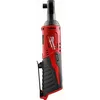
Milwaukee 2457-20 M12 Cordless 3/8″ Sub-Compact Ratchet
A sub-compact head and 250 RPM output make this a favorite for automotive and general repair work in tight spaces.
- Best for: automotive repair, tight-clearance fastening
- Why we picked it: 35 ft-lbs of torque and a variable-speed trigger from a trusted M12 platform
- Main drawback: sold bare (tool only) in this listing — battery and charger sold separately unless you already own M12 batteries
Compare more 3/8″ cordless ratchet options
 Option 1 Milwaukee 2457-21 M12 Ratchet Kit
|
 Option 2 KIMO Cordless Ratchet Wrench Set
|
 Option 3 3/8″ Ratchet for DEWALT 20V Battery
|
As an Amazon Associate we earn from qualifying purchases.
Traditional Hand Ratchets
Traditional hand ratchets have been a staple in mechanical work for decades. They’re manual tools used to tighten or loosen bolts and nuts, relying entirely on the user’s wrist motion and the ratchet mechanism’s back-and-forth swing.
Introduction Of Battery Operated Ratchets
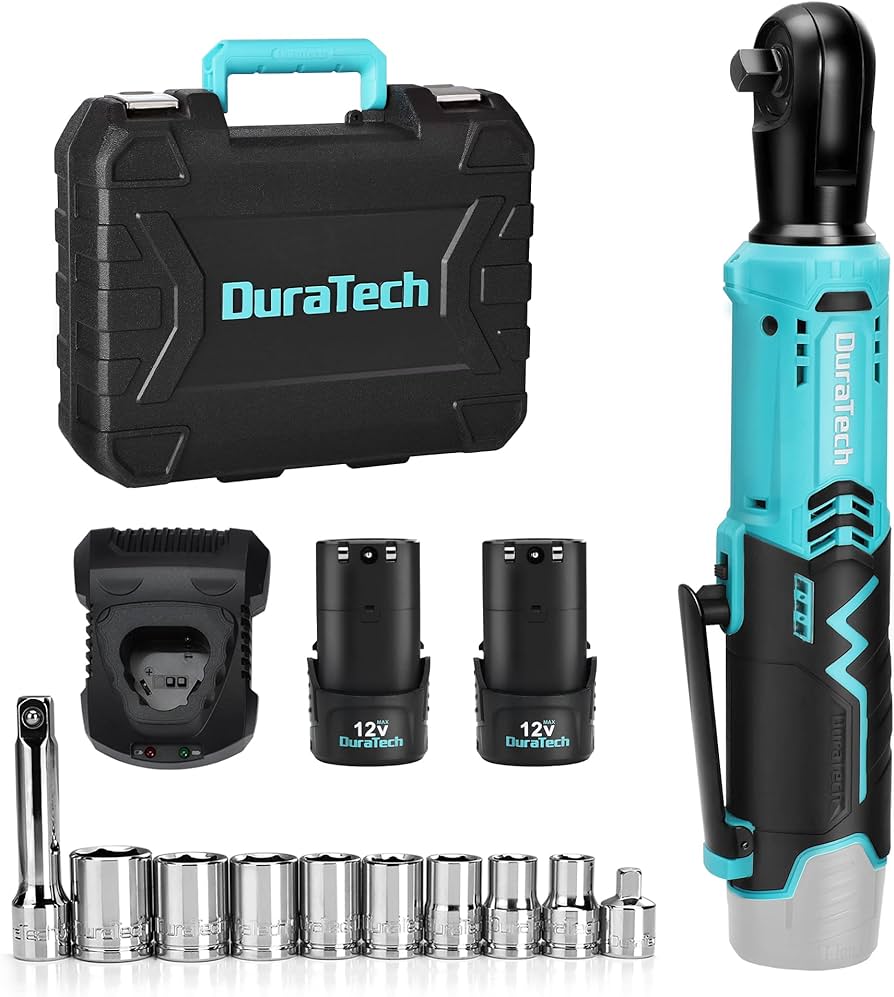
Battery-operated ratchets mark a significant advancement over the manual tool. They use battery power to spin the socket automatically, dramatically speeding up repetitive fastening while still keeping the compact head profile that makes a ratchet useful in tight spaces — something a full-size impact driver usually can’t match.
Benefits Of 3/8″ Battery-Operated Ratchets
3/8″ battery-operated ratchets offer faster operation, reduced manual effort, and improved productivity on any job involving repeated fastening. Those benefits make otherwise tedious tasks noticeably faster to complete.
They suit a wide range of work: automotive repairs, construction projects, and home maintenance tasks all benefit from the speed and compact reach a cordless ratchet provides, adding real versatility over a manual-only toolbox.
Features To Look For
When shopping for a 3/8″ battery-operated ratchet, a few specs matter more than the marketing copy: power and torque, battery life and charging time, and head size/reach for your specific work. Here’s what each one actually means for how the tool performs.
Power And Torque
Look for a ratchet with enough torque to handle your typical fasteners — most 3/8″ cordless ratchets fall in the 35-90 ft-lbs range, with higher numbers better suited to stubborn, rusted, or larger bolts. Variable-speed triggers give you fine control for starting fasteners by hand before running them home at full speed, which protects threads on soft or aluminum fittings. A 12V lithium-ion platform is the standard for this tool category and offers a good balance of power and compact size.
Battery Life And Charging Time
Battery life and charging time determine how much real work you get done between charges. A ratchet that holds a charge through several hours of intermittent use, paired with roughly an hour or less to recharge, keeps downtime to a minimum. If you already own batteries on a specific platform (Milwaukee M12, DEWALT 20V, etc.), buying a bare-tool ratchet on that same platform saves money and avoids managing yet another charger.
Applications Across Industries
Battery-operated ratchets have become common across trades because of their convenience, portability, and efficiency. Here’s how different fields put them to use.
Automotive Industry
In the automotive industry, cordless ratchets are a go-to tool for mechanics. Their compact head reaches into tight engine bay spaces to spin fasteners quickly, making them ideal for engine repairs, brake work, and tire changes — jobs where a full-size impact wrench simply won’t fit.
Construction And Manufacturing Sectors
In construction and manufacturing, cordless ratchets handle furniture assembly, fixture installation, and machinery work with a reliable, powerful solution. Their cordless design eliminates the need for cumbersome cords or hoses, giving workers more freedom of movement on the job site.
Common Mistakes When Choosing Or Using A Cordless Ratchet
- Buying bare-tool without checking your battery platform: A bare-tool ratchet is cheaper, but only saves money if you already own a compatible battery and charger for that brand.
- Using it as a substitute for an impact wrench on stuck fasteners: A ratchet spins steadily; it doesn’t deliver the hammering impact force that breaks loose severely rusted or over-torqued bolts. Use a dedicated impact wrench for those.
- Over-torquing small or soft fasteners at full speed: Start fasteners at low speed by hand-feel before running the ratchet at full trigger, especially on aluminum housings or small-diameter bolts.
- Ignoring head size for the job: A larger, higher-torque ratchet may not fit into tight automotive spaces where a sub-compact head is required — match the tool’s size to the actual clearance you’re working in.
Frequently Asked Questions On 3/8″ Battery-Operated Ratchets
What Are The Benefits Of Using A Battery-Operated Ratchet?
Using a battery-operated ratchet offers convenience, speed, and portability. It eliminates the need for manual effort, making tasks easier and faster, and its compact design accesses tight spaces effortlessly.
How Does A Battery-Operated Ratchet Work?
A battery-operated ratchet uses a motor to generate rotational force that tightens or loosens bolts. Activate the trigger, and the ratchet spins the socket in the selected direction, eliminating the manual back-and-forth motion of a hand ratchet.
Are Battery-Operated Ratchets Powerful Enough For Heavy-Duty Tasks?
Yes, for most fastening tasks. They’re equipped with motors that deliver sufficient torque for automotive repairs, construction projects, and general industrial applications — though for severely stuck or over-torqued fasteners, a dedicated impact wrench is the better tool.
Can I Use A Battery-Operated Ratchet In Tight Spaces?
Absolutely. Their slim head and compact size navigate narrow gaps effortlessly, making them ideal for tasks where a traditional hand ratchet or impact driver wouldn’t fit, like working deep under a car hood.
Is A Cordless Ratchet The Same As An Impact Wrench?
No. A ratchet spins the socket with steady rotational force, while an impact wrench adds rapid hammering impacts to break loose stubborn fasteners. Ratchets are better for speed on easy fasteners and tight clearance; impact wrenches are better for stuck, rusted, or heavily torqued bolts.
Conclusion
A 3/8″ battery-operated ratchet earns its place in any well-stocked toolbox for one reason: it turns repetitive fastening work from a wrist workout into a trigger pull. Match the torque, battery platform, and head size to your actual work, avoid using it in place of an impact wrench on truly stuck fasteners, and this tool will save real time on every job it touches.
Sponsored / affiliate links. As an Amazon Associate I earn from qualifying purchases. I may earn additional commission from eligible campaigns.