Best Saw to Cut Aluminum: 5 Picks Compared by Cut Capacity (2026)
The best saw to cut aluminum overall is the DEWALT DCS383B 20V MAX XR metal-cutting circular saw — a purpose-built brushless saw with a 2-5/8 in. depth of cut and a built-in chip collector. But the right saw depends on the cut: we compared 5 real saws below by their published cut capacity, no-load speed, and price, including two picks that don’t actually ship with an aluminum-ready blade.
Aluminum cuts differently than wood or mild steel — it’s soft and gummy, so a blade with too few teeth or the wrong tooth geometry will load up, overheat, and tear the edge instead of cutting it cleanly. We compiled specs directly from each manufacturer and Amazon’s live catalog (not from a competitor’s own review copy) to build the comparison table below.

Cutting aluminum cleanly comes down to blade choice and cut capacity as much as raw power.
5 Saws to Cut Aluminum, Compared
Every number below is sourced live from the manufacturer’s own published specs and Amazon’s Creators API (checked this session — see “How We Picked These” for the full method). “Max Cut Capacity” is each saw’s own largest published single-pass dimension — depth of cut for the circular saws, height capacity for the miter saw, round-bar diameter for the chop saw, and throat depth for the band saw. These are different measurement types for different saw geometries, so treat capacity as a rough cross-category yardstick, not an exact match.
| Saw | Type | Motor | No-Load Speed | Max Cut Capacity | Ships Aluminum-Ready? | Weight | Price | $/in. of Capacity |
|---|---|---|---|---|---|---|---|---|
| DEWALT DCS383B | Cordless circular | 20V MAX brushless, 1,400 MWO | 1,000 RPM | 2.625 in. (depth of cut) | No — 48T general metal blade included | 13.5 lb (bare tool) | $459.99 | $175.23 |
| Evolution R185SMS+ | Corded sliding miter | 120V, 1,500W | 3,700 RPM | 2.25 in. (height @ 0°/0°) | Yes — 20T multi-material TCT blade included | ≈19 lb | $179.00 | $79.56 |
| Evolution R185CCS | Corded circular | 120V, 15A, 1,600W | 3,700 RPM | 2.52 in. (depth of cut) | Yes — 20T multi-material TCT blade included | 11.2 lb | $110.00 | $43.65 |
| Evolution S355CPSL | Corded chop saw | 120V, 15A | 1,450 RPM | 5.125 in. (round bar @ 90°) | No — 14″ mild-steel blade included | 51 lb | $399.00 | $77.85 |
| WEN 94396 | Portable band saw | 120V, 10A | 60–420 FPM (variable) | 5.0 in. (throat depth) | Yes — 10/14 TPI bi-metal blade included | 14.5 lb | $129.27 | $25.85 |
The correction worth knowing before you buy: the DEWALT DCS383B and the Evolution S355CPSL chop saw — two of the more expensive picks here — both ship with a general mild-steel-rated blade, not an aluminum-specific one. A steel-optimized blade will still cut aluminum, but the tooth geometry is wrong for a soft, gummy metal and tends to load up and leave a rougher edge. A real aluminum-specific replacement blade (Diablo’s 56-tooth 7-1/4 in. aluminum blade at $35.93, or Evolution’s own 80-tooth 14 in. aluminum blade at $95.00) brings the true aluminum-ready cost to about $495.92 for the DCS383B and $494.00 for the S355CPSL — both landing close to the same real-world price once equipped correctly. The three Evolution/WEN picks that use a “multi-material” or general metal-rated blade need no upgrade to cut aluminum cleanly out of the box.
Why Aluminum Cuts Differently Than Wood or Steel
Aluminum sits in an awkward middle ground for a blade. It’s much softer than steel — a standard steel-cutting blade can bite into it fine — but it has a low melting point (about 1,220°F for common 6061 alloy) and a strong tendency to smear and weld itself to hot metal. A blade spinning too fast, with too few teeth, or without lubrication doesn’t just cut slower on aluminum — it packs molten aluminum into the gullets between teeth, which then re-welds to the workpiece and tears the edge instead of shearing it.
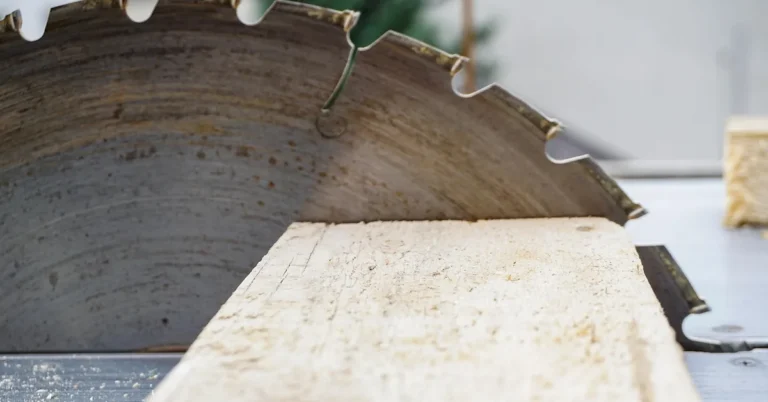
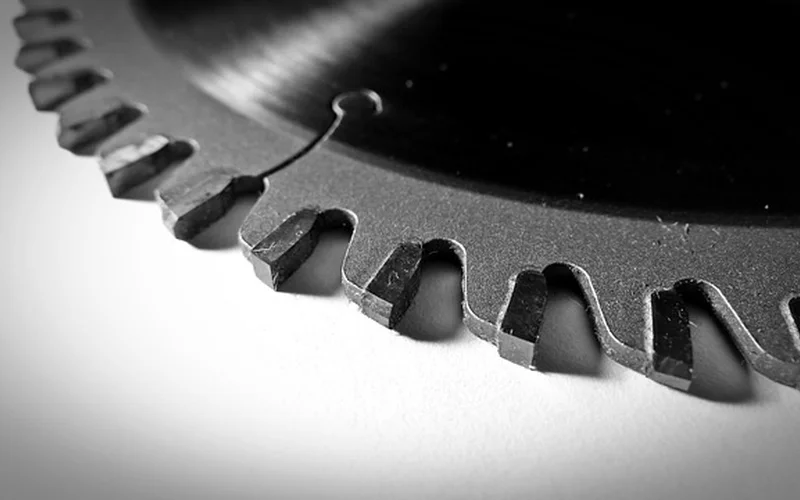
That’s why the blade matters as much as the saw. A triple-chip-grind (TCG) tooth profile, common on “non-ferrous” and “multi-material” blades, alternates a flat-top tooth with a chamfered one — the chamfered tooth shears the sides of the kerf clean before the flat tooth clears the bottom, which is what keeps aluminum from grabbing. This is the exact difference between the blades that ship on the Evolution saws in this comparison and the general mild-steel blade that ships on the DEWALT and Evolution chop saw.
Common Mistakes When Cutting Aluminum With a Power Saw
- Using a wood blade or an unrated steel blade. Both will work briefly, then gum up, overheat, and leave a torn edge.
- Running the saw at full speed on thick stock. Higher RPM isn’t always better on aluminum — it increases heat buildup faster than it increases cut quality.
- Skipping the clamp. Aluminum is lighter and grippier under a spinning blade than most people expect; it can twist or lift if it isn’t secured.
- Cutting dry on anything over 1/4 in. thick. A wax stick or cutting fluid meaningfully extends blade life and cut quality on thicker stock.
- Ignoring the burr. Every one of these saws leaves a sharp aluminum burr along the cut edge — budget the extra minute to deburr before handling the piece bare-handed.
If you’re working with thin aluminum sheet (under 1/16 in.), a jigsaw with a fine-tooth metal-cutting blade or even aviation snips can outperform every saw on this list — the picks above are sized for bar, tube, extrusion, and plate rather than sheet stock. For anything thicker than 1/4 in., stick to the corded picks here; a cordless saw’s battery drains noticeably faster on thick aluminum than on wood of the same dimension because the motor works harder against denser material for longer per cut.
Best Saws to Cut Aluminum
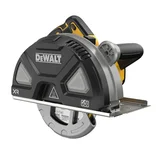
1. DEWALT DCS383B 20V MAX XR Metal Cutting Circular Saw — #1 Best Overall
Price: $459.99 · View on Amazon
- 20V MAX brushless motor, up to 1,400 MWO
- 2-5/8 in. depth of cut at 90°
- 1,000 RPM engineered metal-cutting speed
- Integrated chip collector keeps the cut line visible
- Electronic brake stops the blade in under 1 second
- 13.5 lb bare tool (battery/charger sold separately)
Pros: cordless freedom on a jobsite, built-in chip collection instead of a shower of aluminum swarf, brake stops the blade almost instantly for safer handoffs
Cons: tool-only price is high before you add a battery and charger, and the included blade is mild-steel-rated, not aluminum-specific — budget an extra ~$36 for a real aluminum blade
This is the pick for someone doing repeat aluminum cuts on a jobsite or in a shop without a dedicated 120V outlet nearby, who already owns 20V MAX batteries.
Main drawback: The stock blade isn’t optimized for aluminum — swap in an aluminum-specific TCT blade before your first cut for the cleanest edge.
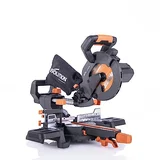
2. Evolution R185SMS+ Sliding Miter Saw — Best Miter Saw for Cutting Aluminum
Price: $179.00 · View on Amazon
- 120V, 1,500W motor, 3,700 RPM
- 0–45° bevel, 50–50° miter range
- 8-1/4 x 2-1/4 in. crosscut capacity
- 20-tooth multi-material TCT blade included, rated for aluminum out of the box
- Laser cutting guide and 3-piece clamp included
- 3-year manufacturer’s warranty
Pros: the only pick here built for repeatable angled cuts, blade is already aluminum-rated, laser guide helps line up miter cuts on aluminum trim or framing
Cons: sliding miter saws are bulkier to store than a circular saw, 2-1/4 in. height capacity is the shallowest of the corded picks
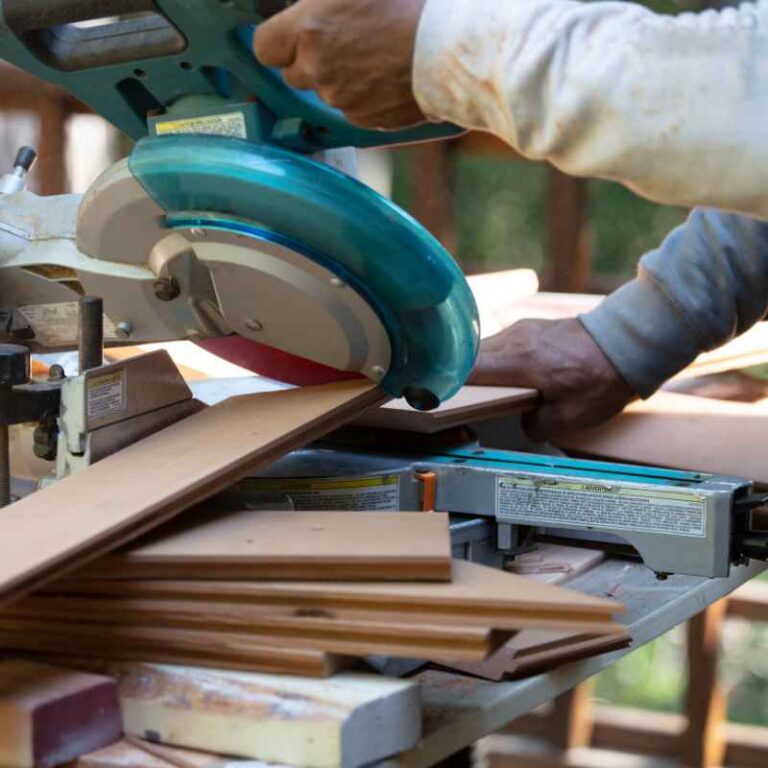
This is the pick for aluminum extrusion, angle stock, or trim work where you need repeatable 45° miters — picture frame corners, aluminum door and window trim, or angle-bracket fabrication.
Main drawback: Height capacity tops out at 2-1/4 in., so thick aluminum bar or plate needs a different saw on this list.
3. Evolution R185CCS Multi-Material Circular Saw — Best Value
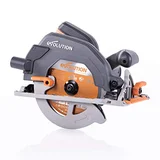
Price: $110.00 · View on Amazon
- 120V, 15A motor, 1,600W, 3,700 RPM
- 2.52 in. depth of cut at 90°
- Cuts accurate to within ±0.5° per manufacturer spec
- 20-tooth Japanese TCT multi-material blade included, rated for aluminum
- 11.2 lb
- 3-year limited warranty
Pros: lowest cost of any pick here by a wide margin, deepest cut capacity of the three circular-style saws, ships aluminum-ready with no blade upgrade needed
Cons: corded only, no chip collection system like the DEWALT, 15A draw needs a real 120V circuit
This is the pick if you want the cheapest genuinely aluminum-ready saw on this list and don’t need cordless portability — it’s the best $-per-inch-of-capacity value in the whole comparison.
Main drawback: No chip collection and no cordless option — it’s a straightforward corded tool, nothing more.
4. Evolution S355CPSL 14 in. Heavy-Duty Metal Cutting Chop Saw — Best Chop Saw for Cutting Aluminum
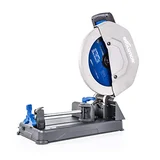
Price: $399.00 · View on Amazon
- 120V, 15A motor, 1,450 RPM
- 5-1/8 in. round tube / 4-3/4 in. square tube capacity at 90°
- 14 in. carbide-tipped blade (mild-steel rated as shipped)
- Cast steel vise with 0–45° miter capacity
- Integrated chip deflector
- 51 lb, 3-year warranty
Pros: largest single-pass cut capacity of any pick here, cast steel vise holds round or square aluminum bar stock securely for repeat cuts
Cons: 51 lb and not portable, included blade is mild-steel rated so budget for Evolution’s own 80-tooth aluminum blade ($95) for a clean finish
This is the shop pick for cutting round or square aluminum bar, tube, and extrusion in volume — the vise and fixed base make repeat cuts faster and more consistent than a handheld saw.
Main drawback: The included blade is a mild-steel blade. On aluminum specifically it will cut, but it loads up faster and leaves a rougher edge than Evolution’s own aluminum-rated blade.
5. WEN 94396 Portable Band Saw — Best Portable Saw for Cutting Aluminum
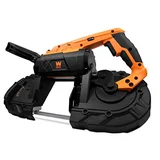
Price: $129.27 · View on Amazon
- 120V, 10A motor, variable speed 60–420 FPM
- 5 in. x 5 in. cutting capacity
- 10/14 TPI bi-metal blade included
- 14.5 lb handheld design
- 2-year warranty
Pros: lightest and most maneuverable pick here, continuous band cuts curves and irregular aluminum shapes a circular or miter saw can’t follow, cheapest true aluminum-ready pick after the R185CCS
Cons: slower material removal than a circular or chop saw on straight cuts, 5 in. capacity is the practical ceiling for round or square stock
This is the pick for curved or irregular aluminum cuts, tight spaces, or on-site work where a full-size saw doesn’t fit — think aluminum conduit, angle stock in awkward spots, or free-form profile cuts.
Main drawback: It’s genuinely slower on long straight cuts than any of the other four picks — choose it for maneuverability, not speed.
How We Picked These
We haven’t physically tested these five saws ourselves — this is a Tier C, dataset-led comparison, not a hands-on review. Every spec in the table above was pulled from the manufacturer’s own published documentation (Evolution Power Tools’ and DEWALT’s own spec pages) or from Amazon’s live Creators API for pricing and buy-box availability, checked the same day this article was last updated. Where a number wasn’t independently confirmable — like exact review counts or star ratings — we left it out rather than copy a competitor’s figure or invent one.
We prioritized saws that are actually sold as metal-cutting or multi-material tools rather than repurposed wood saws, and we cross-checked each pick’s included blade against the manufacturer’s own aluminum-blade accessory listings to confirm whether it ships aluminum-ready — that check is what surfaced the blade-mismatch finding above.
What to Consider When Buying a Saw to Cut Aluminum
Blade Type and Tooth Count
Aluminum needs a carbide-tipped (TCT) blade with a triple-chip or high-tooth-count grind — a standard wood-cutting blade will grab and chip the material, and a low-tooth-count steel blade tends to gum up. Look for blades marketed as “multi-material,” “non-ferrous,” or “aluminum” specifically. As the table above shows, not every “metal cutting” saw ships with one.
Motor Power and Corded vs. Cordless
Corded saws in this comparison run 10–15A and hold speed better under load, which matters more on thicker aluminum stock. Cordless saws like the DCS383B trade some sustained cutting speed for the freedom to work away from an outlet — a real advantage on a jobsite, less of one in a fixed shop.
Cutting Capacity / Depth of Cut
Match the saw’s max capacity to your actual stock. A 2-1/4 in. miter saw is plenty for aluminum trim and angle stock; round or square aluminum bar over 3 in. across needs the chop saw or band saw’s larger throat.
Portability and Weight
The WEN band saw and the DEWALT circular saw are both under 15 lb and easy to carry to the material. The Evolution chop saw, at 51 lb, is a bench tool — plan on leaving it set up rather than moving it between jobs.
Chip Collection and Cleanup
Aluminum swarf is sharp and gets everywhere. The DCS383B is the only pick here with a built-in chip collector; the S355CPSL has a chip deflector that redirects debris away from the operator but doesn’t contain it. Budget for eye protection and a shop vac regardless of which saw you choose.
Safety Features
An electronic brake that stops the blade quickly (DCS383B: under 1 second) reduces the window where an exposed spinning blade is a hazard during material changes. A blade guard that resets on its own after every cut — standard on all five picks here — is worth confirming on any saw you’re considering.
Aluminum-Specific vs. General “Multi-Material” Blades
“Multi-material” blades (like the ones included on the two Evolution circular/miter saws here) are genuinely engineered to cross steel, aluminum, and wood without a swap. A blade marketed only for “metal cutting” or “mild steel” is not the same claim — check the product listing’s own wording, not just the saw’s marketing headline.
Price and True Cost to Get Started
Sticker price alone is misleading here. As the dataset above shows, the DCS383B and S355CPSL both need a ~$36–$95 aluminum blade to actually deliver a clean cut, which erases most of the price gap between them and pushes the DCS383B past $495 all-in even before a battery and charger.
Warranty and Support
DEWALT and all three Evolution picks carry a 3-year manufacturer’s warranty; the WEN band saw carries 2 years. All four brands sell direct replacement parts and blades, which matters for a tool that will need periodic blade swaps.
How to Cut Aluminum With a Power Saw
- Fit the right blade. Confirm it’s TCT and rated for aluminum or multi-material use, not a mild-steel-only blade.
- Clamp the stock securely. Aluminum can grab and shift under blade pressure — use a vise, clamps, or the saw’s own fence, never just hand-held.
- Mark the cut line clearly. A fine-tip marker shows up better on aluminum than pencil.
- Set a moderate feed rate. Push too fast and the blade loads with melted aluminum; too slow and heat builds up. Let the blade do the work.
- Use cutting lubricant on thicker stock. A wax stick or cutting fluid on cuts over 1/4 in. thick reduces heat and gumming.
- Keep the cut moving in one pass. Stopping mid-cut on aluminum tends to leave a burn mark or notch.
- Deburr the edge. A file or deburring tool removes the sharp aluminum burr every one of these cuts leaves behind.
Frequently Asked Questions
What is the best saw for cutting aluminum?
For most users, a circular saw or miter saw fitted with a carbide-tipped, multi-material or aluminum-rated blade gives the cleanest cuts. Our top pick, the DEWALT DCS383B, is a dedicated metal-cutting circular saw with a built-in chip collector and a 2-5/8 in. depth of cut, though it needs an aluminum-specific blade swap for the cleanest edge.
Can a circular saw cut aluminum?
Yes. A circular saw can cut aluminum as long as it’s fitted with a carbide-tipped blade designed for non-ferrous metal — a high tooth count (40–80T) with a triple-chip grind cuts cleanly without gumming or chipping the material.
Do I need a special blade to cut aluminum?
Yes, ideally. A standard wood blade will chip and grab aluminum, and a general steel-cutting blade can still work but tends to load up and leave a rougher edge. A blade marketed specifically for aluminum or non-ferrous metal, or a genuine “multi-material” blade, gives the cleanest result.
Can a miter saw cut aluminum?
Yes, and it’s a good choice for angled cuts on aluminum trim, framing, or extrusion. The Evolution R185SMS+ in this comparison ships with an aluminum-rated multi-material blade and a 0–45° bevel range for exactly this use case.
What TPI or tooth count is best for cutting aluminum?
For circular and miter saw blades, look for 40–80 teeth with a triple-chip grind. For band saw blades, a 10–14 TPI bi-metal blade — like the one included on the WEN 94396 — is the standard recommendation for general aluminum stock; thinner sheet aluminum benefits from a higher TPI count.
Is a chop saw or circular saw better for cutting aluminum?
A chop saw like the Evolution S355CPSL has more raw cut capacity (5-1/8 in. round bar) and a vise for repeat, consistent cuts on bar and tube stock, but it’s a 51 lb bench tool. A circular saw is lighter, more portable, and better suited to sheet or flat stock and job-site work.
What safety precautions should I take when cutting aluminum with a saw?
Wear eye protection and gloves rated for sharp metal chips, clamp the material securely rather than hand-holding it, and keep the blade guard functional. Aluminum swarf is sharp and can fly further than wood sawdust, so a face shield is worth adding on chop saw and band saw cuts.
Final Thoughts
For most people cutting aluminum, the DEWALT DCS383B is the strongest all-around pick — a dedicated metal-cutting circular saw with real chip collection and cordless convenience, as long as you budget for an aluminum-specific blade on top of the $459.99 tool price. If you want the cheapest saw that’s genuinely aluminum-ready straight out of the box, the Evolution R185CCS at $110 is the best value in this comparison at $43.65 per inch of cut capacity — the lowest of any pick here except the WEN band saw.
Related Guides
- How to Cut Aluminum With a Circular Saw
- Can You Cut Aluminum With a Chop Saw?
- Can You Cut Aluminum With a Miter Saw?
- Best Miter Saw Blades for Aluminum
- Best Circular Saw Blade for Cutting Aluminum
- Chop Saw Blades for Aluminum
- Band Saw vs. Jigsaw: Which Should You Use?
Sponsored / affiliate links. As an Amazon Associate I earn from qualifying purchases. I may earn additional commission from eligible campaigns.