Craftsman Miter Gauge: Why It Won’t Fit (5/8 vs 3/4 Slots)
A Craftsman miter gauge is built to slide into a 3/4 in. x 3/8 in. T-slot, but several older and import-era Craftsman table saws cut that slot closer to 5/8 in. Forcing a standard aftermarket bar into a narrower slot causes binding, inaccurate angles, and premature wear. This guide covers how to measure your slot correctly, which gauges fit the true industry standard, and what to do if your saw is one of the non-standard models.
Understanding the Craftsman Miter Gauge
Best Craftsman-Compatible Miter Gauge Pick
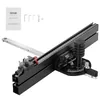
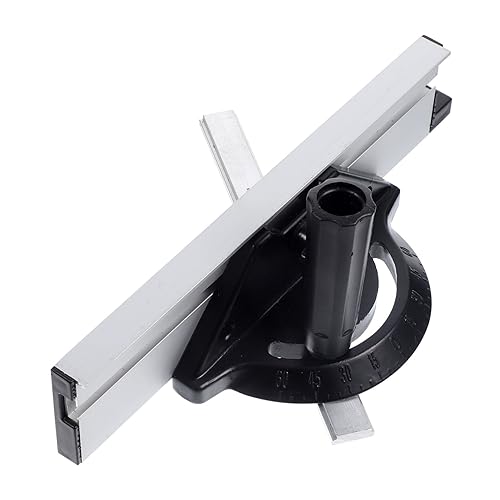
VEVOR Precision Miter Gauge, 18 in. Fence – $60.90
Fits the same 3/4 in. x 3/8 in. slot spec this guide uses to test compatibility — measure your Craftsman’s slot first using the steps above.
- Best for: Craftsman saws with the true 3/4 in. x 3/8 in. T-slot wanting a compact 18 in. fence
- Why we picked it: Ships with a removable disc, so it works in both T-shaped and U-shaped slots
- Main drawback: Only 15 angle stops vs. 27 on the Powertec/WEN options below
Compare more Craftsman-compatible miter gauge options
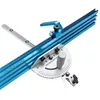 Option 1 POWERTEC 71391 Miter Gauge System – $99.99
|
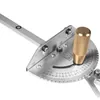 Option 2 WEN WA1401 Steel & Brass Miter Gauge – $60.70
|
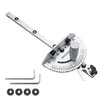 Option 3 POWERTEC 71142 Universal Miter Gauge – $59.99
|
As an Amazon Associate we earn from qualifying purchases.
A Craftsman miter gauge is a sliding jig that rides in the table saw’s miter slot and pivots to a set angle, giving you a repeatable reference edge for crosscuts and angled cuts instead of relying on a freehand push through the blade. If your specific tool is a Craftsman miter saw rather than a table saw, this gauge doesn’t apply — check that guide instead.
Key Features
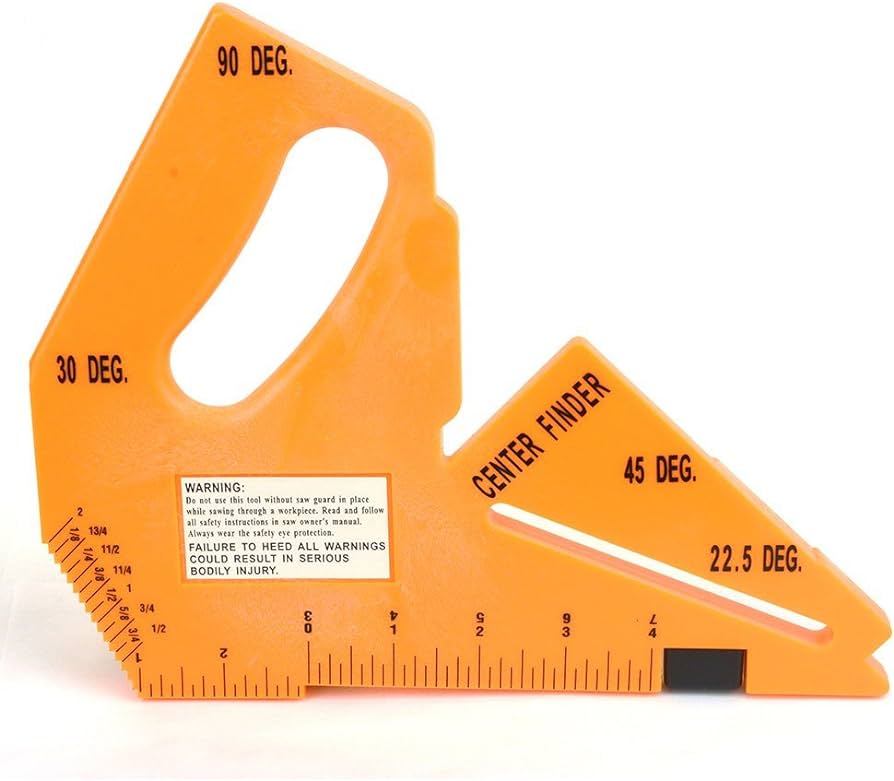
- Adjustable angle head, usually with positive stops at common angles (90°, 45°, 22.5°)
- A graduated protractor scale for reading the angle without a separate tool
- A steel or aluminum bar sized to ride in the saw’s miter slot
- A clamping face or fence to hold stock square against the head
Applications in Woodworking
A miter gauge earns its keep on three recurring cuts:
- Cutting mitered corners for picture frames and molding
- Squaring crosscuts on boards too short or narrow to trust to the rip fence alone
- Making repeatable compound-angle cuts when a flip stop is added to the fence
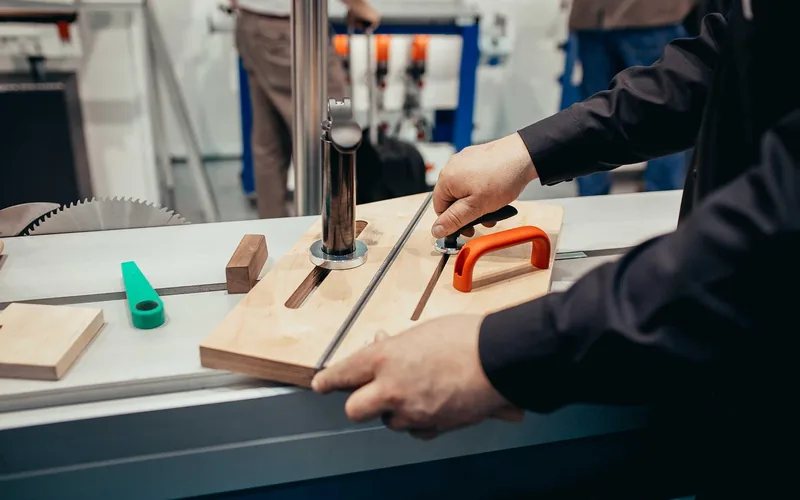
Why Some Craftsman Miter Gauges Won’t Fit (Slot Size Explained)
A miter slot is the machined channel running parallel to the blade that a miter gauge’s bar rides in. The de facto industry standard is 3/4 in. wide by 3/8 in. deep — the dimension nearly every aftermarket miter gauge, sled, and jig on the market is built to fit. Some older and budget-line Craftsman table saws, however, cut that slot closer to 5/8 in., or a few thousandths under 3/4 in., which is why a bar that should slide freely instead binds or won’t seat at all.
| Spec | Industry-Standard Slot | Non-Standard Craftsman Slot |
|---|---|---|
| Width | 3/4 in. (19 mm) | 5/8 in. (16 mm), or slightly under 3/4 in. |
| Depth | 3/8 in. (9.5 mm) | Varies by model |
| Fits off-the-shelf gauges? | Yes — most aftermarket options | No — binds or won’t seat |
| Common on | Most contractor and cabinet saws | Some vintage/113-series and import-sourced Craftsman saws |
How to Measure Your Miter Slot
- Unplug the saw and remove the throat plate for a clear view of the slot.
- Measure the width with digital calipers across the top of the slot, not just by eye.
- Measure the depth the same way, then compare both numbers to the 3/4 in. x 3/8 in. standard above.
- If your slot reads narrower, look for a gauge with a removable/adjustable disc, or plan to have the slot routed out to 3/4 in. x 1/4 in. by a machinist.
📊 The 3/4 in. x 3/8 in. miter slot is the de facto industry standard that most aftermarket miter gauges, sleds, and jigs are manufactured to fit — confirmed across VEVOR, POWERTEC, and WEN’s own current product specs (2026). — Source: cross-referenced manufacturer listings, no single canonical spec page exists for this de facto standard.
“Our miter gauge is expertly designed to fit the majority of standard table saw slots measuring 3/4 x 3/8 in. (19 x 9.5 mm). To ensure a perfect match, please measure the slots on your table saw before purchase.”
Mastering Angles With the Craftsman Miter Gauge
Once you’ve confirmed the bar fits your slot — the same check covered in our Incra miter gauge review for that brand’s different bar spec — dialing in accurate angles comes down to setup, not the gauge itself.
Setting Up for Precision Cuts
Lock the head to the desired angle at a positive stop when one exists — stops are more repeatable than reading the scale by eye. Slide the bar through the full slot length once before cutting to check for binding or side-to-side play.
Tips for Achieving Perfect Angles
Clamp or firmly hand-press the stock against the gauge’s face before every cut — slippage during the cut is the most common cause of an off-angle miter. For repeat cuts, add a flip stop to the fence so each piece lands at the same length without re-measuring.
Enhancing Safety and Efficiency
Utilizing Safety Features
Keep the workpiece firmly against the gauge face and never place your hand in line with the blade path. A gauge with a no-slip grip or built-in hold-down reduces the chance of the stock shifting mid-cut.
Improving Workflow and Productivity
A quick-release or flip-stop fence speeds up repeat cuts by letting you swap stock without re-measuring the angle each time, which matters most on multi-piece jobs like picture frames or trim runs.
Choosing the Right Craftsman Miter Gauge
A miter gauge is one of the cheaper upgrades in a shop, alongside a good table saw alignment gauge, so it’s worth matching it to your saw and your typical cuts rather than grabbing the first listing that says “Craftsman-compatible.”
Considerations for Woodworking Projects
- Angle range: confirm the gauge covers the angles you actually cut, not just 90° and 45°
- Accuracy: look for a gauge with a positive-stop head that locks securely at each angle instead of relying on friction alone
- Compatibility: match the bar to your measured slot width and depth from the section above
- Build quality: aluminum or steel bars hold calibration longer than plastic
- Ease of use: clear, high-contrast angle markings save time on every setup
How to Verify Fit Before You Buy
Original-equipment Craftsman miter gauges for older 113-series saws are largely discontinued (see our guide to Craftsman table saw attachments for other replacement parts), so most buyers today are shopping aftermarket. Before ordering: recheck your measured slot dimensions against the listing’s stated bar size, confirm the seller allows returns in case of a fit issue, and favor listings (like the options above) that explicitly state the 3/4 in. x 3/8 in. spec rather than a vague “universal fit” claim.
Frequently Asked Questions on Craftsman Miter Gauge
What size miter slot is on a Craftsman 113 table saw?
The Craftsman 113-series table saw typically uses a 3/4 in. wide by 3/8 in. deep miter slot, matching the industry standard — but always measure yours, since some units in this series shipped with narrower slots.
How do you fix a loose miter gauge?
Tighten the adjustment screws on the gauge head and bar with a screwdriver or hex wrench, then check the bar for wear where it rides in the slot. If play remains after tightening, the bar itself is likely worn and needs replacing rather than re-adjusting.
Does a table saw have a miter gauge?
Most table saws ship with a basic miter gauge included, but factory gauges are typically less precise than aftermarket options and are a common first upgrade.
Do you use the miter gauge when crosscutting?
Yes — set the gauge to 90° for a square crosscut, or to the desired angle for a mitered crosscut, and keep the stock clamped or firmly pressed against the face throughout the cut.
Why won’t a standard miter gauge fit my Craftsman table saw?
Some older and import-era Craftsman saws cut their miter slot closer to 5/8 in. instead of the 3/4 in. x 3/8 in. industry standard. Measure your slot with digital calipers before buying — a gauge with a removable disc, or a professionally re-routed slot, solves the mismatch.
Conclusion
A Craftsman miter gauge only performs as well as its fit: confirm your saw’s true slot dimensions against the 3/4 in. x 3/8 in. standard before you buy, and a properly matched gauge will deliver accurate, repeatable angled cuts for picture frames, trim, and general crosscutting alike.
Sponsored / affiliate links. As an Amazon Associate I earn from qualifying purchases. I may earn additional commission from eligible campaigns.