Do Oak Trees Have Flowers Surprising Facts
Have you ever wondered about oak trees? Many people find it tricky to know if these big trees have flowers. It’s a common question, especially when you’re learning about nature.
This guide will make it super simple. We’ll break it down step by step so you can easily see how oak trees surprise us. Get ready to discover something new about these amazing plants.
Do Oak Trees Have Flowers Surprising Facts Explained
It’s a common question for many to ask, “Do oak trees have flowers?” This often comes up when people are curious about the reproductive cycles of plants and trees. For those new to botany or simply observing nature, the idea of a large, sturdy oak tree producing something as delicate as a flower might seem unusual. Oaks are more known for their strong wood, acorns, and broad canopies.
Their flowering process is also quite different from what we typically picture with colorful petals. This makes the question “Do Oak Trees Have Flowers Surprising Facts” a topic that can be both intriguing and a bit confusing for beginners. This section will clarify this, explaining that yes, oaks do flower, but in a way that might not be immediately obvious.
We will explore the unique characteristics of oak flowers and why they often go unnoticed.
The Nature of Oak Flowers
Oak trees, like all flowering plants, produce flowers to reproduce. However, oak flowers are not the showy, brightly colored blooms you might find on a rose or a tulip. Instead, they are very subtle and designed for wind pollination, a strategy known as anemophily.
This means they don’t need to attract insects with bright colors or sweet scents. Their flowers are typically small, inconspicuous, and produced in large numbers to increase the chances of successful pollination. This wind-driven pollination is a key characteristic that often leads people to question whether oaks even have flowers in the traditional sense.
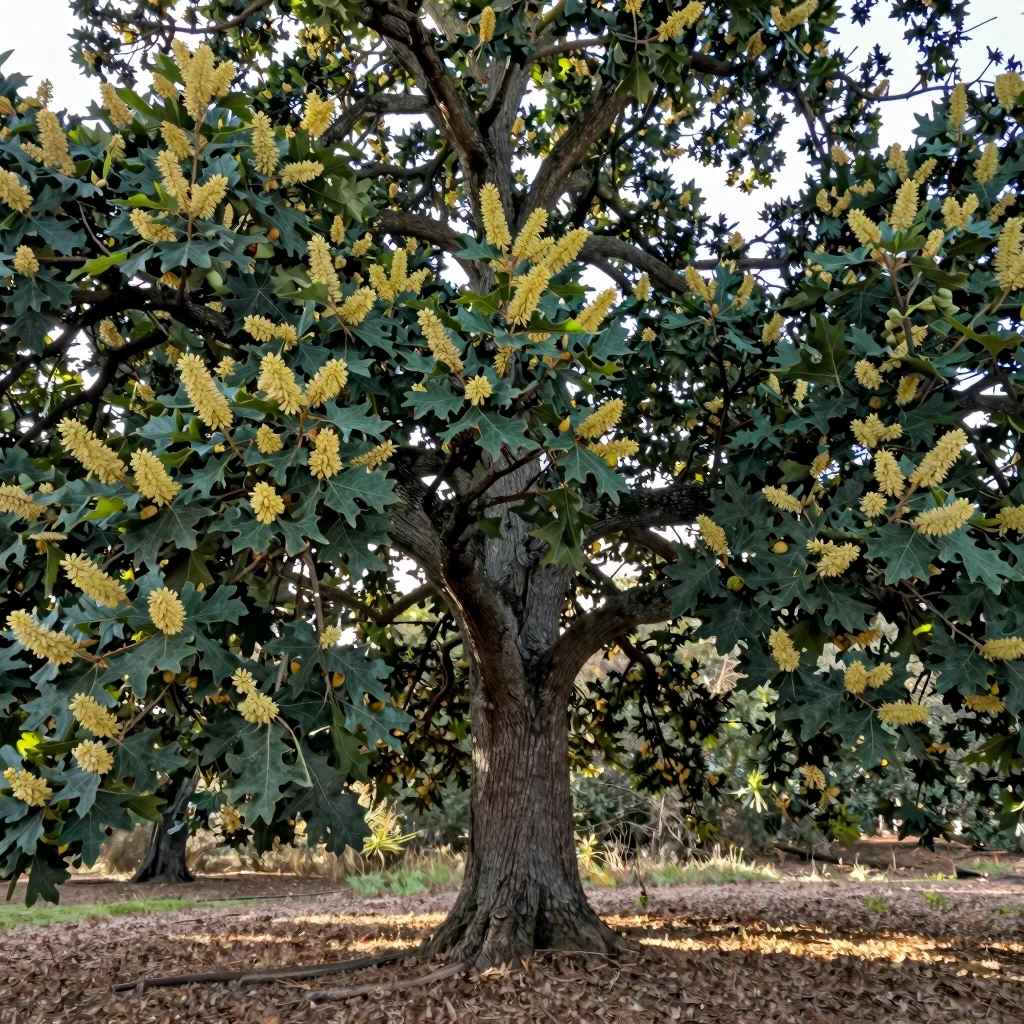
Oak flowers appear in two distinct forms: male and female. These are found on the same tree, making the oak a monoecious plant. The male flowers are arranged in long, drooping clusters called catkins, which hang from the branches.
These catkins are light green or yellowish and release large amounts of pollen into the wind. The female flowers are much smaller and often appear in clusters near the tips of new shoots. They are typically reddish or greenish and have a stigmatic surface designed to catch the airborne pollen.
The timing of oak flowering is also important. They typically bloom in the spring, often before or as the leaves begin to emerge. This timing ensures that the pollen can travel easily through the air without being obstructed by dense foliage.
The wind then carries the pollen from the male catkins to the female flowers, where fertilization can occur, eventually leading to the development of acorns. This entire process, while vital for the oak’s life cycle, is so understated that many observers miss it entirely.
- Oak flowers are not showy: Unlike many familiar flowers, oak blooms are designed for wind pollination, not for attracting insects. They are small and discreet, making them easy to overlook.
- Wind pollination strategy: Oaks rely on wind to carry pollen from their male flowers to their female flowers. This means their flowers have features optimized for airborne pollen dispersal and reception.
- Monoecious plants: Oak trees have both male and female flowers on the same tree. This allows for self-pollination or cross-pollination with other oak trees.
Male Flowers Catkins Explained
The male flowers of an oak tree are perhaps the most noticeable part of their reproductive structures, though still quite subtle. They grow in long, pendulous clusters known as catkins. These catkins are essentially a collection of many small, stamen-bearing flowers.
When they are ready for pollination, they turn a yellowish-green color. Their primary purpose is to produce and release vast quantities of pollen. This pollen is lightweight and dry, perfect for being carried by the wind over long distances.
The appearance of catkins is a sure sign that spring has arrived for many oak species. They typically emerge in early to mid-spring, often before the leaves fully unfurl. This strategy is advantageous for wind pollination, as it allows the pollen to travel unimpeded by the dense canopy of leaves that will soon develop.
A mature oak tree can produce hundreds of these catkins, each releasing millions of pollen grains. This prolific production is a necessity for successful fertilization, as wind pollination is an inefficient process with many pollen grains being lost to the environment.
The structure of a catkin itself is simple. Each individual male flower within the catkin consists of several stamens, which are the pollen-producing parts. These stamens are typically surrounded by small, scale-like bracts, which are modified leaves.
The entire catkin structure is designed to sway gently in the breeze, aiding in the release of pollen. When the wind blows, the catkins release their pollen load, creating a visible yellow dust that can settle on everything around the tree.
- Structure of Catkins: Male flowers are clustered together on drooping stalks called catkins. Each catkin contains many individual male flowers, each with pollen-producing stamens.
- Pollen Production: These catkins are designed to produce a massive amount of pollen. This is essential because wind pollination is a numbers game; not every pollen grain will reach its target.
- Appearance and Timing: Catkins are usually yellowish-green and appear in spring. They often emerge before the leaves, maximizing wind dispersal potential.
Female Flowers Identification
Identifying the female flowers of an oak tree can be a bit more challenging than spotting the male catkins. They are much smaller and less conspicuous. Female flowers are typically found in clusters at the base of new leaf shoots, near the tips of branches.
Each female flower is essentially a tiny, immature acorn. It has a small, reddish or greenish stigma, which is the part of the flower that receives pollen.
The stigma is usually feathery or lobed, increasing its surface area to better catch pollen grains carried by the wind. This is crucial for successful pollination. Unlike the abundant pollen production of the male flowers, the female flowers are fewer in number.
They are receptive to pollen for a limited time during the spring blooming period. Once pollinated, the tiny flower begins to develop into an acorn, with the scales of the flower forming the cap of the acorn.
Because they are so small and often nestled among developing leaves, female flowers are easily missed by the casual observer. They do not have petals or bright colors. Their appearance is more subtle, blending in with the surrounding foliage.
Observing them requires close inspection of the newest growth on the branches. The presence of these tiny structures is the first step in the oak’s yearly production of acorns, its signature fruit.
- Location of Female Flowers: These tiny flowers are typically found in clusters at the base of new leaf shoots on the branches.
- Appearance: They are small, often reddish or greenish, and feature a stigma designed to catch pollen. They lack petals and bright colors.
- Role in Reproduction: Once pollinated, the female flower develops into an acorn. Their discreet nature makes them hard to spot, but they are vital for the oak’s life cycle.
How Oak Flowers Lead to Acorns
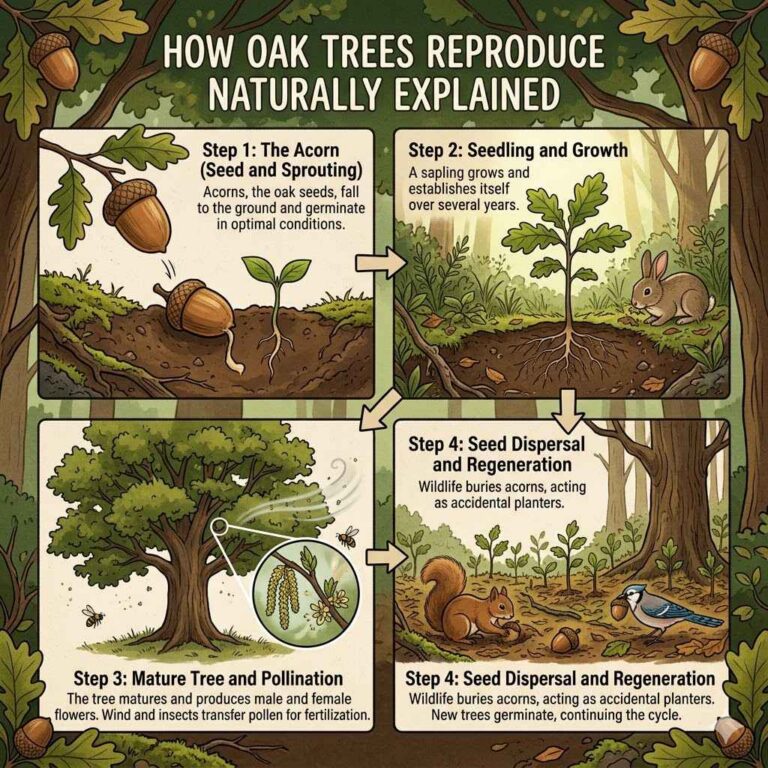
The transformation from a simple flower to a mature acorn is a remarkable process that showcases the reproductive power of oak trees. It begins with pollination, where pollen from the male catkins is carried by the wind to the receptive stigmas of the female flowers. This transfer is the critical first step.
Once a pollen grain lands on a compatible stigma, it germinates and grows a pollen tube down to the ovule within the ovary of the female flower. This is where fertilization takes place, the fusion of male and female genetic material.
After fertilization, the ovule begins to develop into a seed, and the ovary, along with surrounding floral parts, matures into the fruit. In the case of oaks, this fruit is the acorn. The tiny female flower gradually swells and elongates.
The scales that formed the protective base of the female flower start to develop into the characteristic cap of the acorn. This cap, which can vary in size and texture depending on the oak species, is actually made up of fused bracts from the original flower and surrounding tissues.
The development of an acorn from fertilization to maturity takes several months, typically spanning the entire growing season. The young acorn is small and green, growing larger and eventually turning brown as it ripens in late summer or fall. Throughout this period, the acorn is nourished by the parent tree.
The success of this entire process is dependent on favorable weather conditions for pollination and the tree’s overall health and resource availability. The final acorn is the oak’s seed, containing all the genetic information needed to start a new oak tree.
The Pollination Process Details
Pollination in oak trees is a fascinating example of adaptation for survival. It relies entirely on wind to transfer pollen from male flowers to female flowers. This process, known as anemophily, is highly efficient in terms of pollen dispersal but less so in terms of individual pollen grain success.
Oaks compensate for this by producing an enormous quantity of pollen. A single large oak tree can release millions, even billions, of pollen grains into the atmosphere during the spring blooming period. This sheer volume increases the probability that some pollen grains will reach a receptive female flower.
The timing of pollination is crucial. Oak trees usually synchronize their flowering with the emergence of new leaves in spring. This allows the wind to carry the pollen freely through the open branches.
As the leaves begin to bud and unfurl, they can create a barrier, hindering efficient pollen dispersal and reception. Therefore, the period of receptivity for female flowers often overlaps with the shedding of pollen from the male catkins. This synchronization is a key evolutionary strategy to maximize reproductive success.
The process involves several stages. First, the anthers within the male catkins mature and split open, releasing the dry, powdery pollen. This pollen is then carried by air currents.
If a pollen grain lands on the sticky or feathery stigma of a receptive female flower on the same or another oak tree, pollination has occurred. The pollen grain then germinates, sending a pollen tube down through the style to reach the ovule within the ovary. This fusion of gametes is the critical step that initiates acorn development.
- Wind as the Vector: Oak pollen is carried by the wind. This means that oak flowers do not need to be brightly colored or scented to attract pollinators like bees or butterflies.
- Massive Pollen Production: To ensure successful pollination, oak trees produce an incredibly large amount of pollen. This is a common strategy for plants that rely on wind for pollination.
- Synchronized Blooming: Oak trees typically bloom in the spring, often before their leaves fully emerge. This timing helps the wind carry pollen effectively without obstruction.
Fertilization and Acorn Development Stages
Once pollen lands on a receptive female flower, the journey to becoming an acorn truly begins. The pollen grain absorbs moisture from the stigma and germinates. It then grows a slender tube, known as a pollen tube, down through the style, which connects the stigma to the ovary.
This pollen tube carries the male genetic material. The ovary contains one or more ovules, which hold the female genetic material.
Fertilization occurs when the pollen tube reaches an ovule and releases its male gametes. One male gamete fuses with the egg cell inside the ovule, a process called syngamy. This fusion creates a diploid zygote, the first cell of the new embryo that will grow into a new oak tree.
Another male gamete typically fuses with other cells within the ovule to form endosperm, a nutritive tissue that will feed the developing embryo.
Following fertilization, the ovule begins to develop into the seed, and the surrounding floral structures mature into the fruit. The base of the female flower, composed of fused bracts, begins to enlarge and form the acorn cap. The ovary itself swells to enclose the developing seed, becoming the acorn shell.
The entire acorn, including the cap, is technically a fruit. This development process is gradual, taking several months, and requires significant resources from the parent tree to nourish the growing acorn.
The speed and success of acorn development vary greatly depending on the oak species and environmental conditions. Some oaks, like White Oaks, take only one growing season for acorns to mature (biennial or annual fruiting). Others, like Red Oaks, take two growing seasons (biennial fruiting).
This difference in maturity time is a key characteristic used in classifying oak species. The acorn continues to grow and mature throughout the summer, hardening and browning as autumn approaches.
- Pollen Tube Growth: After pollination, a pollen tube grows from the pollen grain down to the ovule within the female flower’s ovary.
- Fusion of Gametes: Fertilization happens when the male genetic material from the pollen fuses with the female genetic material in the ovule, creating an embryo.
- Fruit Formation: The fertilized ovule develops into a seed, and the surrounding floral parts mature into the acorn’s shell and cap. This process can take one or two years depending on the oak species.
Surprising Facts About Oak Flowers and Trees
The reproductive cycle of oak trees, including their flowers, is filled with fascinating details that often surprise people. Beyond the basic fact that they do indeed flower, there are many unique aspects to their biology. For instance, the sheer scale of pollen production is astonishing.
A single mature oak tree can release enough pollen during a spring bloom to dust several acres of land. This massive output is a testament to their strategy for survival in a competitive environment, ensuring their genetic legacy continues.
Another surprising fact relates to the lifespan of oak trees and their flowering. Oaks can live for hundreds, sometimes even thousands, of years. They begin producing acorns when they are relatively young, perhaps 20 to 50 years old, but their seed production often increases significantly with age and size.
This longevity means that an ancient oak tree has witnessed centuries of seasons, silently carrying out its flowering and fruiting cycle year after year, a silent observer of history.
The acorns themselves are not just seeds; they are also a vital food source for a wide array of wildlife. Squirrels, jays, deer, and many other forest creatures rely on acorns for sustenance, especially during the fall and winter months. This makes the oak tree a keystone species in many ecosystems, supporting a complex web of life through its production of flowers and, subsequently, acorns.
The health of these ecosystems is often directly linked to the health and abundance of oak trees.
The Scale of Pollen Dispersal
One of the most striking aspects of oak flowering is the sheer volume of pollen released. Oaks are wind-pollinated, meaning they don’t need to attract insects with vibrant colors or sweet nectar. Instead, their reproductive strategy is to produce an immense quantity of lightweight, dry pollen grains.
These grains are designed to be easily carried by the wind, sometimes traveling for miles.
A single mature oak tree, depending on its size and species, can produce hundreds of thousands, or even millions, of catkins. Each catkin, in turn, is packed with stamens that churn out pollen. When the conditions are right—typically a dry, breezy spring day—the pollen is shed in massive clouds.
This phenomenon is often referred to as “oak pollen season” and can be responsible for significant increases in airborne pollen, affecting people with allergies. The yellow dust that can settle on cars and surfaces is this very pollen.
This prolific pollen production is a necessity due to the inefficiency of wind pollination. While the pollen is widely dispersed, only a tiny fraction will land on a receptive female flower. By releasing such a vast amount, the oak tree significantly increases its chances of successful fertilization and subsequent acorn development.
This strategy has been effective for oaks for millions of years, ensuring their continued presence in forests worldwide.
- Enormous Pollen Output: Oaks release billions of pollen grains during their blooming season. This mass release is crucial for successful wind pollination.
- Impact on Air Quality: The sheer volume of pollen can affect air quality and trigger allergies for sensitive individuals.
- Evolutionary Advantage: This strategy ensures that at least some pollen reaches its target, contributing to the long-term survival and propagation of oak species.
Oak Lifespan and Reproductive Cycles
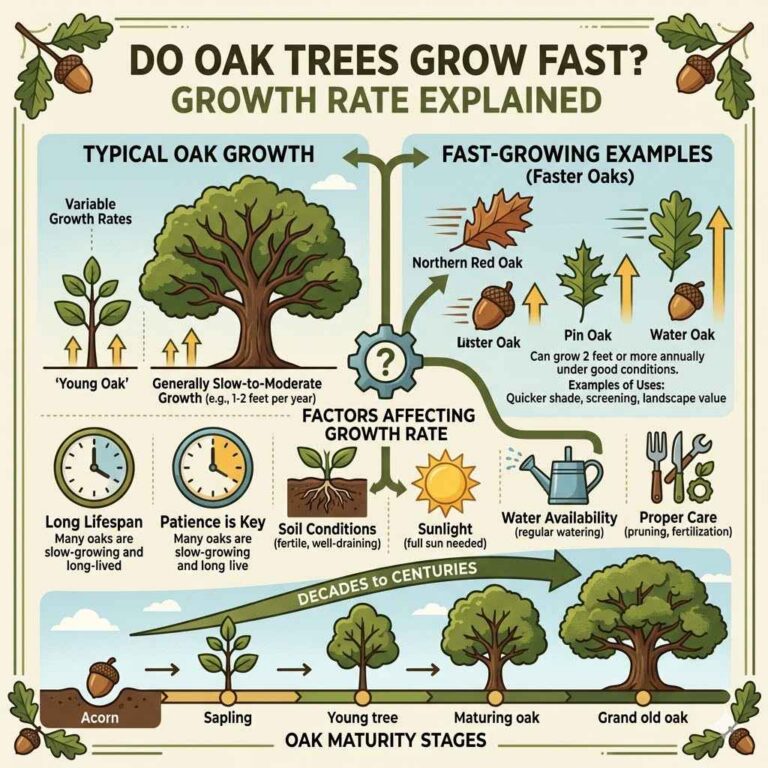
Oak trees are renowned for their longevity. Many species can live for several centuries, with some individuals documented to be over a thousand years old. This long lifespan means they are living monuments, witnesses to changing landscapes and human history.
Their reproductive cycles, therefore, span vast periods.
Oaks typically begin producing acorns when they reach maturity, which can vary by species but is generally between 20 to 50 years old. However, their most productive years for acorn yield often come much later, as they grow larger and stronger. A mature oak tree can produce thousands of acorns each year.
This continuous production over many decades and centuries is vital for sustaining forest ecosystems and wildlife populations.
The fruiting patterns of oaks can also be interesting. Some species produce acorns annually, while others have biennial fruiting cycles, meaning they have a heavy acorn year followed by a lighter year. These cycles are influenced by environmental factors such as rainfall, temperature, and nutrient availability.
The sheer number of acorns produced in a good year can be staggering, often referred to as an “acorn year” or “mast year.” This abundance is crucial for the survival of many species that depend on acorns as a primary food source.
A case study in the effectiveness of oak reproduction could be observed in the vast oak forests of North America. For example, during a mast year, the sheer quantity of acorns dropped by Red Oak species can significantly impact the populations of squirrels, deer, and birds, providing them with essential reserves for winter. This sustained reproductive output over centuries from individual trees ensures the regeneration and resilience of these forest ecosystems.
Acorns as a Keystone Food Source
Acorns, the fruits produced by oak trees from their flowers, are far more than just seeds; they are a cornerstone of many forest ecosystems. Their nutritional value, high in carbohydrates and fats, makes them a critical food source for a diverse range of wildlife. This dependency elevates the oak tree from a mere plant to a keystone species—an organism that has a disproportionately large effect on its environment relative to its abundance.
Small mammals, such as squirrels, chipmunks, and mice, rely heavily on acorns for survival. They gather and store acorns as a crucial food reserve for the winter months. Larger mammals, including deer and wild boars, also consume acorns when available.
Birds, especially jays and woodpeckers, feed on acorns and play a vital role in their dispersal by burying them for later consumption, with many forgotten acorns sprouting into new trees.
The abundance of acorns in a given year, known as a mast year, can have significant ripple effects throughout the food web. A good mast year often leads to higher survival rates for young animals and increased reproductive success in populations that feed on acorns. Conversely, a poor acorn year can lead to food shortages, impacting wildlife populations and potentially influencing predator-prey dynamics.
Therefore, the annual flowering and fruiting of oak trees are essential for the health and stability of entire ecosystems.
- Nutritional Value: Acorns are rich in carbohydrates and fats, providing essential energy for wildlife.
- Dietary Staple: They form a primary food source for many animals, including squirrels, deer, birds, and insects.
- Ecological Impact: The abundance of acorns influences wildlife populations and the overall health of forest ecosystems, making oaks keystone species.
When Do Oak Trees Flower
The timing of when oak trees flower is a crucial aspect of their reproductive strategy and is closely tied to the changing seasons. For most oak species in temperate climates, flowering occurs in the spring. This timing is not random; it is an adaptation that maximizes the chances of successful pollination and acorn development.
Oak trees typically begin to flower shortly before or as their new leaves emerge. This is usually in April, May, or early June, depending on the specific species and the geographical location. The appearance of the male catkins is often one of the first visible signs of spring on an oak tree, even before the leaves have fully unfurled.
This early spring blooming is advantageous for wind pollination. The bare branches and nascent leaves offer less resistance to the wind, allowing pollen to travel more freely. It also means that the female flowers are receptive and ready to receive pollen as soon as it is available.
The entire flowering period for an individual oak tree is relatively short, lasting only a few weeks.
Spring Blooming Phenomenon
Spring is the season when oak trees reveal their floral display, though it is a subtle one. As temperatures rise and days lengthen, oak trees prepare for reproduction. This preparation involves the development and eventual release of pollen from their male catkins and the maturation of their small, unassuming female flowers.
The exact timing within spring can vary significantly based on the species of oak and its geographic location. For instance, Southern Hemisphere oaks would flower during their spring months (September-November), while Northern Hemisphere oaks flower from April to June. Within a region, warmer springs can accelerate flowering, while cooler springs can delay it.
This synchronized blooming ensures that pollen is released when receptive female flowers are present on the same or nearby trees. It’s a carefully orchestrated event, driven by environmental cues. The appearance of the catkins, which often hang down like delicate yellow or greenish tassels, is a hallmark of spring for many oak species.
They are a clear indicator that the tree is entering its reproductive phase, even if their beauty is not as flamboyant as that of other flowering plants.
- Seasonal Timing: Oak flowers emerge in the spring, typically before or as the leaves begin to unfurl.
- Species and Location Variation: The exact timing can shift based on the oak species and the climate of its region.
- Significance of Early Bloom: This timing is essential for efficient wind pollination, as it allows pollen to travel freely through the branches.
Factors Influencing Flowering Time
Several environmental factors play a role in determining precisely when oak trees will flower. These factors ensure that the delicate reproductive process occurs under optimal conditions for success. One of the most significant influences is temperature.
Warmer spring temperatures generally signal to the tree that it is time to bloom.
Daylight length, or photoperiod, is another critical cue. Trees are sensitive to the amount of light they receive, and the increasing length of days in spring triggers hormonal changes that initiate flowering. Additionally, the amount of rainfall and soil moisture can affect the tree’s overall health and its ability to invest energy into reproduction.
A particularly dry or stressful period can sometimes delay or reduce flowering.
Furthermore, chilling requirements can also play a role for some species. Many deciduous trees, including oaks, need a certain period of cold temperatures during the winter to properly break dormancy and prepare for spring growth and flowering. If winter chilling is insufficient, flowering can be irregular or reduced.
These interconnected factors work together to ensure that oak flowers appear when the likelihood of successful pollination and subsequent acorn development is highest.
A real-life example of this can be seen when comparing two consecutive years. If one spring is exceptionally warm and wet, oak trees might flower earlier and more abundantly than in a subsequent year that is cooler and drier. This variability, driven by weather patterns, highlights how sensitive the flowering cycle is to the immediate environmental conditions.
Scientists and foresters often monitor these conditions to predict acorn yields, which are important for wildlife management.
Duration of Oak Flowering
The flowering period for oak trees is relatively brief, typically lasting only a few weeks each spring. This short duration is characteristic of wind-pollinated plants. During this time, the male catkins release their pollen, and the female flowers are receptive to it.
Once this critical window passes, the flowers fade, and the focus shifts to the development of acorns.
The exact length of the flowering period can vary by species and environmental conditions. In a warm spring with consistent breezes, the pollen release might be swift and the entire process completed quickly. Conversely, a cooler, more variable spring might extend the period slightly.
However, it is rare for oak flowering to extend beyond a month.
This short window is efficient for the tree. It means the energy expended on producing flowers is concentrated over a brief period. It also ensures that the reproductive events are synchronized, increasing the chances of cross-pollination.
After the pollen has been shed and the female flowers have hopefully been pollinated, the energy reserves of the tree are then channeled into the demanding process of acorn growth, which continues throughout the summer.
- Short Window: Oak flowering typically lasts only a few weeks in the spring.
- Species and Weather Dependent: The precise duration can differ based on the specific oak species and the prevailing weather conditions.
- Focused Energy Investment: This brief period allows the tree to efficiently invest energy into reproduction before focusing on acorn development.
Do Oak Trees Have Flowers Surprising Facts Recap
We’ve explored the fascinating world of oak trees and their flowers. The main takeaway is that indeed, oak trees do have flowers, but they are very different from what we might expect. Their subtle, wind-pollinated blooms are essential for producing acorns.
Understanding this helps appreciate the intricate life cycles of these majestic trees.
Frequently Asked Questions
Question: Do oak trees have colorful flowers?
Answer: No, oak trees do not have colorful flowers. Their flowers are very small and inconspicuous, designed for wind pollination rather than attracting insects.
Question: Where are oak flowers located on the tree?
Answer: Male oak flowers are found in long, drooping clusters called catkins. Female flowers are much smaller and typically appear in clusters near the tips of new leaf shoots.
Question: How long does it take for an acorn to develop after flowering?
Answer: Acorn development takes several months. Some oak species mature their acorns in one growing season, while others take two seasons.
Question: Are oak flowers the same as acorns?
Answer: No, oak flowers are the reproductive structures that lead to acorns. The female flower, after being pollinated, develops into the acorn.
Question: When can I see oak flowers?
Answer: Oak trees typically flower in the spring, usually in April, May, or early June, often before or as their new leaves begin to emerge.
Summary
Oak trees have flowers that are small and wind-pollinated, appearing in spring. Male flowers are in catkins, and female flowers develop into acorns. These trees are long-lived and their acorns are vital for wildlife, making them keystone species.
Now you know Do Oak Trees Have Flowers Surprising Facts.