Handled Cutting Board Guide: Best Wood, Size & Care Tips
A handled cutting board is a wood, bamboo, or composite board with a built-in grip at one end for carrying it between counter, sink, and table — but the handle matters less than what’s underneath it. Pick end-grain maple or walnut and, per a 1994 University of Wisconsin-Madison study, the surface kills off up to 99.9% of bacteria within minutes; pick bamboo or a thin softwood board and you’ll be replacing it within a year. This guide covers which wood actually holds up, what size and thickness fit your kitchen, and how to oil it so it doesn’t crack.
Insert your Affiliate Disclosure reusable block here.
Quick Answer
A good handled cutting board is end-grain maple, walnut, or cherry, at least 1 to 1.5 inches thick, with a routed juice groove and non-slip feet. Skip bamboo and teak if you want to protect your knife edge. Oil it every 2 to 4 weeks with food-grade mineral oil — never polyurethane, varnish, or cooking oil.
What Makes a Cutting Board “Handled”?
Best Handled Cutting Board Pick
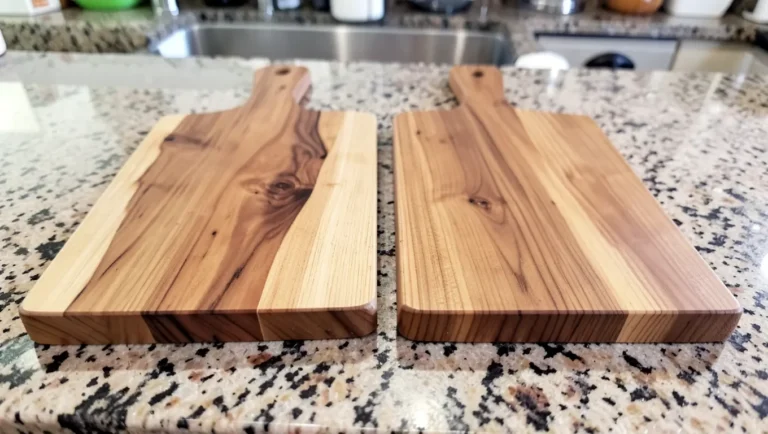
Acacia Wood Cutting Board with Handle, 17″ x 10″ – $19.98
Acacia is a dense hardwood in the same knife-friendly family as walnut — a mid-size board that fits the 12-18in range covered above, with a carved handle and juice groove built in.
- Best for: everyday chopping plus serving charcuterie straight off the board
- Why we picked it: acacia is harder than maple and priced well below most end-grain boards
- Main drawback: edge-grain, not end-grain — knife marks will show sooner than on an end-grain board
Compare more handled cutting board options
 Option 1 Large Acacia Board, 17″ x 13″ – $29.98
|
 Option 2 Bamboo Board with Stand – $24.99
|
 Option 3 3-Piece Acacia Set – $32.99
|
As an Amazon Associate we earn from qualifying purchases.
A handled cutting board is a standard wood, bamboo, or composite cutting board with an integrated grip or cutout handle built into one end. It’s the same cutting surface you’d get from any wood cutting board — the handle just lets you lift and move it without sliding a hand under the food side.
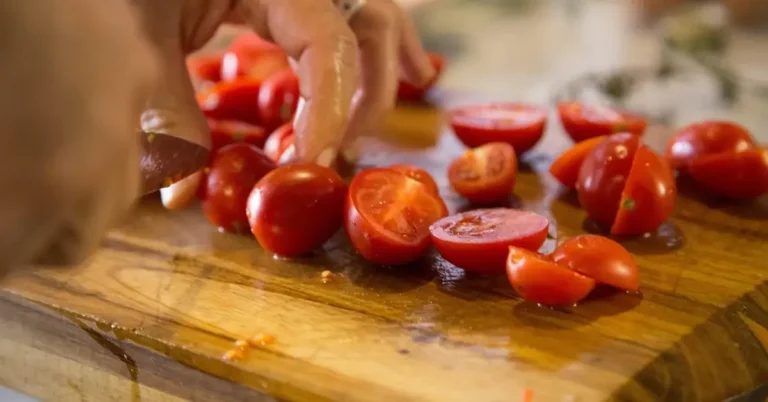
The handle earns its keep in two situations: carrying a full load of chopped vegetables straight to the pan, and setting the board down as a serving piece for a charcuterie spread or cheese board. A cutout handle also gives you a place to hang the board on a hook between uses, which keeps it drying evenly instead of sitting flat on a damp counter. For more on wood cutting boards and techniques in general, see our full wood cutting guide hub.
Is Wood or Plastic More Sanitary for a Cutting Board?
Wood wins this one, and not by a small margin. A 1994 University of Wisconsin-Madison study (published in the Journal of Food Protection) deliberately contaminated new and used wood and plastic boards with bacteria, then tracked survival. Liquid inoculum on clean wood was absorbed within 3 to 10 minutes and the bacteria became unrecoverable; on plastic, bacteria persisted and sometimes multiplied, especially once the surface was knife-scarred. A 2021 review of wood-in-contact-with-food research on PubMed backs the same conclusion: wood’s natural antimicrobial action outperforms non-porous plastic once both surfaces have real-world knife scarring.
📊 Wood reduced recoverable bacteria by 98% to over 99.9% within minutes, while bacteria on plastic persisted or multiplied — Source: Ak, Cliver & Kaspar, Journal of Food Protection, 1994 (University of Wisconsin-Madison)
That doesn’t make plastic unsafe — it’s still dishwasher-safe and fine for raw meat if you replace it once it’s heavily scarred. It does mean a hardwood handled board isn’t the compromise choice it’s sometimes made out to be; for most home kitchens, it’s the more hygienic option, not just the nicer-looking one. For the fuller comparison beyond bacteria alone — cost, knife wear, and dishwasher habits — see our dedicated wood vs. plastic cutting board guide.
Choosing the Right Wood, Size, and Thickness
Three decisions determine whether a handled cutting board lasts five years or one: the wood species, the grain orientation, and the thickness. Get those right and the handle is just a convenience feature.
Size, Thickness, and Weight
Handled boards run smaller than full countertop boards since the handle eats into usable surface. A small board (roughly 8×11 in) suits quick prep and serving; medium (12×18 in) covers most daily cooking; large (14×20 in and up) is for holiday-size meal prep. Thickness should be 1 to 1.5 inches — thinner warps and cracks faster, thicker adds weight without much added stability. Expect 3 to 8 pounds depending on size and wood density; a board under 3 lbs will slide around on a wet counter no matter how good its feet are.
End-Grain vs. Edge-Grain Construction
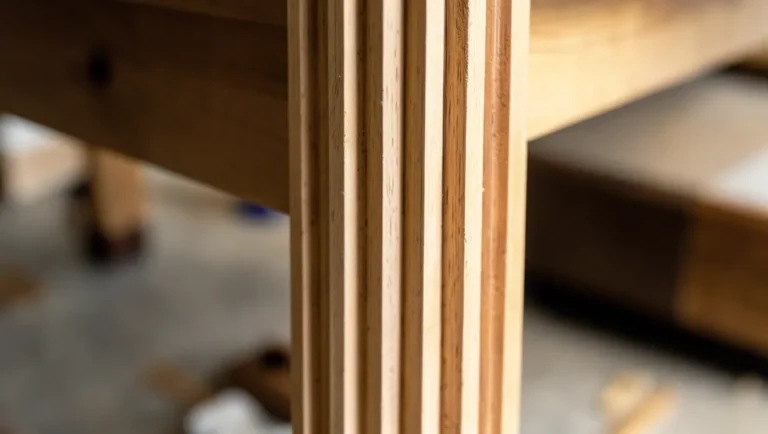
End-grain boards are built from short wood blocks stood on end, so the knife cuts between the fibers instead of across them — gentler on blades and the cuts tend to self-heal as the fibers swell shut. Edge-grain boards use full-length strips laid on their sides; they’re more affordable and just as durable structurally, but knife marks show sooner and don’t close up the same way. Face-grain boards (flat boards cut straight from a plank) look the best but wear fastest — fine for a display or serving board, not for a board someone chops on daily.
Material and Sustainability
Wooden cutting boards in maple, walnut, or cherry are the standard pick: dense, gentle on knives, and naturally resistant to bacteria once oiled. Bamboo is technically a grass, not a wood, and its silica content — while giving it good hardness — dulls knife edges noticeably faster than maple or walnut; it’s a fine budget or serving-only choice, not the pick for daily chopping. Teak carries the same silica trade-off. Both wooden and bamboo boards need regular oiling and should never be soaked, since standing water is what actually causes warping and cracking, not the cutting itself.
Plastic and composite boards are lightweight, dishwasher-safe, and non-porous, but the section above on bacteria shows why that’s not automatically the safer choice. If sustainability matters to your decision, look for FSC-certified hardwood or boards made from recycled or reclaimed wood rather than defaulting to bamboo on eco-friendliness alone — bamboo regrows fast, but the knife-dulling trade-off is real.
Maintenance and Care
A wood cutting board, handled or not, needs the same three habits: wipe it down after every use, never let it soak, and oil it before it looks dry. Skip the film-forming finishes entirely on the food-contact surface — polyurethane and varnish aren’t food-safe once a knife starts cutting into them, and they trap moisture underneath instead of letting the board breathe.
Proper Cleaning and Sanitization
Wash with hot, soapy water after each use, rinse, and pat dry — don’t let it air-dry lying flat, since that’s what traps moisture against the counter. To disinfect after cutting raw meat, wipe with a solution of one part white vinegar to four parts water and let it air dry standing on its edge or hanging by the handle.
How Often Should You Oil a Wood Cutting Board?
Oil a daily-use board every 2 to 4 weeks, and more often for end-grain maple, which is thirstier than edge-grain boards and dries out faster. A board used a few times a week can usually go 2 to 3 months between oilings. Use only food-grade mineral oil or a beeswax-and-mineral-oil board butter — both meet FDA requirements for food-contact surfaces under 21 CFR 172.878 and 178.3620(a). Skip cooking oils like olive or vegetable oil; they go rancid on wood and leave the board smelling off within weeks.
“We’ve seen end-grain maple boards in daily use go years without cracking as long as they get oiled on a real schedule — the boards that split are almost always the ones that got soaked in a sink and left to dry flat.”
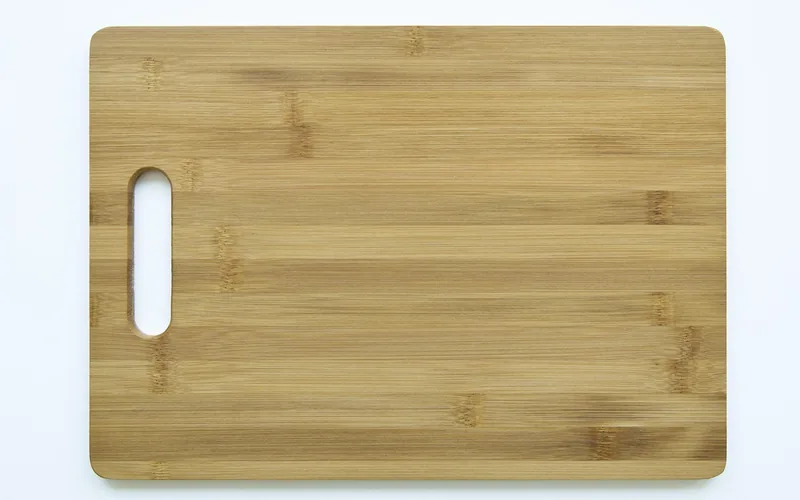
- Oil regularly with food-grade mineral oil or board butter — never polyurethane, varnish, or cooking oil.
- Keep it out of direct sunlight and away from the dishwasher or stovetop heat to prevent warping.
- Use a separate board for raw meat to avoid cross-contamination, especially if you’re using a wood board.
- Store it standing on edge or hanging by the handle so both faces dry evenly.
Creative Uses for a Handled Cutting Board
Once the board earns its keep at the cutting stage, the handle makes it just as useful for serving. A few ways to get more use out of one:
- Build a charcuterie spread directly on the board — cured meats, cheese, fruit, and nuts — and carry it to the table by the handle.
- Use it as a serving tray for sushi, appetizers, or a dessert spread when you want something sturdier than a platter.
- Layer a salad presentation directly on the board for a rustic, restaurant-style plate at the table.
The handle also works as a compositional line in food photography — angle the board to create shadow and depth, and pair it with a rustic wood or marble background for contrast.

Frequently Asked Questions
Is a Handled Cutting Board Better Than a Regular Cutting Board?
Not structurally — the cutting surface is the same wood or bamboo either way. The handle just makes it easier to carry a loaded board or hang it to dry, so it’s an upgrade in convenience, not in cutting performance or hygiene.
Are Handled Cutting Boards Dishwasher Safe?
No, not if it’s wood or bamboo. Dishwasher heat and prolonged water exposure warp and crack wood boards regardless of the finish. Hand-wash with hot, soapy water and dry it standing up. Plastic handled boards are usually dishwasher-safe — check the specific product’s care label.
How Thick Should a Handled Cutting Board Be?
Between 1 and 1.5 inches for daily use. Thinner boards are lighter to carry by the handle but warp and crack sooner; anything much past 1.5 inches adds weight without a real durability benefit for home use.
Is Bamboo or Hardwood Better for a Cutting Board?
Hardwood — maple, walnut, or cherry — is better for daily chopping because it’s gentler on knife edges. Bamboo is harder and more affordable, but its natural silica content dulls blades faster over time, which is why it’s better suited to serving and light prep than to a primary chopping board.
How Do I Clean a Handled Cutting Board?
Rinse off food debris, scrub with mild dish soap and hot water, paying extra attention to the handle grip, then rinse and dry it standing up. Sanitize periodically with a one-part vinegar to four-part water solution instead of bleach, which can be too harsh for wood.
Can I Use a Handled Cutting Board for Serving Food?
Yes — it’s one of the main reasons to choose a handled design. A charcuterie spread, cheese board, or platter of sliced fruit all work well served directly on the board, and the handle makes it easy to carry to the table.
Conclusion
A handled cutting board earns its price when the wood underneath the handle is right: end-grain or edge-grain maple, walnut, or cherry, 1 to 1.5 inches thick, oiled every few weeks with food-grade mineral oil. The handle is a real convenience for carrying and serving, but it’s not a substitute for choosing the right material in the first place.
Sponsored / affiliate links. As an Amazon Associate I earn from qualifying purchases. I may earn additional commission from eligible campaigns.