How to Fix Squeaky Hardwood Floors From Below or Above (6 Fixes)
Squeaky hardwood floors come from boards rubbing on nails, on each other, or from a subfloor that has pulled away from its joist, and the right fix depends on where you can reach. From below, shims and short screws fix it for good; from above, a breakaway-screw kit or angled finishing nails do. Talcum powder only buys time. This guide covers six fixes, the screw-length rule most guides skip, and the stairs fix.
See where this fits in our complete guide to wood flooring types & care.
Match the Fix to Your Access: Below, Above, or No Access
Best Squeak Kit From Above
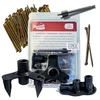 |
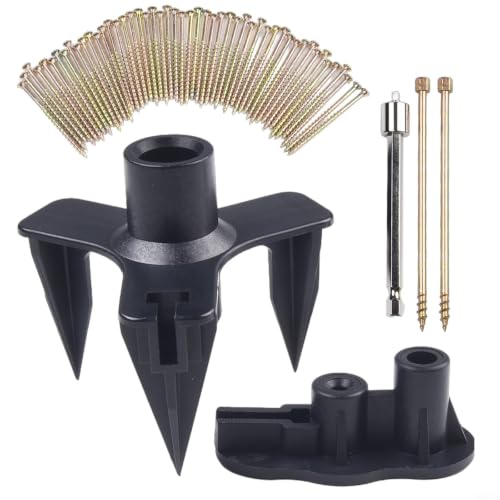
SQUEEEK NO MORE Squeaky Floor Repair Kit, $22.99 The kit behind the no-access fix below: joist-finder bits, 50 counter-snap screws and a hardwood adapter, so you can pull a loose board down to the joist from above without a visible screw head.
|
As an Amazon Associate we earn from qualifying purchases.
Pick the row that matches what you can physically reach. Working from below is cleaner because the finished surface never gets touched, which is why it is the first choice whenever there is a basement or crawlspace under the squeak.
| What you can reach | Best fix | How long it lasts | What you need |
|---|---|---|---|
| Basement or crawlspace under the squeak | Shim and adhesive, or screws up through the subfloor | Permanent | Wood shims, construction adhesive, drill, short screws |
| Underside, but the squeak is mid-span between joists | Blocking or a plywood bridge glued and screwed to the joists | Permanent | 2×4 blocking or 3/4 in. plywood, adhesive, 2-1/2 in. screws |
| Top of the floor only | Breakaway-screw kit with a hardwood adapter, or angled finishing nails | Permanent | Squeak kit or finishing nails, nail set, wood filler |
| Top of the floor, boards just rubbing at the seam | Talcum powder, powdered graphite or soapstone | Temporary: reapply as it wears out | Powder and a soft brush |
Why Hardwood Floors Squeak (and How to Find the Spot)
Most squeaks are not a defect. The Hardwood Information Center puts them down mainly to the normal seasonal cycle of wood swelling and shrinking as indoor humidity changes, which lets boards move against nails, against the subfloor and against each other. The other common source is a subfloor that has separated slightly from a joist, so it flexes every time you step on it.
To locate the spot, walk the floor slowly, mark each squeak with painter’s tape, and note whether the noise follows one board (a loose board or nail) or a wider patch (the subfloor lifting off a joist). If a helper can walk above while you listen from below, you can see exactly which joist bay is moving.
Quick Fix From Above: Talcum Powder, Graphite and What to Skip
When two boards rub at their seam and nothing is actually loose, a dry lubricant is the lowest-effort option. The Hardwood Information Center lists powdered soapstone, talcum powder and powdered graphite. Sweep the powder into the seam, then walk over the spot so it works down between the boards, and wipe off the excess.
- Talcum or baby powder: white, so it shows least on light floors and in pale seams.
- Powdered graphite: dark, so it can show on a light floor, but it lubricates the same way.
- Liquid wax: only on a wax-finished floor, not on urethane or varnish.
- WD-40 or silicone spray: skip these on a finished floor. A liquid soaks into the seam and can leave slick residue; see our note on whether you can use WD-40 on wood.
Treat powder as a diagnostic as much as a fix. If the squeak is gone for good, it was friction. If it comes back after the powder wears out, something is loose and needs fasteners. Our squeaky wood floor lubricant guide compares the lubricant types in more detail.
How To Fix Squeaky Hardwood Floors From Below
Working from a basement, crawlspace or unfinished lower level is the most reliable approach because you can target the exact subfloor-to-joist connection without touching the finished surface above. Have someone walk the floor while you watch the subfloor and joist from below, and mark the moving spot.
Method 1: Glued Shims Between Joist and Subfloor
If you can see a gap between the subfloor and the top of a joist, coat a thin wood shim with construction adhesive and tap it in until it is snug. Do not force it; a shim driven too hard can lift the subfloor and move the squeak to a new spot. Family Handyman suggests working in pairs of shims from opposite sides and scoring the excess with a utility knife so it snaps off cleanly.
Method 2: Construction Adhesive Along the Joist
Where the subfloor has pulled away without a visible gap, run a bead of construction adhesive along the top of the joist and press the subfloor down while it sets. The adhesive contains a strong solvent, so wear an organic-vapor respirator in a closed crawlspace.
Method 3: Short Screws Up Through the Subfloor
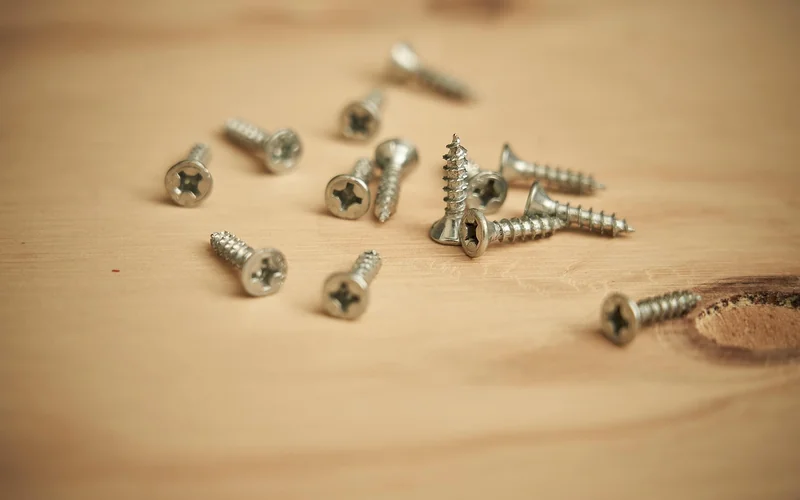
Drive screws up through the subfloor into the underside of the hardwood while a helper stands on the board above to hold it down. The screw has to be shorter than the total floor thickness or it will poke through the finished surface. Family Handyman’s rule is a No. 8 wood screw about 1/4 in. shorter than the combined thickness of subfloor and flooring, with pilot holes drilled to about 1/2 in. less than that total (mark the depth with tape on the bit) and screws about every 6 in. through the squeaky area.
| Hardwood thickness | Subfloor thickness | Total floor | Screw length (total minus 1/4 in.) |
|---|---|---|---|
| 3/4 in. | 3/4 in. | 1-1/2 in. | 1-1/4 in. |
| 3/4 in. | 5/8 in. | 1-3/8 in. | 1-1/8 in. |
| 3/4 in. | 1-1/8 in. (tongue-and-groove plywood) | 1-7/8 in. | 1-5/8 in. |
Measure your own floor first; the table is the arithmetic of that rule, not a spec for your house. One correction to a common tip: a 1-1/2 in. screw is not safe on a 3/4 in. floor over a 3/4 in. subfloor, because it is exactly as long as the whole floor and will break through the top. For spacing at the subfloor itself, see our subfloor screw spacing guide.
Method 4: Blocking or a Plywood Bridge
If the noise is mid-span, between joists, glue and screw a 2×4 block (or a strip of 3/4 in. plywood) against the joist and the underside of the subfloor. Family Handyman describes 2×4 blocks screwed to the joists with 2-1/2 in. screws, plus adhesive, at slightly upward angles.
Fixing Squeaks From Above When You Can’t Reach the Underside
With finished space below, or a slab-on-grade floor, the only option is to fasten through the top. Two methods work, and both leave something to hide.
Breakaway-Screw Kit
A kit like the SQUEEEK NO MORE system uses a joist-finder bit to locate the joist, then drives a counter-snap screw that breaks off below the surface. Its listing describes 50 counter-snap breakaway screws, two joist-finding screws, a driver bit, a tripod fixture for carpet and a hardwood adapter. On bare hardwood the hardwood adapter is the part that matters, since it guides the screw so the head snaps below the surface. If a squeak persists afterward, add more screws along the same joist line.
Angled Finishing Nails or Trim Screws
For a single loose board, the Hardwood Information Center describes drilling a pilot hole about the same size as the nail or slightly smaller, at least 1/2 in. from the board edge, angled toward the center of the board. Press down on the board while you drive the nail, then countersink with a nail set and fill the hole with matching wood filler. Our guide to nail sizes for hardwood flooring covers the gauge to use.
Glazier Points
Another from-above trick from the same source: tap small triangular glazier points (the metal pieces used to hold window glass) between the boards with a putty knife to stop them rubbing.
How To Fix Squeaky Wooden Stairs
Squeaky wooden stairs come from the same mechanism as floor squeaks, wood rubbing on wood at a loose joint, usually where the tread meets the riser. The fix depends on whether you can see the underside of the staircase.
From above (finished staircase):
- Talcum powder in the joint: work it between the tread and riser for a quick, temporary fix.
- Angled screws: drill a pilot hole, drive a screw at an angle through the tread into the riser, countersink it, then fill with wood filler and sand smooth.
- Construction adhesive: apply a bead at the tread-to-riser joint, press firmly and weight it overnight.
From below (open or accessible staircase): drive screws through the riser into the back of the tread. This is the most permanent repair because it pulls the joint tight with no hardware showing on top. A breakaway-screw kit also works on stairs; the listing for the kit above says it can be used on them. If you are repairing MDF treads instead, see our guide to stopping MDF stairs creaking.
Keeping Floors Quiet After the Repair
Because seasonal moisture swings drive most squeaks, steady humidity is the long-term fix. Run a humidifier in dry winter months and a dehumidifier or air conditioning in humid summers, aiming for roughly 30% to 50% relative humidity. Our guide on how to care for hardwood floors covers cleaning and humidity routines, and if boards have opened up as well, read what causes separation between hardwood boards.
Data point: the Hardwood Information Center attributes most hardwood-floor squeaks to the normal seasonal cycle of contraction and expansion, not poor workmanship. Source: Hardwood Information Center, Fixing Cracks and Squeaks in Hardwood Floors.
When To Call a Professional
Call a flooring or framing professional if squeaks keep returning after screws and shims, if the floor visibly sags or bounces, or if you find water-stained or soft subfloor from below. Those point to damaged framing or moisture, not simple friction. If you are already planning a floor sanding and refinish, fix the squeaks first so you do not have to patch the new finish.
Frequently Asked Questions On How To Fix Squeaky Hardwood Floors
How Do I Stop My Hardwood Floors From Squeaking?
Match the fix to your access. From below, tap in glued shims or drive short screws up through the subfloor. From above, use a breakaway-screw kit or angled finishing nails. Powdered graphite or talcum powder in the seams only quiets boards that are rubbing and needs reapplying.
Why Do My Hardwood Floors Squeak When I Walk On Them?
The boards are moving. Seasonal humidity changes make the wood swell and shrink, so boards rub on nails, each other or the subfloor, and a subfloor that has pulled away from a joist will flex underfoot. Finding the exact spot tells you which fix applies.
How Do You Fix A Squeaky Floor Without Taking It Apart?
Dust powdered graphite or talcum powder into the seams for a temporary fix, or fasten the loose board. From below, use glued shims or screws. From above, use a breakaway-screw kit with a hardwood adapter, or angled finishing nails set below the surface and filled with wood filler.
What Is The Best Lubricant For Squeaky Wood Floors?
For a finished floor, a dry powder: talcum powder, powdered graphite or powdered soapstone. Liquid wax is only for wax-finished floors. Avoid WD-40 and silicone sprays, which soak into seams and can leave residue. If powder does not last, the board is loose and needs fasteners.
How Long Should Screws Be When Fixing A Squeak From Below?
About 1/4 in. shorter than the total thickness of subfloor plus hardwood, so the tip never reaches the finished surface. On a 3/4 in. floor over a 3/4 in. subfloor, that means 1-1/4 in. screws, not 1-1/2 in. Pre-drill, and space screws about 6 in. apart through the squeaky area.
Can You Fix A Squeaky Hardwood Floor From Above Without Visible Holes?
Mostly yes. A breakaway-screw kit snaps the screw head off below the surface. Angled finishing nails leave a small hole that you countersink and fill with matching wood filler, which is barely visible on most finishes.
Conclusion
Find the squeak, decide whether you can reach it from below, and fasten the loose layer to the joist with the right screw length. Use powder only to test whether friction is the cause. For a sibling topic, see why floors creak in our guide on the mechanical causes of creaking wood floors.
Sponsored / affiliate links. As an Amazon Associate I earn from qualifying purchases. I may earn additional commission from eligible campaigns.