Is Rubio Monocoat Food Safe? Yes, Once Fully Cured (EN71-3 Verified)
Yes – Rubio Monocoat Oil Plus 2C is food-contact certified once it has fully cured. It carries EN71-3 toy-safety certification and passed independent testing (Eurofins) against the EU’s food contact materials regulation (EC 1935/2004). That certification applies specifically to Oil Plus 2C, Universal Maintenance Oil, and SheenPlus – not automatically to every product in the Rubio Monocoat lineup.
If you’re finishing a cutting board, butcher block, charcuterie board, or dining table and want a straight answer sourced from Rubio Monocoat’s own published documentation (not a guess), here’s what’s actually verified, what it does and doesn’t cover, and one caveat most articles on this topic skip entirely.
Is Rubio Monocoat Food Safe? The Short Answer
Rubio Monocoat’s Oil Plus 2C hardwax-oil finish has two relevant, real certifications you can check yourself on the brand’s own site:
- EN 71-3 (Toy Safety): confirms the cured finish doesn’t release harmful levels of elements like barium, cadmium, or mercury – the standard used for children’s toys and, by extension, surfaces kids put their hands and mouths on.
- EU Food Contact Compliance (EC 1935/2004): tested by the independent lab Eurofins, confirming the cured finish is compliant for surfaces that touch food.
Both apply once the finish has fully cured – Rubio Monocoat’s own instructions list roughly 24 hours before the surface is dry to the touch, and about 5 days for a full cure. A tabletop wiped down the same afternoon it was finished hasn’t reached that point yet.
The Food-Safe Rubio Monocoat Finish
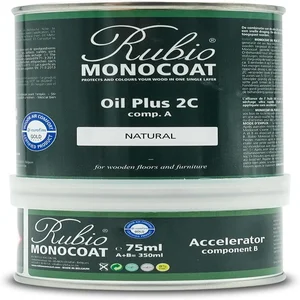 |
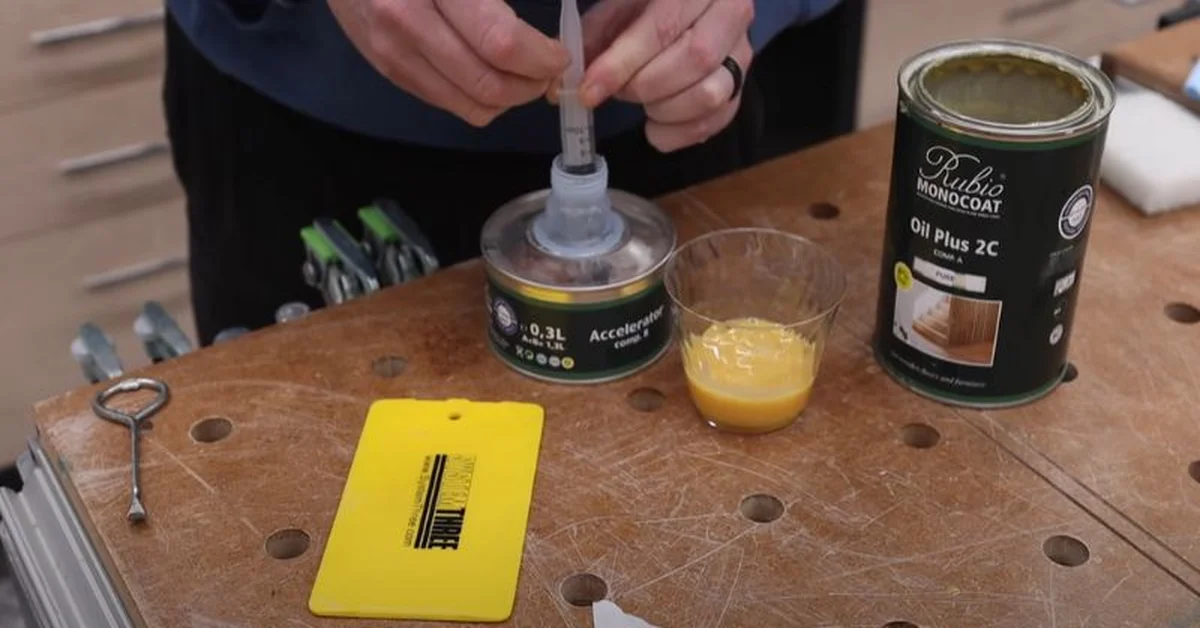
Rubio Monocoat Oil Plus 2C, Natural, 350 mL – $77.99 This is the specific two-part formula (Part A oil + Part B accelerator) that actually carries the EN71-3 and EU food contact certification discussed in this article.
|
What EN71-3 and EU Food Contact Certification Actually Cover
It’s easy to see “certified” on a can and assume that covers everything. It doesn’t – and knowing the specifics is what actually protects you if you’re finishing something food goes on.
EN 71-3 is a European toy-safety standard that tests for migration of specific heavy metals and elements out of a material. Rubio Monocoat lists Oil Plus 2C, Universal Maintenance Oil, SheenPlus, Hybrid Wood Protector, and DuroGrit as compliant with it. That’s a wider list than the food-contact certification below, which is narrower on purpose.
EU Food Contact Compliance is the more directly relevant one for a cutting board or dining table. Rubio Monocoat’s own service documentation states this applies to Oil Plus 2C on its own, and to Universal Maintenance Oil or SheenPlus when applied as a maintenance coat over Oil Plus 2C. It does not automatically extend to every finish or stain Rubio Monocoat sells – if you used a different Rubio Monocoat product (a pretreatment stain, for example), check that specific product’s own documentation rather than assuming the certification carries over.
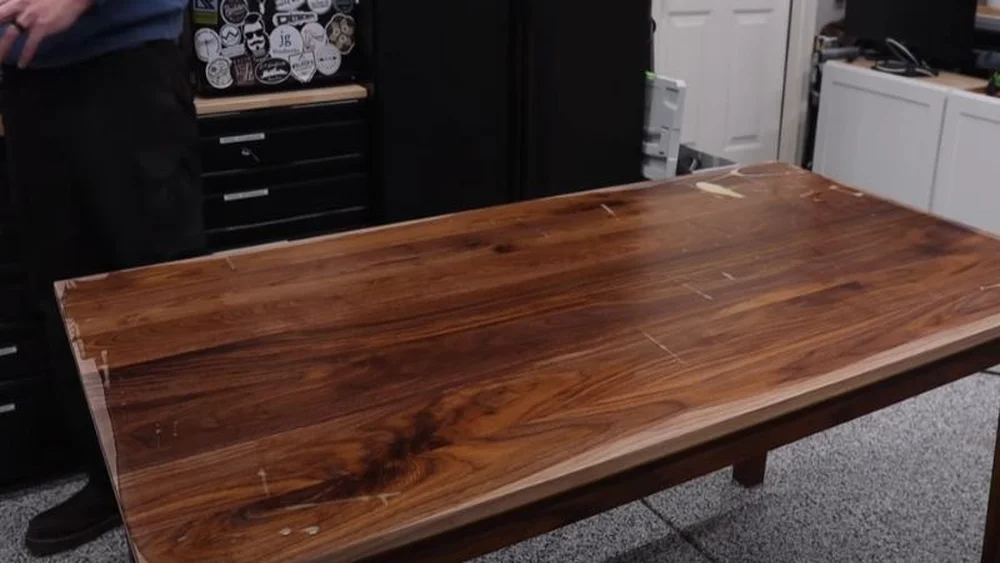
One more thing worth knowing: Rubio Monocoat’s official guidance is straightforward on this – the company doesn’t recommend ingesting the product itself (no finish is meant to be eaten), but once cured, it’s rated safe to use on a food contact surface. That’s a meaningfully different, and more accurate, claim than saying the finish is “100% safe” in an unqualified sense.
The Cutting Board Caveat Most Articles Skip
Here’s the part that gets left out of nearly every “is X food safe” roundup, including earlier versions of this one: Rubio Monocoat’s own technical guidance says Oil Plus 2C is food-contact compliant, but the company doesn’t specifically recommend it as a finish for cutting boards. The reason is mechanical, not chemical – a knife blade cuts deeper into the wood than the oil penetrates. Once you’ve scored through the finished layer, you’re left with raw, unsealed wood exposed inside the cut marks, which can hold moisture and support bacteria or mold growth over time.
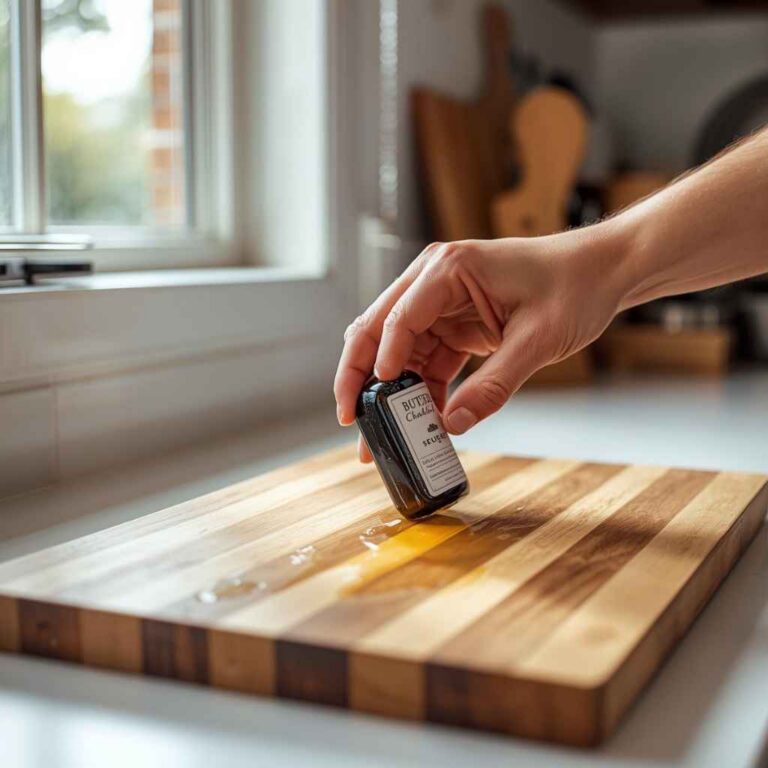
That doesn’t make Oil Plus 2C the wrong choice for every kitchen surface – it’s a good fit for a dining table, a charcuterie/serving board that isn’t cut on directly, or a butcher-block countertop used mainly for prep rather than repeated deep knife strokes in the same spot. For an actual working cutting board, re-oil it more often than you’d otherwise think necessary, and expect to eventually resand and refinish the cut area rather than relying on the original coat indefinitely.
How Rubio Monocoat Compares to Other Finishes on Food Safety
Not every wood finish that looks similar performs the same way here. Spar varnish, for example, is not food safe once cured – it’s built for marine and exterior durability, not food contact, and doesn’t carry the same certification. If you’re deciding between finishes for a kitchen or dining piece, that distinction matters more than how glossy or durable a product looks on the shelf. A hardwax-oil like Rubio Monocoat’s Oil Plus 2C and a film-forming exterior varnish are built for different jobs, and only one of them has independent food-contact testing behind it.
How to Confirm Your Own Piece Is Actually Food-Safe
- Confirm which Rubio Monocoat product was actually used – Oil Plus 2C (or Universal Maintenance Oil/SheenPlus applied over it), not a different item in the lineup.
- Let it cure fully before food contact – about 24 hours to dry, roughly 5 days for a full cure, per Rubio Monocoat’s own application instructions.
- Clean with a damp cloth or mild soap rather than harsh solvents, which can strip or dull the finish over time.
- If the surface will see direct knife work (a true cutting board), plan on more frequent maintenance coats and eventual resanding, for the mechanical reason covered above – not because the chemistry is unsafe.
Frequently Asked Questions
Can I use Rubio Monocoat on a charcuterie board?
Yes. Once it’s had the full 5-day cure, the certification covers this kind of surface well – a charcuterie or serving board that isn’t repeatedly cut into directly is a good fit for Oil Plus 2C.
Can I use Rubio Monocoat on a butcher block?
Yes, for a butcher-block surface used mainly for food prep rather than constant direct knife cuts in one spot. The certification holds once cured, though heavy chopping surfaces will need more frequent re-oiling.
Is Rubio Monocoat good for kitchen countertops?
Yes. Oil Plus 2C is a common choice for wood kitchen countertops – it’s food-contact certified once cured, penetrates into the wood rather than sitting on top as a film, and is maintained with simple re-oiling rather than stripping and recoating.
Is Rubio Monocoat recommended for cutting boards specifically?
It’s food-contact compliant, but Rubio Monocoat doesn’t specifically recommend it for cutting boards, because a knife cuts deeper than the finish penetrates, exposing raw wood in the cut marks. It works better for boards that aren’t cut on directly, with more frequent maintenance if it is used as a working cutting surface.
Bottom Line
Rubio Monocoat Oil Plus 2C is genuinely food-contact certified – EN71-3 toy-safety compliant and independently tested against the EU’s EC 1935/2004 food contact regulation by Eurofins – once it has fully cured. That’s a real, verifiable claim, not marketing language. The nuance worth remembering is that the certification is specific to Oil Plus 2C (and Universal Maintenance Oil/SheenPlus applied over it), requires the full cure time, and doesn’t make it the ideal choice for a heavily-used cutting board for mechanical, not chemical, reasons.
Sponsored / affiliate links. As an Amazon Associate I earn from qualifying purchases. I may earn additional commission from eligible campaigns.