Laminate Countertop Glue Essentials: Strong Bonding Secrets
Laminate countertop glue is a strong adhesive designed for bonding laminate sheets to surfaces. It ensures a durable, long-lasting finish that resists moisture and wear.
Choosing the right glue for laminate countertops is essential for a successful installation. This adhesive provides a reliable bond that withstands daily use and enhances the countertop’s durability. Many options are available, including contact cement and PVA glue, each offering unique benefits.
Contact cement creates an instant bond, while PVA glue allows for repositioning before it sets. Understanding the differences helps in selecting the best product for your project. Proper application techniques, such as even spreading and adequate drying time, also play a critical role in achieving a professional finish. Investing in quality glue ensures your countertops remain attractive and functional for years to come.
Introduction To Laminate Countertop Glue
Choosing the right adhesive for laminate countertops is essential. The strength of the bond affects the durability of your surface. A good adhesive prevents peeling and damage over time.
Different types of glue serve various purposes. Contact cement is often used for quick application. PVA glue offers a strong bond but needs more time to set. Epoxy is ideal for high-stress areas.
Consider the environment where the countertop will be used. Some adhesives work better in moist areas, while others are suited for dry conditions. Always check the manufacturer’s recommendations for the best results.
“Types Of Adhesives For Laminate”
Contact Cement is a popular choice for laminate countertops. It creates a strong bond and is easy to use. Apply it on both surfaces, then press them together.
Epoxy Glue is very strong and waterproof. It works well for heavy-duty applications. Mixing the two components is necessary before use. It takes longer to set compared to contact cement.
Polyurethane Adhesives are flexible and can fill gaps. They resist moisture and temperature changes. This makes them a great option for kitchens and bathrooms.
Surface Preparation For Optimal Adhesion
To ensure optimal adhesion, start by thoroughly cleaning the surface. Use a mild cleaner to remove dust and grease. Rinse the area with water and dry it completely.
Next, sanding techniques play a crucial role. Use fine-grit sandpaper for a smooth finish. Sand in a circular motion to create a better surface for the glue.
After sanding, focus on drying and dehumidifying the area. Use fans to circulate air. A dehumidifier can help reduce moisture in the space.
Application Techniques For Strong Bonding
Applying adhesive evenly is crucial for a strong bond. Use a notched trowel to spread the glue. Ensure the layer is consistent across the entire surface. This helps prevent weak spots.
Aligning laminate sheets is an important step. Place the sheets carefully on the surface. Make sure the edges match up perfectly. Double-check alignment before pressing them down.
Rolling out air bubbles can save your work. Use a roller to push out trapped air. Start from the center and move outward. This creates a smooth and even finish.
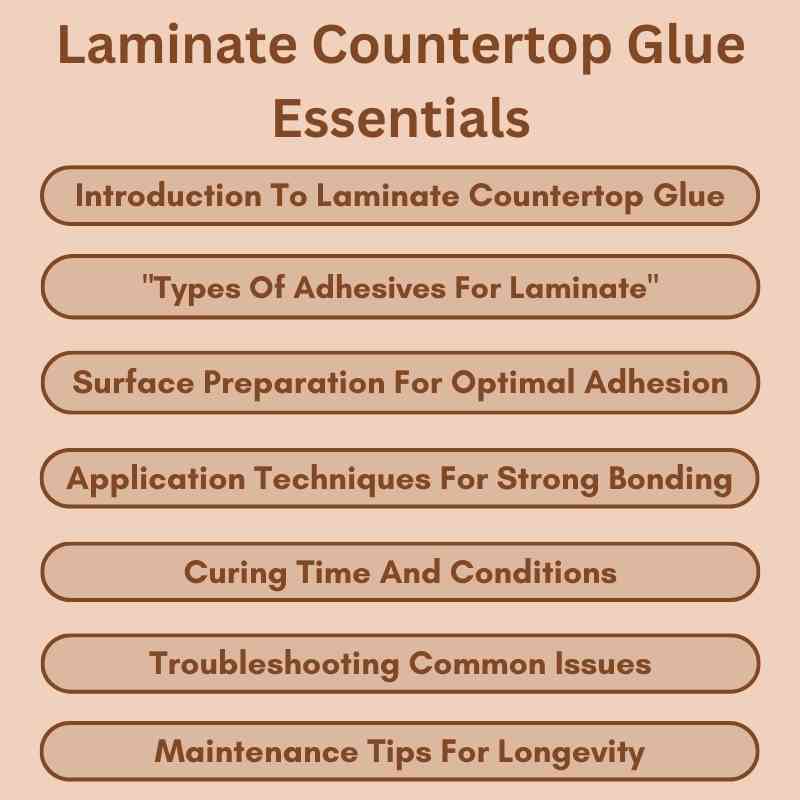
Curing Time And Conditions
Curing time for laminate countertop glue is important for a strong bond. The ideal temperature for curing is between 70°F and 80°F. At this range, the glue sets well and cures properly.
Humidity levels also affect curing. Aim for humidity between 30% and 50%. Too much moisture can weaken the bond.
| Condition | Ideal Range |
|---|---|
| Temperature | 70°F – 80°F |
| Humidity | 30% – 50% |
Wait at least 24 hours before using the countertop. This ensures a strong and durable surface.
Troubleshooting Common Issues
Dealing with bubbles and wrinkles can be tricky. Start by gently lifting the laminate. Use a small roller to smooth it out. If bubbles remain, poke them with a pin. Then, press the area firmly. This helps the glue spread evenly.
For edges that won’t stick, check for dirt or moisture. Clean the area with a damp cloth. Apply more adhesive if needed. Press the edge down firmly. Use clamps to hold it in place while it dries. This ensures a strong bond.
Maintenance Tips For Longevity
To keep laminated surfaces clean, use a soft cloth. Avoid harsh chemicals. Warm water and mild soap work well. Wipe up spills quickly to prevent stains.
For minor repairs, fill small scratches with a suitable filler. Smooth the surface with fine sandpaper. Use a matching paint to touch up any areas. Always test repairs in an inconspicuous area first.
| Repair Type | Materials Needed |
|---|---|
| Filling Scratches | Filler, Sandpaper |
| Touch-Up Painting | Matching Paint, Brush |
Advanced Bonding Techniques
Using the right router bits can greatly improve your edge finishing. Choose bits that create smooth and precise edges. This ensures a clean look for your laminate countertop.
Achieving seamless joints is crucial for a professional finish. Use high-quality glue to bond edges tightly. Proper alignment during installation helps create an invisible seam. This enhances the overall appearance of your countertop.
| Technique | Description |
|---|---|
| Router Bits | Use bits designed for laminate to ensure smooth edges. |
| Seam Alignment | Align pieces carefully to prevent gaps and ensure a seamless look. |
| Quality Glue | Select durable glue for strong and lasting bonds. |
Frequently Asked Questions
What Type Of Glue Is Best For Laminate Countertops?
The best glue for laminate countertops is contact cement. This adhesive creates a strong bond and is ideal for laminate materials. Ensure the surfaces are clean and dry before application. Follow the manufacturer’s instructions for optimal results. Always use in a well-ventilated area due to strong fumes.
How Do You Apply Laminate Countertop Glue?
To apply laminate countertop glue, first clean both surfaces thoroughly. Use a brush or roller to spread the glue evenly. Allow it to set according to the product instructions. Carefully position the laminate, press firmly, and ensure no air bubbles form.
Finally, clamp the pieces together for a strong bond.
Can You Remove Laminate Countertop Glue?
Yes, laminate countertop glue can be removed, but it requires effort. Use a heat gun to soften the adhesive. Carefully scrape it off with a putty knife. For stubborn glue, a solvent may help. Always test the solvent on a small area first to avoid damage.
Is Laminate Countertop Glue Waterproof?
Most laminate countertop glues are water-resistant but not fully waterproof. While they can withstand spills and moisture, prolonged exposure may weaken the bond. It’s crucial to wipe up spills promptly. For areas exposed to water, consider using a waterproof sealant for added protection.
Conclusion
Choosing the right laminate countertop glue is crucial for a durable and seamless finish. Quality adhesives ensure your surfaces withstand daily wear and tear. Remember to follow the manufacturer’s instructions for the best results. With the right glue, your countertops can look beautiful and last for years.
Make an informed decision today!