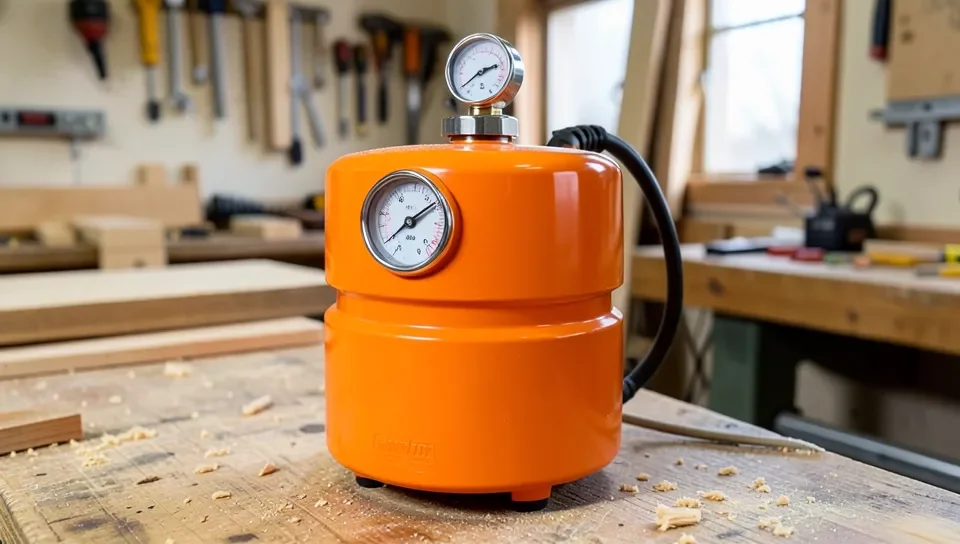
DeWalt Air Compressor Pressure Switch: Cut-In/Cut-Out PSI and Replacement
Most DeWalt pancake and hand-carry air compressors use a pressure switch set to cut in at 95 PSI and cut out at 125 PSI — the motor starts when tank pressure drops to 95 and stops once it hits 125. Larger stationary DeWalt compressors typically run a higher 135/175 PSI range instead. If your compressor cycles erratically, won’t shut off, or won’t start at all, the switch (not the motor or tank) is the most common point of failure.
What the Switch Actually Does
Universal 4-Port Replacement
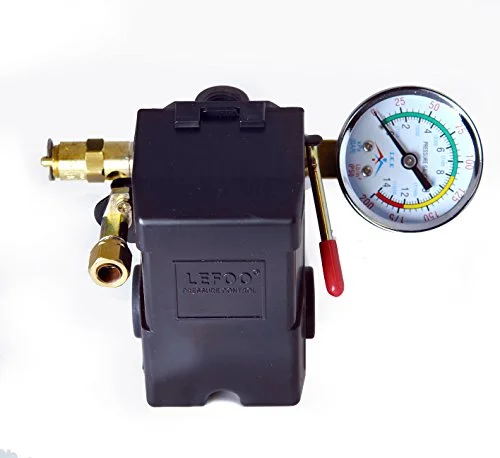 |
FIRE ROSE 95-125 PSI Pressure Switch w/ Gauge – $24.00 Matches the 95/125 PSI cut-in/cut-out range most DeWalt pancake and hand-carry compressors ship with.
|
The pressure switch is a mechanical diaphragm that senses tank pressure through a small port and physically opens or closes the electrical contacts that power the motor. Most switches also integrate an unloader valve, which bleeds off the pressure trapped in the line between the switch and the check valve the moment the motor stops — without this, the motor would have to restart against full tank pressure every cycle, which strains the motor and is a common reason a compressor struggles to restart after sitting at cut-out pressure. A separate pop-off (safety relief) valve is built into most replacement switches as a backup in case the switch itself fails to cut out.
Adjusting Cut-In and Cut-Out Pressure
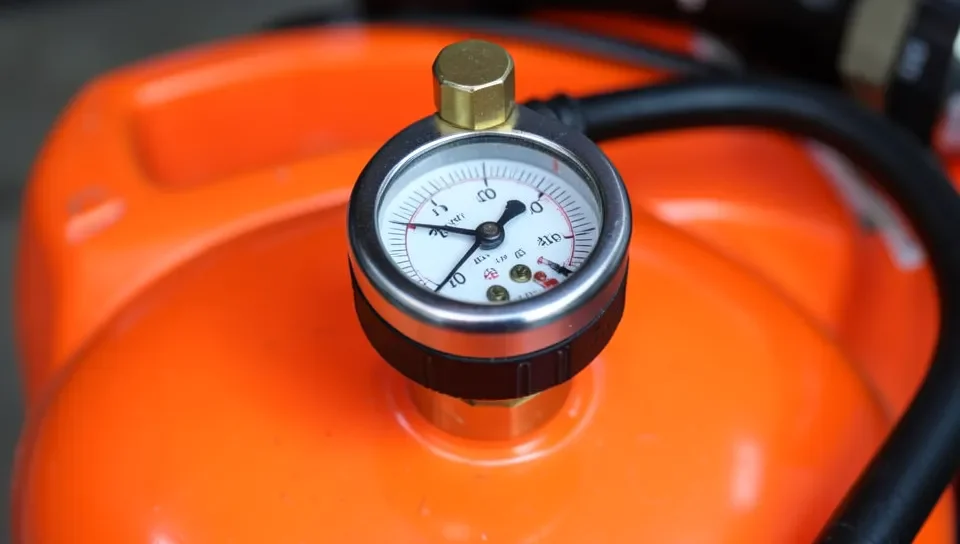
With the compressor unplugged and tank fully depressurized, removing the switch’s cover reveals two adjustment nuts: a larger one that shifts both cut-in and cut-out together (the overall range), and a smaller one that adjusts only the differential (the gap between cut-in and cut-out). Turning the range nut clockwise raises both pressures; turning the differential nut clockwise widens the gap between them, which means the compressor runs less often but for longer stretches. Most woodworking tools don’t need adjustment beyond the factory 95/125 default — a wider differential is mainly useful if the motor is cycling on and off more frequently than you’d like during steady tool use like sanding or nailing.
Diagnosing a Bad Switch vs. a Bad Check Valve
A compressor that runs continuously and never cuts out usually means a failed switch. A compressor that cuts out normally but then the tank pressure bleeds down on its own while sitting idle usually points to the check valve instead, not the switch — air leaking backward through a worn check valve will eventually trigger the switch to cut back in even with no tools running, which looks like a switch problem but isn’t. Listen for where air is escaping: a hiss right at the switch’s unloader port for a few seconds after shutoff is normal; a continuous hiss anywhere else, or pressure dropping over hours with the compressor off, points to the check valve or a tank fitting instead. Soapy water brushed along tank welds, fittings, and the switch’s own threaded connection is the simplest way to actually find a slow leak — bubbles form right at the leak point within a few seconds, faster than trying to isolate a slow overnight pressure drop by ear alone.
Installing a Replacement Switch Safely
Before touching the switch, unplug the compressor and fully drain the tank through the drain valve at the bottom — never work on a pressurized tank. Note or photograph the wire positions on the old switch before disconnecting them, since most replacement switches use the same three-wire layout (line in, load out to the motor, and ground) but terminal positions can differ between brands. Thread sealant tape on the switch’s NPT threads prevents air leaks at the connection, and the switch should be snugged firmly but not overtightened, since the housing is typically a die-cast material that can crack under excessive torque. If you’re not comfortable with basic 120V wiring, this is a reasonable job to hand to an electrician rather than guess at.
Oil-Free vs. Oil-Lubricated: Why It Affects Switch Wear
DeWalt’s smaller pancake and hand-carry compressors are almost all oil-free, which means the pump runs hotter and cycles the pressure switch more frequently under sustained use than an oil-lubricated compressor of the same tank size. This isn’t a defect — it’s a tradeoff for the lighter, maintenance-free design — but it does mean the switch on an oil-free compressor sees more on/off cycles over its life and is a more common wear item on these models specifically than on DeWalt’s larger oil-lubricated stationary units, where the switch typically lasts the life of the compressor.
How Switch Cycling Relates to the Tool You’re Running
A brad nailer or finish nailer draws air in short bursts, so the switch cycles infrequently even during a long nailing session — the tank has time to recover between shots. An orbital sander or air ratchet, by contrast, draws air continuously while running, which can outpace what a small pancake compressor’s motor and switch can keep up with, causing the switch to cycle rapidly or the pressure to sag mid-task. This is a CFM (cubic feet per minute) supply-versus-demand issue, not a switch malfunction — check your tool’s actual CFM requirement against the compressor’s rated CFM at the pressure you’re running before assuming a rapid-cycling switch needs replacing; it may just mean the tool is asking for more continuous air than that compressor size is built to supply.
Quick Troubleshooting Checklist Before Replacing the Switch
- Confirm the tank actually reaches cut-out pressure on the gauge — if it stalls well below 125 PSI, suspect the motor or a leak, not the switch
- Listen for the unloader valve hissing for 1-2 seconds right after cutout — silence here can mean a clogged unloader port, not necessarily a dead switch
- Check the electrical contacts inside the switch cover for visible pitting or carbon buildup, a common failure mode after years of cycling
- Rule out a tripped thermal overload or a blown fuse/breaker before condemning the switch, since a compressor that won’t start at all sometimes has nothing to do with the pressure switch
Frequently Asked Questions
What PSI should a DeWalt pancake compressor cut in and out at?
Most DeWalt pancake and hand-carry compressors cut in at 95 PSI and cut out at 125 PSI by default. Larger stationary models typically run a 135/175 PSI range instead.
Why won’t my compressor shut off at the cut-out pressure?
This usually means the pressure switch’s diaphragm or contacts have failed and it’s not sensing tank pressure correctly. Replace the switch rather than the motor, since a stuck-on switch will burn out a good motor if left running.
My compressor loses pressure overnight even though it cuts out fine — is that the switch?
Probably not. A switch that cuts out correctly but pressure bleeds down over hours while idle usually points to a worn check valve or a leaking tank fitting, not the switch itself.
Conclusion
DeWalt’s pressure switch is a simple, replaceable mechanical part, not something to troubleshoot by guessing — know your compressor’s factory cut-in/cut-out range (95/125 PSI on most pancake models), check the switch itself for stuck contacts before assuming the motor is bad, and rule out the check valve separately if pressure bleeds down with the compressor idle. A universal 4-port replacement switch with a gauge and pop-off valve covers most 1/4 NPT DeWalt tanks for well under the cost of a service call.
Sponsored / affiliate links. As an Amazon Associate I earn from qualifying purchases. I may earn additional commission from eligible campaigns.
 2 Packs for DeWalt DWE64233 & N329079 Orbital Sander Replacement Pad, 5 inch 8 Hole Hook and Loop Sanding Disc Backing Pads, Compatible with DWE6421-B2, DWE6421-B3, DWE6423/6423K, DWE6421/6421K
 Miter Saw Crown Molding Stops For Dewalt Models DW703 DW706 DW708 DW712 DW715 DW716 DW718 DW7084 Metal Replacement Accessory

![How To Mount A Woodworking Vice [Quick Guide]](https://cdn.woodworkingadvisor.com/2022/11/How-To-Mount-A-Woodworking-Vice-768x384.webp)