What Size Hole Saw for a 6-Inch Recessed Light?
A 6-inch recessed light needs a 6-3/8″ hole saw — not a 6-inch one, since the housing needs clearance to seat flush. Cutting that hole in a wood plank ceiling instead of drywall risks splintering the show face if you use the wrong technique. This guide covers exact sizes for 4, 5, and 6-inch fixtures, the step-by-step cut, and how wood ceilings differ from drywall.
Hole Saw Sizes for 4, 5, and 6-Inch Recessed Lights
Best Recessed Light Hole Saw Pick
Klein Tools 53710 Adjustable Circle Hole Cutter – $44.98
Adjusts from 2″ to 7″, so it covers the 4-3/8″, 5-3/8″, and 6-3/8″ sizes in the table above with one tool, and its integrated vacuum port supports the “use a vacuum” tip further down this guide.
- Best for: Installers mixing 4, 5, and 6-inch fixtures on the same job
- Why we picked it: One adjustable cutter replaces three fixed-size hole saws, and the dust port keeps ceiling debris down mid-cut
- Main drawback: Built for drywall and ceiling tile, not wood — see the wood-rated kit below for plank or panel ceilings
Compare more hole saw options
 Option 1 VIKITON 6.25″ Hole Saw – $18.99
|
 Option 2 KATA 25-Piece Hole Saw Kit – $20.99
|
 Option 3 8-in-1 Bi-Metal Hole Saw Kit – $26.99
|
As an Amazon Associate we earn from qualifying purchases.
The number on the box (4-inch, 5-inch, 6-inch) is the fixture’s trim size, not the hole saw size — the actual cutout always runs about 3/8″ larger so the housing can seat and the trim ring can cover the gap. Here’s the size for each common fixture:
| Fixture (Trim) Size | Hole Saw Size Needed | Typical Use |
|---|---|---|
| 4-inch | 4-3/8″ | Accent lighting, small rooms, hallways |
| 5-inch | 5-3/8″ | Medium rooms, focused task lighting |
| 6-inch | 6-3/8″ | Living rooms, kitchens, general ceiling lighting |
Always confirm against the cutout diameter printed on your specific fixture’s housing before you cut — sizing varies slightly by brand and trim style. Milwaukee, for instance, sells its recessed-light hole saws in 6-3/8″, 6-5/8″, and even 6-7/8″ versions for different housings, and states its carbide-grit line is built to cut “drywall, plaster, acoustical tile, wood and stucco with mesh” — the same saw works across most ceiling materials you’ll run into. (Source: Milwaukee Tool, 6-3/8″ Recessed Light Hole Saw spec page)
Factors That Affect Your Hole Saw Size
Beyond the fixture’s trim size, two things change what hole saw you actually need: the fixture type and the ceiling material.
Type of Light Fixture
Wafer and disc-style LED lights typically need a smaller, shallower cutout than a traditional can housing, even at the same nominal trim size. Check the manufacturer’s cutout diameter printed on the fixture or its spec sheet before cutting — don’t assume the trim size alone.
Type of Ceiling Material
Drywall, plaster, and wood behave differently under a hole saw. Plaster is harder and dulls carbide-grit teeth faster, so a slightly larger, freer-cutting hole saw helps. Wood is where things change the most — it’s tougher, grain-directional, and prone to splintering on the exit side in a way drywall never is. That’s covered in detail below.
Cutting Recessed Light Holes in a Wood Plank or Panel Ceiling
Tongue-and-groove, shiplap, and cedar or pine plank ceilings are common on porches, basements, and cabin-style rooms — and this is the situation most recessed-light guides skip entirely. Solid wood cuts slower than drywall, and the exit side of the cut is prone to splintering the visible face if you push the saw through too fast.
| Ceiling Material | Best Cutting Method | Splinter/Tear-Out Risk |
|---|---|---|
| Drywall | Carbide-grit hole saw, steady speed | Low — drywall crumbles cleanly |
| Plaster | Carbide-grit hole saw, slower speed | Medium — can crack around the edge |
| Wood plank / panel ceiling | Paper template + jigsaw, or bi-metal hole saw backed with a scrap block | High — grain-directional, splinters on exit without backing |
Template + Jigsaw Method (Best for Plank Ceilings)
On tongue-and-groove or plank ceilings, many finish carpenters skip the hole saw entirely and use a paper template instead: trace the fixture’s outline onto a sheet of paper, transfer that outline onto the plank, then cut it out with a jigsaw. This avoids straining a drill or circle-cutter bit against solid pine or cedar, and it gives you more control over tear-out than forcing a hole saw through end grain.
To find the center accurately, draw a square box around the fixture’s footprint on your template, then draw diagonal lines corner to corner — where they cross is your exact center point for the pilot mark.
When the Ceiling Material Is Too Thick to Tilt the Can In
Remodel-style can lights are designed to tilt in at an angle and pivot upright once inside the ceiling cavity — that pivot needs clearance that thin drywall doesn’t take up, but thick plank material can. If your wood ceiling material runs 1-1/2″ or thicker, the housing may not have room to tilt through a hole cut exactly to spec. Either cut the hole slightly wider than the standard size to allow the tilt, or undercut the back (top) side of the board around the opening with a reciprocating saw to create relief space, leaving the visible face opening at the correct diameter.
“On tongue-and-groove ceiling boards, clamp a scrap block behind the cut line before the hole saw’s pilot bit breaks through. Without backing, the last quarter-inch of the cut is where the saw’s teeth blow out the show face instead of shearing it cleanly — and that happens right at the moment you can’t see it coming from below.”
📊 Milwaukee’s carbide-grit recessed-light hole saw line is rated for drywall, plaster, acoustical tile, wood, and stucco with mesh — the same tool class works across most ceiling substrates. — Source: Milwaukee Tool product spec, 2026
Tools You’ll Need
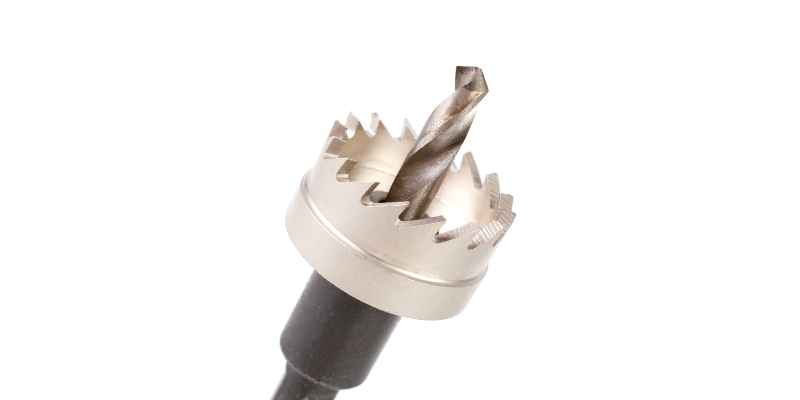
- Hole saw — sized per the table above, carbide-grit for drywall/plaster or bi-metal for wood
- Drill — corded or a high-torque cordless model; large hole saws stall low-power drills
- Pilot bit — almost always included with the hole saw’s arbor; guides the cut and stops wandering
- Safety gear — safety glasses, a dust mask, and hearing protection
- Vacuum or dust bowl attachment — keeps sawdust and drywall dust from raining down mid-cut
How to Cut the Hole, Step by Step
- Mark the center: Find the fixture’s center point on the ceiling and mark it clearly.
- Drill a pilot hole: Use a small bit to drill through at the center mark — this gives the hole saw’s pilot bit something to lock onto.
- Attach the correctly sized hole saw: Match the saw to the size from the table above and secure it to the drill.
- Start the cut: Position the pilot bit in the pilot hole, keep the drill level, and let the saw do the work — don’t force it.
- Check progress halfway through: Stop once the teeth have scored through and confirm the hole is centered and the correct size before cutting all the way through.
- Finish the cut: Complete the pass through the material, then vacuum the cavity before wiring the fixture.
Tips for a Clean, Splinter-Free Cut
- Don’t rush it. A slow, steady pass avoids the uneven, jagged edges that come from forcing the saw through.
- Match the bit to the size in the table above. An undersized or oversized hole saw is the single most common cause of a poorly fitting trim ring.
- Let the saw’s teeth do the cutting. Pushing hard causes friction, heat, and a rougher edge — not a faster cut.
- Back wood boards with a scrap block near the exit side of the cut to prevent the show-face blowout described above.
- Vacuum as you go. Clearing dust mid-cut keeps the blade visible and the cut line accurate.
Frequently Asked Questions
What size hole saw do I need for a 6-inch recessed light?
Use a 6-3/8″ hole saw for a standard 6-inch recessed light housing. Always confirm against the cutout diameter printed on your specific fixture, since some brands use 6-1/4″ or 6-5/8″ instead. Drill firmly and finish the edge smoothly for a clean fit with the trim ring.
How do you use a hole saw to cut a recessed light hole?
Mark the center, drill a small pilot hole, attach the correctly sized hole saw to your drill, and cut at a steady speed while keeping the drill level. Check the hole size and edge quality partway through, then finish the cut and vacuum out the debris before wiring the fixture. For the full mounting and drill-speed process, see our complete guide on how to use a hole saw drill bit.
How do you cut a hole in a ceiling for a light fixture without damaging wires?
Locate and avoid existing wiring and joists before marking your center point — a stud finder with wire-detection helps. Cut slowly and stop the moment the saw breaks through so you can see what’s on the other side before continuing, rather than plunging all the way through in one pass.
What size hole do I need for 4-inch LED recessed lights?
Most 4-inch LED recessed lights need a 4-3/8″ hole, though wafer-style LED retrofits often need a smaller cutout — check the manufacturer’s spec sheet, since LED wafer lights don’t always follow the same sizing rule as traditional can housings.
Can you cut a recessed light hole in a wood ceiling with a hole saw?
Yes, but a wood-rated bi-metal hole saw works better than a drywall-only carbide-grit model, and the exit side of the cut is prone to splintering. Many installers prefer a paper template and jigsaw on tongue-and-groove or plank ceilings instead, since it gives more control over tear-out than a hole saw does on solid wood.
Do recessed lights in a wood ceiling need to be IC-rated?
If the fixture will be in contact with insulation above the ceiling, it needs to be IC-rated (Insulation Contact rated) regardless of whether the ceiling surface is drywall or wood. IC rating addresses fire risk from insulation contact, which is a separate requirement from any fire-resistance rating the ceiling assembly itself may need to meet.
Conclusion
A 6-3/8″ hole saw is the standard for a 6-inch recessed light, with 5-3/8″ and 4-3/8″ covering the smaller sizes — but always verify against your specific fixture’s printed cutout spec before cutting. On drywall, a carbide-grit hole saw and steady pressure gets a clean result. On a wood plank or panel ceiling, back the board near the exit cut, consider a paper template and jigsaw instead, and give thick material room to tilt the housing in without forcing it.
Sponsored / affiliate links. As an Amazon Associate I earn from qualifying purchases. I may earn additional commission from eligible campaigns.