JET Wood Lathe Comparison: JWL-1221VS vs 1440VSK vs 1015
The JET JWL-1221VS is JET’s best-selling midi lathe: 1 HP, three speed ranges spanning 60–3,600 RPM, and a 12-inch swing — but it’s not the right size for every project. Buy too small and you outgrow it on your first bowl blank; buy too big and a light spindle project fights an oversized motor. This guide compares all three current JET lathes by motor, swing, and price, plus safe setup and sharpening.
What Is a JET Wood Lathe?
Best JET Midi Lathe Pick
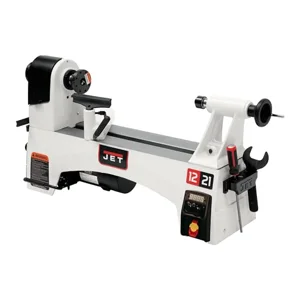 |
JET 12″ x 21″ Variable-Speed Woodworking Lathe, 1 HP, 115V 1Ph (JWL-1221VS) – $989.99 The exact model this guide’s spec comparison below is built around — three-speed-range belt drive (60–3,600 RPM) and a 21-inch spindle-to-spindle capacity for spindle and bowl work up to 12 inches.
|
Definition
A wood lathe is a machine that spins a piece of wood on its axis while a fixed cutting tool, held against a tool rest, shapes it into a symmetrical form — table legs, pens, bowls, and spindles. It belongs in the same category as the rest of your shop power tools: JET makes three current wood lathes (the JWL-1015VS, JWL-1221VS, and JWL-1440VSK), and the model that fits your shop depends on the swing capacity and motor power your projects need, not brand alone.
- Variable speed control: every current JET lathe uses a belt-and-pulley system with 2–3 speed ranges rather than a single fixed RPM, so one machine handles roughing and fine detail work.
- Cast-iron bed: a heavier bed absorbs vibration at higher RPM — this is why the 413-lb JWL-1440VSK turns larger, more out-of-balance bowl blanks more smoothly than the lighter 1015VS.
- Adjustable tool rest and banjo: repositions to match the diameter and shape being turned.
- Spring-loaded spindle lock: lets you change sanding discs or chucks without a separate wrench.
- Digital RPM readout (1221VS and 1440VSK): shows actual spindle speed instead of a dial estimate — the 1015VS uses a marked dial instead.
JET’s Three Wood Lathes Compared by Real Spec
Most single-model review pages only cover one JET lathe. Here are the three current models side by side, pulled from JET’s own published specifications and current retailer listings, so you can match motor power and swing capacity to your actual project size instead of guessing from marketing copy.
| Model | Motor / Speed Range | Swing / Between Centers | Weight | Street Price | Best For |
|---|---|---|---|---|---|
| JWL-1015VS | 0.5 HP, 200–3,600 RPM (3 ranges) | 10″ swing / 15.5″ between centers | ~62 lbs (benchtop) | ~$715–$878 | First lathe, pens, small spindles |
| JWL-1221VS | 1 HP, 60–3,600 RPM (3 ranges) | 12″ swing / 21″ between centers | ~130 lbs | ~$990 | Most home shops: bowls, spindles, furniture legs |
| JWL-1440VSK | 1 HP, 400–3,000 RPM | 14.5″ swing / 40″ between centers | ~413 lbs (with legs) | ~$2,749 | Large bowls, long spindles, table/bed legs |
“The JWL-1221VS’s three-speed-range belt system (60–900 / 110–1,800 / 220–3,600 RPM) is built so one motor handles everything from rough-turning a bowl blank at low RPM to fine spindle detail at the top of the range.”
If you already know the RPM a technique calls for but not what speed setting that is on your own lathe, our lathe speed calculator converts blank diameter and target surface speed into an actual RPM number instead of eyeballing the dial.
Getting Precise Results on a Wood Lathe
Precision on a lathe comes from tool control and technique more than the machine itself. The tools and habits below apply whether you’re running a 0.5 HP JWL-1015VS or a 1440VSK.
Tools That Actually Matter
- High-speed steel chisels: hold an edge through a full turning session without needing a mid-project resharpen.
- Faceplates and a scroll chuck: secure the workpiece so it can’t shift or come loose at speed — a loose blank is the single most common cause of a lathe catch.
- Calipers and a center-finder: keep spindle diameters consistent and centers accurate across a multi-piece project like a set of table legs.
Techniques for Cleaner Cuts
- Match speed to blank diameter: larger, more out-of-balance blanks need a lower RPM to start — use the low speed range and work up once the piece is round.
- Keep the bevel rubbing: a chisel presented bevel-first against the spinning wood, per our wood lathe tool sharpening systems comparison, is what prevents the tool from digging in and catching.
- Take light passes: a shallow cut reduces tear-out and gives you more time to react before a catch happens.
- Square and true the blank first: a blank that isn’t already close to round wastes turning time and stresses the motor unevenly — see our guide on how to square up a piece of wood before mounting it.
Safety Measures for Lathe Work
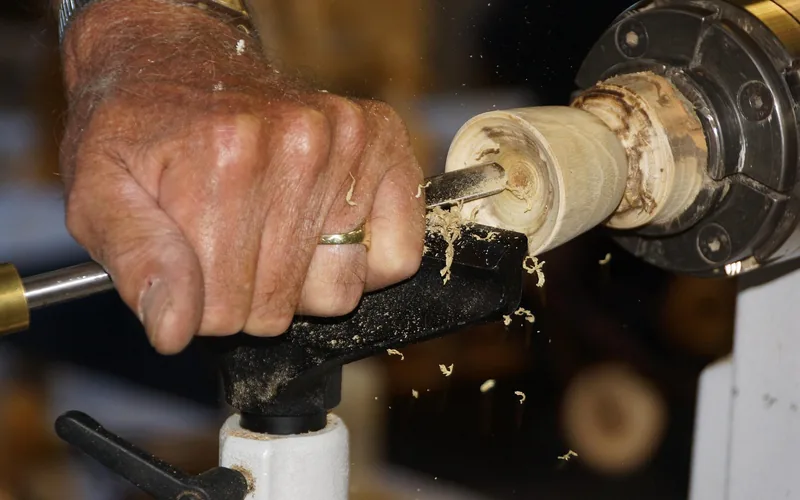
A lathe spins wood fast enough that a loose piece, a dull tool, or a caught sleeve becomes dangerous in a fraction of a second. Eye protection and workpiece security are not optional extras.
📊 90% of work-related eye injuries could have been prevented by wearing safety glasses, and roughly 20,000 U.S. workers suffer an eye injury on the job every day. — Source: OSHA Woodworking eTool: Lathes
- Face shield or safety glasses, always: a full face shield is worth the extra step for bowl turning, where chunks can break free at the rim.
- Secure the workpiece before starting the motor: check the chuck or faceplate is fully tightened, then spin it by hand once before switching the lathe on.
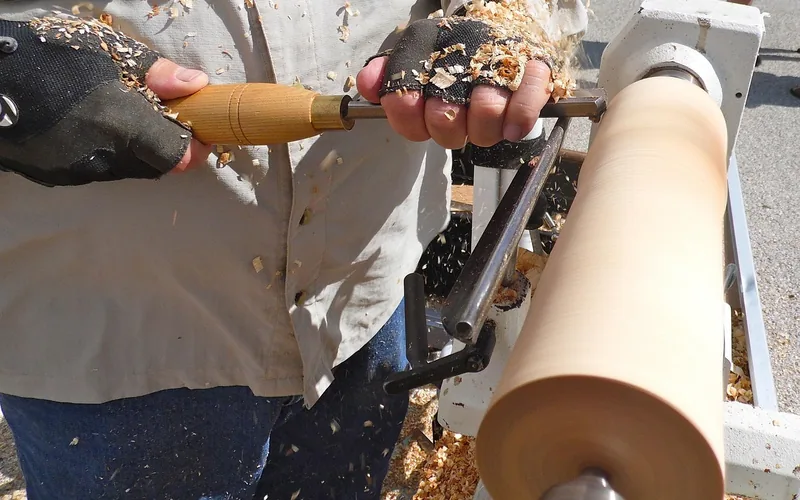
- No loose clothing, gloves, or jewelry: anything that can catch on a spinning spindle will pull a hand in before you can react — this is why the gloves in the photo above only come out for slow, controlled shaping, never near the headstock.
- Stand slightly to the side, not directly in the line of a bowl blank: that’s where a piece goes if it comes loose at speed.
Choosing the Right JET Lathe for Your Shop
The lathe model matters less than matching it to the wood you actually plan to turn. If you haven’t settled on a species yet, our breakdown of turning-wood cost and hardness by species covers eight real options and which ones suit a beginner-friendly 0.5–1 HP motor.
- Project size: pen and small-spindle work never needs more than the 1015VS’s 10-inch swing; furniture legs and mid-size bowls fit the 1221VS’s 12-inch swing; anything larger or longer needs the 1440VSK’s 14.5-inch swing and 40-inch bed.
- Motor power: 0.5 HP (1015VS) is fine for dry, balanced blanks; 1 HP (1221VS, 1440VSK) holds speed on green or off-balance wood without bogging down.
- Shop space and budget: the 1015VS is benchtop and under $900; the 1221VS needs a stand but stays under $1,000; the 1440VSK is a floor-standing machine near $2,750 and needs the room to match.
Frequently Asked Questions About JET Wood Lathes
What Are the Key Features of the JET Wood Lathe Line?
JET’s current lathes share variable speed control across 2-3 belt-driven ranges, a cast-iron bed for vibration control, an adjustable tool rest and banjo, and a spring-loaded spindle lock. The JWL-1221VS and JWL-1440VSK add a digital RPM readout that the entry-level JWL-1015VS doesn’t have.
How Do You Properly Maintain a JET Wood Lathe for Longevity?
Clean sawdust from the bed ways and headstock after each session, lubricate the moving parts per JET’s manual, and check belt tension periodically since a loose belt causes speed slippage under load. Store the lathe in a dry, dust-free area to prevent rust on the cast-iron bed.
What Safety Precautions Should You Take While Using a Wood Lathe?
Wear a face shield or safety glasses, tie back loose clothing and remove jewelry, secure the workpiece and spin it by hand once before starting the motor, and never operate the lathe with a damaged tool rest or missing guard.
Can Beginners Use a JET Wood Lathe for Their First Projects?
Yes. The JWL-1015VS’s 0.5 HP motor and 10-inch swing make it the easiest of the three to control while learning, and its lower price limits the cost of early mistakes compared to jumping straight to the 1221VS or 1440VSK.
Which JET Wood Lathe Is Best for Beginners?
The JWL-1015VS. Its smaller 10-inch swing and 0.5 HP motor turn slower and more predictably than the 1221VS or 1440VSK, which matters most while you’re still learning to read grain direction and prevent catches.
How Much Horsepower Do You Need for a Wood Lathe?
0.5 HP is enough for dry, well-balanced blanks under about 10 inches. Once you’re turning green or out-of-balance wood, or bowls near a 12-inch swing, 1 HP (like the JWL-1221VS or JWL-1440VSK) keeps the spindle from bogging down mid-cut.
Conclusion
JET’s three current wood lathes cover the same range most home turners need: the JWL-1015VS for a first, low-cost lathe; the JWL-1221VS for the mid-size projects most shops actually turn; and the JWL-1440VSK when a project’s length or diameter outgrows a midi lathe. Match the swing and motor to your actual project size rather than buying the biggest model available, and you’ll get years of accurate, controlled cuts out of any of the three.
Sponsored / affiliate links. As an Amazon Associate I earn from qualifying purchases. I may earn additional commission from eligible campaigns.