Best Fertilizer for Japanese Maple Trees
Picking the Best Fertilizer for Japanese Maple Trees can feel tricky, especially if you’re new to gardening. You want your Japanese maple to look its absolute best, with vibrant leaves and strong growth, but what kind of food does it need? It’s easy to get lost in all the options and worry about making a mistake.
Don’t fret! This guide will make it super simple. We’ll walk through exactly what your tree needs and show you how to give it the perfect boost, step by step.
Let’s get your maple thriving!
Choosing The Best Fertilizer for Japanese Maple Trees
Selecting the Best Fertilizer for Japanese Maple Trees is key to keeping these beautiful specimens healthy and vibrant. Japanese maples are known for their delicate nature and specific nutrient needs, making a one-size-fits-all approach unsuitable. Using the wrong fertilizer or too much can actually harm your tree, leading to leaf scorch, weak growth, or increased susceptibility to pests and diseases.
This section will explore the fundamental principles of fertilizing Japanese maples, focusing on their unique requirements to ensure optimal health and stunning aesthetic appeal. We will break down the essential nutrients they need and the signs of deficiency or excess.
Understanding Japanese Maple Nutrient Needs
Japanese maples, like all plants, require a balanced diet of nutrients to grow and flourish. These nutrients are broadly categorized into macronutrients and micronutrients. Macronutrients are needed in larger quantities and include nitrogen (N), phosphorus (P), and potassium (K).
These are often represented by the N-P-K ratio found on fertilizer bags. Micronutrients are essential but required in much smaller amounts, such as iron, magnesium, and zinc.
Nitrogen is vital for leaf growth and overall green color. Phosphorus supports root development and flowering, though Japanese maples are primarily grown for their foliage. Potassium helps in disease resistance, water regulation, and overall plant vigor.
Deficiencies in any of these can lead to visible problems.
For instance, a lack of nitrogen might show as pale green or yellowing leaves, especially on older foliage. If your maple struggles with weak branches or poor flowering, it might indicate a potassium deficiency. Understanding these basic needs helps us identify what makes a fertilizer “best” for these specific trees.
Nitrogen (N)
Nitrogen is the workhorse nutrient for leafy green plants. It’s a core component of chlorophyll, the pigment that makes leaves green and allows the tree to perform photosynthesis – its way of making food from sunlight. When nitrogen is readily available, Japanese maples produce lush, dark green foliage, contributing to their visual appeal.
Too little nitrogen, and you’ll notice the leaves becoming lighter, sometimes even yellowish, particularly on the older parts of the tree. This yellowing is called chlorosis.
However, too much nitrogen can be detrimental. It might encourage rapid, soft growth that is more prone to damage from frost, wind, or pests. Over-fertilizing with nitrogen can also lead to an excessive amount of foliage, which can sometimes shade out the delicate inner parts of the tree or make the tree more susceptible to fungal diseases due to increased humidity.
The goal is healthy, steady growth, not explosive bursts.
Phosphorus (P)
Phosphorus plays a significant role in root development and the transfer of energy within the plant. While Japanese maples are not primarily grown for blooms, strong root systems are fundamental for absorbing water and nutrients, especially during dry periods or when establishing. A deficiency in phosphorus can result in stunted growth and poor root formation, making the tree less resilient.
Fertilizers with a higher middle number in their N-P-K ratio indicate more phosphorus. For young trees or those showing signs of weak root development, a fertilizer that includes adequate phosphorus can be beneficial. However, most established soils and many general-purpose fertilizers already contain sufficient phosphorus, so excessive application is usually unnecessary and can even interfere with the uptake of other important nutrients like zinc and iron.
Potassium (K)
Potassium is like a general health booster for your Japanese maple. It helps the tree regulate water, strengthen its cell walls, and improve its overall resistance to diseases and stress, including heat and cold. A tree with enough potassium will generally look more robust, with stems that are less likely to break and leaves that are less susceptible to wilting or scorching.
It’s crucial for the tree’s ability to cope with environmental challenges.
Signs of potassium deficiency might include yellowing or browning along the edges of the leaves, sometimes referred to as marginal scorch. In severe cases, the entire leaf might dry out and fall off prematurely. Ensuring a balanced supply of potassium contributes to the tree’s longevity and its ability to maintain its attractive form throughout the growing season, especially during tough weather.
Signs Of Nutrient Deficiencies and Excesses
Observing your Japanese maple is the best way to tell if it’s getting the right nutrition. Visual cues are strong indicators. Yellowing leaves, especially when they are uniform across the tree or concentrated on older leaves, often point to a nitrogen deficiency.
This can make the vibrant red or green foliage look dull and washed out.
Marginal browning or yellowing, where the edges of the leaves turn brown or crispy, can suggest a potassium issue. If the tree looks generally weak, with small leaves and poor branch development, it might need a broader spectrum of nutrients or better soil conditions. On the other hand, too much fertilizer, particularly nitrogen, can cause leaf edges to turn brown and dry, a condition known as fertilizer burn or leaf scorch.
Sometimes, deficiencies can mimic other problems. For example, iron deficiency can also cause yellowing leaves with green veins, similar to nitrogen deficiency, but it typically affects newer growth more. Understanding these subtle differences helps in diagnosing what might be wrong and choosing the correct approach to fertilizing your Japanese maple.
Chlorosis
Chlorosis is a common symptom where plant leaves turn yellow because they lack chlorophyll. This often happens when there isn’t enough iron available to the plant, or when the soil pH is too high, preventing iron uptake. Japanese maples, particularly certain varieties, can be prone to iron chlorosis.
The classic sign is interveinal chlorosis, where the leaf tissue between the veins turns yellow, but the veins themselves remain green. This is distinct from a general nitrogen deficiency, which might cause the entire leaf to turn pale. If you see this pattern, especially on new growth, it suggests an iron availability problem, even if there’s enough iron in the soil.
Adjusting soil pH or applying chelated iron can help correct this.
Leaf Scorch
Leaf scorch is a condition where the edges and tips of leaves turn brown and crispy, eventually becoming brittle and falling off. This can be caused by several factors, including drought stress, excessive heat, strong winds, or over-fertilization. When it comes to fertilization, excessive salts from too much fertilizer can build up in the soil and damage the fine root hairs, preventing the tree from taking up water.
This damage leads to dehydration of the leaf margins. It’s important to distinguish this from natural leaf drop in autumn. If scorch appears during the growing season, especially after a fertilization event or during dry spells, it’s a strong indicator of stress, often exacerbated by nutrient imbalances or too much fertilizer.
Proper watering and applying fertilizer at the correct rate are crucial to prevent this.
When and How to Fertilize Japanese Maples
The timing and method of fertilization are as important as the type of fertilizer used for your Japanese maple. Applying fertilizer at the wrong time can do more harm than good. For instance, fertilizing too late in the season can encourage new growth that won’t have time to harden off before winter, making it vulnerable to frost damage.
The general rule is to fertilize when the tree is actively growing, typically in early spring as new leaves emerge. A second, lighter feeding might be beneficial in early summer for some trees, but it’s often not necessary. Over-fertilizing is a common mistake, so it’s better to under-fertilize than over-fertilize.
We’ll cover the best ways to apply fertilizer to ensure it reaches the roots effectively.
Best Time of Year to Fertilize
The prime time to fertilize your Japanese maple is in early spring. This is when the tree is just waking up from its winter dormancy and beginning its active growth cycle. Applying fertilizer at this stage provides the nutrients it needs to support the development of new leaves, branches, and an expanding root system for the upcoming growing season.
A good indicator is when you see the leaf buds beginning to swell or the first tiny leaves unfurling.
Fertilizing in early spring ensures that the nutrients are available when the tree has the highest demand. Some gardeners also opt for a second, light application in early summer, perhaps in June. This can help sustain growth through the hotter months.
However, it’s crucial to avoid fertilizing too late in the summer or into the fall. Late-season fertilization can stimulate tender new growth that may not have enough time to mature and harden off before the first frost, making it susceptible to winter damage.
Early Spring Application
The early spring fertilization is arguably the most critical. As temperatures begin to rise and daylight hours increase, your Japanese maple will start its annual growth spurt. This is when it draws heavily on stored energy and requires a fresh supply of nutrients from the soil to fuel new leaf production and branch elongation.
Applying a balanced, slow-release fertilizer in early spring, ideally when the soil is moist but not waterlogged, provides a steady stream of nourishment.
This timing aligns perfectly with the tree’s physiological needs. The emerging leaves will utilize the nitrogen for chlorophyll production, while phosphorus and potassium will support root growth and overall plant health. This early feeding sets the stage for a healthy and vigorous growing season, ensuring your maple develops its characteristic beautiful foliage and form.
It’s about giving the tree the best possible start.
Optional Early Summer Feeding
For some established Japanese maples, especially those in hotter climates or on sandy soils that leach nutrients quickly, a light application of fertilizer in early summer might be considered. This second feeding, typically in June, can help maintain vigor during the mid-summer period when growth might slow due to heat. It’s important that this feeding is light and uses a slow-release formula.
The goal here is to provide sustained energy, not to force rapid new growth. Overdoing it in summer can lead to the same problems as late fall fertilization: tender growth that is vulnerable to heat stress and diseases. Many gardeners find that a single, well-timed early spring application is sufficient for their Japanese maples, particularly if the soil is reasonably fertile and the tree is healthy.
Always assess your tree’s condition before deciding on a second feeding.
Application Methods
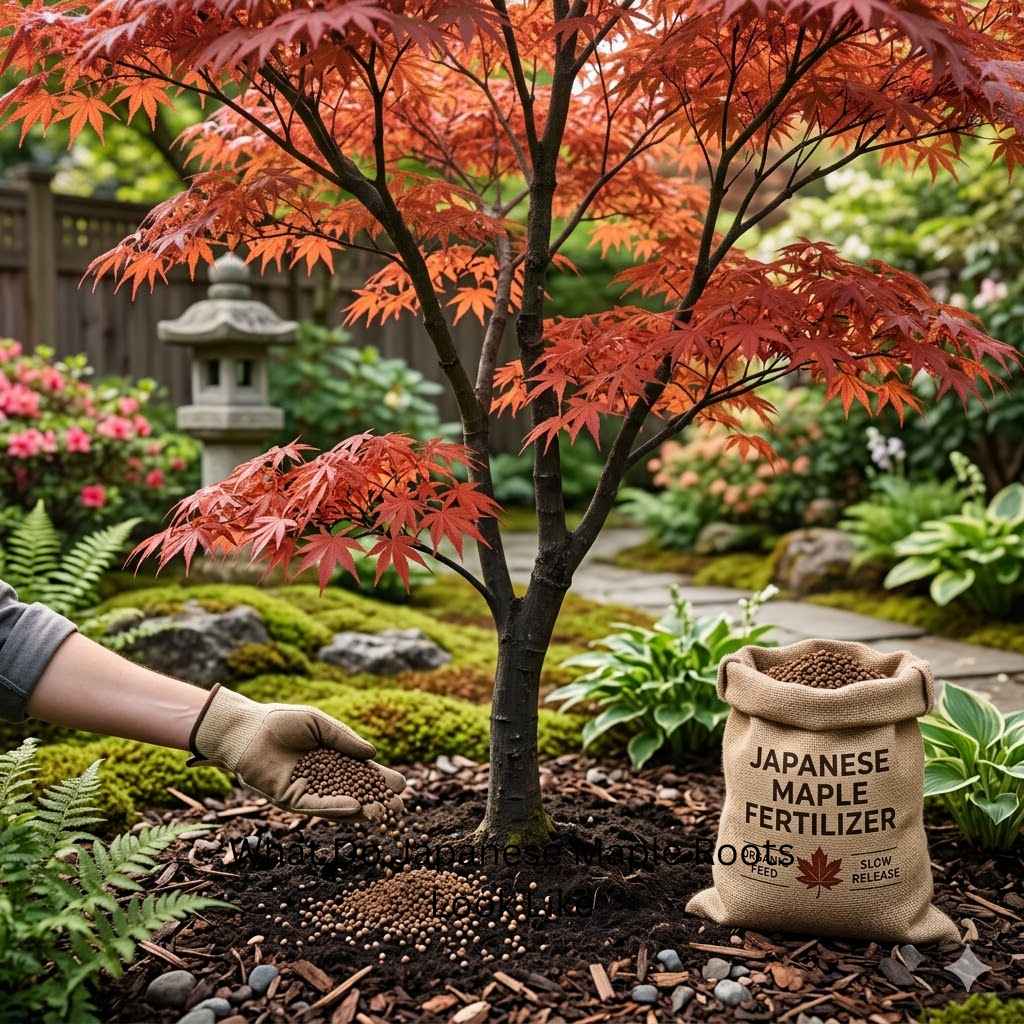
How you apply fertilizer is as important as when you do it. Japanese maples have a relatively shallow root system, and their feeding roots are typically found in the top 6 to 12 inches of soil, extending out to the drip line (the edge of the canopy). Therefore, it’s best to apply fertilizer around this area, not directly against the trunk.
Broadcasting the fertilizer evenly over the soil surface under the canopy is a common and effective method. For granular fertilizers, this allows them to slowly break down and be washed into the soil by rain or irrigation. Liquid fertilizers offer a more immediate boost but require more frequent application and careful dilution.
It’s vital to water thoroughly after applying granular fertilizer to help it dissolve and prevent root burn.
Granular Fertilizers
Granular fertilizers are a popular choice for many gardeners due to their ease of use and their slow-release properties. These fertilizers are typically applied in a dry, pelletized form. They are spread evenly over the soil surface around the base of the tree, extending outwards towards the drip line.
The key benefit of granular fertilizers is that they release their nutrients gradually over time as they break down, either through microbial action in the soil or when dissolved by water.
This slow release is ideal for Japanese maples because it provides a steady supply of nutrients without the risk of a sudden surge that could damage the roots or encourage excessive, weak growth. After applying granular fertilizer, it’s crucial to water the area well. This helps to move the nutrients down into the soil where the roots can access them and also washes away any fertilizer particles that may have landed on the leaves, preventing potential scorching.
Liquid Fertilizers and Soil Drenches
Liquid fertilizers offer a more immediate way to deliver nutrients to plants. They can be applied as a foliar spray directly onto the leaves, or as a soil drench, meaning they are diluted in water and poured onto the soil around the base of the tree. For Japanese maples, a soil drench is generally preferred to avoid potential leaf burn from foliar sprays, especially with sensitive varieties.
A soil drench allows the nutrients to be absorbed by the roots more quickly than with granular fertilizers. This can be useful for correcting an acute deficiency or giving a quick boost. However, the effects of liquid fertilizers are often shorter-lived, meaning they may need to be applied more frequently than slow-release granular types.
It is essential to follow the dilution instructions carefully, as too concentrated a solution can easily damage the roots.
Selecting the Best Fertilizer Type
Choosing the right type of fertilizer is crucial for the health and beauty of your Japanese maple. The ideal fertilizer will provide a balanced blend of essential nutrients without overwhelming the tree. For most Japanese maples, a slow-release, balanced fertilizer is the safest and most effective option.
These types are formulated to feed the plant gradually over an extended period.
Specialty fertilizers designed for acid-loving plants or ornamental trees can also be good choices, as they often contain micronutrients like iron that Japanese maples may benefit from. The N-P-K ratio is important, but so are the secondary nutrients and micronutrients. We’ll explore specific ratios and formulations that are well-suited for these elegant trees.
Ideal N-P-K Ratios
The N-P-K ratio on a fertilizer package represents the percentage by weight of nitrogen (N), phosphorus (P), and potassium (K). For Japanese maples, a balanced fertilizer is generally recommended. This means the numbers are relatively close to each other, or the first number (nitrogen) is slightly higher to support leaf growth, but not excessively so.
A common and effective N-P-K ratio for Japanese maples is around 10-10-10 or 12-12-12. Some gardeners prefer a slightly higher nitrogen content, such as 15-10-10, to encourage lush foliage, but this must be applied cautiously to avoid overstimulation. It’s important to remember that Japanese maples generally do not require high levels of phosphorus, as it’s primarily for root and flower development, which are not the main ornamental features of these trees.
Balanced Formulas
Balanced fertilizers, such as those with an N-P-K ratio of 10-10-10 or 12-12-12, are excellent starting points for most Japanese maples. These formulas provide an equal or nearly equal amount of the three primary macronutrients, ensuring that the tree receives a comprehensive supply of essential elements without an overabundance of any single nutrient. This balance supports overall plant health, including leaf development, root growth, and disease resistance.
The gradual release of nutrients from these balanced formulas helps prevent the rapid, potentially damaging growth that can occur with high-nitrogen fertilizers. They are designed to be forgiving and reduce the risk of nutrient burn, making them a safe choice for both beginners and experienced gardeners aiming to maintain the health and beauty of their Japanese maple trees.
Formulas for Acid-Loving Plants
Japanese maples tend to prefer slightly acidic soil conditions, with a pH typically ranging between 5.5 and 6.5. Fertilizers formulated for acid-loving plants, such as azaleas, rhododendrons, or camellias, can be a great choice because they are often designed to promote and maintain this slightly acidic environment. These fertilizers usually contain sulfur or ammonium sulfate, which gradually lower the soil pH as they break down.
Additionally, these specialized fertilizers often include chelated iron and other micronutrients that are more readily available to plants in acidic soil. Iron deficiency (chlorosis) is a common issue for Japanese maples, especially in alkaline soils. Using a fertilizer for acid-loving plants can help prevent or correct this by ensuring better iron uptake and maintaining the optimal soil pH for the tree’s overall nutrient absorption.
Slow-Release vs. Quick-Release Fertilizers
The choice between slow-release and quick-release fertilizers significantly impacts how your Japanese maple is fed. Quick-release fertilizers, also known as water-soluble or immediate-release fertilizers, dissolve rapidly in water and deliver nutrients to the plant almost instantly. This can provide a fast green-up effect and a rapid boost in growth.
However, this rapid delivery also comes with risks. The nutrients can be easily leached from the soil by rain or watering, meaning they don’t last long. More importantly, a sudden surge of concentrated nutrients can easily burn the delicate roots of a Japanese maple, leading to leaf scorch and general stress.
For this reason, quick-release fertilizers are generally not recommended for Japanese maples.
Benefits of Slow-Release Formulas
Slow-release fertilizers are the gold standard for feeding Japanese maples. These fertilizers are designed to break down gradually over weeks or even months, releasing nutrients at a controlled pace. This is incredibly beneficial for Japanese maples because it matches their natural growth cycle.
Instead of a shock of nutrients, the tree receives a steady, consistent supply, which promotes healthy, sustained growth without the risk of burning its roots.
This gradual feeding also means you don’t have to fertilize as often. A single application in early spring can provide nourishment throughout the entire growing season. This convenience, combined with the reduced risk of over-fertilization and the promotion of steady, balanced growth, makes slow-release fertilizers the ideal choice for ensuring your Japanese maple remains vibrant, healthy, and beautiful year after year.
Why Quick-Release Can Be Risky
Quick-release fertilizers, while seemingly offering a faster solution, pose significant risks for Japanese maples. Their rapid solubility means that when applied, the nutrients are immediately available to the plant. This can lead to a sudden surge in growth, producing soft, tender new shoots that are highly susceptible to frost damage in spring or fall.
Moreover, the concentrated salts in quick-release fertilizers can easily overwhelm the fine root hairs of a Japanese maple. This can cause root damage, leading to symptoms that mimic drought stress, such as leaf scorch – brown, crispy edges on the leaves. The nutrients can also leach out of the soil quickly, meaning the feeding effect is short-lived, requiring more frequent applications, which further increases the risk of over-fertilization.
Therefore, for the health and safety of your Japanese maple, quick-release options should be avoided.
Common Mistakes to Avoid
Even with the best intentions, gardeners can make mistakes when fertilizing their Japanese maples. These errors often stem from over-enthusiasm or a lack of specific knowledge about these trees’ unique needs. The most common pitfall is applying too much fertilizer, which can lead to root burn and other damage.
Another frequent error is fertilizing at the wrong time of year, encouraging vulnerable new growth before winter.
Understanding what not to do is just as important as knowing what to do. We’ll highlight some of the most common blunders to help you avoid them and ensure your Japanese maple thrives. This includes understanding the correct amount, avoiding direct contact with the trunk, and recognizing when fertilization might not be necessary at all.
Over-Fertilizing
The number one mistake made by gardeners is applying too much fertilizer. It’s often born from the idea that if a little is good, more must be better. However, for a sensitive plant like a Japanese maple, excessive fertilizer can be toxic.
The concentrated salts within fertilizers can dehydrate the root tissues, leading to what is commonly known as fertilizer burn.
Symptoms of over-fertilization include browning leaf edges and tips (leaf scorch), wilting even when the soil is moist, and overall yellowing of the foliage. It can severely stress the tree, weaken its defenses against pests and diseases, and in extreme cases, can be fatal. It’s always better to err on the side of caution and use less fertilizer than recommended, especially with slow-release formulas.
Fertilizing Too Late in the Season
Another significant mistake is fertilizing Japanese maples too late in the growing season, particularly in late summer or fall. While it might seem like a good idea to give your tree a final boost before winter, this can actually be detrimental. Fertilizing late encourages the production of new, tender foliage and shoots that have not had enough time to mature and harden off.
These soft new tissues are extremely vulnerable to the first frosts and freezing temperatures of winter. When these delicate parts are damaged by cold, they turn black and die, detracting from the tree’s appearance and wasting its energy. The tree then has to expend energy repairing this damage in the spring, potentially weakening it.
The safest approach is to stop fertilizing by mid-summer at the latest.
Applying Fertilizer Incorrectly
Beyond the type and timing, the physical application of fertilizer is also critical. One common error is piling fertilizer directly against the trunk of the tree. Japanese maple roots spread out wide, generally reaching the edge of the canopy (the drip line), and are not concentrated at the base of the trunk.
Applying fertilizer too close to the trunk can result in concentrated salts damaging the bark and shallow roots located there.
Another mistake is failing to water the fertilizer in properly. If granular fertilizer is left on the surface without watering, it can sit there and potentially burn the soil and any surface roots. Proper watering after application is essential to dissolve the fertilizer and move it into the root zone where it can be absorbed by the plant.
Fertilizer Too Close to the Trunk
It’s a common misconception that a tree’s main nutrient uptake happens directly at its base. For Japanese maples, and indeed for most trees, the most active feeding roots are found in the top layers of soil, spreading outwards from the trunk to well beyond the canopy’s edge, known as the drip line. Applying fertilizer in a tight circle right around the trunk is therefore inefficient and can be harmful.
This concentrated application can deliver a high dose of nutrients to a small area, increasing the risk of root burn. It also misses the majority of the tree’s active root zone. For optimal results and to minimize risk, fertilizer should always be distributed evenly over the soil surface from a few inches away from the trunk out to the drip line.
Forgetting to Water After Application
A seemingly small step that is often overlooked is watering after applying fertilizer. Many fertilizers, especially granular types, contain salts. When these salts are left dry on the soil surface, they can draw moisture out of plant tissues, including roots and bark, causing damage and wilting – essentially, a form of dehydration or burn.
Watering thoroughly after fertilizing serves multiple purposes. Firstly, it helps to dissolve the fertilizer granules, allowing them to break down and release their nutrients into the soil. Secondly, it washes the dissolved nutrients down into the root zone, where they can be absorbed by the plant.
Finally, it helps to dilute any concentrated salts, significantly reducing the risk of root burn and ensuring a gentler, more effective nutrient delivery.
When Your Japanese Maple May Not Need Fertilizer
It’s important to remember that not all Japanese maples require annual fertilization. Healthy, well-established trees growing in fertile soil may be perfectly content without any added nutrients. Over-fertilizing can be more harmful than not fertilizing at all.
So, before you reach for the fertilizer bag, take a moment to assess your tree’s condition.
Signs that your tree is thriving and doesn’t need extra food include robust, consistent growth each year, healthy green or red foliage that isn’t pale or showing signs of stress, and good overall vigor. If your maple is in a location with rich soil that is amended regularly, or if it’s growing well in a container with fresh potting mix, it might be getting all the nutrition it needs from its environment.
Signs of a Healthy, Well-Fed Tree
A healthy Japanese maple that is well-nourished will display several positive signs. Its leaves will have a rich, deep color—whether it’s a vibrant green, a fiery red, or a delicate variegated pattern, the color will be consistent and intense. The growth each year will be noticeable but not excessive; you’ll see new shoots developing, and the tree will gradually increase in size and density.
The tree will also have a strong, upright form with well-developed branches. It will appear resilient, able to withstand normal weather conditions without wilting or showing stress. If your Japanese maple exhibits these characteristics, it’s a strong indication that its current nutrient levels are sufficient, and additional fertilizer might not be necessary, or could even be detrimental.
Established Trees in Good Soil
Established Japanese maples that have been growing in the same spot for several years in good quality soil often do not need supplemental fertilization. These trees have developed extensive root systems that can efficiently access the nutrients available in the soil. If the soil has been amended with compost or organic matter periodically, it likely retains enough essential nutrients to support the tree’s needs.
In such cases, adding fertilizer can upset the natural nutrient balance in the soil, potentially leading to issues like nutrient imbalances or root stress. It’s wise to observe the tree’s growth and appearance. If it’s thriving without intervention, the best approach is often to simply let it be and focus on proper watering and mulching.
When to Consider Fertilizing
There are specific situations where fertilizing your Japanese maple becomes beneficial. These usually involve signs of deficiency or a need to support establishment. Young trees, especially during their first few years after planting, benefit from a gentle feeding to help them establish a strong root system and begin their growth.
You should also consider fertilizing if you notice clear signs of nutrient deficiency, such as pale foliage (especially yellowing without green veins), slow or stunted growth compared to previous years, or a general lack of vigor. Trees recovering from stress, disease, or pest damage might also benefit from a carefully timed, light feeding to help them regain strength.
Young or Newly Planted Trees
Newly planted Japanese maples are like infants needing nourishment to grow strong. During their first one to three years after planting, they are dedicating significant energy to developing a robust root system and establishing themselves in their new environment. Fertilizing at this stage can provide the necessary building blocks for this critical development.
It is important to use a mild, slow-release fertilizer specifically formulated for trees and shrubs and to apply it sparingly, well away from the trunk, extending to the drip line. This early support helps the young tree become more resilient and encourages healthy, steady growth, setting it up for a long and beautiful life.
Trees Showing Signs of Deficiency
If your Japanese maple is showing visible signs that it is not getting enough of a particular nutrient, then fertilization becomes necessary. The most common deficiency observed in Japanese maples is iron chlorosis. This typically appears as yellowing leaves with distinctly green veins, usually on the newest growth.
Other signs can include overall pale foliage, stunted growth, or leaves that are smaller than usual. If you notice these symptoms and have ruled out other issues like improper watering or disease, a targeted fertilizer or soil amendment can help correct the deficiency. For example, an iron supplement or a fertilizer with added iron, especially one suitable for acid-loving plants, can often resolve iron-related chlorosis.
Conclusion
Choosing the Best Fertilizer for Japanese Maple Trees doesn’t have to be complicated. Focus on early spring feeding with a slow-release, balanced fertilizer. Always apply it correctly, away from the trunk, and water well.
Healthy trees in good soil might not need fertilizer at all. Watch your tree, and give it what it needs.
Frequently Asked Questions
Question: What is the best N-P-K ratio for Japanese maple fertilizer
Answer: For most Japanese maples, a balanced N-P-K ratio like 10-10-10 or 12-12-12 is recommended, or one with slightly more nitrogen like 15-10-10 if foliage color is a priority, but always use a slow-release formula.
Question: Can I use a general-purpose fertilizer on my Japanese maple
Answer: A general-purpose, slow-release fertilizer can work if its N-P-K ratio is balanced and it doesn’t contain excessive phosphorus. Fertilizers for acid-loving plants are often a safer bet.
Question: How often should I fertilize my Japanese maple
Answer: Typically, fertilizing once in early spring is sufficient for established Japanese maples. Newly planted trees may benefit from feeding for the first few years.
Question: What are the signs of over-fertilizing a Japanese maple
Answer: Signs include brown, crispy leaf edges (leaf scorch), wilting even when watered, and stunted or yellowing foliage. It’s best to under-fertilize than over-fertilize.
Question: Should I fertilize my Japanese maple in the fall
Answer: No, it’s best to avoid fertilizing Japanese maples in late summer or fall. This can encourage tender new growth that is vulnerable to winter frost damage.