Can You Eat Maple Seeds? Genius & Essential Guide
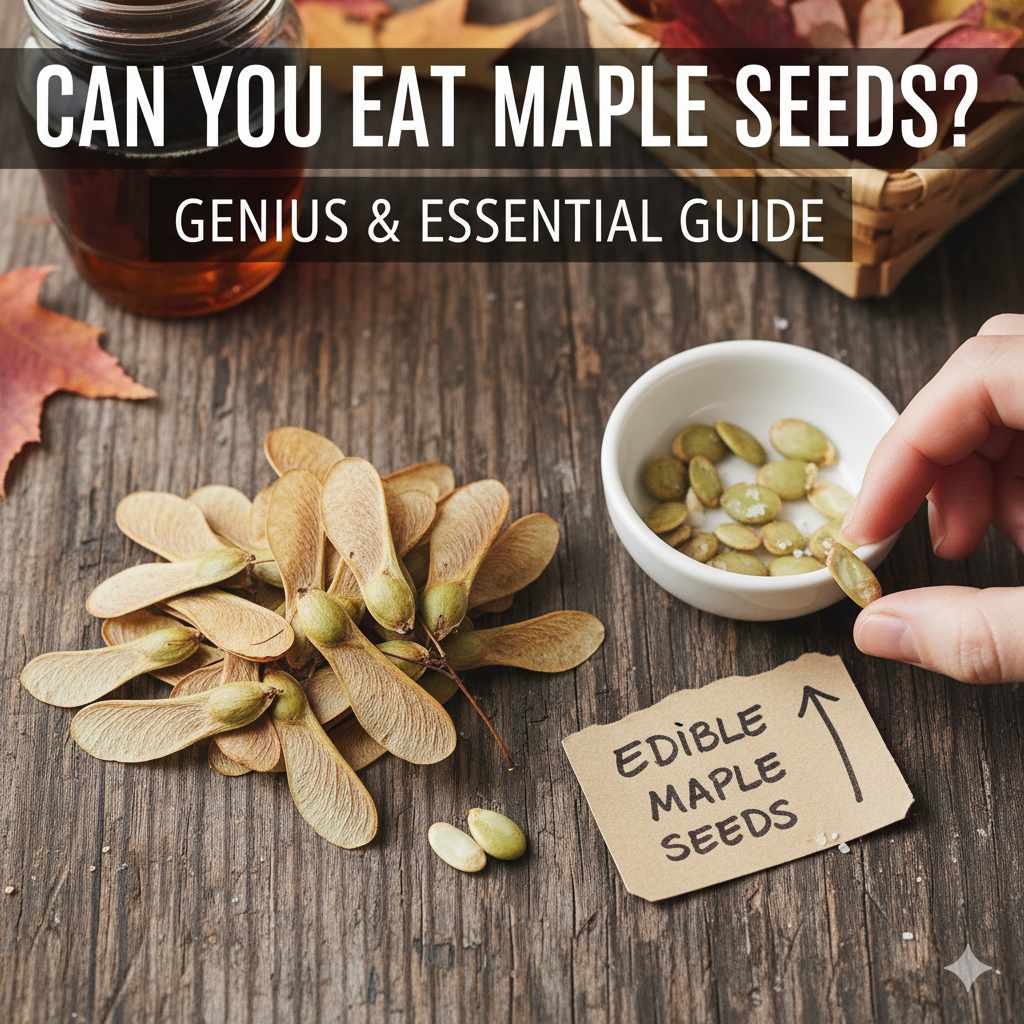
Yes, you can eat maple seeds! These small, winged fruits, often called “helicopters” or “samaras,” are edible and can be a surprising, nutritious addition to your diet. This guide reveals how to safely identify, harvest, and prepare them for a unique foraging experience.
Ever looked up at a maple tree and wondered about those little spinning seeds that flutter down? They’re more than just a fun distraction; they’re nature’s tiny edible surprises! Many people walk right past them, thinking they’re just for nature’s critters. But guess what? With a little know-how, you can turn these samaras into a tasty snack. It’s a fantastic way to connect with nature and discover new flavors right in your backyard. Let’s explore how you can safely enjoy these often-overlooked treasures!
Understanding Maple Seeds: Nature’s Little Helicopters
Maple seeds, scientifically known as samaras, are the winged fruits produced by maple trees (genus Acer). Their unique shape is designed to help them spin through the air, dispersing seeds far from the parent tree, much like a helicopter’s rotor. These aren’t just for decoration; they’ve historically been a food source for various cultures and wildlife.
It’s important to know that not all maple seeds are ideal for eating, and identification is key to a safe foraging experience. While most common maple species produce edible samaras, it’s crucial to be absolutely certain you’ve identified the tree correctly. Misidentification can lead to consuming unsafe plants, which is why understanding the basic characteristics of edible maple seeds is essential.
Identifying Edible Maple Varieties
Most maple species in North America and Europe produce edible seeds. The most commonly foraged species include:
- Sugar Maple (Acer saccharum): Famous for its syrup, its seeds are also edible.
- Red Maple (Acer rubrum): Another common and widely recognized species.
- Silver Maple (Acer saccharinum): Known for its fast growth and deeply lobed leaves.
- Norway Maple (Acer platanoides): Often found in urban areas, though it’s an introduced species and can be invasive in some regions.
When foraging, always look for the characteristic paired wings. The seeds themselves are small, and it’s the immature seed within the wing structure that is typically eaten. The wing itself is usually discarded.
What Part of the Maple Seed Do You Eat?
You’re not meant to chew through the entire woody wing! The part of the maple seed that’s edible is the small, underdeveloped kernel or nutlet located at the base of the wing. This kernel contains the embryo of a new maple tree. It’s best harvested when the seeds are still green and immature, typically in late spring to early summer. At this stage, the kernel is soft and has a mild, somewhat nutty or green-bean-like flavor. As they mature and turn brown, the kernels become harder and less palatable.
The Best Time to Harvest Maple Seeds
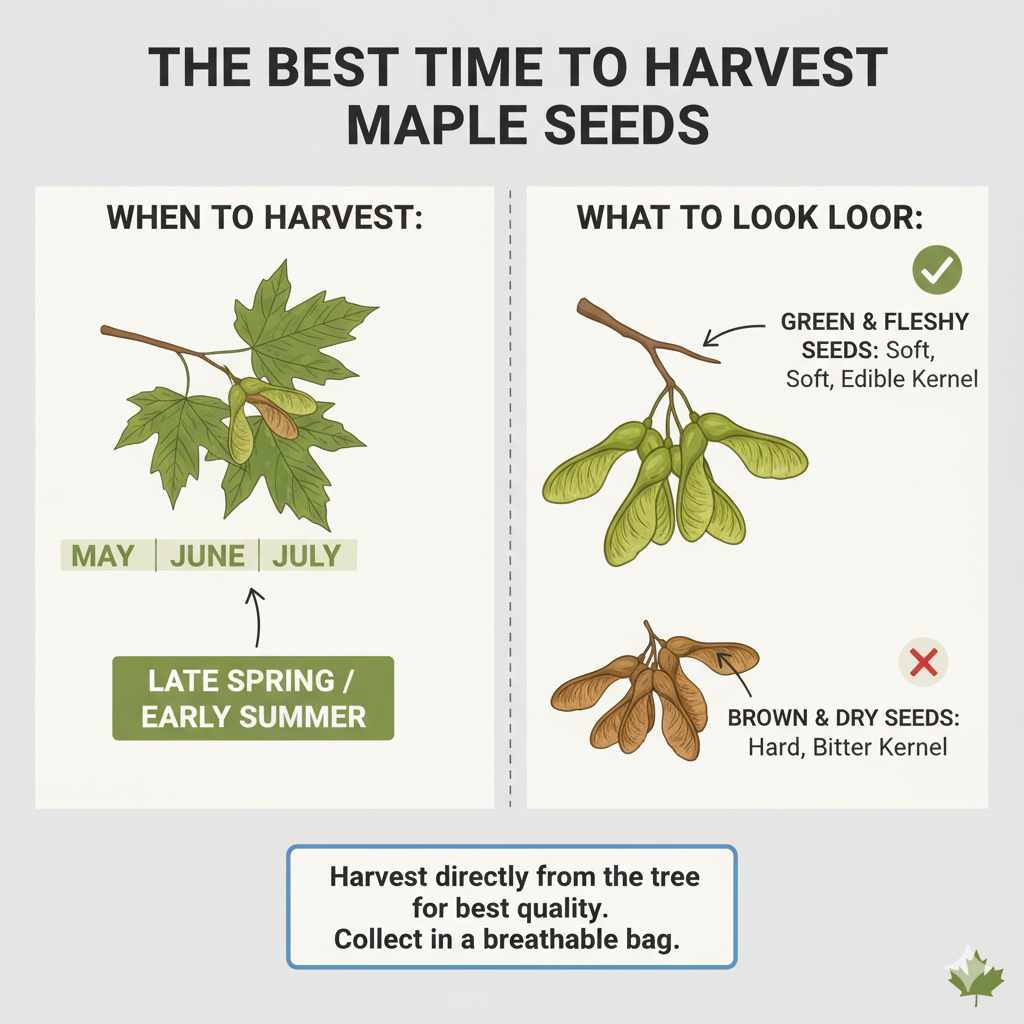
Timing is crucial for enjoying the best flavor and texture from maple seeds. The sweet spot for harvesting is during the late spring and early summer months, typically from May through July, depending on your local climate.
Look for seeds that are still green and have a slightly fleshy appearance. These are immature seeds where the kernel inside is soft and easy to eat. If the seeds have turned brown and dry, they are mature and the kernel will likely be hard and bitter, making them unsuitable for consumption.
You’ll want to harvest them before they fall to the ground in large numbers. While fallen seeds can sometimes be usable if they are very fresh and still green, harvesting directly from the tree ensures you get the best quality. Collect them in a basket or breathable bag to prevent them from getting crushed or overly warm.
How to Harvest and Prepare Maple Seeds
Harvesting and preparing maple seeds is a simple process, perfect for a beginner forager. It’s a great way to involve the whole family in learning about nature’s bounty.
Step-by-Step Harvesting Guide:
- Identify the Right Tree: Make sure you’re collecting from a maple tree species known to be edible. See the identification section above.
- Choose the Right Time: Aim for late spring to early summer when the seeds are green and immature.
- Select Healthy Seeds: Look for vibrant green seeds still attached to the branches. Avoid any that appear diseased, discolored, or have signs of insect damage.
- Gentle Harvesting: Gently twist or pull the seeds from their stems. You can often grab a cluster and pull them off with a slight tug.
- Use a Container: Place your harvested seeds into a basket or a mesh bag. This allows for air circulation, which is important to prevent them from overheating or molding.
Preparation Steps:
- Rinse Thoroughly: Once you’ve gathered your seeds, rinse them well under cool running water. This removes any dirt, dust, or small insects.
- Trim the Wings: The edible part is the small kernel. Use a sharp knife or kitchen shears to carefully trim off the papery wing. You want to expose the small, roundish kernel at the base of the wing.
- Consider De-winging (Optional): Some find it easier to de-wing the seeds before cooking. Others prefer to do it after a quick blanching, as the wing might loosen.
- Blanching (Recommended): To improve texture and reduce any potential bitterness, it’s often recommended to blanch the kernels. Bring a pot of water to a boil, add the kernels (with or without wings attached, though de-winged is easier to handle), and boil for about 1-2 minutes.
- Cool and Dry: Immediately plunge the blanched kernels into ice-cold water to stop the cooking process. Drain them well and pat them dry with a clean towel.
Delicious Ways to Eat Maple Seeds
Once prepped, these little kernels can be used in a variety of dishes, adding a unique flavor and texture. Don’t expect a super-strong taste; they are quite mild and subtle.
Raw and Simple
The simplest way to enjoy them is to eat the blanched and de-winged kernels raw. They have a fresh, slightly grassy, and subtly nutty flavor. This is a great way to taste their natural essence.
Stir-Fries and Sautéed Dishes
Add the blanched kernels to stir-fries or sautéed vegetables during the last few minutes of cooking. They provide a pleasant, slightly chewy texture and absorb the flavors of your dish beautifully.
Salads
Sprinkle them onto salads for a unique crunch and a pop of green. They pair well with vinaigrette dressings.
Soups and Stews
Toss them into soups or stews towards the end of cooking. They can add a little body and a subtle nutty undertone.
Roasted
For a crispier texture, you can roast the de-winged kernels. Toss them with a little oil, salt, and your favorite spices, then spread them on a baking sheet and roast at around 350°F (175°C) for 10-15 minutes, or until golden and slightly crispy. Keep a close eye on them as they can burn quickly.
You can also try substituting them for nuts or seeds in pesto recipes, or even incorporating them into simple baked goods for an unexpected twist.
Nutritional Benefits of Maple Seeds
While not a major staple food, immature maple seeds offer a surprising nutritional boost. They are a good source of:
- Vitamins: Particularly Vitamin C and some B vitamins.
- Minerals: They contain minerals like potassium, magnesium, and phosphorus.
- Protein: Offering a modest amount of plant-based protein.
- Fiber: Contributing to digestive health.
Their nutritional profile makes them a valuable addition to a varied diet, especially for those interested in wild edibles and natural foods. Studies in plant-based nutrition often highlight the overlooked benefits of foraging for diverse plant parts. For example, research from institutions like the USDA Agricultural Research Service often touches upon the nutritional diversity found in various plant species, including less common edible parts.
Safety and Considerations Before You Forage
Foraging for any wild food requires caution and knowledge. Here’s what you need to keep in mind to ensure a safe and enjoyable experience with maple seeds:
1. Accurate Identification is Paramount
This is the most critical step. Never eat anything unless you are 100% sure of its identification. While most common maples are safe, a misidentification could lead to consuming toxic plants. If you’re unsure, consult a local field guide or an experienced forager.
2. Avoid Polluted Areas
Just like any wild food, maple seeds can absorb pollutants from their environment. Do not harvest from trees growing near busy roadsides, industrial areas, or agricultural fields where pesticides might be used. Look for trees in natural settings like parks, forests, or your own backyard if it’s free from contamination.
3. Harvest Responsibly
Take only what you need. Leave plenty of seeds for wildlife and for the trees to reproduce. Never damage the tree or its branches while harvesting.
4. Check for Pests and Disease
Ensure the seeds you collect are free from mold, insect damage, or signs of disease. Discard anything that looks questionable. Even if the tree itself looks healthy, individual seed clusters can sometimes be affected.
5. Moderation is Key
As with any new food, start with small quantities to see how your body reacts. Some people may have sensitivities.
For more detailed information on safe foraging practices, resources like the USDA Forest Service offer general guidelines on responsible wild food harvesting.
Maple Seeds vs. Other Edible “Weeds”
Maple seeds offer a unique category of wild edible. Unlike common “weeds” like dandelions or purslane, which are typically harvested for their leaves or flowers, maple seeds provide a distinct seed-based food source. Their seasonal availability and specific preparation requirements set them apart.
| Foraged Food | Edible Part | Typical Harvest Time | Flavor Profile | Preparation Needs |
|---|---|---|---|---|
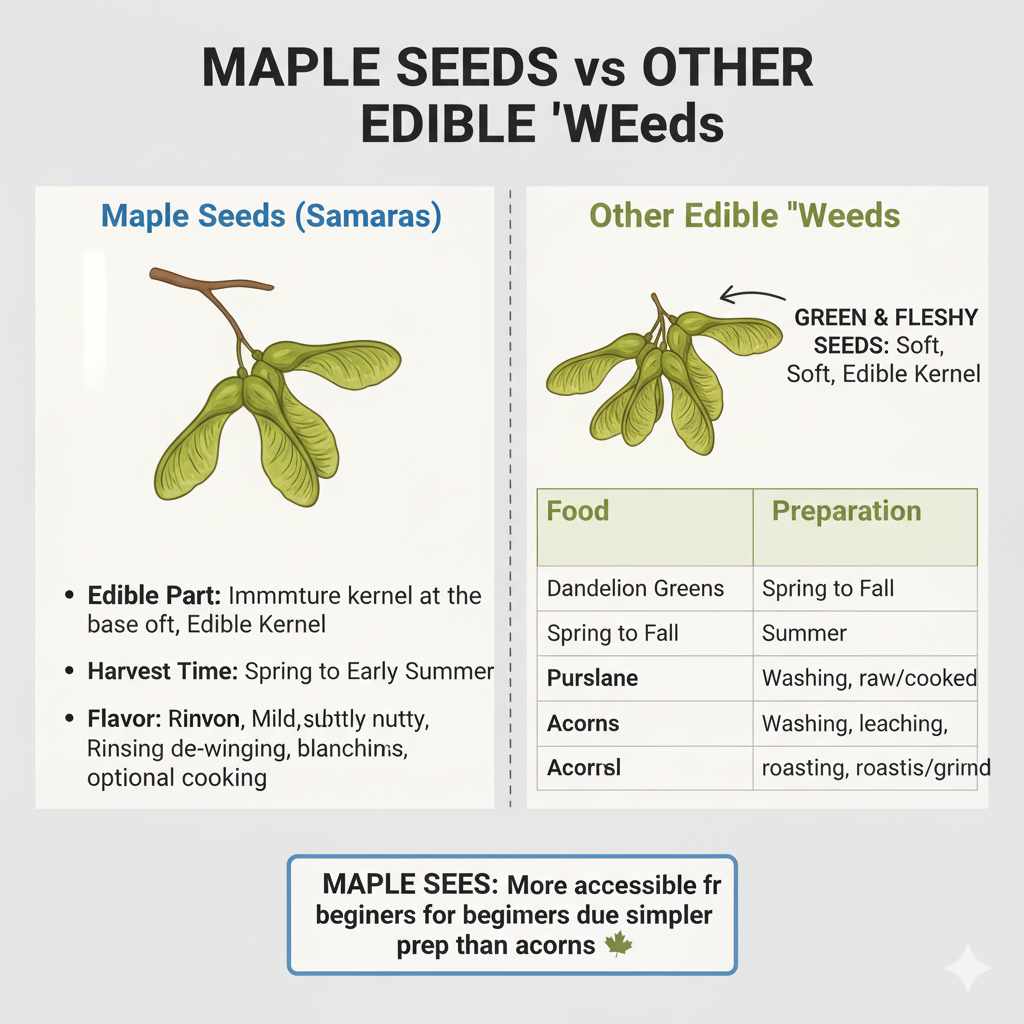
| Maple Seeds (Samaras) | Immature kernel at the base of the wing | Late Spring to Early Summer | Mild, subtly nutty, green-bean-like | Rinsing, de-winging, blanching, optional cooking |
| Dandelion Greens | Leaves | Spring to Fall | Bitter, earthy | Washing, potential soaking to reduce bitterness, can be eaten raw or cooked |
| Purslane | Leaves and stems | Summer | Slightly salty, lemony, succulent | Washing, can be eaten raw or cooked |
| Acorns | Nut kernel | Fall | Tannic, bitter (requires leaching) | Harvesting, shelling, leaching (boiling multiple times) to remove tannins, then roasting or grinding |
The process for preparing maple seeds is generally less involved than that for acorns, which require a significant leaching process to remove bitter tannins. This makes maple seeds a more accessible option for beginner foragers looking for a quick reward.
Common Questions About Eating Maple Seeds
Q1: Are all maple seeds edible?
While the seeds of most common maple species are edible when immature, it’s crucial to correctly identify the tree. It is always best to stick to known species like Sugar Maple, Red Maple, or Silver Maple.
Q2: When is the best time to harvest maple seeds for eating?
The ideal time is late spring to early summer (May to July) when the seeds are still green and the kernel inside is soft. Brown, mature seeds are generally not palatable.
Q3: What part of the maple seed do you eat?
You eat the small, undeveloped kernel located at the base of the wing. The papery wing itself is discarded.
Q4: Can I eat maple seeds raw?
Yes, immature, blanched, and de-winged maple kernels can be eaten raw. They have a mild, fresh flavor. Blanching is recommended to improve texture and reduce any potential bitterness.
Q5: Do maple seeds taste good?
Maple seeds have a mild, slightly nutty, or green-bean-like flavor. They are not overpowering and tend to take on the flavors of the dishes they are cooked with.
Q6: Are there any risks associated with eating maple seeds?
The main risks involve misidentification of the tree species and harvesting from polluted areas. Always be certain of your identification and choose a clean harvesting location.
Q7: How do I prepare maple seeds for cooking?
After harvesting, rinse them, trim off the wings, and blanch the kernels in boiling water for 1-2 minutes. Then, cool them in ice water and drain thoroughly. They are now ready for various culinary uses.
Conclusion
So, can you eat maple seeds? Absolutely! These humble little helicopters offer a fascinating glimpse into wild edibles and a surprisingly pleasant taste experience. By following proper identification, harvesting, and preparation techniques, you can enjoy this unique, natural food source. It’s a rewarding activity that deepens your connection to the outdoors and adds a novel element to your culinary adventures, proving that sometimes, the most extraordinary ingredients are found right beneath our feet (or rather, fluttering from the trees!). Happy foraging!