1/8 Inch Maple Plywood: Sizes, Uses & Buying Guide
1/8 inch (3mm) maple plywood is a thin, fine-grained hobby and craft plywood — common in precut sheet packs for laser cutting, model making, and wood burning, and rarely sold as a full 4×8 construction sheet at this thickness.
Characteristics Of Maple Plywood
Best Precut Hobby Pack
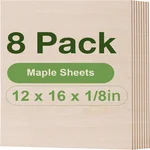 |
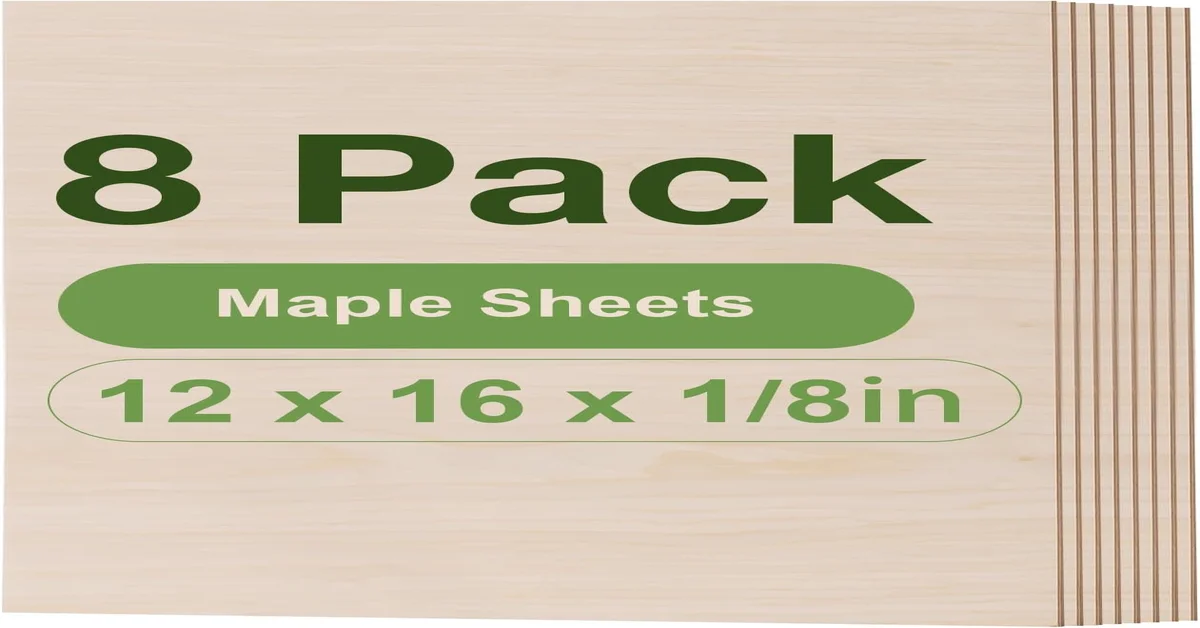
Wowood 1/8″ Maple Plywood Sheets, 12×16″, 8-Pack – $38.99 Clean, knot-free maple sheets at the exact 1/8″ thickness this page covers — sized for laser cutters, scroll saws, and model builds.
|
- Hardness: maple resists dents and scratches better than softer plywood faces like pine.
- Grain: fine, uniform grain with a light, creamy-to-tan color.
- Stability: holds its shape well and resists warping when stored flat.
- Workability: cuts and sands cleanly, which is why it’s the go-to face veneer for laser-cut and scroll-saw work.
At this thickness, expect real manufacturing tolerance — a typical hobby sheet spec allows around ±1/2″ on length and width and ±1/12″ on thickness. If a project needs an exact fit, measure the actual sheet rather than trusting the labeled dimension.
Ideal Uses For 1/8 Inch Maple Plywood
This thickness is chosen specifically because it’s thin enough to laser-cut or scroll-saw cleanly and light enough for models — not because it’s a general-purpose structural sheet.
- Laser cutting and engraving
- Architectural and hobby models
- Wood burning (pyrography) blanks
- Small furniture accents and inlay
- Decorative wall panels and signage, where weight matters
Use a sharp utility knife, a fine-tooth scroll saw blade, or a laser cutter for clean edges — a standard circular saw blade is too coarse and will tear out the thin face veneer.
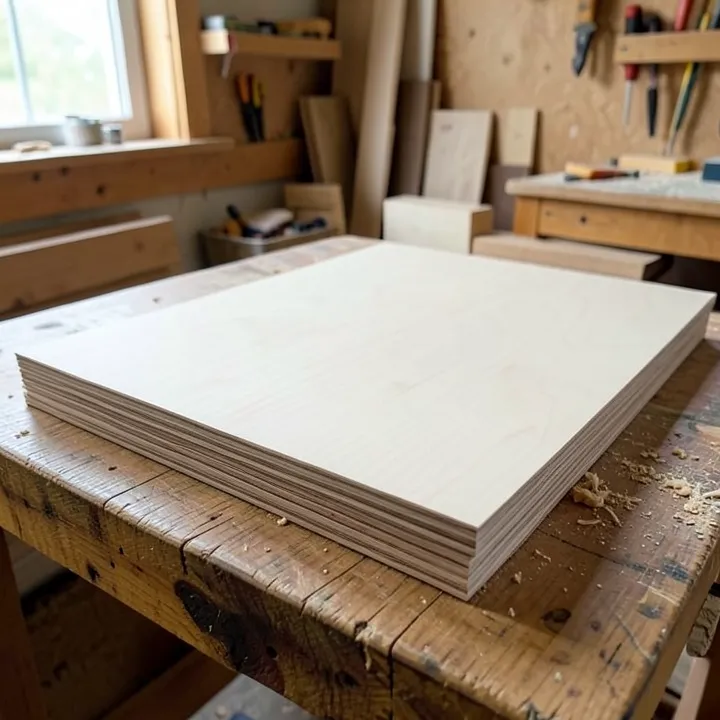
Maple Vs. Birch Plywood At This Thickness
| Feature | Maple Plywood | Birch Plywood |
|---|---|---|
| Color | Light, creamy tone | Warm, golden hue |
| Grain | Fine and subtle | Distinct and bold |
| Hardness | Harder face veneer | Slightly softer |
| Typical cost | Somewhat higher | Generally cheaper |
If you don’t specifically need a maple face, our 1/8 plywood sheets guide covers actual thickness, sheet weight, and current pricing across the standard Baltic birch and lauan grades at this same thickness.
Cutting And Fastening At 1/8 Inch
Cutting: score the cut line with a utility knife first, apply painter’s tape along the line to reduce tear-out, and cut from the back face when using a hand saw. Support the sheet on both sides — unsupported thin plywood flexes and splinters mid-cut.
Fastening: at 1/8″ thick, screws typically split or strip straight through the material — this thickness isn’t meant to be screwed. Wood glue or CA (cyanoacrylate) glue, with light clamping or weighted pressure while it cures, is the practical way to join or laminate pieces this thin. Save nails and screws for thicker stock.
Finishing
Sand progressively from 120-grit to 220-grit, wipe away dust with a damp cloth, then apply stain with a cloth or brush and wipe off the excess. A thin coat of polyurethane or oil-based sealant after the stain dries adds durability without hiding the grain — apply a second coat once the first has fully cured for a more robust finish.
Cost And Where To Buy
A precut hobby pack like an 8-sheet set of 12×16″ maple runs about $39 — noticeably more per square foot than a full 4×8 construction-grade sheet (roughly $30–$50), because you’re paying for consistent thickness, knot-free faces, and laser-ready sizing rather than raw square footage. For a full sheet at this thickness, check specialty lumber suppliers or a hardwood plywood dealer rather than a big-box store, which typically stocks 1/4″ as its thinnest maple option.
Preventing And Fixing Warping
Thin plywood warps easily with humidity changes. Store sheets flat, weighted, in a space with stable humidity (40–60% is a reasonable target) — never stood on edge or in a damp garage. If a sheet has already warped, lightly dampen the concave side, place it under weight or clamp it flat, and give it a few days to relax back into shape before using it.
Frequently Asked Questions
What Is Maple Plywood 1/8 Used For?
Mostly laser cutting, architectural and hobby models, wood burning, and small decorative accents — its thinness and clean face grain make it a poor fit for structural work but ideal for detailed, lightweight projects.
How Strong Is Maple Plywood 1/8?
It’s strong for its thinness thanks to cross-laminated layers, but 1/8″ is not a structural thickness — it flexes noticeably and isn’t rated for load-bearing use. Treat it as a surface/detail material, not framing stock.
Can Maple Plywood 1/8 Be Painted Or Stained?
Yes. Its smooth, fine grain takes stain and paint evenly. Sand progressively up to 220-grit before finishing for the cleanest result.
Can You Screw Into 1/8 Inch Maple Plywood?
Not reliably. At this thickness, screws tend to split or strip through the material. Use wood glue or CA glue with light clamping pressure instead.
Conclusion
1/8 inch maple plywood is a hobby and craft material, not a structural one — its value is in clean laser cuts, fine detail work, and a smooth surface that finishes well. Buy a precut pack for laser cutting and models, source a specialty supplier if you need a full sheet, and fasten with glue rather than screws at this thickness.
Sponsored / affiliate links. As an Amazon Associate I earn from qualifying purchases. I may earn additional commission from eligible campaigns.