Can You Mix Duraflame Logs With Regular Wood?
Duraflame recommends burning one firelog alone indoors and never adding wood to it — the wax composite burns roughly twice the BTU per pound of cordwood, and a disturbed firelog can flare up mid-burn. Ignoring this can overheat a fireplace or coat a flue with soot. This guide covers what Duraflame’s own instructions say, the safer placement technique if you still combine them, and which appliance types (wood stove, insert, fire pit) never take a firelog at all.
Some links below are Amazon affiliate links, which means we may earn a small commission on qualifying purchases at no extra cost to you.
Quick Answer
Duraflame’s official instructions say no — burn one firelog alone indoors and never add wood to it, since the extra fuel can cause the firelog to flare up or exceed your fireplace’s rated heat output. If you still combine them, place the firelog beneath the cordwood (never on top), light it first, and never poke or restack it once burning — especially in the first hour.
What Are Duraflame Logs?
Best Indoor/Outdoor Duraflame Pick
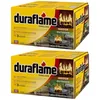
Duraflame 12-Pack Fire Logs for Indoor and Outdoor Use, 3-Hour Burn, 4.5 Lb Each
Rated for both indoor fireplaces and outdoor fire pits, so you don’t have to guess which appliance type a firelog is cleared for.
- Best for: households that burn fires both indoors and in an outdoor fire pit
- Why we picked it: the indoor/outdoor rating removes the appliance-type guesswork this article covers
- Main drawback: still burns hotter per pound than cordwood, so don’t mix it with wood in an indoor fireplace
Compare more fireplace safety options
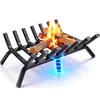 Option 1 AMAGABELI Fireplace Grate 30 Inch Heavy Duty Fire Pit Grate
|
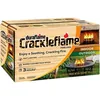 Option 2 Duraflame Crackleflame Firelogs, Cozy Crackling Fireplace Logs
|
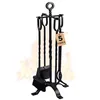 Option 3 AMAGABELI 5-Piece Wrought Iron Fireplace Tool Set
|
As an Amazon Associate we earn from qualifying purchases.
A Duraflame firelog is a manufactured fire log made of compressed sawdust and paraffin wax that is designed to be burned as a single, whole unit — not cut, broken, or mixed with other fuel. It ignites without kindling and burns with less smoke and ash than cordwood, but it also concentrates roughly twice the heat energy per pound, which is the reason manufacturer instructions warn against combining it with wood. For the broader rules on burning safely indoors and out, see our wood-burning solutions hub.
Composition of Duraflame Logs
Duraflame logs are made from compressed sawdust and recycled biomass fibers bound with paraffin wax. The wax lets the log ignite instantly and burn at a steady, predictable rate, and the compressed structure is what produces the low-ash, low-spark burn the product is known for.
Benefits of Duraflame Logs
Duraflame logs skip the kindling step entirely, light with a single match, and burn cleaner than most cordwood — useful for anyone who wants a fire started fast without storing or splitting firewood. They also produce less ash and fewer airborne sparks, which is part of why manufacturers restrict them to specific appliance types rather than open burning. If burn time is your main concern, our comparison of the longest-burning fire logs ranks Duraflame against other manufactured logs.
Regular Wood Vs. Duraflame Logs
Regular cordwood burns longer and cooler, while a Duraflame firelog burns hotter, faster, and cleaner — the two are built for different jobs, which is exactly why the manufacturer does not design them to be combined in one fire.
Density and Burn Time
Cordwood is less dense and burns over several hours, making it the better choice for a long-lasting fire. A Duraflame firelog is denser per volume but burns on a fixed, engineered timeline (typically 2.5–4 hours depending on the product), so it suits a shorter, controlled fire rather than an all-night burn.
Cleanliness of the Burn
Cordwood produces more smoke, ash, and soot as it burns, especially if it isn’t fully seasoned. A Duraflame log burns with markedly less smoke and ash, which is one reason it is popular for indoor fireplaces with glass doors or limited flue draft.
Real Wood Flavor Vs. Chemical Aroma
Cordwood produces the traditional wood-smoke aroma many people associate with a real fire. A Duraflame log’s wax content gives off a milder, slightly different scent — noticeable to some, a non-issue to others.
Cost Comparison
Cordwood is typically cheaper per hour of burn time if you have local access to seasoned wood, while a Duraflame log costs more per log but saves the time and equipment needed to split, season, and store firewood.
Can You Mix Duraflame Logs With Regular Wood?
Duraflame’s own safety guidance says no — burn one firelog alone in an indoor fireplace and never add anything to it once lit. Some people do combine a firelog with cordwood anyway for a faster, hotter start, but doing so goes against the manufacturer’s instructions and carries real flare-up risk if the technique isn’t followed exactly.
What Duraflame Officially Recommends
According to Duraflame’s published safety guidance, an indoor fireplace should burn only one firelog at a time, with nothing else added to that fire. The reasoning is straightforward: a firelog already contains roughly twice the BTU energy per pound of seasoned firewood, so adding cordwood on top of an already-burning firelog can push total heat output past what a fireplace or flue is rated to handle.
“Burn only one firelog at a time (in an indoor fireplace), and never add anything to an existing firelog fire.”
If You Still Mix Them: The Safer Placement Technique
If you choose to combine them despite the manufacturer’s guidance, place the firelog beneath the cordwood, not on top of it, and build the stack before lighting anything. Light the firelog first so it establishes a steady flame at the base, then let the cordwood catch from below — never set cordwood on top of a firelog that is already burning, since the sudden extra fuel load is what triggers a flare-up.
Use no more than one standard indoor firelog per fire, keep the total wood added modest so airflow isn’t smothered, and watch the fire continuously for the first 15–20 minutes after lighting, when flare-up risk is highest.
Never Do These Things While Burning
- Never cut or break a firelog apart — it’s engineered to burn as one sealed unit, and a broken piece burns unpredictably fast.
- Never poke, stir, or restack a firelog once it’s lit — disturbing it in the first hour after lighting is the single most common cause of a sudden flare-up.
- Never add a second firelog to an indoor fire — standard indoor firelogs are rated for one at a time; only specific outdoor-labeled products are designed for two.
- Never assume every appliance is rated for firelogs — check the product label before using one in anything other than an open, traditional indoor fireplace.
📊 Poking or breaking a burning firelog within the first hour of lighting is specifically flagged as the trigger point for sudden flare-ups. — Source: Duraflame product safety guidance
Indoor Vs. Outdoor Duraflame Logs: Different Appliance Rules
Not every Duraflame product is rated for the same appliance, and mixing that up is a real safety gap — a standard indoor firelog is not automatically safe in a wood stove, fireplace insert, chimenea, or outdoor fire pit just because it will physically fit and burn.
Never Use a Standard Firelog In These
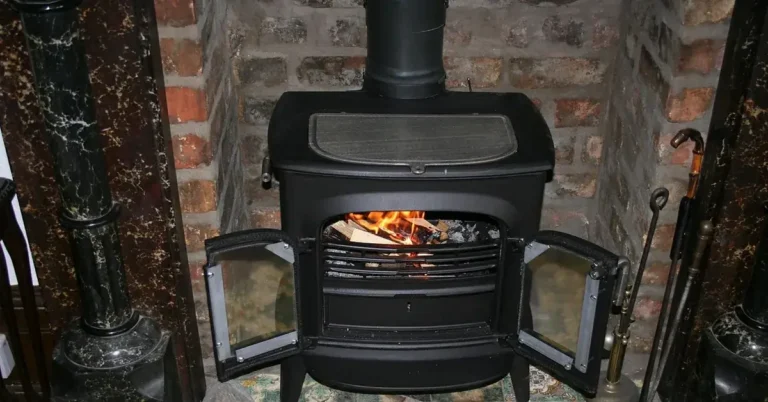
- Wood stoves and fireplace inserts with doors that restrict airflow — a firelog’s heat output can overfire a closed-door appliance even at low air control, coating the flue with soot.
- Barbecues or grills — firelogs are not formulated as a food-safe cooking fuel.
- Any outdoor fire pit or chimenea, unless the specific product label says it’s rated for outdoor use — standard indoor firelogs are built for a traditional open-hearth fireplace, not open-air outdoor burning.
Duraflame does sell outdoor-specific products (labeled Indoor & Outdoor Firelogs or Outdoor Firelogs) built for open fire pits, and some of those are designed to burn two at once in a well-ventilated, uncovered area. The rule that matters is simple: check the label on the specific product you own before assuming it belongs anywhere other than an open indoor fireplace. If you’re evaluating whether your wood stove itself is running hotter than it should, our guide on warning signs a wood burner is overheating covers what to watch for, and if fire pit safety is the concern, see our breakdown of what’s actually safe to burn in an outdoor wood fire pit.
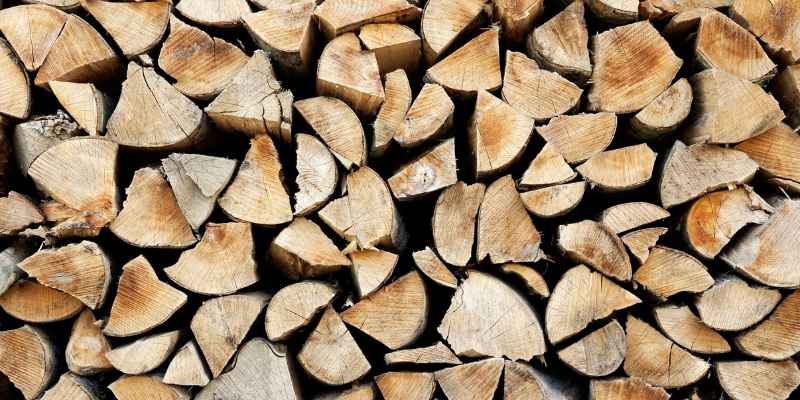
How Many Duraflame Logs To Use
A standard indoor firelog is rated for one at a time, with nothing else added to that fire — not a second firelog, and not cordwood layered on top of an already-burning one. Outdoor-labeled Duraflame products are the exception: some are specifically designed to burn two logs together in an open, well-ventilated fire pit.
Determining The Number Of Logs Based On Fireplace Size
A standard-size indoor fireplace only needs one firelog to produce a full, sustained fire — adding a second indoor-rated log is not a manufacturer-supported use case, regardless of how large the firebox is. Keep the log clear of the fire screen and any glass doors so radiant heat doesn’t stress the hardware.
Extending Burn Time Without Breaking The Rules
If you want more burn time than one firelog provides, the safer route is to let the firelog finish burning down first, then add fresh cordwood to the established coal bed — rather than stacking wood onto a firelog that’s still actively flaring. This avoids the sudden fuel-load spike that causes overheating, while still giving you a longer fire overall.
When To Use Only Duraflame Logs
Duraflame logs are the better choice on their own — without cordwood — whenever you need a fast, contained fire rather than a long, low-maintenance burn.
Small Fires For Quick Heat
A single firelog lights instantly and produces a steady, consistent flame, which makes it a good match for a small fireplace or a quick warm-up fire where you don’t want to manage kindling or a multi-log stack.
When To Use Only Regular Wood
Cordwood is the better choice on its own whenever you need a long burn time, food-safe cooking heat, or the traditional crackle and aroma of a real wood fire — none of which a firelog is designed to deliver.
Long Burn Times
If you need a fire that lasts several hours without attention, seasoned cordwood outlasts a firelog’s fixed 2.5–4 hour burn window by a wide margin.
Cooking Over An Open Fire
Firelogs contain wax and additives that aren’t formulated for food contact, so cordwood is the only appropriate fuel if you’re cooking directly over the fire.
Other Factors To Consider
- For the traditional crackle, pop, and wood-smoke aroma of a real fire, cordwood delivers what a firelog can’t replicate.
- If you have a wood-burning stove or fireplace insert with restrictive doors, cordwood is the safer default — see the appliance-type rules above.
- For households with young children or pets, a firelog’s lower spark output can be an advantage, but never leave any fire unattended regardless of fuel type.
Frequently Asked Questions About Mixing Duraflame Logs With Wood
Are Duraflame Logs Better Than Wood?
Duraflame logs burn cleaner and hotter per pound than cordwood, but they’re not a universal upgrade — they’re built for a fixed, shorter burn and shouldn’t be used in a wood stove or mixed with cordwood, since combining fuels can push heat output past what your fireplace is rated for.
How Many Duraflame Logs Can You Use At Once?
One, in a standard indoor fireplace, with nothing else added to that fire. Only specific outdoor-labeled Duraflame products are designed to burn two logs together, and only in an open, well-ventilated fire pit.
Can You Cut Duraflame Logs In Half?
No. A firelog is engineered to burn as one sealed unit, and cutting or breaking it apart can make it burn unpredictably fast and flare up, since the wax and compressed sawdust core is no longer contained the way it was designed to burn.
Why Can’t You Use Duraflame Logs In A Wood Stove?
A firelog’s wax content burns hot enough to overfire a wood stove, even with the air control turned down, and the fast burn can coat the flue and chimney cap with soot. Duraflame’s guidance restricts standard firelogs to open, traditional indoor fireplaces rather than closed-door stoves or inserts.
Can You Put Wood On Top Of A Duraflame Log?
It’s against manufacturer guidance, but if you choose to do it anyway, never place cordwood on a firelog that’s already burning — build the stack with the firelog on the bottom before lighting anything, since adding fuel to an active flame is what causes flare-ups.
How Long Should You Wait Before Disturbing A Burning Firelog?
Don’t poke, stir, or restack it at all while it’s burning, but the first hour after lighting is specifically the highest-risk window for a sudden flare-up if the log is disturbed, according to manufacturer safety guidance.
Conclusion
Duraflame’s own guidance is clear: burn one firelog alone indoors and don’t add cordwood to it. If you mix them anyway, keep the firelog underneath, light it first, never restack or poke it — especially in that first hour — and always check the product label before using any firelog outside a traditional open indoor fireplace.
Sponsored / affiliate links. As an Amazon Associate I earn from qualifying purchases. I may earn additional commission from eligible campaigns.