Can You Put Tung Oil Over Stain? Yes – Wait This Long First
Yes, you can put tung oil over stain, but only once the stain has fully cured, not just dried to the touch. Rushing this step is the single most common reason a tung-oil-over-stain finish turns out blotchy, tacky, or slow to harden.
It is a fair question to ask, because the two products work very differently. Stain is designed to soak color into open wood pores and then get wiped mostly off the surface. Tung oil is a penetrating finish that needs to work its way into whatever wood is left exposed beneath that stain layer. If the stain underneath hasn’t finished off-gassing its solvents, or if it’s a thicker gel stain that’s still sitting mostly on the surface, the tung oil has nowhere to go and nothing to bond with. Below is exactly how long to wait for each stain type, which stains actually cause problems (it’s not the ones most people assume), and the step-by-step process for a clean, even result.
How Long to Wait Before Applying Tung Oil Over Stain
Best Pure Tung Oil for Topcoating Stained Wood
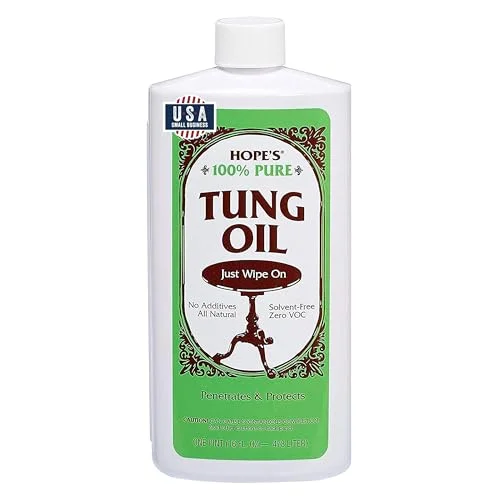 |
Hope’s 100% Pure Tung Oil, Food Safe Wood Finish, 16 Fl Oz – $17.99 A solvent-free, additive-free tung oil that penetrates cured stain instead of just filming over it, which is exactly what this guide’s application steps below are built around.
|
Cure time depends entirely on which type of stain is on the wood, not on how the wood looks or feels. A surface can look perfectly dry and still be off-gassing solvent underneath.
Oil-based wiping stains (Minwax Wood Finish, Varathane Premium Wood Stain, and similar): dry to the touch in a few hours, but the can’s own directions almost always call for a 24–48 hour wait before any topcoat. In a cool or humid shop, push that to the full 48 hours — the solvent needs time to fully evaporate, not just flash off the surface.
Water-based stains: these feel dry within an hour or two, which tricks a lot of people into topcoating too soon. Give them a minimum of 24 hours anyway. Water-based stain can trap residual moisture in the wood fibers longer than it looks, and applying an oil finish over that moisture is a common cause of a cloudy or hazy finish.
Gel stains (including walnut and other dark gel stains used on tabletops): these are the slowest. Because a gel stain sits mostly on the surface instead of soaking in, it forms a thicker film that can take 24–72 hours to cure, and up to a full week in a cool or humid space. Rushing a gel stain is the single most common cause of a tacky, never-fully-hardening tung oil layer — if you used a gel stain, wait the extra day or two.
Does the Type of Stain Actually Matter?
There’s a persistent myth that oil finishes “don’t adhere well” to solvent-based (oil) stains. In practice it’s the opposite: most oil-based wiping stains are specifically formulated to be topcoated with an oil or oil-based finish — that pairing is the manufacturer’s default recommendation on the can, not a workaround. Tung oil and an oil-based stain are chemically compatible, which is why this combination is one of the most common finish schedules in woodworking.
The real risk isn’t the stain’s chemistry, it’s one of these three things:
- Incomplete cure. Trapped solvent or moisture under a tung oil layer keeps it from hardening properly, leading to a soft, gummy film weeks later.
- Wax or silicone additives. Some stain-and-finish combo products, and older stains with added wax, leave a film that blocks oil penetration entirely. Check the can — if it says “polyurethane” or “wax” anywhere in the product name, treat it differently (see the FAQ below).
- Gel stain thickness. Because gel stain doesn’t fully penetrate, it behaves more like a thin painted layer than a true stain, so it needs the longer cure window covered above.
A dark walnut gel stain on a table top is a good example: it looks fully dry within a day, but the film underneath is often still curing. Wait the full 48–72 hours, then do the test patch below before committing to the whole surface.
Step-by-Step: Applying Tung Oil Over Cured Stain
- Confirm the stain is fully cured using the wait times above, not just a touch test.
- Test a hidden spot first — the underside of a shelf or an inside edge. Apply a small amount of tung oil and check it after a few hours for cloudiness, blotching, or a spot that stays tacky.
- Wipe the surface with a tack cloth to remove dust before applying anything. Any grit trapped under the oil will show once the finish cures.
- Cut the first coat 50/50 with mineral spirits. Pure tung oil is thick and slow to absorb, especially over a stained (already partially sealed) surface. Thinning the first coat helps it penetrate instead of just sitting on top.
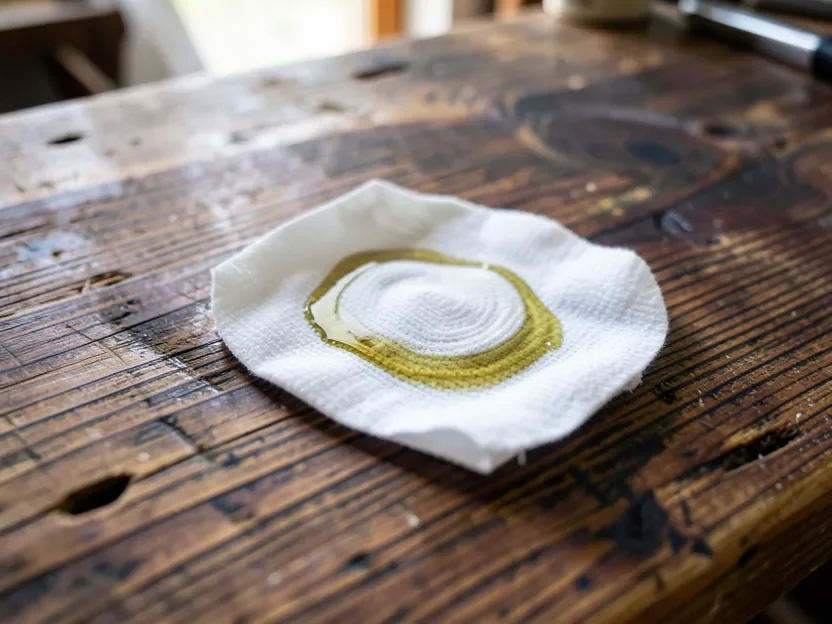
- Apply with a clean cloth or brush, working with the grain, and let it sit for 15–20 minutes so it can soak in.
- Wipe off all excess with a dry, lint-free cloth. This is not optional — tung oil cures by oxidation, and any puddled excess left on the surface will stay soft and gummy instead of hardening.
- Let it cure 24 hours, then repeat for coats two and three, using full-strength (unthinned) oil once the first coat has sealed the surface. Most stained pieces look their best with 2–3 coats total.
- Buff lightly with a soft cloth after the final coat has cured for a full day to bring up an even sheen.
Always store used rags flat outdoors or submerged in water until they’re dry — oil-soaked rags generate heat as they cure and can combust in a pile.
Common Mistakes That Ruin a Tung Oil Over Stain Finish
- Recoating before the stain has cured — the most common cause of a finish that never fully hardens.
- Applying tung oil full-strength on the first coat over a stain that’s already partially sealed the wood’s pores, leaving a surface film instead of a penetrating bond.
- Not wiping off excess oil within 15–20 minutes, which leaves a sticky, dust-attracting film that never properly cures.
- Skipping the test patch on a hidden area, especially with gel stains or an unfamiliar stain-and-oil combination.
- Assuming “dry to the touch” means “cured.” Those are two different things, and the gap between them is exactly where most of these finishes go wrong.
Frequently Asked Questions
Can you put tung oil over gel stain?
Yes, including walnut and other dark gel stains. Because gel stain forms a thicker surface film than a wiping stain, give it 48–72 hours to cure (longer in a cool or humid shop) before applying tung oil, and test a hidden spot first.
Can you apply tung oil over oil-based stain?
Yes, this is the standard, manufacturer-intended combination. Oil-based stains and tung oil are chemically compatible. Just let the stain cure for 24–48 hours first so the solvent has fully evaporated before you topcoat.
How long should stain dry before you use tung oil over it?
At minimum 24 hours for a water-based stain, 24–48 hours for an oil-based wiping stain, and 48–72 hours for a gel stain. When in doubt, wait the longer time and test a hidden spot before doing the whole piece.
Can you mix stain into tung oil?
You can buy pre-mixed tinted tung oil products, but mixing raw pigment stain into pure tung oil yourself isn’t recommended. The stain’s pigment and solvent can interfere with how the oil cures, leading to an uneven, blotchy result. If you want color and protection in one step, look for a product sold specifically as a tung-oil-based stain rather than mixing your own.
Does tung oil work over a stained table top, like an American walnut stain?
Yes. Table tops just take extra care because they see more wear and moisture (cups, condensation, cleaning) than vertical surfaces. Let the walnut stain fully cure, apply 2–3 coats of tung oil with full drying time between coats, and plan on refreshing the oil every 6–12 months depending on use.
Conclusion
Tung oil over stain is a reliable, food-safe way to protect and deepen the color of stained wood, and it works over oil-based, water-based, and gel stains alike. The finish only goes wrong when the stain underneath hasn’t actually finished curing. Match the wait time to your stain type, thin the first coat so it can penetrate, wipe off every trace of excess oil, and you’ll get a durable, natural-looking topcoat instead of a tacky one.
Sponsored / affiliate links. As an Amazon Associate I earn from qualifying purchases. I may earn additional commission from eligible campaigns.