RIDGID Cordless Vacuums: Models, Specs, and Which One to Buy
RIDGID’s cordless vacuums all run on the same 18V battery platform as RIDGID’s drills and saws — the 3-gal. NXT wet/dry model pulls 82 CFM and runs about 34 minutes on a single 9.0Ah battery. Picking the right one depends on whether you need shop-vac suction or just a quick handheld for the truck. This guide covers real specs for each model, how the battery system actually works, and which one to buy.
RIDGID Cordless Vacuum Models Compared
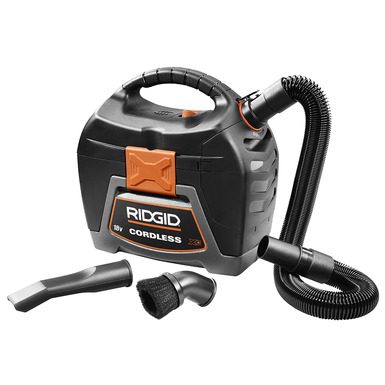
RIDGID sells four distinct cordless vacuums, and they’re not interchangeable — a hand vac won’t pick up a wet mess in a shop, and a full wet/dry vac is overkill for cleaning out a truck cab. Here’s how the real specs stack up.
| Model | Type | Capacity | Airflow / Power | Approx. Price |
|---|---|---|---|---|
| HD0318 (NXT) | Wet/dry shop vac | 3 gal. | 82 CFM | ~$129 (bare tool) |
| X4 18V | Wet/dry shop vac | Larger canister | RIDGID’s highest-output cordless vac motor | Varies by retailer |
| R8609021B | Handheld dry vac | Small canister, no hose | Not CFM-rated by RIDGID; built for quick pickup, not shop debris | ~$59–$99 (kit) |
| R86090B (Gen5X) | Handheld wet/dry | Small canister | Not CFM-rated by RIDGID | ~$70–$100 (kit) |
For most woodworking shops, the HD0318 NXT is the pick — it’s the only one rated in CFM by RIDGID, it’s a real wet/dry vac (not just a handheld), and it uses the same batteries as everything else in a RIDGID 18V toolbox. The X4 exists for people who want more raw suction and don’t mind paying more for it.
How the RIDGID 18V Battery System Actually Works
A RIDGID cordless vacuum runs on any RIDGID 18V power tool battery — the same packs that go in RIDGID’s drills, impact drivers, and saws. That’s the real advantage of buying into this line: no dedicated vacuum battery to keep charged separately.
The NXT model has two battery slots, but it doesn’t draw from both at once. It runs off one pack until it’s depleted, then automatically switches to the second — so the second battery extends runtime, it doesn’t add power. In independent testing, a single 9.0Ah Octane battery ran the NXT vac for about 34 minutes and 25 seconds of continuous suction; a pair of 9.0Ah packs stretched that to roughly 69 minutes. Smaller packs (1.5–4.0Ah) will run for noticeably less time but still work in the vacuum — RIDGID doesn’t require a minimum amp-hour rating, and you can even mix an Octane pack with a standard pack in the two slots.
Is a RIDGID Cordless Vacuum Powerful Enough for Shop Cleanup?
Honestly — not as powerful as a corded shop vac, and that’s worth knowing before you buy. A typical corded 5-gallon shop vac runs 150+ CFM off wall power; the NXT’s 82 CFM on battery is real but noticeably less. Where the cordless vac wins is convenience: no cord to drag across a job site, no hunting for an outlet, and it uses batteries you probably already own if you run other RIDGID tools. For fine sawdust cleanup at the bench, sweeping a truck bed, or a quick spill, it’s plenty. For a shop that generates heavy debris daily — planer shavings, a full dust collection pass — a corded vac or dedicated dust collector still does the job faster.
Attachments and Surface Compatibility
The NXT and X4 models ship with a crevice tool for tight corners and an expandable hose; the utility nozzle handles flat debris on carpet and hardwood floors. Because RIDGID vacuums use the industry-standard 2.5-inch hose diameter, most generic shop-vac attachments and hoses will also fit — including ones made for other brands, which is handy if you already own a set. If your primary use case is a vehicle interior rather than a shop, a dedicated small cordless vacuum built for that job will usually maneuver better than a shop vac’s rigid hose.
Best RIDGID Battery Upgrade Pick
|
RIDGID 18V 4.0Ah MAX Output Battery (AC840040) A second genuine RIDGID 18V battery so the vacuum keeps running instead of sitting on the charger mid-job — and it works in every other RIDGID 18V tool you own.
|
As an Amazon Associate we earn from qualifying purchases.
Using It for Sawdust and Shop Cleanup
For a woodworking shop specifically, treat a RIDGID cordless vacuum as a cleanup tool, not a dust collector. The standard foam sleeve and cartridge filter that ship with the NXT are built to trap chips, shavings, and general debris — not the fine airborne dust from sanding or a table saw cut. Run enough fine dust through the stock filter and it clogs fast, which drops suction well before the battery runs out. Two practical fixes: knock the filter out over a trash can between uses instead of leaving fine dust packed into the pleats, and if you’re regularly vacuuming drywall dust or fine sanding dust rather than chips, buy RIDGID’s fine-dust filter upgrade instead of running the stock cartridge past its limit.
For actual dust collection at a stationary tool — a table saw, planer, or router table — a shop vac (corded or cordless) is the wrong tool regardless of brand. Those tools need a dedicated dust collector or cyclone rated for continuous high-CFM airflow, not a portable vacuum designed for intermittent cleanup. Where the cordless RIDGID actually earns its keep is the five-minute jobs: clearing chips off a workbench, sucking sawdust out of a miter saw’s dust port after a cut list, or cleaning out a truck bed on the way to a job site — tasks where dragging a cord and finding an outlet is the real time cost, not suction power.
Warranty: Is It Worth Registering?
Yes, and it’s easy to forget to do. RIDGID’s Lifetime Service Agreement (LSA) covers the original owner of eligible RIDGID power tools — including batteries — with free replacement parts, free service, and free replacement batteries for as long as you own the tool. The catch is the deadline: you have to register the tool and submit proof of purchase within 90 days of buying it at RIDGID.com/registration, or the LSA coverage doesn’t apply. Miss the window and you’re back to RIDGID’s standard limited warranty instead of the lifetime coverage. Shop vacuums and handheld vacuums have historically had narrower LSA eligibility than RIDGID’s drills and saws, so check the specific model’s registration page before assuming full lifetime battery coverage applies — it’s a five-minute step that’s worth confirming rather than skipping.
RIDGID vs. Craftsman: Is the Hose Actually Compatible?
Yes — RIDGID and Craftsman shop vacs both use the standard 2.5-inch hose diameter, so hoses, wands, and most attachments cross over between the brands. Battery packs do not cross over; RIDGID’s 18V cordless line only accepts RIDGID 18V batteries. See our full Craftsman vs. RIDGID shop vac comparison for how the two brands compare on corded models.
Frequently Asked Questions
Does RIDGID make a battery-powered vacuum?
Yes. RIDGID makes four cordless 18V vacuums: the HD0318 NXT (3-gal. wet/dry), the X4 (higher-output wet/dry), and two handhelds — the R8609021B and the Gen5X R86090B. All four run on RIDGID’s 18V power tool battery platform.
Can I use my other RIDGID 18V tool batteries in the cordless vacuum?
Yes. The vacuum accepts any RIDGID 18V battery, from 1.5Ah compact packs up to 9.0Ah Octane packs, and you can mix pack sizes across the two battery slots. Nothing in the vacuum requires an Octane-specific or high-capacity pack to function.
How long does a RIDGID cordless vacuum run on one charge?
On the NXT wet/dry model, a single 9.0Ah battery runs for about 34 minutes and 25 seconds of continuous suction. Loading a second 9.0Ah battery extends that to roughly 69 minutes total, since the vacuum uses one pack at a time rather than drawing from both simultaneously. Smaller-capacity batteries will run for proportionally less time.
Is a RIDGID cordless vacuum as powerful as a corded shop vac?
No, not quite. The NXT’s 82 CFM airflow is solid for a battery-powered vacuum but still below a typical corded 5-gallon shop vac’s 150+ CFM. The cordless vacuum trades some peak suction for the ability to work without an outlet or a dragging cord.
Is RIDGID compatible with standard shop vac hoses and attachments?
Yes. RIDGID vacuums use the industry-standard 2.5-inch hose diameter, so most generic shop-vac hoses, wands, and attachments — including ones from other brands like Craftsman — will fit. Battery packs are RIDGID-specific and do not cross brands.
Watch: RIDGID 18V Cordless Wet/Dry Vacuum Review
Bottom Line
For most woodworking shops, the HD0318 NXT is the RIDGID cordless vacuum to buy: it’s the only model RIDGID rates in CFM, it holds 3 gallons, and it runs on the same 18V batteries as the rest of a RIDGID toolbox. Buy the handhelds only if you specifically need a small vacuum for a vehicle or quick spot cleanup — they’re not a substitute for shop-vac suction. If runtime is a concern, a second 18V battery is the cheapest way to keep the vacuum running through a full cleanup pass.
Sponsored / affiliate links. As an Amazon Associate I earn from qualifying purchases. I may earn additional commission from eligible campaigns.