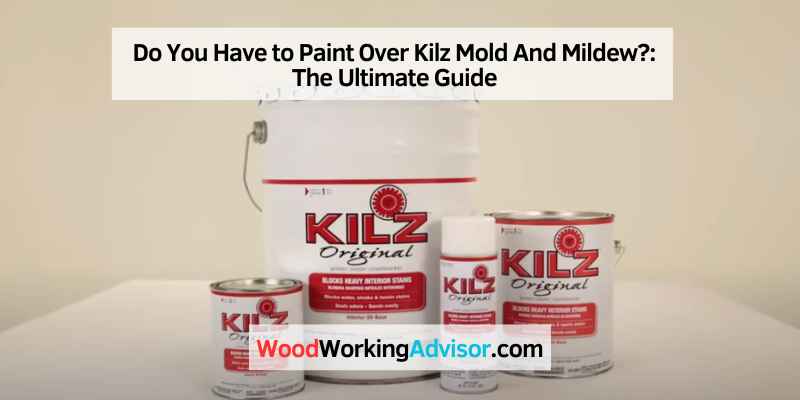
Do You Have to Paint Over Kilz Mold And Mildew?: The Ultimate Guide
Yes, as a primer, Kilz Mold and Mildew must be top-coated with a mold and mildew-proof paint. Kilz primer can help prevent new mold growth but should not be used as the sole protection against mold and mildew.
Painting over mold and mildew can be a tempting quick fix, but it is not a permanent solution. Kilz Mold and Mildew Primer is a useful tool in preventing mold and mildew growth, but it must be used in conjunction with other mold-resistant products and thorough mold remediation. Skipping straight to a topcoat, or assuming any white primer will do the job, is one of the most common and costly mistakes homeowners make after a water leak or a humid bathroom season.
It is important to remember that painting over mold and mildew does not solve the underlying problem of moisture, which is what causes mold growth in the first place. Therefore, it is essential to address moisture issues and take preventative measures to keep mold and mildew at bay. That means checking for plumbing leaks, poor bathroom or kitchen ventilation, roof or window leaks, and high indoor humidity before you ever open a paint can.
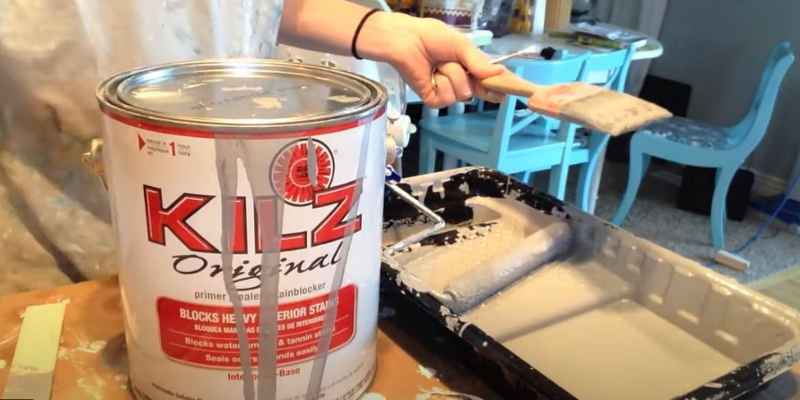
How to Remove Mold Before Priming
- Identify and fix the moisture source (leak, condensation, poor ventilation) — priming over an active leak will fail regardless of the product used.
- Wear an N95 respirator, gloves, and eye protection; ventilate the room.
- Scrub the affected surface with a detergent solution or a mold-specific cleaner, then let it dry completely (typically 24-48 hours).
- For porous materials like drywall or fabric-backed insulation with heavy mold growth, cut out and replace the material instead of just cleaning the surface.
- Once the surface is clean and fully dry, apply a mold-killing primer, followed by a mold and mildew-resistant topcoat.
Kilz Product Line: Which One Do You Need?
| Product | Purpose | Must be top-coated? |
|---|---|---|
| Kilz Original | General stain-blocking primer | Yes |
| Kilz Mold & Mildew Primer | Blocks stains and helps resist new mold/mildew growth on the primed surface | Yes, with a mold-resistant topcoat |
| Kilz Restoration | Heavy stain and odor blocking after water damage | Yes |
| Zinsser Perma-White | Self-priming mold and mildew-proof topcoat paint | Can be used as a finish coat |
Note the key difference: Kilz Mold & Mildew is a primer, while Zinsser Perma-White is a finish paint — they are not interchangeable, and using only the primer without a compatible topcoat leaves the surface under-protected long-term.
Frequently Asked Questions Of Do You Have To Paint Over Kilz Mold And Mildew
Do I Have To Paint Over Mold Killing Primer?
Yes, as a primer, Mold Killing Primer must be top-coated. Therefore, it is recommended to apply a mold and mildew proof top coat such as Zinsser Perma-White Mold & Mildew Proof Paint after using the primer.
Is Kilz Enough For Mold?
While Kilz can help prevent new mold growth, it is not an effective paint against mold. For best results, apply Kilz after using a mold-killing primer and top coat with a mold and mildew proof paint. Kilz should always be top coated and is not a substitute for proper mold remediation.
How Do You Use Kilz Mold And Mildew?
When using Kilz mold and mildew, it must be top-coated with a mold and mildew proof paint like Zinsser Perma-White. Kilz is not effective against mold, but it can help prevent its growth. It’s best to apply Kilz after a mold-killing primer.
Protective clothing and face protection should be worn while using this product. Painting over mold with Kilz will not kill the mold. Mold should be removed before painting.
Is Kilz Mold And Mildew Toxic?
KILZ® Mold and Mildew Interior Exterior Primer contains hazardous components that can cause skin and eye irritation. It is important to wear protective clothing and avoid consuming the product. As a primer, it does not kill mold, but can help prevent new mold from growing if used after a mold-killing primer and before a mold-resistant topcoat.
It is necessary to remove mold before painting, and KILZ is not the best primer for mold remediation.
How long does Kilz Mold and Mildew Primer take to dry?
Most Kilz mold-resistant primers are dry to the touch within about an hour and ready to topcoat in roughly 3-4 hours under normal indoor conditions, though cold, humid, or poorly ventilated rooms slow this significantly. Always check the can’s current label for the exact recoat window, since formulas are updated over time.
Can I use Kilz Mold and Mildew Primer outdoors?
Kilz makes both interior and exterior mold-resistant formulas; check the specific product label rather than assuming one formula covers both. Exterior use also demands a compatible, UV-stable exterior topcoat rated for mold and mildew resistance.
Common Mistakes That Lead to Mold Coming Back
- Priming and painting directly over visible mold instead of cleaning and drying the surface first.
- Never identifying or fixing the actual moisture source (leaky pipe, roof leak, poor bathroom ventilation, or high indoor humidity).
- Skipping the mold-resistant topcoat and treating the primer alone as a finished, protective surface.
- Using a flat, non-washable topcoat in a high-humidity room like a bathroom, which is harder to wipe down and keep clean.
- Painting over damp drywall or wood before it has fully dried, trapping moisture behind the new coating.
Conclusion
To wrap it up, using Kilz Mold and Mildew Primer is a great option to prevent mold and mildew growth when it is paired correctly with cleaning, drying, and a proper mold-resistant topcoat. However, it’s essential to remember that the primer should be used only as a primer and should be top-coated with a mold-resistant paint for better, longer-lasting results.
It’s also important to remove any underlying mold or mildew before applying the primer. Kilz primer is not an effective solution to kill existing mold and mildew problems. By following these steps, you can ensure your home remains free of mold and mildew for a long time. If mold covers a large area (commonly cited as more than about 10 square feet), or keeps returning after cleaning and repainting, it is worth bringing in a professional mold remediation service rather than repeating a DIY cycle of scrubbing and repainting.
Sponsored / affiliate links. As an Amazon Associate I earn from qualifying purchases. I may earn additional commission from eligible campaigns.