How Do You Cut Vinyl Plank Flooring? By Type (LVT vs SPC)
Flexible LVT vinyl plank scores and snaps cleanly with a sharp utility knife, but rigid SPC or WPC core – 4mm to 7mm thick – won’t snap and cracks the wear layer if you try. It needs a fine-tooth power saw instead. This guide covers the score-and-snap method, the power-saw method rigid core actually requires, cutting curves and obstacles, and which blade each vinyl type needs.

Tools You Need (and Which Ones Depend on Your Vinyl Type)
Best Vinyl Plank Cutter Pick
CUTTEREX 13-Inch Vinyl Plank Floor Cutter
A shear-style cutter that handles LVT, WPC, and SPC up to 13mm without a saw, dust, or power – one tool covers every vinyl type in this guide.
- Best for: mixed installs with more than one vinyl type, or anyone cutting more than a few boxes
- Why we picked it: replaces both the utility knife and the saw for rigid core, with a repeatable angle guide
- Main drawback: heavier and bulkier than a knife – overkill for a single small repair cut
Compare more vinyl plank cutting tools
 Option 1 Stanley Retractable Utility Knife, 2-Pack
|
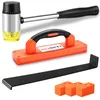 Option 2 REXBETI Laminate & Vinyl Flooring Installation Kit
|
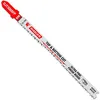 Option 3 Diablo Bi-Metal Jigsaw Blades, 5-Pack
|
As an Amazon Associate we earn from qualifying purchases.
Every cut starts with the same basics. What changes is the cutting tool itself, and that depends entirely on whether your flooring is flexible LVT or rigid SPC/WPC core.
For how vinyl compares to other flooring types on cost and durability, see our wood flooring guide.
Essential for Every Cut
- Measuring tape – for accurate cut-line placement
- Pencil or chalk – for marking, not a pen (ink can bleed into the wear layer)
- Straight edge or T-square – to guide a straight score or saw line
- Safety glasses and gloves – vinyl edges and saw dust both cut and irritate
Depends on Vinyl Type
- Utility knife – for scoring flexible LVT (4mm or thinner)
- Vinyl plank cutter – a shear-style cutter that handles both LVT and thicker SPC without power tools or dust – see our comparison of vinyl plank cutters if you need one
- Circular saw or jigsaw with a 40-tooth-or-higher, fine-tooth or carbide blade – required for rigid SPC/WPC core over about 4mm
- Aviation snips or a utility knife – for curved cuts around pipes and jambs
Which Cutting Method for Your Vinyl Type?
Most guides treat “vinyl plank” as one product, but LVT, WPC, and SPC cut differently because their cores are different thicknesses and rigidities. Check your plank’s packaging or spec sheet for the core type before you pick a tool.
| Vinyl Type | Typical Thickness | Best Cutting Method | Why |
|---|---|---|---|
| Flexible LVT | 2-4mm | Utility knife, score and snap | Thin enough to bend and break cleanly along a scored line |
| WPC (wood plastic composite) | 5-8mm | Vinyl plank cutter or fine-tooth saw | Foam core resists a clean snap; shears or a saw give a straight edge |
| SPC (stone plastic composite / rigid core) | 4-7mm | Fine-tooth power saw (40+ tooth blade) | Rigid limestone-composite core cracks instead of snapping |
How to Score and Snap Flexible LVT Vinyl Plank
This is the fastest method and needs no power tools – but it only works on flexible LVT under about 4mm. Trying to snap thicker WPC or SPC this way just cracks the core instead of breaking cleanly.
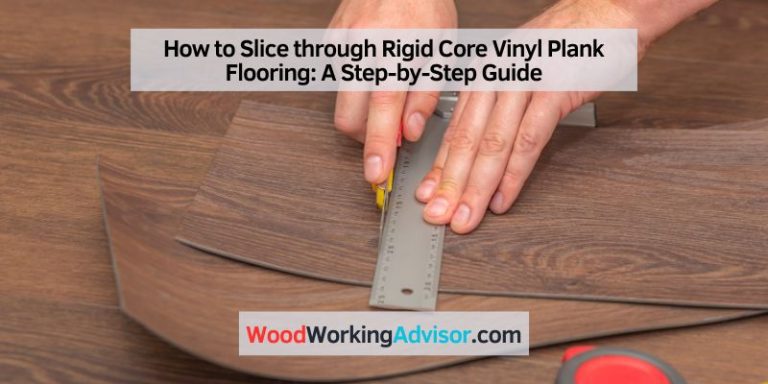
- Measure and mark: measure the exact length needed and mark the cut point on the plank’s edge with a pencil.
- Align the straight edge: line up a T-square or straight edge with the mark, squared to the plank.
- Score the surface: run a sharp utility knife along the straight edge, cutting through the wear layer only – you don’t need to cut all the way through.
- Snap the plank: put a knee or hand on the larger section to hold it flat, then pull up sharply on the smaller section to snap it along the score line.
- Clean the edge: if a thin film remains on the back, run the knife along it once more to separate the pieces fully.
How to Cut Rigid Core SPC or WPC Vinyl Plank
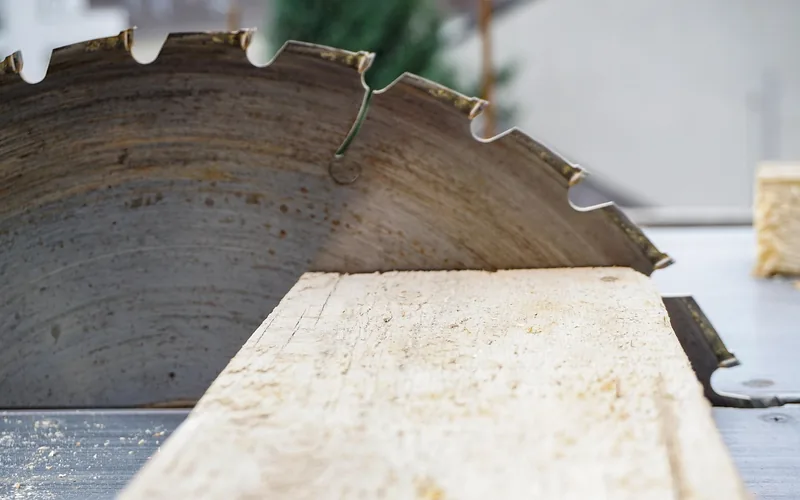
SPC and WPC core boards will not snap along a score line – go slow, support both sides of the plank on a stable surface, and use light downward pressure so the rigid core doesn’t crack. Set a circular saw or jigsaw to a 40-tooth-or-higher fine-tooth or carbide blade, clamp the plank to keep it from shifting, and cut slowly along the marked line rather than forcing the blade through. For the complete step-by-step process, tool settings, and mistakes to avoid on rigid core specifically, see our dedicated guide to cutting rigid core vinyl plank flooring.
Cutting Curves, Corners, and Obstacles
Straight cuts are easy; door jambs, pipes, and rounded corners need a template first. Trace the exact shape onto stiff cardboard or construction paper, hold it against the obstacle to confirm the fit, then transfer the outline to the plank.
- Curved cuts: a utility knife works on thin LVT; use aviation snips or a jigsaw for SPC/WPC curves.
- Around pipes: cut the plank in two pieces that meet at the pipe’s center, then notch a semicircle from each half so they fit together around it.
- Around a toilet or door jamb: see our step-by-step guide to cutting and sealing vinyl plank flooring around a toilet for the exact notch pattern.
Common Mistakes to Avoid
- Skipping acclimation: let planks sit in the install room for 48 hours before cutting or installing – vinyl that hasn’t adjusted to room temperature and humidity can shrink or gap after installation.
- Using a dull blade: a dull utility knife or saw blade tears the wear layer instead of cutting it cleanly, leaving a jagged edge visible in the seam.
- Trying to snap rigid core: forcing SPC or WPC to snap like LVT cracks the core along the fold instead of breaking cleanly – use a saw.
- Not measuring twice: vinyl plank can’t be stretched back to size after an undersized cut – confirm the measurement before scoring or sawing.
Frequently Asked Questions
What is the easiest way to cut vinyl plank flooring?
For flexible LVT, the easiest method is scoring the surface with a sharp utility knife along a straight edge, then snapping the plank along the score line. This needs no power tools and produces a clean edge in seconds. Rigid SPC or WPC core won’t snap this way and needs a fine-tooth power saw instead.
Do I need a special blade to cut vinyl plank flooring?
Yes, for rigid core. LVT cuts fine with a standard sharp utility knife blade. SPC and WPC core need a fine-tooth blade with at least 40 teeth – a standard wood-cutting blade with fewer, larger teeth tends to chip the wear layer and crack the core.
Can rigid core SPC vinyl plank be cut with just a utility knife?
No, not cleanly. SPC core is a limestone-composite material that resists bending, so scoring it and trying to snap it cracks the core unevenly instead of breaking along the line. Use a circular saw or jigsaw with a fine-tooth blade instead.
What is the best saw for cutting vinyl plank flooring?
A jigsaw with a fine-tooth, wood-and-metal blade handles both straight cuts and curves well. For long straight rip cuts on SPC or WPC, a circular saw with a 40-tooth-or-higher carbide blade gives a straighter, cleaner edge.
Can you cut vinyl plank flooring with scissors or aviation snips?
Aviation snips work for thin LVT on curved cuts, like notches around pipes, but they crush or crack thicker SPC and WPC core. Regular household scissors aren’t sharp or strong enough for any vinyl plank thickness.
Do vinyl planks need to acclimate before you cut and install them?
Yes. Most manufacturers recommend letting boxes sit unopened in the installation room for at least 48 hours so the planks adjust to room temperature and humidity. Cutting planks that haven’t acclimated can leave gaps or buckling once they settle.
How do you cut vinyl plank flooring around a toilet or pipe?
Trace the obstacle’s shape onto cardboard to make a template, transfer that outline to the plank, then cut the plank into two pieces that meet at the pipe’s center with a notch removed from each half. See our full walkthrough for cutting around a toilet for the exact steps.
Conclusion
The right cutting method for vinyl plank flooring comes down to what’s inside the plank, not just what’s printed on the box. Score and snap flexible LVT with a sharp utility knife; switch to a fine-tooth power saw the moment you’re working with rigid SPC or WPC core. Measure twice, let the planks acclimate first, and template anything that isn’t a straight line, and the cuts will hold up as well as the rest of the floor.
Sponsored / affiliate links. As an Amazon Associate I earn from qualifying purchases. I may earn additional commission from eligible campaigns.