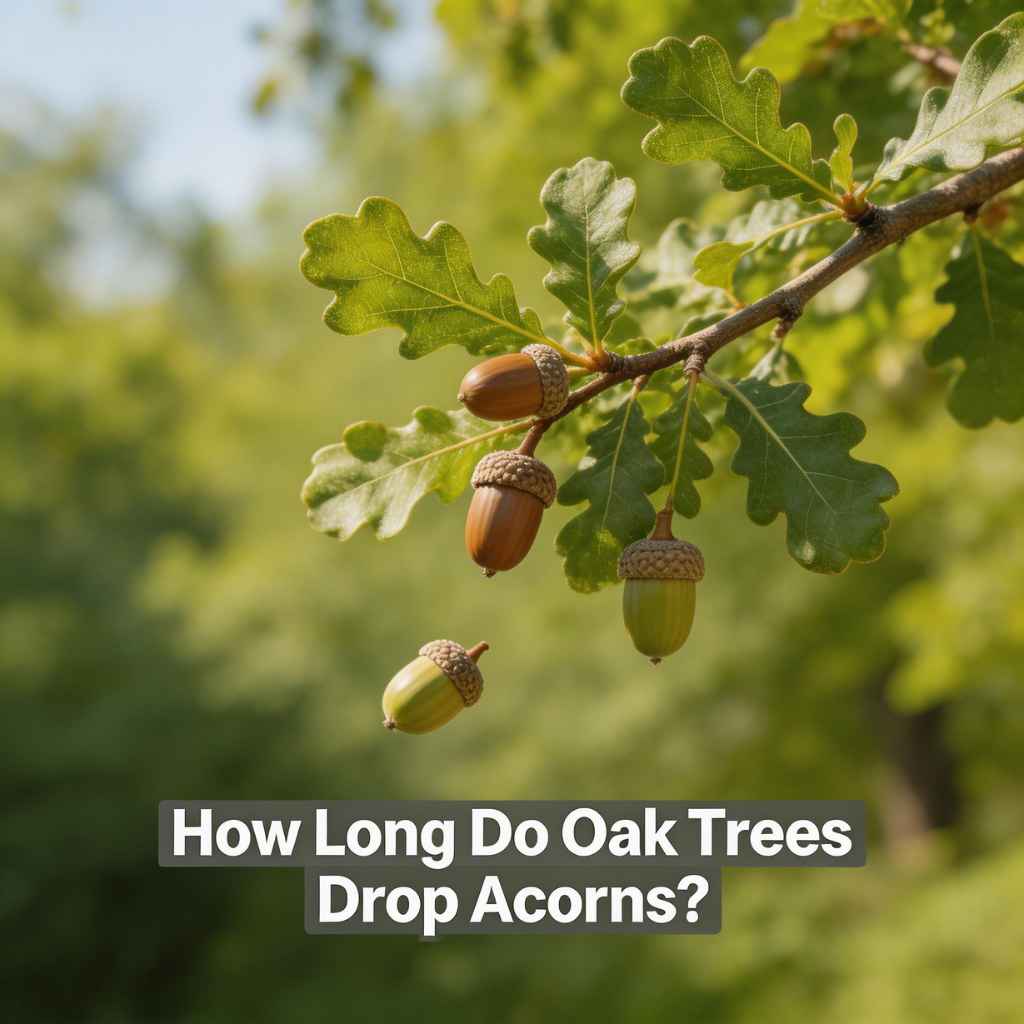
How Long Do Oak Trees Drop Acorns?
Wondering when those acorns will start falling from oak trees? It’s a common question, especially for gardeners, wildlife enthusiasts, or folks just curious about nature’s schedule. Figuring out How Long Do Oak Trees Drop Acorns?
Local Timing Guide can feel a little tricky because it depends on a few things. But don’t worry! We’ll break it down nice and easy.
Get ready to learn all about acorn drop times and how to know when to expect them in your area.
When Oak Trees Drop Acorns
This section explores the general timing of acorn fall. We will look at the typical seasons and factors influencing when acorns are ready to drop from oak trees. Understanding these patterns helps predict acorn availability for wildlife and gardeners.
The Annual Acorn Cycle
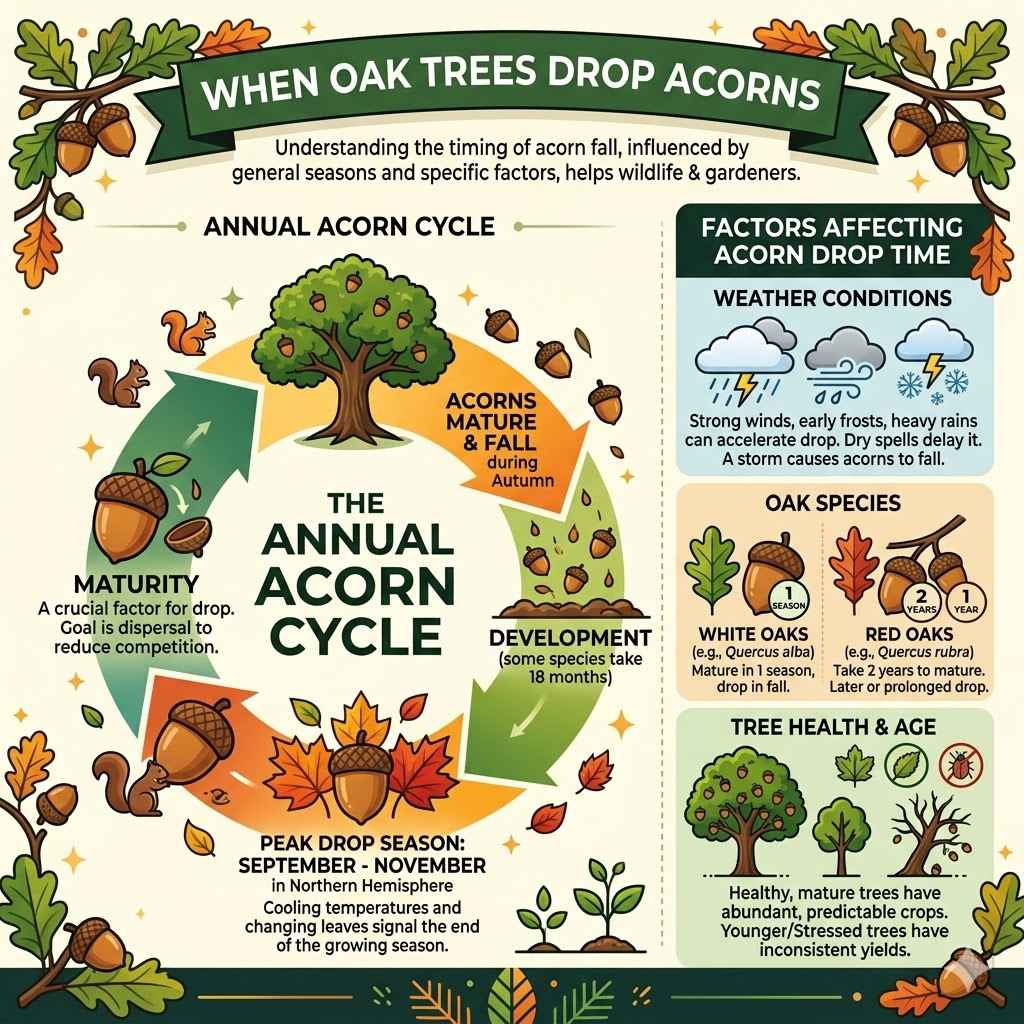
Oak trees, like many plants, follow an annual cycle for producing and shedding acorns. This cycle is driven by the seasons, with acorns typically maturing and falling during the autumn months. The exact timing can vary, but late summer and fall are the prime acorn-dropping periods.
This is when the acorns have fully developed and are ready to be dispersed from the trees.
- The primary acorn-dropping season generally occurs from September through November in most temperate regions of the Northern Hemisphere. This period aligns with the cooling temperatures and changing leaf colors that signal the end of the growing season and the onset of autumn. The acorns need sufficient time to develop on the tree, which usually takes about 18 months for some oak species, meaning they start forming well in advance of their fall drop.
- Factors like specific oak species, local climate, and even the tree’s health play a significant role in the precise timing of acorn fall. Some oak varieties might start dropping acorns a bit earlier, perhaps in late August, while others might continue into early December. This variability is why a general guide is helpful, but local observation is key.
- Maturity is the most crucial factor for an acorn to drop. Once an acorn reaches its full size and its cap loosens, it detaches from the branch. This natural process is essential for the oak tree’s reproduction, allowing acorns to spread and grow into new trees. The goal is dispersal, reaching new ground away from the parent tree to reduce competition for resources.
Factors Affecting Acorn Drop Time
Several environmental and biological factors influence when oak trees release their acorns. These include weather patterns, the specific type of oak, and the health of the individual tree. Understanding these elements can help you better anticipate acorn fall in your local area.
- Weather Conditions: Significant weather events like strong winds, early frosts, or heavy rains can accelerate or disrupt the acorn drop. A strong autumn storm, for instance, can cause a large number of acorns to fall at once, even if they aren’t fully mature. Conversely, a prolonged dry spell might delay the process.
- Oak Species: Different species of oak trees have different life cycles and acorn development periods. For example, white oaks (Quercus alba) tend to produce acorns that mature in a single season and drop in the fall. Red oaks (Quercus rubra) often take two years to mature, meaning their acorns might drop a bit later or have a more prolonged drop period that extends into the following year.
- Tree Health and Age: A healthy, mature oak tree is likely to produce a more abundant and predictable acorn crop. Younger trees might not produce acorns yet, and very old or stressed trees might have inconsistent yields. Factors like disease, pests, or nutrient deficiencies can also impact acorn production and the timing of their release.
How Long Do Oak Trees Drop Acorns? Local Timing Guide
This section focuses on the duration of acorn dropping and provides guidance on how to determine the local timing. We will cover the typical length of the acorn dropping period and suggest methods for observing and understanding this in your specific region.
Duration of Acorn Fall
The period during which oak trees actively drop acorns is not a single event but rather a process that can span several weeks. This duration varies depending on the factors mentioned earlier, such as species and weather. For a given oak tree, the main drop might last for a few weeks, but considering all oak trees in an area, the acorn season can be longer.
- Typically, the intense dropping of acorns from a single oak tree can last anywhere from two to six weeks. This period begins when the first ripe acorns start to fall and continues until the majority of acorns have been released. During the peak of the drop, you might notice acorns littering the ground in significant numbers daily.
- The entire acorn season for a particular region can be longer than the drop from a single tree. This is because different oak species in the same area will have slightly staggered dropping times. So, while one type of oak might finish its primary drop, another might be just starting, extending the overall availability of acorns on the ground.
- Factors like consistent weather patterns during the autumn can lead to a more concentrated and shorter dropping period. Conversely, unpredictable weather can spread the acorn drop out over a longer, more erratic timeline. It’s also worth noting that not all acorns mature every year; some years are considered “mast years” with exceptionally heavy acorn production and fall.
Observing Acorn Drop in Your Area
To get the most accurate understanding of How Long Do Oak Trees Drop Acorns? Local Timing Guide, observing your local environment is key. Naturalists, gardeners, and wildlife watchers can all benefit from paying attention to these subtle seasonal shifts.
- Visit Local Parks and Woodlands: Regularly walking through areas with oak trees is the best way to track acorn drop. Start visiting in late August or early September and continue your observations through November. Look for acorns on the ground, and check the trees for signs of developing acorns or ones that are beginning to loosen from their caps.
- Note Different Oak Species: If you can identify different types of oak trees in your neighborhood, pay attention to when each species starts dropping acorns. As mentioned, white oaks and red oaks can have different schedules, and this can help you piece together the broader acorn fall timeline for your locale.
- Monitor Weather Patterns: Keep an eye on the weather forecasts. Sudden temperature drops, strong winds, or heavy rainfall can often trigger or hasten acorn drops. Understanding the weather can give you clues about when to expect a surge in falling acorns.
- Connect with Local Nature Groups: Local gardening clubs, bird watching groups, or nature conservancies often share observations about local flora and fauna. Checking their forums, social media, or newsletters can provide valuable real-time information about when acorns are dropping in your community.
Understanding Acorn Drop for Wildlife and Gardens
This section delves into the significance of acorn drop for ecosystems and gardening practices. We will explore how acorn availability impacts local wildlife and what gardeners should consider when acorns are present in their yards.
Acorns and Local Wildlife
Acorns are a vital food source for a wide array of wildlife, playing a critical role in the food chain. Their timely and abundant drop supports the health and survival of many species as they prepare for winter.
- Food Source for Mammals: Acorns are a primary food for many mammals, including squirrels, chipmunks, deer, mice, and wild turkeys. These animals rely on the energy-rich nuts to build up fat reserves for the lean winter months. A good mast year, meaning a year with abundant acorns, can significantly boost wildlife populations.
- Impact on Ecosystem Health: The availability of acorns influences predator-prey dynamics. For example, increased acorn crops can lead to larger squirrel populations, which in turn can affect populations of predators that prey on squirrels. This demonstrates the ripple effect acorns have throughout the ecosystem.
- Seed Dispersal and Forest Regeneration: Animals that consume acorns often bury them for later use, and many of these buried acorns are never recovered. These forgotten acorns can then germinate and grow into new oak trees, effectively aiding in the dispersal and regeneration of oak forests. This symbiotic relationship is crucial for forest health and diversity.
- Timing is Crucial: Wildlife has evolved to depend on the predictable timing of acorn fall. When this timing is disrupted by unusual weather or other factors, it can create challenges for animals trying to gather enough food before winter. This highlights the importance of understanding the natural cycles of trees.
Acorns in the Garden
For gardeners, falling acorns can be both a nuisance and an opportunity. Managing acorns in the garden requires some practical considerations, especially concerning lawn care and potential plant growth.
- Lawn Care Challenges: A thick carpet of acorns on a lawn can be problematic. They can smother grass, making it difficult for the grass to get sunlight and air. Acorns can also clog lawnmowers and other garden equipment, leading to damage. Regular raking or blowing of acorns is often necessary during the fall to keep lawns healthy.
- Potential for New Growth: While many acorns are eaten by wildlife or become unusable, some will inevitably land in suitable spots in a garden and begin to sprout. If you don’t want new oak saplings to grow, you’ll need to remove them when they are small. However, for those who appreciate oak trees, this can be a chance to cultivate a new tree.
- Attracting Wildlife: Leaving some acorns in your garden can be beneficial for attracting and supporting local wildlife. Birds and small mammals will appreciate the readily available food source, turning your garden into a mini wildlife sanctuary. However, it’s a balance between supporting nature and managing your garden’s appearance.
- Composting Acorns: Acorns can be composted, but it’s often recommended to break them up or grind them first. This helps them decompose more quickly in the compost pile. They add valuable organic matter to your compost, enriching it for future use in your garden.
Factors Influencing Acorn Drop Timing Across Regions
This section looks at how geographical location and climate variations affect when oak trees drop acorns. We will discuss how different climates and regional characteristics can alter the predictable patterns of acorn fall.
Regional Climate Variations
The climate in a particular region is one of the most significant determinants of when oak trees drop their acorns. Temperature, rainfall, and the length of the growing season all play a part.
- Temperate Climates: In most temperate regions, like much of the United States and Europe, acorn drop occurs in the fall, typically from September to November. These climates have distinct seasons, with a clear transition from warm summers to cold winters, which signals to the trees that it’s time to shed their mature acorns.
- Milder Climates: Regions with milder climates, where winters are less severe and frost is infrequent, might see a slightly extended acorn drop period. In some areas, acorns might continue to fall into early winter or even be present on the ground longer due to slower decomposition rates.
- Drier Regions: In areas that experience significant drought, acorn production and drop can be affected. Drought stress can lead to fewer acorns being produced or acorns that drop prematurely. The overall quantity and timing can be less predictable in arid or semi-arid environments.
- Higher Altitudes: Oak trees at higher altitudes or in mountainous regions often experience shorter growing seasons and earlier frosts. This can cause their acorn drop to occur earlier in the fall, sometimes starting in late August or early September, to ensure acorns mature before harsh winter conditions set in.
Geographic Location and Oak Species
The specific geographic location is intrinsically linked to the types of oak trees that thrive there and, consequently, their acorn dropping habits. Different continents and even different parts of the same continent will host various oak species with unique cycles.
- North America: North America boasts a vast diversity of oak species, from the white oaks and red oaks of the eastern United States to the live oaks of the South and the various oaks of the West Coast. Each group has its general timing, but regional microclimates within North America can lead to variations. For instance, acorns might drop earlier in New England than in the warmer southern states.
- Europe: European oak species, such as the English oak (Quercus robur) and sessile oak (Quercus petraea), typically follow a similar fall acorn drop pattern to their North American counterparts, occurring from September through November. Their cycles are closely tied to the European temperate climate.
- Mediterranean Regions: Oak species in Mediterranean climates may have different adaptations. Some might produce acorns that mature over two years, with the two-year acorns dropping in the fall of the second year. The timing can also be influenced by the distinct wet and dry seasons characteristic of these areas.
- Southern Hemisphere: In the Southern Hemisphere, where seasons are reversed, oak trees will generally drop acorns during their local autumn, which falls between March and May. This timing is crucial for the reproductive cycle, ensuring seeds are dispersed before winter.
Example Scenarios for Local Timing
To illustrate how location impacts acorn drop, consider these common scenarios. These examples highlight the interplay of species, climate, and geographic position in determining the acorn fall schedule.
Scenario: New England, USA
In a New England town with a mix of Red Oak and White Oak species, acorns typically begin to drop in mid-September. The Red Oaks, with their two-year maturation cycle, might drop acorns a bit later and more sporadically. The White Oaks usually have a more concentrated drop from late September to mid-October.
Strong winds in October often lead to the peak of acorn fall. The entire period, considering both species and potential lingering drops, usually finishes by late November.
Scenario: Northern California Coast
Along the Northern California coast, where the climate is milder and wetter, Coastal Live Oaks (a type of evergreen oak) might start dropping acorns earlier, potentially in late August or early September. Their acorns are also known to drop over a longer period due to the more consistent, though sometimes dry, summer conditions leading into a mild autumn. Some acorns might persist on the ground or still be falling into December.
Best Practices for Tracking Acorn Drop
This section provides practical advice on how individuals can effectively track and understand acorn drop in their specific locations. These methods are designed to help anyone interested in observing the natural phenomenon of acorn fall.
Tools and Techniques for Observation
Observing acorn drop doesn’t require specialized equipment. Simple tools and consistent observation habits can provide a clear picture of when acorns are falling in your area.
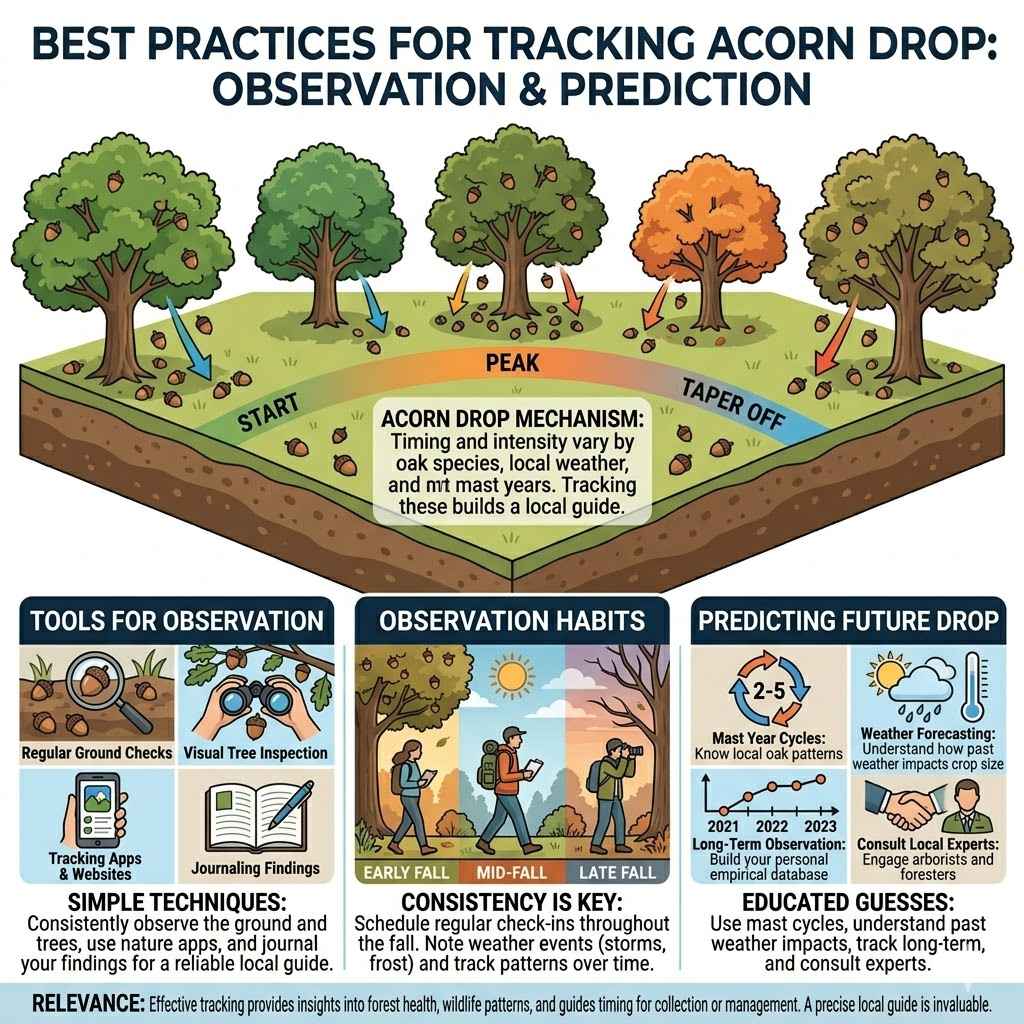
- Regular Ground Checks: The most straightforward technique is to simply walk the areas where oak trees are present on a regular basis during the fall months. Look for acorns on the ground. The first acorns you find indicate the start of the drop. The density of acorns on the ground will show you the intensity and duration of the fall.
- Visual Tree Inspection: Periodically look up at the oak trees. You can spot developing acorns on the branches. When you see acorns starting to detach from their caps or hear them hitting the ground, it’s a sure sign the drop is active. Some acorns may fall due to wind, while others fall when fully ripe.
- Phenology Tracking Apps and Websites: Many nature observation platforms and apps allow users to log sightings of plants and animals. By contributing your acorn drop observations or checking what others in your region have reported, you can gain a broader understanding of the local timing. These platforms often use citizen science data.
- Journaling Your Findings: Keeping a simple nature journal can be very effective. Note the date you see the first acorns, the types of oaks you observe, significant weather events like storms or frosts, and when the acorn fall seems to taper off. This personal log builds a reliable local timing guide over the years.
Predicting Future Acorn Drops
While no system can predict acorn drops with absolute certainty, understanding past patterns and key influencing factors can help in making educated guesses for future years.
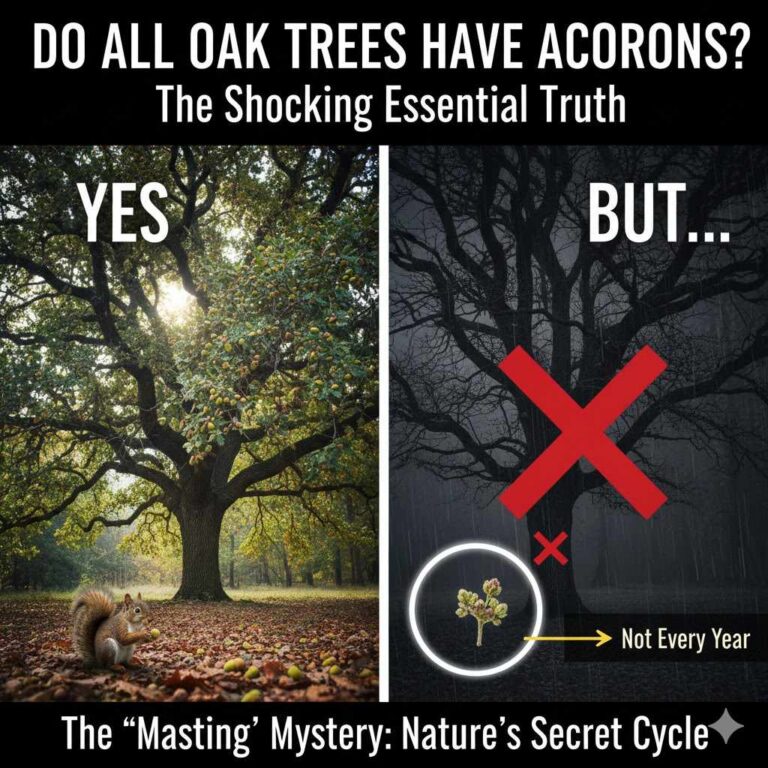
- Mast Year Cycles: Many oak species exhibit a phenomenon known as “masting,” where they have periods of heavy acorn production followed by years of low production. These cycles often occur every 2-5 years, though they can vary. Knowing if your local oaks are prone to masting can help predict when you might see a significant acorn drop.
- Weather Forecasting for Next Year: While it’s hard to predict acorn drop for the coming year based on current weather, understanding how weather affected past drops can be useful. For example, if a particularly hot and dry summer occurred, it might suggest a reduced acorn crop the following fall, or perhaps a quicker drop as the tree tries to shed prematurely.
- Long-Term Observation: The most reliable way to predict future acorn drops is through consistent, long-term observation. By tracking acorn fall over several years, you build a personal database of when different oak species in your specific area tend to drop their acorns under various conditions. This empirical data is invaluable.
- Consulting Local Experts: Arborists, foresters, and experienced local gardeners often have a good sense of the typical acorn drop patterns for their region. Engaging with these individuals and sharing your observations can further refine your predictions and understanding of local oak behavior.
Frequently Asked Questions
Question: What is the earliest an oak tree might drop acorns
Answer: In some warmer regions or with specific species, oak trees might start dropping acorns as early as late August.
Question: Do all oak trees drop acorns at the same time
Answer: No, different oak species have different acorn maturation times, and local weather can also affect the timing of acorn drop.
Question: How long does the acorn dropping season typically last for a specific tree
Answer: For a single oak tree, the main acorn drop period usually lasts about two to six weeks.
Question: Can acorns fall in the spring
Answer: Acorns that were not eaten or did not germinate in the fall might persist through winter and could potentially be found in early spring, but the active dropping period is in the autumn.
Question: Is there a specific number of years between heavy acorn drops
Answer: Many oak species have masting cycles, meaning heavy acorn drops often occur every 2 to 5 years, but this can vary significantly.
Summary
Understanding How Long Do Oak Trees Drop Acorns? Local Timing Guide involves looking at species, climate, and weather. Acorns generally fall from September to November.
Observing local oaks and noting weather patterns will give you the best sense of when to expect them. Your local acorn drop timing is unique, and consistent observation builds your personal guide.