Do All Oak Trees Have Acorns? Yes, But Not Every Year
Yes, every oak (genus Quercus) can produce acorns, but no oak is guaranteed a crop. USDA Forest Service data put the first acorns of a northern red oak at about 25 years and a forest-grown white oak at 50 or more, and good crops arrive only every 2 to 10 years. This guide covers the 5 real reasons your oak is bare, which trees actually make acorns, and what the red and white oak groups mean in your workshop.
The Simple Truth About Oaks and Acorns
 |
Best Tree ID Book Pick Trees of North America: A Guide to Field Identification (Golden Field Guide), $17.99 If your oak has never dropped an acorn, step one is confirming it really is an oak, the lookalike check this guide walks through. A field guide to North American trees is the quickest way to do that from the leaves, bark and fruit.
|
As an Amazon Associate we earn from qualifying purchases.
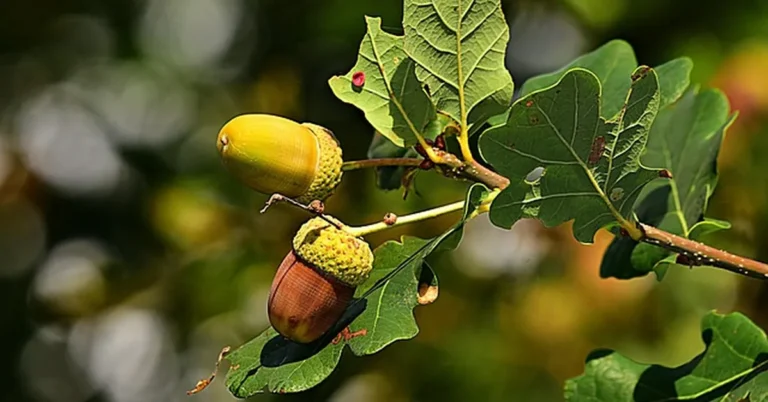
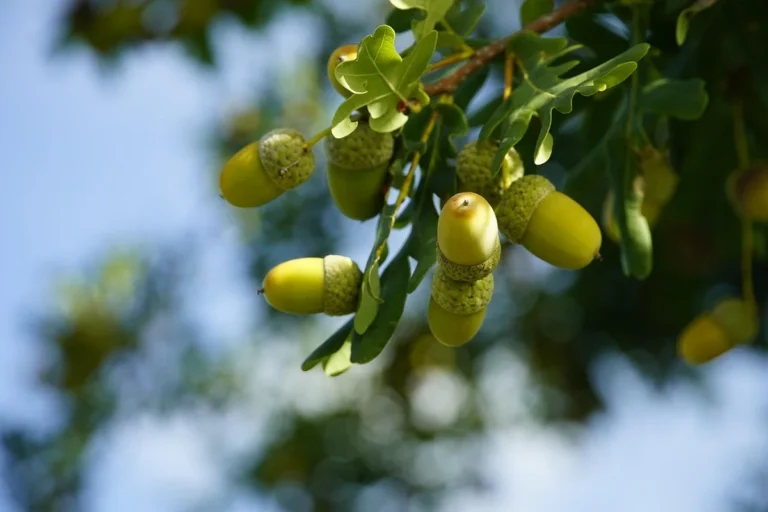
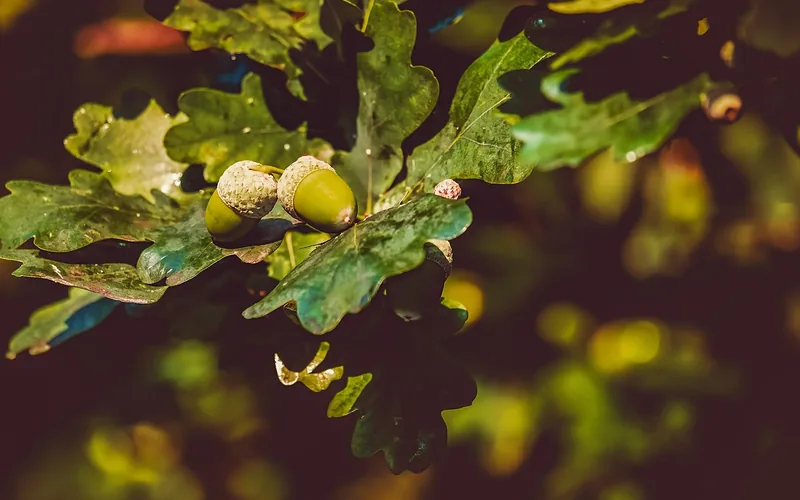
An acorn is the fruit of an oak and carries the seed for a new tree. Any true oak (genus Quercus) has the genetic ability to make them, and there is no acorn-less oak species. Whether it will this year is a separate question: several conditions have to line up, so a crop is a special event, not a guarantee.
📊 Good white oak acorn crops are irregular and occur only every 4 to 10 years, according to the USDA Forest Service Silvics of North America.
Curious how oak stacks up against other trees in the yard or workshop? See our full oak guide hub for grain, finishing, and species comparisons.
Which Trees Produce Acorns? Only Oaks
True acorns come only from oaks, the trees in the genus Quercus. Common North American acorn trees include white oak, northern red oak, black oak, pin oak, bur oak and live oak. If a tree in your yard has lobed leaves but drops something else, it is a different tree; the lookalike list further down shows how to tell maples, beeches and hickories apart from oaks.
That also means the species of your oak is almost never the reason it is bare. Every oak can fruit, so the real questions are age, weather and timing.
The Top 5 Reasons Your Oak Tree Doesn’t Have Acorns
If you’re staring up at empty branches, one of these five reasons is the likely culprit.
1. Your Oak Tree is Still a Teenager
This is the most common reason. Oaks spend their first decades building height and roots, and acorns cost a tree a lot of energy.
So how old is “old enough”? According to the USDA Forest Service, northern red oak begins to bear fruit at about age 25 but usually does not produce seeds abundantly until about 50. White oaks in forest stands normally bear between 50 and 200 years of age, although open-grown trees may fruit as early as 20.
- Red oak group (northern red oak): first acorns around 25 years, abundant crops around 50.
- White oak: 50 to 200 years in a crowded forest stand, but as early as 20 for a tree growing alone in the open.
Two details most guides skip. First, open-grown yard trees can start earlier than woodland trees. Second, trunk size is a poor guide: in a USDA Forest Service study of five eastern oak species, trunk diameter explained little of the variation in acorns per unit of crown (R² of 0.08 to 0.28), and acorn production varied considerably among species, individual trees, years and locations.
If your tree was planted in the last 10 to 15 years, patience is the answer. It is healthy and growing, just not ready yet.
| Species | When first acorns appear | Good-crop interval | Acorn maturity |
|---|---|---|---|
| Northern red oak (Quercus rubra) | About 25 years; abundant around 50 | Every 2 to 5 years | 2 growing seasons |
| White oak (Quercus alba) | 50 to 200 years in forest stands; as early as 20 if open-grown | Every 4 to 10 years | 1 season (about 120 days after pollination) |
Extension services quote slightly different cycles. Iowa State says most oaks give a good crop every two or three years and white oak every four to six, while the University of Illinois Extension puts red oaks at 3 to 5 years and white oaks at 4 to 7. Treat any single number as a rough range. For more on the white oak group, see bur oak vs white oak.
2. The Invisible Flowers and Poor Pollination
Oaks do flower, just not showily. Each tree is “monoecious,” carrying both male flowers (droopy, yellowish-green catkins that shed pollen) and tiny reddish female flowers where a leaf meets the twig. Pollination is by wind, not insects, so a long rainy spring can wash pollen out of the air before it reaches the female flowers, and no pollination means no acorns.
You don’t need a whole grove for a single oak to bear acorns, since each tree carries both flower types. What matters is that pollen reaches the female flowers during a short window, which is why spring weather matters so much. See our guide on how oak trees reproduce for the full process.
3. The Wrong Weather at the Wrong Time
Weather can make or break an acorn crop even when age and health are right. The University of Illinois Extension lists heavy spring rains, flooding, drought and unusually high or low temperatures as causes of poor pollination, aborted crops and complete failures. Two events do the most damage:
- Late spring frost: Oak flowers emerge in early to mid-spring. A hard frost after they open kills them, and the tree does not get a second chance that year.
- Summer drought or stress: If a severe drought hits after pollination, the tree may abort young acorns to conserve water and energy, so they shrivel and drop early.
📊 Timing at flowering matters: the USDA Forest Service describes good white oak flowering conditions as about 10 warm days during flowering followed by 13 to 20 cool days, while poor crops followed cool periods that came before warm ones. Dry winds and freezing weather also hurt flowering. Source: Silvics of North America.
4. Natural Cycles: The “Mast Year” Phenomenon
Here’s a concept that surprises many people. Oaks do not fruit heavily every year. They run on a cycle: a few poor or empty years, then a big crop. That boom-and-bust pattern is a “mast year.” For northern red oak the USDA gives a good crop every 2 to 5 years; for white oak, every 4 to 10. Our full breakdown of how often oak trees produce acorns covers the cycle by species, and do oak trees produce acorns every year answers the yearly version of the question.
“Good acorn crops are irregular and occur only every 4 to 10 years. Sometimes several years may pass without a crop.”
USDA Forest Service, Silvics of North America (white oak)
Ecologists generally explain this as a survival strategy: lean years keep acorn-eating animals such as squirrels, deer and turkeys from multiplying, and a mast year floods the woods with more acorns than they can eat, so some are left to sprout.
To follow the cycle, it helps to know the two major groups of oak trees:
- The White Oak Group: This group includes White Oaks, Bur Oaks, and Chestnut Oaks. Their acorns mature in a single growing season. You’ll see flowers in the spring and fully formed acorns on the ground that same fall.
- The Red Oak Group: This group includes Northern Red Oaks, Pin Oaks, and Black Oaks. Their acorns take two full years to mature. The flowers that are pollinated this spring will form tiny, pea-sized acorns that stay on the tree through the winter. They won’t mature and drop until the fall of next year. This two-year cycle makes them even more vulnerable to weather events like a late frost.
A common mix-up: because red oak acorns take two seasons to ripen, many people assume red oaks are the slower, less frequent croppers. The USDA numbers say the opposite. Northern red oak gives a good crop every 2 to 5 years, while white oak, whose acorns ripen in a single season, waits 4 to 10. Neither fruits every year, and ripening time says little about how often a tree crops.
| Feature | White Oak Group | Red Oak Group |
|---|---|---|
| Leaf lobes | Rounded lobes, no bristles. | Pointed lobes with bristle-like tips. |
| Acorn maturation | 1 year (same season as pollination) | 2 years (season after pollination) |
| Good-crop interval (USDA) | White oak: every 4 to 10 years | Northern red oak: every 2 to 5 years |
| Examples | White oak, bur oak, swamp white oak | Northern red oak, pin oak, black oak, scarlet oak |
5. The Tree is Sick or Stressed
A stressed tree will not spend energy on acorns. Common stressors:
- Pests: Acorn weevils destroy developing acorns from the inside, and heavy leaf damage limits the energy the tree can make.
- Disease: Oak wilt clogs the vascular system, which can halt acorn production and eventually kill the tree.
- Site stress: Compacted soil from foot traffic or construction, poor nutrients, too little sun, or mower and storm damage.
How You Can Help Your Oak Tree
You cannot control the weather or the tree’s age, but you can keep it healthy.
- Water deeply in dry spells: Lay a soaker hose in a circle at the drip line (the ground under the outermost leaves) and let it run for several hours every few weeks without rain.
- Protect the roots: Do not park, pile materials or build under the canopy. A 2-3 inch layer of mulch, kept off the trunk, helps retain moisture.
- Prune lightly: Remove only dead, damaged or dangerous branches.
- Inspect for problems: If you see widespread insect damage or wilting leaves in summer, call a certified arborist. Your local extension service, such as Iowa State University Extension, is also a good resource.
Is It Really an Oak? Common Lookalikes
Once in a while the issue is not the oak, it is that the tree is not an oak at all. Many trees have lobed leaves that look similar at first glance. If your mature tree has never produced acorns and does not fit the other reasons, check for these:
- Maple Tree: Many maples have lobed leaves similar to oaks, but they produce the classic winged seeds known as “helicopters” (samaras), not acorns.
- American Beech: Beech trees have smooth, gray bark and produce small, edible nuts inside a spiky, bristly husk.
- Hickory Tree: Hickories have large compound leaves and produce a round nut encased in a thick, woody husk that splits open when mature.
What the Red and White Oak Groups Mean in Your Workshop
The two groups that decide when an oak sets acorns also split the lumber yard into red oak and white oak, and the difference shows up in the shop. The Wood Database lists white oak at 1,350 lbf Janka hardness and red oak at 1,220 lbf, close enough that hardness is not the deciding factor. Pores are. White oak is full of tyloses, bubble-like plugs in its large pores, which makes it water-resistant and is why it is used for barrels and boatbuilding. Red oak has no tyloses, and its pores are so open that, as the Wood Database puts it, you can blow air through a piece of end grain.
| Property | White oak | Red oak |
|---|---|---|
| Janka hardness | 1,350 lbf | 1,220 lbf |
| Pores | Plugged with tyloses, water-resistant | Open, no tyloses |
| Decay resistance | Very durable | Non-durable to perishable |
| Common uses | Barrels, boatbuilding, furniture, flooring | Cabinetry, furniture, trim, flooring |
So the oak in your yard may never drop an acorn, but its lumber still sorts into one of these two camps. For how the two woods differ in color and grain, see what color oak wood is.
Frequently Asked Questions (FAQ)
1. How old does an oak tree have to be to make acorns?
It depends on the species and the site. The USDA Forest Service says northern red oak begins to bear at about age 25 and produces abundantly at about 50, while white oaks in forest stands normally bear between 50 and 200 years of age. Open-grown white oaks may fruit as early as 20.
2. My oak tree had tons of acorns last year but none this year. Why?
This is most likely a mast cycle. The USDA lists good crops every 2 to 5 years for northern red oak and every 4 to 10 years for white oak, with few acorns in between. Off-years are normal and are not a sign of disease.
3. Which oak tree does not have acorns?
None. Every true oak species (genus Quercus) is genetically capable of producing acorns, so there is no acorn-less oak species. If a specific tree never produces any, the cause is almost always its age, health, weather at flowering, or a mast-year cycle, not its species.
4. Does an oak tree need another oak tree nearby to produce acorns?
Not strictly, because each oak carries both male catkins and female flowers. But oaks rely on wind to move pollen, so a rainy or frosty spring can ruin a crop even when other oaks are nearby.
5. Do beech trees have acorns?
No. Beech trees make small edible nuts inside a spiky, bristly husk, not acorns. Only oaks (genus Quercus) produce true acorns.
6. What time of year do acorns fall, and can I find them in summer?
Most acorns drop in early to mid-autumn, typically September through November depending on climate and species. Finding acorns in summer is unusual and usually means an early-drop stress event, such as drought or pest damage, rather than a normal harvest.
7. Are acorns safe to eat?
Many acorns are technically edible for humans, but they must be processed first. Raw acorns contain high levels of tannins, which are very bitter and can cause an upset stomach. Shell them and leach them in water to remove the tannins before eating or grinding into flour.
Conclusion: The Patient Gardener’s Reward
So, do all oak trees have acorns? Yes, in theory. In practice a tree needs to reach roughly 25 to 50 years, flower in the right weather, and then wait out a cycle that runs every 2 to 10 years depending on the species. A bare oak is rarely a problem. More often it is young, between mast years, or caught by a bad spring.
Keep the roots protected and water in dry spells, and when conditions finally line up the tree will do the rest.
Sponsored / affiliate links. As an Amazon Associate I earn from qualifying purchases. I may earn additional commission from eligible campaigns.