How to Care for Japanese Maple Like a Pro
Many people dream of having a beautiful Japanese maple tree in their yard. But sometimes, figuring out How to Care for Japanese Maple Like a Pro can feel a little tricky. Don’t worry!
This guide will make it super simple with easy steps. We’ll cover everything you need to know so your tree can grow big and strong. Get ready to learn the best ways to keep your Japanese maple looking its absolute best.
Choosing the Right Japanese Maple
Picking the perfect Japanese maple is the first big step towards a happy, healthy tree. It’s like choosing the right pet; you want one that fits your home and lifestyle. There are so many types, each with its own special look and needs.
Some have bright red leaves all year, while others change colors beautifully in the fall. Some stay small and bushy, perfect for a small garden, and others grow into elegant, weeping shapes.
Understanding Different Varieties
Japanese maples come in hundreds of varieties, and they aren’t all the same! Some popular ones include the ‘Bloodgood’ with its deep red leaves that hold their color, the ‘Crimson Queen’ which is a graceful weeping type with lacy, red foliage, and the ‘Sango Kaku’ known for its striking coral-red bark in winter. Each has unique characteristics for leaf shape, color, growth habit, and size.
- Bloodgood Maple
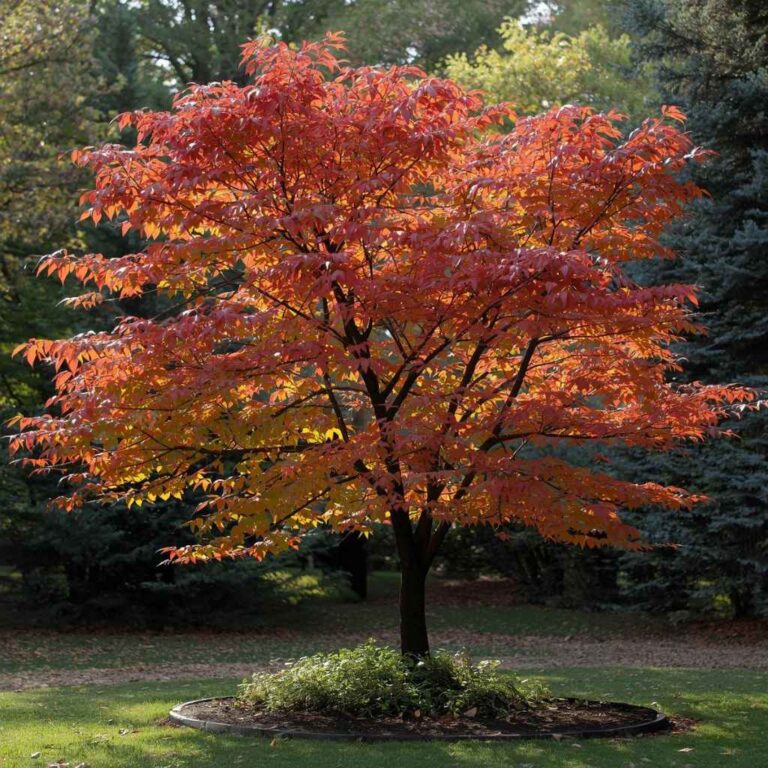
This is a classic choice for good reason. The ‘Bloodgood’ is a vigorous grower with deep crimson-red leaves that tend to keep their color well throughout the summer. It forms an upright, rounded shape and can reach about 20-25 feet tall and wide.
It’s a reliable performer for many gardeners.
- Crimson Queen Maple
If you love a weeping, delicate look, the ‘Crimson Queen’ is a fantastic option. Its finely dissected, red leaves cascade downwards, creating a stunning visual effect. It typically grows about 6-10 feet tall but can spread 10-12 feet wide, making it a great specimen tree for smaller spaces or as a focal point.
- Sango Kaku Maple
Also known as the Coral Bark Maple, this variety offers beauty in all seasons. Its green leaves turn a lovely golden-yellow in fall. What makes it truly special is its bright coral-red bark, which is most vibrant in the winter months when the tree is bare.
It usually grows to about 20-25 feet tall.
Where to Plant Your Japanese Maple
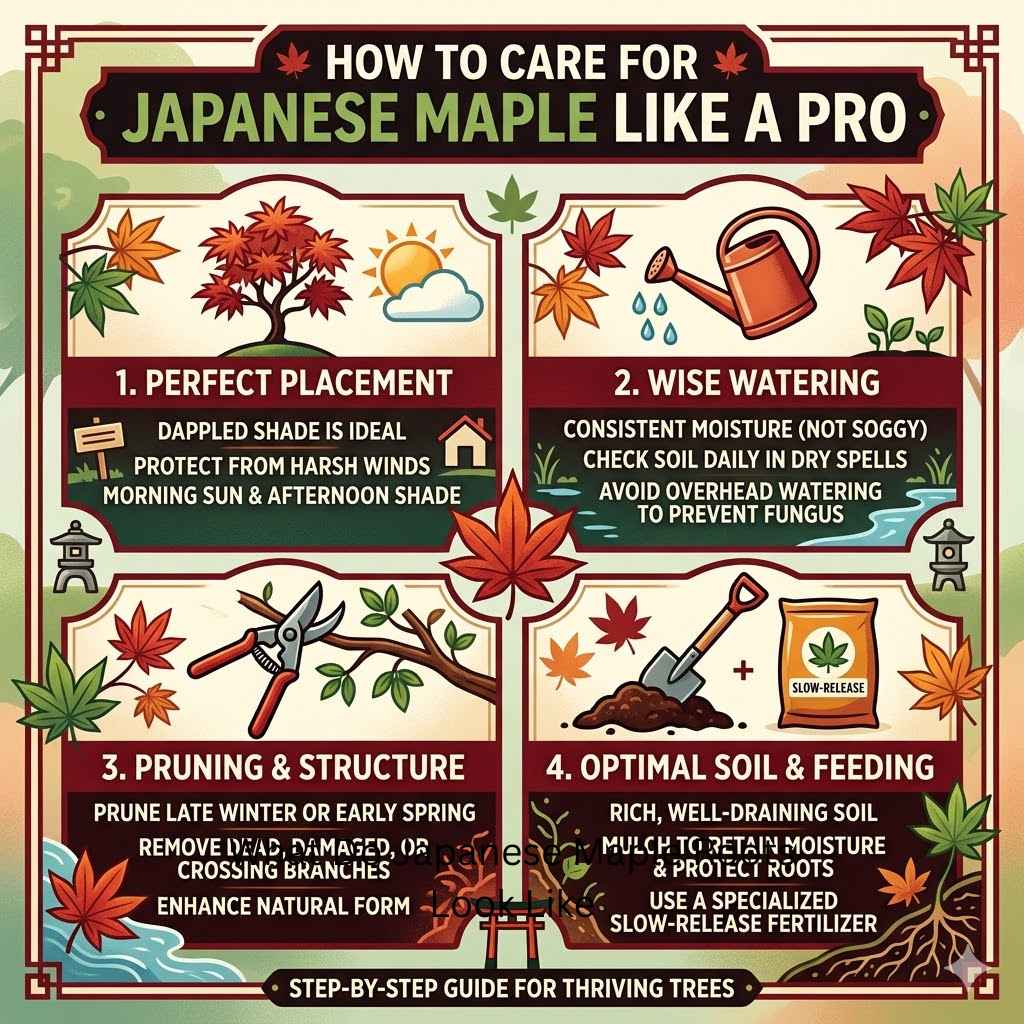
Where you put your tree matters a lot for its health and how it looks. Most Japanese maples like a spot that gets morning sun but is shaded from the hot afternoon sun. This is especially true for younger trees.
Too much direct sun can scorch their delicate leaves, while too much shade might make their colors less vibrant.
Think about drainage too. These trees really don’t like having their roots sit in soggy soil. So, pick a spot where water drains away nicely after it rains.
If your soil is heavy clay, you might need to improve it with compost or choose a slightly raised planting spot.
Sunlight Needs
The ideal light for most Japanese maples is partial shade. This means they get filtered sunlight or morning sun and afternoon shade. Some varieties, especially those with green or variegated leaves, can tolerate more sun.
However, red-leaved varieties are more prone to leaf scorch if exposed to intense, direct sunlight for prolonged periods.
Soil and Drainage
Japanese maples thrive in well-draining, slightly acidic soil. This means the soil shouldn’t hold too much water. If you have heavy clay soil that stays wet, consider amending it with organic matter like compost or planting your maple in a raised bed.
Good drainage prevents root rot, a common problem for these trees.
Planting Your Japanese Maple Correctly
Getting the planting right is super important for your Japanese maple’s long-term health. It’s not just about digging a hole and dropping the tree in. Taking a little extra time during planting will set your tree up for success, helping it establish strong roots and grow beautifully for years to come.
Preparing the Planting Hole
When you dig the hole, make it wider than the tree’s root ball, but no deeper. The top of the root ball should be level with or slightly above the surrounding soil. This helps prevent water from pooling around the base of the trunk, which can lead to rot.
Loosen the soil on the sides of the hole. This makes it easier for the roots to spread out into the new soil. Don’t add fertilizer to the planting hole; it can burn the young roots.
Just use the soil you removed, mixed with a little compost if you like, to backfill around the root ball.
Hole Size and Depth
Dig the hole about two to three times as wide as the root ball. The depth of the hole should be the same as the height of the root ball. You want the tree to sit at the same level it was in its pot or nursery container.
Planting too deep is a common mistake that can harm the tree.
Backfilling the Hole
Gently place the tree in the hole, making sure it’s straight. Then, begin filling the hole with the soil you dug out. As you fill, lightly tamp the soil down with your hands to remove large air pockets.
Avoid using your feet to stomp on the soil, as this can compact it too much.
Watering After Planting
Right after planting, give your Japanese maple a good, deep watering. This helps settle the soil around the roots and remove any remaining air pockets. For the first few weeks, check the soil moisture regularly.
The soil should stay moist but not soggy.
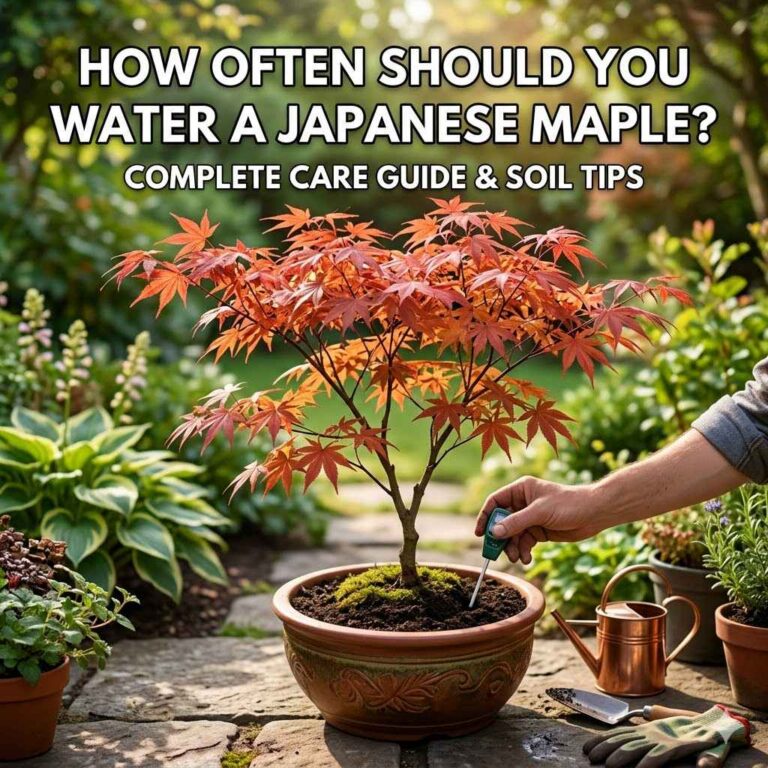
Watering less frequently but more deeply is better than frequent shallow watering. This encourages the roots to grow deeper into the soil, making the tree more drought-tolerant over time. You can use your finger to check how moist the soil is by poking it a few inches down.
Initial Watering
Immediately after planting, water the tree thoroughly until the soil is soaked. This helps settle the soil around the roots and reduces stress on the tree. Aim to water until you see water draining from the bottom of the root ball area.
Ongoing Watering Schedule
For the first year, keep the soil consistently moist. Water deeply about once or twice a week, especially during dry spells. As the tree becomes established, you can gradually reduce the frequency of watering.
Mature trees are more drought-tolerant but will still benefit from watering during prolonged dry periods.
Providing Ongoing Care for Your Maple
Once your Japanese maple is planted, the real fun begins: watching it grow and thrive! Regular care, like watering, feeding, and protecting it from pests, will keep your tree looking its absolute best. These steps are key to helping your tree stay healthy and beautiful throughout the seasons.
Watering Needs Throughout the Year
Japanese maples prefer consistently moist soil, but they don’t like to be waterlogged. During hot, dry periods, they will need more water. Check the soil moisture by sticking your finger about two inches down.
If it feels dry, it’s time to water. In winter, you may need to water if there’s a long dry spell, but usually, rain and snow provide enough moisture.
Proper watering is vital. Overwatering can lead to root rot, while underwatering can cause leaf scorch and stress. Aim for deep watering that reaches the root zone, rather than frequent, shallow sprinklings.
This encourages the roots to grow deeper into the soil, making the tree more resilient.
- Spring Watering
As temperatures warm and the tree begins to leaf out, ensure consistent moisture. Water deeply if the spring is dry. This is a critical time for growth, and adequate water is essential.
- Summer Watering
Summers can be hot and dry, stressing Japanese maples. Water deeply when the top inch of soil feels dry. Providing shade during the hottest part of the day can also help reduce water needs and prevent leaf scorch.
- Fall Watering
Continue watering as needed in the fall, especially if there’s no rain. This helps the tree prepare for winter by storing moisture. Water until the ground freezes.
- Winter Watering
In mild winter climates, if there are extended dry spells and no snow cover, water your tree. This is to prevent the roots from drying out. Water on a warmer day when the ground is not frozen.
Fertilizing Your Japanese Maple
Japanese maples generally don’t need a lot of fertilizer. In fact, too much can actually harm them. If your soil is healthy and you’ve amended it with compost, your tree might not need any extra feeding.
Over-fertilizing can lead to too much growth, making the leaves softer and more prone to pests or diseases.
If you do decide to fertilize, use a slow-release, balanced fertilizer, like one with a 10-10-10 N-P-K ratio. Apply it in early spring, just as the tree is starting to wake up. Spread it evenly around the drip line of the tree, not right up against the trunk.
Follow the package instructions carefully.
When to Fertilize
The best time to fertilize a Japanese maple is in early spring, just as the buds begin to swell. This is when the tree is actively growing and can benefit from the nutrients. Avoid fertilizing late in the season, as this can encourage new growth that may not harden off before winter.
Type of Fertilizer
Use a slow-release, balanced fertilizer. A fertilizer with an N-P-K ratio like 10-10-10 or one specifically formulated for trees and shrubs is a good choice. Organic fertilizers like compost or aged manure can also be beneficial.
Avoid high-nitrogen fertilizers, which can promote weak, leggy growth.
Pruning for Health and Shape
Pruning is an art and a science when it comes to Japanese maples. The goal is to enhance their natural beauty and keep them healthy. You’re not trying to make them into a perfectly round ball like some other trees.
Instead, you want to encourage their unique structure and remove any dead, damaged, or crossing branches.
The best time to do most pruning is in late winter or very early spring, before the leaves fully emerge. This is when the tree’s structure is most visible. You can also do light pruning in mid-summer to remove stray shoots or to maintain shape, but avoid heavy pruning during this time.
- Why Prune
Pruning helps maintain the tree’s shape and size, removes dead or diseased branches, improves air circulation within the canopy, and encourages better light penetration. It also helps to highlight the tree’s natural branching structure, which is often a key part of its aesthetic appeal.
- When to Prune
The ideal time for most pruning is late winter or early spring, before new growth begins. This allows you to see the tree’s structure clearly. Light pruning to remove crossing branches or suckers can be done throughout the growing season, but avoid heavy pruning in summer.
- How to Prune
Use clean, sharp pruning tools. Make cuts just outside the branch collar, where the branch meets the trunk or a larger limb. Avoid leaving stubs, as these can invite pests and diseases.
For larger branches, consider making three cuts to prevent tearing the bark.
Dealing with Common Pests and Diseases
Even with the best care, your Japanese maple might occasionally face some unwanted visitors or health issues. Knowing what to look for and how to handle it can save your tree a lot of trouble. Most problems are not serious and can be managed with simple solutions.
Identifying Pests
Common pests that might bother your Japanese maple include aphids and scale insects. Aphids are tiny, soft-bodied insects that often cluster on new growth. They can cause leaves to curl or yellow.
Scale insects look like small bumps on branches and leaves, and they suck sap from the tree.
For aphids, a strong spray of water from the hose can often knock them off. If there are many, insecticidal soap or neem oil can be effective. For scale, you might need to use a horticultural oil during the dormant season or insecticidal soap during the growing season.
Always test any treatment on a small area first.
- Aphids
These small insects, often green, black, or yellow, feed on the sap of new leaves and stems. They can cause distorted growth and sticky honeydew, which may lead to sooty mold. You can often dislodge them with a strong spray of water.
Horticultural oils or insecticidal soaps are effective if the infestation is severe.
- Scale Insects
These appear as small, hard or soft bumps on branches and leaves. They feed on plant sap. Heavy infestations can weaken the tree.
Dormant oil sprays are effective in the dormant season. During the growing season, insecticidal soaps or neem oil can help control them.
Recognizing Diseases
One of the most common issues for Japanese maples is verticillium wilt. This is a fungal disease that can enter through the roots or wounds in the bark. It blocks the tree’s water-conducting tissues, causing wilting and dieback, often starting on one side of the tree.
There’s no cure for verticillium wilt.
Another concern can be fungal leaf spots. These usually appear as discolored patches on the leaves and are often more of an aesthetic issue. Good air circulation and avoiding overhead watering can help prevent them.
If severe, fungicides might be used, but prevention is key. Always remove fallen leaves, as they can harbor disease.
Verticillium Wilt
This is a serious fungal disease that affects the vascular system of the tree. It can cause wilting, yellowing of leaves, and dieback of branches, often on one side of the tree. There is no cure, so prevention is key.
Avoid wounding the tree, and ensure good drainage. Affected branches should be pruned off.
Fungal Leaf Spots
Various fungi can cause spots on the leaves. These are usually small, circular, and can be brown, black, or red. While unsightly, they rarely cause significant harm to a healthy tree.
Good air circulation and cleaning up fallen leaves in the fall can help manage these issues.
Protecting from Environmental Stress
Japanese maples are sensitive to extreme conditions. Protect them from harsh winds, especially during their first few years. Strong winds can dry out their leaves and break delicate branches.
Planting them in a somewhat sheltered location or using a temporary windbreak can make a big difference.
Extreme heat can also be stressful. Providing shade during the hottest part of the day, especially for younger trees, can prevent leaf scorch. Mulching around the base of the tree helps keep the soil cool and moist, protecting the roots from temperature fluctuations and conserving water.
Wind Protection
Strong winds can cause significant damage, leading to leaf desiccation (drying out) and branch breakage. Consider planting your Japanese maple in a location that offers some natural protection from prevailing winds. For young trees, temporary windbreaks made of burlap or fencing can be beneficial.
Heat Stress
During prolonged heat waves, Japanese maples can suffer from leaf scorch. Symptoms include browning and crisping of leaf edges. Providing afternoon shade, especially for trees newly planted or those in exposed locations, is crucial.
Consistent watering also helps mitigate heat stress.
Seasonal Care for Your Japanese Maple
Caring for a Japanese maple means adjusting your approach as the seasons change. Each time of year brings its own needs, from watering and feeding to protecting your tree from winter’s chill or summer’s heat. Following these seasonal tips will help your tree stay vibrant and healthy all year long.
Spring Care
Spring is when your Japanese maple wakes up! It’s time to check for any winter damage and start thinking about feeding. Lightly prune any dead or crossing branches before the new leaves fully open.
This is also the best time to apply a slow-release fertilizer if your tree needs it.
Ensure the soil stays consistently moist as new growth emerges. Watch out for early pests like aphids that love the fresh, tender leaves. Mulching around the base of the tree in spring helps retain moisture and regulate soil temperature.
The goal is to support vigorous new growth.
- Pruning and Cleanup
Remove any dead, damaged, or crossing branches from winter. This is the ideal time for structural pruning before new leaves obscure the branching pattern. Clear away any fallen debris from around the base of the tree.
- Fertilizing
Apply a balanced, slow-release fertilizer in early spring as the tree’s growth begins. This provides nutrients for the upcoming growing season without causing rapid, weak growth.
- Pest Watch
Begin monitoring for early pest activity, such as aphids, which are attracted to new, tender growth. Early detection allows for simple treatment before infestations become severe.
Summer Care
Summer is about keeping your maple hydrated and protected from the heat. Consistent watering is key, especially during dry spells. Watch for signs of leaf scorch, which indicates the tree is too hot or dry.
Providing afternoon shade can be very helpful during heatwaves.
While you can do light pruning to shape or remove errant branches, avoid heavy pruning in the summer heat, as this can stress the tree. Continue to monitor for pests and diseases. A layer of mulch will help keep the roots cool and the soil moist.
- Watering
Ensure the tree receives adequate water, especially during hot, dry periods. Deep watering is more effective than frequent, shallow watering. Check the soil moisture regularly.
- Shade and Mulch
Provide afternoon shade if possible, especially for younger trees or those in full sun. Maintain a good layer of mulch around the base to conserve moisture and keep roots cool.
- Light Pruning
Lightly prune to shape the tree or remove any unwanted shoots. Avoid heavy pruning during the peak heat of summer, as it can stress the tree.
Fall Care
As the leaves begin to turn their stunning fall colors, your Japanese maple is preparing for dormancy. Watering is still important, especially in dry climates, to ensure the tree has enough moisture to get through winter. Keep watering until the ground freezes.
Now is a great time to clean up fallen leaves. These can harbor diseases and pests over winter. Avoid fertilizing in fall, as this can encourage late growth that won’t harden off before the cold.
Focus on keeping the tree hydrated and protected.
- Watering
Continue to water deeply if the fall is dry. This helps the tree store moisture for winter. Water until the ground freezes to prevent desiccation.
- Leaf Cleanup
Rake up fallen leaves promptly. This helps prevent fungal diseases and pests from overwintering around the tree.
- No Fall Fertilizing
Refrain from fertilizing in the fall. This can stimulate new growth that is vulnerable to frost damage.
Winter Care
Even in winter, your Japanese maple needs some attention. Young trees might need protection from harsh winds and extreme cold. You can wrap the trunk with burlap or use a tree wrap.
Ensure the soil is not completely frozen if you are in a mild winter climate and have had no rain or snow.
The beautiful, bare branches are a unique feature of Japanese maples in winter. If you’re in an area with heavy snow, gently brush it off branches if there’s a risk of breakage. Once the ground thaws in late winter, you can begin thinking about spring pruning.
- Protection for Young Trees
Younger trees are more susceptible to winter damage. Wrap the trunk with burlap or tree guards to protect against frost, sunscald, and animal damage.
- Watering
In mild winter climates with no precipitation, water the tree on warmer days to prevent root desiccation. Ensure the ground is not frozen.
- Snow Management
If heavy snow accumulates on branches, gently brush it off to prevent breakage. Avoid shaking branches vigorously, as this can cause damage.
How to Care for Japanese Maple Like a Pro Summary
Mastering How to Care for Japanese Maple Like a Pro involves understanding its unique needs for light, soil, water, and occasional pruning. By choosing the right variety, planting it correctly, and providing consistent seasonal care, you ensure its health and beauty. Vigilance against pests and diseases, along with protection from harsh weather, guarantees a thriving, magnificent tree.
Enjoy your stunning Japanese maple!