How Do You Kill a Maple Tree? 4 Methods That Actually Work
The fastest way to kill a maple tree is the cut-stump method: fell the tree, then paint undiluted triclopyr or glyphosate onto the outer ring of the fresh stump within minutes, before the cut seals over. Skip that window and the roots often push up new sprouts within weeks. This guide covers girdling, cut-stump treatment, hack-and-squirt, and stem injection, plus stump removal and permit rules.
Insert your Affiliate Disclosure reusable block here.
Quick Answer
Girdling (removing a full ring of bark and cambium) kills a maple with zero chemicals but takes 6 months to 2 years. Cut-stump herbicide treatment kills the root system in weeks and is the most reliable option for a maple you need gone for good. Hack-and-squirt and tree injection split the difference — targeted chemical, no felling required yet.
Why People Remove a Maple Tree
Best PPE Pick for Tree Removal
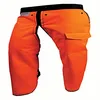
Notch Hi-Vis Apron-Style Chainsaw Chaps
Wrap-around leg protection for the felling step of the cut-stump method — the point in this whole process where a chainsaw is actually running.
- Best for: anyone felling the tree themselves rather than just girdling or injecting it
- Why we picked it: hi-vis orange apron cut is easier to see and put on fast than full wrap-style chaps
- Main drawback: apron-style only covers the front of the legs, not full wrap protection
Compare more tree-removal safety gear
 Option 1 3-in-1 Forestry Helmet, Face Shield & Ear Muffs
|
 Option 2 Ironclad Ranchworx Leather Work Gloves
|
 Option 3 8-Piece Wood Chisel Set
|
As an Amazon Associate we earn from qualifying purchases.
Maples are attractive shade trees, but a handful of real problems send homeowners looking for a way to kill one instead of trim it:
- Invasive roots: Maple root systems are shallow and aggressive enough to crack sidewalks, lift driveways, and threaten a foundation or septic line.
- Wrong location: A maple planted too close to a house, fence, or power line becomes more hazardous every year it grows.
- Disease or storm damage: A tree with heart rot, fungal conks, or a cracked trunk can drop limbs without warning.
- Overcrowding: Too many trees competing for light and water weakens all of them; thinning lets the rest thrive.
- Invasive species: Norway maple in particular spreads aggressively and crowds out native trees in many states.

Safety Comes Before Any Cut
Before you touch bark, chemical, or chainsaw, get your safety setup right. This isn’t optional — a compromised tree or a chainsaw kickback causes real injuries every year.
PPE Checklist
- Safety glasses or a mesh face shield: protects against wood chips, dust, and herbicide splash-back.
- Heavy-duty leather gloves: guards against cuts, splinters, and chemical contact.
- Long sleeves and pants: covers skin from scratches and herbicide drift.
- Sturdy, closed-toe boots: keeps footing solid and protects against falling debris.
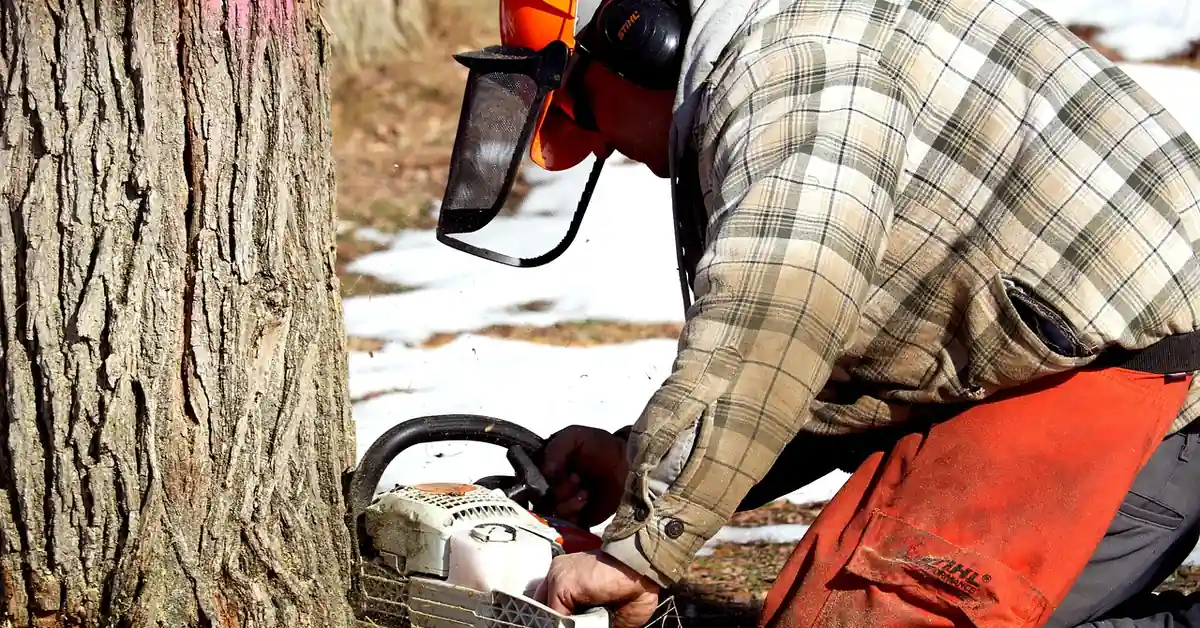
- Chainsaw chaps, if felling: the single piece of gear most likely to stop a leg injury from a kickback.
Assess the Area First
- Check for utilities: If the tree or its branches are anywhere near power lines, stop and call a licensed arborist — this is not a DIY job. Call 811 before you dig near the stump; marking underground lines is free.
- Clear the work zone: Move toys, furniture, pets, and people well outside the tree’s height in every direction.
- Check the tree’s condition: Large dead limbs, visible rot, or a heavy lean mean the tree can behave unpredictably. If you have any doubt about stability, call a professional instead.
Why a Maple Is So Hard to Kill
Cutting a maple down at ground level often isn’t enough on its own — you’ve probably seen a ring of new sprouts shoot up from a “dead” stump within a season. That happens because the tree’s stored energy lives in its root system, not just the trunk. Every method below targets the same structure: the cambium, a thin living layer just under the bark that carries water up from the roots and sugars back down to them. Cut off that flow completely, or poison it, and the roots eventually run out of stored energy and die.
Four Ways to Kill a Maple Tree
Which method makes sense depends on the tree’s size, whether you want to avoid chemicals, and how fast you need it gone.
Method 1: Girdling (Chemical-Free)
Girdling starves the tree by physically removing its supply line. You cut and peel away a complete ring of bark and cambium, which stops sugars from reaching the roots.
Pros: no chemicals, low cost, simple tools. Cons: slow (6 months to 2 years), and the tree dies standing, so it still needs to come down eventually.
- Mark your ring: at roughly waist height (about 3–4 feet up), score two parallel lines around the full circumference, spaced 4 to 6 inches apart — a wider ring reduces the chance of the tree bridging the gap with new tissue.
- Cut through bark and cambium: a chainsaw, hatchet, or wide chisel works. Cut about 1 to 1.5 inches deep on a mature trunk — through the bark and into the moist, greenish cambium layer just beneath it.
- Remove everything between the cuts: a chisel or the back of a hatchet clears bark and cambium cleanly. Even a thin uncut strip left behind can keep the tree alive, so go all the way around.
- Wait it out: leaves may wilt the first season and the tree typically fails to leaf out the following spring. A standing dead tree becomes brittle and eventually needs professional removal.
Method 2: Cut-Stump Herbicide Treatment (Most Reliable)
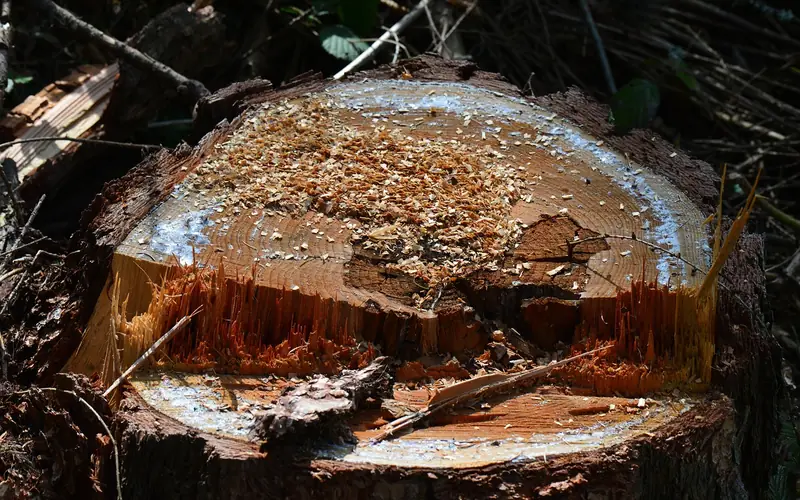
Fell the tree, then treat the stump immediately with a systemic herbicide. The chemical travels down into the root system and kills it outright, which is what actually stops the sucker growth girdling can leave behind.
Pros: highest success rate, kills the roots in weeks, prevents resprouting. Cons: requires felling first and involves handling a regulated chemical.
One thing worth knowing before you shop: Bayer pulled glyphosate out of its residential Roundup lineup sold in the U.S. back in 2023, shifting homeowner cut-stump and brush-killer formulas onto other actives, mainly triclopyr. Glyphosate itself isn’t banned federally and the EPA’s current registration review is expected to close around October 2026, but if a product on a hardware-store shelf is labeled for homeowner stump use, it’s far more likely to list triclopyr than glyphosate today. Either active works for cut-stump treatment; check the label’s cut-stump/basal-bark instructions and follow the mixing ratio exactly.
- Have herbicide ready before the first cut: read the label and mix per the manufacturer’s cut-stump directions. Many stump-and-brush products are sold ready-to-use.
- Fell the tree low: cut as close to the ground as is safe. For anything beyond a small trunk, this step is worth hiring a professional for.
- Apply herbicide within minutes: a tree begins sealing its cut surface almost immediately, so treat it while the wood is still wet. Paint or spray a thin layer onto the outer ring — the cambium — not the whole stump face; that living ring is what carries the chemical to the roots.
- Clean up per the label: dispose of the container and applicator as directed, and wash hands and tools thoroughly.
Penn State Extension and other university extension offices identify cut-stump application as one of the most targeted, lowest-drift ways to control an unwanted tree, since the herbicide goes almost entirely into the one plant you’re treating.
Method 3: Hack-and-Squirt (Frill Girdle)
A hybrid of girdling and chemical treatment: cut a series of angled notches around the trunk, then apply herbicide directly into each one. Useful when you can’t or don’t want to fell the tree right away.
Pros: effective, uses less herbicide than spraying foliage, no immediate felling. Cons: slower than cut-stump, still leaves a standing dead tree.
- Cut downward-angled notches: using a hatchet, space the cuts about 2 to 3 inches apart around the full trunk at waist height, each one deep enough to form a small pocket that penetrates the cambium.
- Fill each notch immediately: squirt herbicide into the pocket without letting it overflow onto the bark.
- Monitor and plan removal: the tree declines gradually, the same way a girdled tree does, and will eventually need to be taken down once it’s confirmed dead.
Method 4: Stem Injection (No Felling, Minimal Drift)
Stem injection is the method most homeowner guides skip, but it’s standard practice for professional applicators dealing with trees near structures or landscaping they don’t want to spray. Instead of cutting a ring or notches, you inject a measured dose of herbicide straight through the bark at set intervals around the trunk.
Two real product categories cover this: capsule-injection lances like the EZject system, which fire solid herbicide capsules (imazapyr or triclopyr amine) directly through the bark and into the cambium with a spring-loaded tool, and ready-to-use tree injection herbicides like Tordon RTU (active ingredients picloram and 2,4-D), which is injected in roughly 1 milliliter doses through the bark at ground level, spaced every 2 to 3 inches around the trunk’s circumference.
Pros: no felling needed, minimal herbicide volume, very little drift onto surrounding soil or plants. Cons: requires a specific injection tool, slower to show results than cut-stump, and the tree still dies standing.
Tordon RTU in particular carries soil-activity warnings on its label — it can move through tree roots into the soil and injure nearby desirable trees and shrubs sharing the same root zone, so it’s not the right choice for a maple growing close to trees you want to keep.
Comparing All Four Methods
| Method | Effectiveness | Speed | Effort | Best For |
|---|---|---|---|---|
| Girdling | High if done fully | Very slow (6 months – 2 years) | Medium | Avoiding chemicals entirely, no rush |
| Cut-stump | Very high (near 100%) | Fast (roots die in weeks) | High (felling required) | Permanent removal, preventing regrowth |
| Hack-and-squirt | High | Moderate (several months) | Low-medium | Killing a standing tree with less chemical |
| Stem injection | High | Moderate (weeks to months) | Low (needs injection tool) | Minimal drift near desirable plants |
What Happens After Treatment
Patience matters here — the tree needs time to actually shut down.
- Early signs: chemical methods often show wilting or yellowing leaves within a few weeks during the growing season. Girdling and hack-and-squirt may show nothing until the following spring, when the tree fails to leaf out.
- Confirming death: wood turns dry and brittle, and scratching the bark reveals no green cambium underneath. No new growth for a full growing season confirms it.
- Becoming a hazard: a standing dead maple gets weaker every month. Branches can break and fall with no warning, especially in wind or storms — plan for removal once death is confirmed.
Dealing With the Stump and Roots
Once the tree itself is down, the stump is the last piece.
Stump Removal Options
| Option | How it works | Pros | Cons |
|---|---|---|---|
| Stump grinding | A rotating cutter wheel grinds the stump below grade | Fast, immediate, thorough | Needs rented equipment or a pro; can be costly |
| Chemical stump remover | Potassium nitrate granules in drilled holes speed up natural decay | Inexpensive, low physical effort | Slow (a year or more), leaves decaying wood in place |
| Manual removal | Shovel, axe, and saw to dig out the stump and major roots | No cost beyond tools you own | Extremely labor-intensive on a mature maple stump |
Frequently Asked Questions
What is the best time of year to kill a maple tree?
Late summer through fall is best. Trees are actively moving sugars down to the roots for winter storage during that window, so herbicide applied to a cut stump or injection site travels through the root system more completely than it would in spring.
Can I kill a maple tree without chemicals?
Yes. Girdling is entirely chemical-free and works reliably if you remove the full bark and cambium ring with no gaps. The tradeoff is time — expect 6 months to 2 years before the tree is fully dead.
How long does it take for a girdled maple tree to die?
Typically six months to two years, depending on the tree’s size and health. Most homeowners notice a sharp drop in leaf-out the first spring after girdling.
Will vinegar or salt kill a large maple tree?
Not reliably. Household vinegar and salt can scorch small seedlings but rarely reach the root mass of an established maple, and salt in particular can contaminate soil and damage nearby plants for years. Stick to girdling, cut-stump treatment, or injection for a tree of real size.
Can I still buy glyphosate (Roundup) for this, or only triclopyr?
Glyphosate itself is not banned in the U.S. and the EPA’s current registration review is expected to conclude around October 2026, but Bayer removed glyphosate from its residential Roundup products in 2023. Most stump-and-brush killers sold to homeowners today are triclopyr-based instead. Either active works for cut-stump treatment — check the product label for cut-stump or basal-bark directions rather than assuming a specific brand or chemical.
What if sprouts appear after I cut the tree down?
Sprouts mean the root system is still alive, usually because herbicide wasn’t applied, or wasn’t applied fast enough after cutting. Cut the sprouts off at the base and immediately paint the fresh cuts with a concentrated triclopyr product to finish off the remaining roots.
Do I need a permit to remove a tree on my property?
It depends entirely on your city or HOA. Many municipalities protect large or “heritage” trees specifically: San José, CA can fine up to $30,000 per tree for unauthorized removal of a protected tree, and Austin, TX requires a permit for any tree 19 inches or more in trunk diameter. Call your local planning or urban forestry office before you cut — a five-minute call can save a five-figure fine.
Getting It Done Right
You now have four real ways to take down a problem maple tree, from fully chemical-free girdling to a same-week cut-stump kill. Whichever you choose, the fundamentals stay the same: protect yourself first, treat the tree at the right point in its cycle, and follow through on the stump so roots don’t come back as sprouts next spring. If the job is bigger than your tools or comfort level — especially anything near power lines or a protected heritage tree — call a certified arborist instead.
Once the maple is gone, see our guides on how many taps a maple tree can safely handle if you’re managing the ones you keep, or browse the full maple wood and tree hub for identification, care, and woodworking guides.
Sponsored / affiliate links. As an Amazon Associate I earn from qualifying purchases. I may earn additional commission from eligible campaigns.