How to Remove Pee Stains on Wood Floors: Quick Tips
Blot fresh urine immediately with paper towels, then clean with an enzymatic pet stain remover — not just vinegar — since enzymes are what actually break down the uric acid crystals that cause both the smell and the eventual black staining. Vinegar and baking soda help with surface odor, but they don’t fully neutralize deep-set uric acid the way an enzymatic cleaner does.
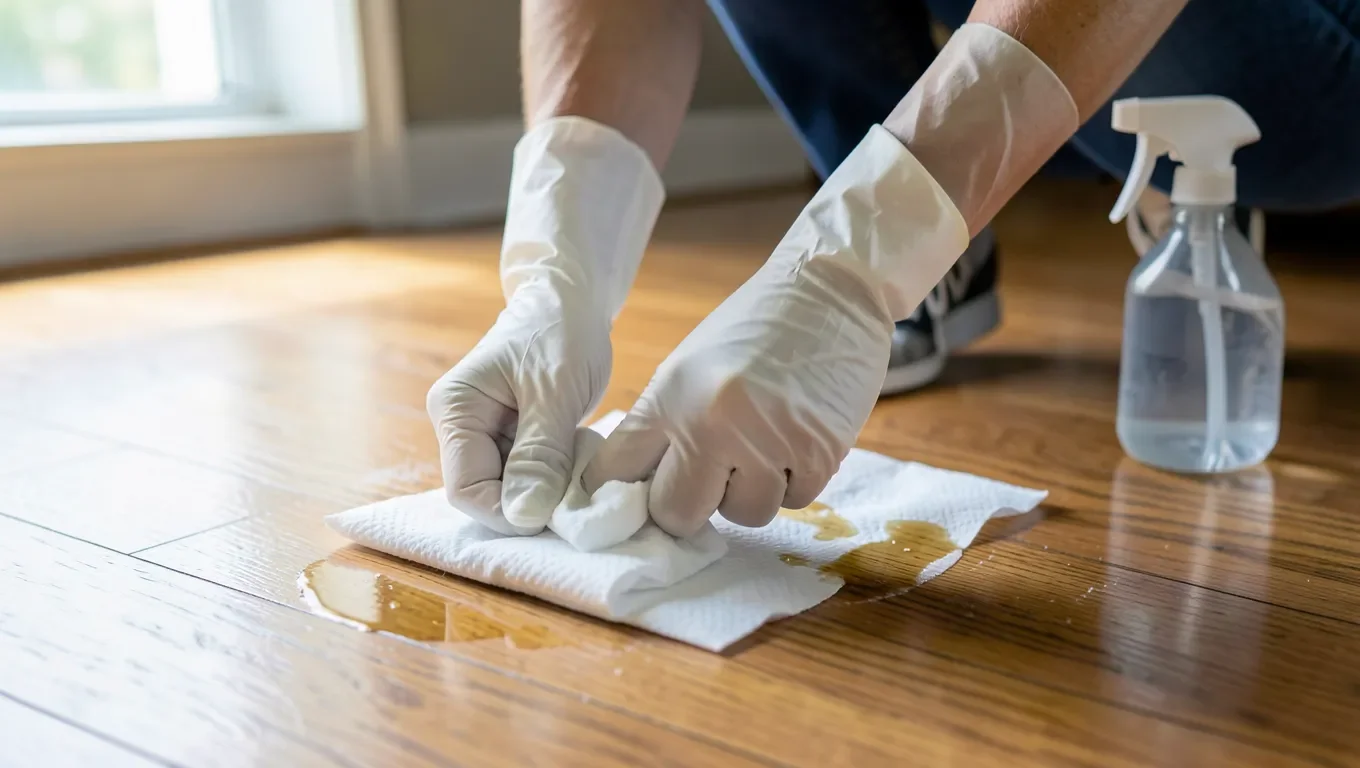
Removing a Fresh Pee Stain
Best For Sealed Hardwood and Laminate Floors
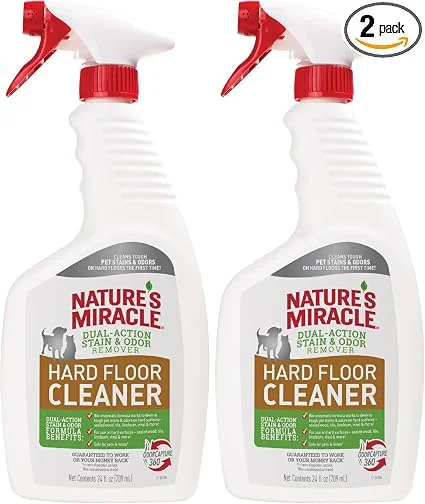 |
Nature’s Miracle Hard Floor Stain & Odor Remover – $8.01+ An enzymatic formula made specifically for sealed wood and hard floors — breaks down uric acid instead of just masking the smell.
|
Fresh stains are far easier to deal with than old ones, since the urine hasn’t had time to soak deep into the wood grain or finish. Work through these steps as soon as you find the spot:
- Blot up as much urine as possible with paper towels — press down, don’t rub, so you’re not spreading it further into the wood.
- Wipe the area with a damp cloth to remove surface residue.
- Apply an enzymatic cleaner (see above) or a vinegar-and-water solution, following the product’s own directions.
- Let it sit for the recommended time — for enzymatic cleaners this is often longer than you’d expect, since the enzymes need time to work.
- Wipe dry with a clean cloth. Avoid steam mops here — the heat and moisture can push liquid deeper into the wood and damage the finish.
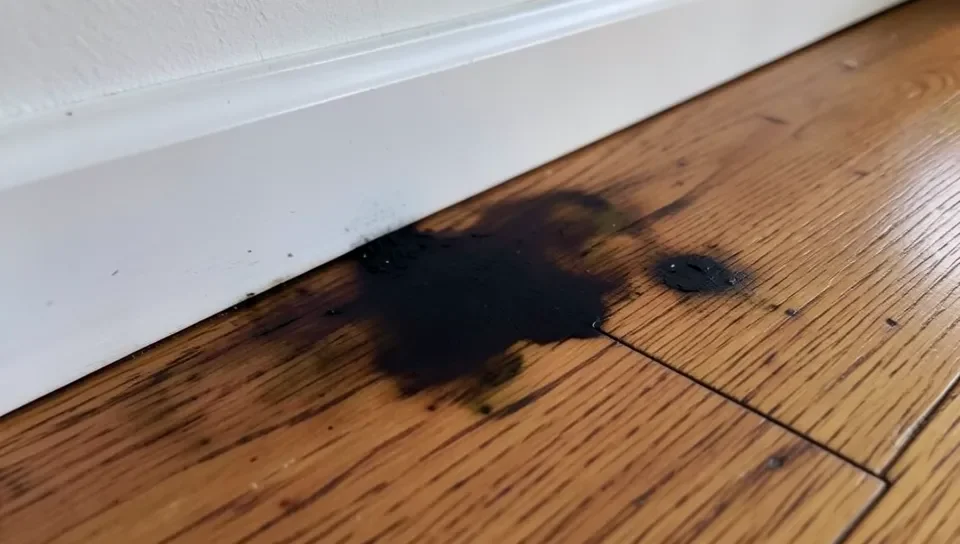
Why Old Stains Turn Black — and How to Treat Them
Repeated urine soiling in the same spot lets dried uric acid crystals build up and penetrate deep into the wood fibers, which is what causes that stubborn black or dark-gray discoloration on old stains. By this point, vinegar and baking soda usually aren’t strong enough on their own — the crystals have to be broken down and often the finish itself needs to be addressed.
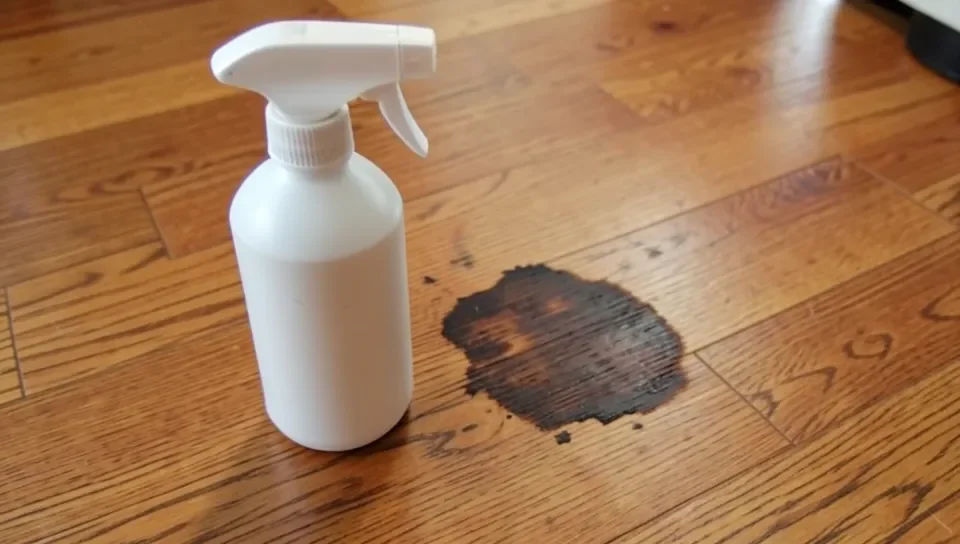
- Saturate the black area with an enzymatic cleaner and let it sit well beyond the label’s minimum time — old stains need more contact time, not more scrubbing pressure.
- If the black discoloration remains after cleaning, it’s likely the uric acid has stained the wood fibers themselves, not just the finish. At this point, sanding down to bare wood and treating with an oxalic-acid-based wood bleach (a different product from chlorine bleach) is usually the only way to lift it.
- After bleaching, neutralize and rinse per the product’s instructions, let the wood dry fully, then re-sand lightly to blend the spot before refinishing.
Because sanding and wood bleach affect the finish, treat an old, blackened stain as a refinishing job, not a quick cleanup — test on an inconspicuous spot first.
Household Items That Actually Help
If you’d rather not buy a dedicated product, a few household items can help — with real limits worth knowing:
- Vinegar and water: a 1:1 mix helps neutralize the ammonia smell on the surface and is safe on sealed wood, but it doesn’t break down uric acid crystals the way an enzyme does — treat it as a first pass, not a complete fix on set-in stains.
- Baking soda: sprinkled on and left to sit, it absorbs surface moisture and odor. Good for a quick freshen-up, not for a stain that’s already dried and penetrated the wood.
- Hydrogen peroxide: can help lighten mild discoloration, but test it on a hidden spot first — it can lighten the wood’s finish or color along with the stain.
Preventing Pee Stains On Wood Floors
Training and Routine
Consistent potty training and a predictable schedule are still the most effective prevention. Take pets out regularly, reward success immediately, and watch for the early signs of an accident so you can catch it before it happens.
Protective Measures
Rugs or mats in high-risk areas — near food and water bowls, favorite resting spots, or by the door — give you an easy-to-wash buffer instead of raw wood. Waterproof pet pads in a designated spot work well for puppies, older pets, or anyone still in training.
When to Call a Professional
If repeated attempts with enzymatic cleaners haven’t lifted a stain, or the urine has already reached bare wood through worn or damaged finish, a professional floor refinisher can sand and refinish the affected boards — sometimes replacing a board is more practical than trying to bleach out a deeply set stain. Look for a company with specific experience treating pet-urine damage, not just general floor cleaning, and ask how they handle boards that don’t respond to bleaching.
Frequently Asked Questions
How Do You Get Old Urine Stains Out Of Hardwood Floors?
Saturate the stain with an enzymatic cleaner and give it extra dwell time beyond the label minimum — old stains need more contact time, not more scrubbing. If black discoloration remains, the uric acid has likely stained the wood fibers, which usually requires sanding to bare wood and treating with an oxalic-acid wood bleach.
Can You Get Pee Stains Out Of Wood?
Yes. Fresh stains respond well to blotting plus an enzymatic cleaner or a vinegar-and-water rinse. Older, blackened stains usually need a stronger approach — an enzymatic cleaner with extended dwell time, and in stubborn cases, sanding and wood bleach.
Does Urine Ruin Hardwood Floors?
It can, if left untreated. Repeated soiling lets dried uric acid crystals build up and penetrate the wood, causing dark or black discoloration that plain cleaning can’t lift. Treated promptly, urine is very manageable and rarely causes lasting damage.
Does Vinegar Alone Remove Urine Stains?
Not fully. Vinegar neutralizes surface ammonia odor and is safe on sealed wood, but it doesn’t break down the uric acid crystals that cause deep staining the way an enzymatic cleaner does. Use vinegar for a quick fresh-stain rinse, but reach for an enzymatic product for anything that’s already set in.
Conclusion
Act fast on fresh accidents — blot, then clean with an enzymatic cleaner rather than relying on vinegar alone — and old, blackened stains are still fixable with extended enzyme treatment or, as a last resort, sanding and wood bleach. Prevention through training and a few well-placed rugs or pads goes a long way toward not needing any of this in the first place.
Sponsored / affiliate links. As an Amazon Associate I earn from qualifying purchases. I may earn additional commission from eligible campaigns.