Incra Miter Gauge Guide: 7 Models Compared (Prices & Specs)
Incra makes five distinct miter gauges, not one, and the $79 V27 and $390 Miter 5000 solve different problems. The wrong pick wastes money on stops you will not use, or leaves you short on the resolution segmented work demands. This guide compares angle stops, resolution, fence length, and real Amazon pricing for the V27, Miter 1000, 1000SE, 1000HD, and Miter 5000.
Quick Answer
Most home shops should buy the Miter 1000HD ($172) — 180 angle stops every degree plus a 1/10-degree vernier for the price of a mid-tier gauge. Buy the V27 ($79) if you only need a tighter stock replacement, and the Miter 5000 ($390) if you’re doing production segmented work with a full sled.
Which Incra Miter Gauge Should You Buy?
Best Incra Miter Gauge Pick
INCRA Miter1000/18T Miter Gauge
A solid-steel laser-cut protractor head with a gold-anodized Track Fence, 18 indexed stops every 5°, and 6 expansion points that hold zero side-play on the miter bar.
- Best for: Repeat angle cuts at common shop angles with a rock-solid miter bar
- Why we picked it: Zero side-play adjustment on both sides of the bar plus a durable steel protractor head
- Main drawback: Indexed at 5° increments only — no fine vernier scale for odd angles
Compare more Incra miter gauge options
 Option 1 INCRA MITERV27 Miter Gauge
|
 Option 2 INCRA Miter1000SE Special Edition
|
 Option 3 INCRA Miter 5000 with Sled
|
As an Amazon Associate we earn from qualifying purchases.
Incra’s miter gauges share the same AngleLOCK indexing system but differ in how many angle stops they carve into the protractor plate, how fine the vernier scale reads between those stops, and whether the fence telescopes. Prices below are current Amazon listings, not MSRP — check before buying since Incra pricing shifts with retailer promotions.
| Model | Angle Stops | Fence | Price | Best For |
|---|---|---|---|---|
| Miter V27 | 27 fixed presets | Fixed, no telescoping | ~$79 | Tight benchtop saws, occasional angles |
| Miter 1000 | 41 stops, 5° increments, 1/2° vernier | 18″ fixed | ~$134 | Budget upgrade with real detents |
| Miter 1000SE | 41 stops, 5° increments, 1/10° vernier | 18″–31″ telescoping | ~$166 | Long workpieces, finer readout |
| Miter 1000HD | 180 stops, 1° increments, 1/10° vernier | 18″–31″ telescoping | ~$172 | Most segmented and picture-frame work |
| Miter 5000 | 364 stops, 0.5°/1°/5° increments | Telescoping + 3-panel sled | ~$390 | Production shops, full sled setups |
The jump from the 1000SE to the 1000HD is the one worth understanding before you buy: both telescope from 18″ to 31″ and both read to 1/10 of a degree with the vernier cursor, but the 1000HD carves a stop into the protractor plate every single degree instead of every 5 degrees. For picture frames, segmented bowls, and multi-sided boxes, that’s the difference between dialing in an odd angle by eye and simply flipping to a machined stop that’s already there.
Setting Up and Calibrating Your Incra Miter Gauge
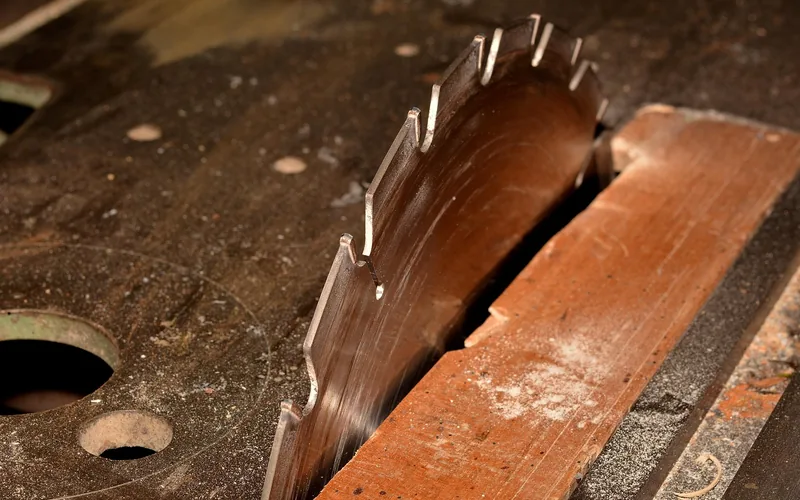
Every Incra miter gauge assembles and calibrates the same way regardless of model, because they all share the GlideLOCK miter bar and expansion-disk system.
Assembly steps
- Check your slot width first: Incra’s bar is designed to adjust between 0.740″ and 0.765″, which covers Delta, Craftsman, and most import saw slots — but measure your slot before assembly, not after.
- Attach the miter bar to the gauge head using the provided hardware, keeping the six expansion disks loose until the fit is tested.
- Slide the bar into the miter slot and turn the expansion-disk screws until the bar takes up all side-to-side play with no binding when you slide it end to end.
- Attach the fence to the gauge head — telescoping on the 1000-series models, fixed-length on the V27 — and confirm it locks square to the protractor plate.
Calibrating for a true 90-degree cut
- Loosen the gauge head’s locking mechanism and place a reliable square against the blade and the fence face.
- Adjust the head until the square shows zero gap at both the top and bottom of the blade, then re-tighten.
- Make a test cut on scrap and check it with a second square — a single square can itself be slightly off, so a cross-check matters more than the tool’s stated accuracy.
- Use the 1/10-degree vernier cursor for micro-adjustments once you’re within a degree of true, rather than trying to eyeball the last fraction of a degree.
Key Features That Set the Incra Lineup Apart
Three design details carry across every Incra model and explain why the brand costs more than a stock gauge or a basic aftermarket unit.
| Feature | What it actually does |
|---|---|
| AngleLOCK Indexing System | Laser-cut steel teeth engage a fixed stop at each increment, so the gauge returns to the exact same angle every time instead of drifting like a friction-locked protractor. |
| GlideLOCK Miter Bar | Six expansion disks let the bar widen to fill a loose or worn miter slot, removing the side-to-side play that causes inaccurate cuts on older saws. |
| Flip Shop Stop | A hinged stop on the fence flips out of the way for the first cut, then flips back into an identical position for repeat cuts — no clamped block or pencil mark needed. |
| Telescoping IncraLOCK Fence (1000SE/1000HD/5000) | Extends from 18″ to 31″ with a front T-slot for a wooden zero-clearance sub-fence, which supports long workpieces the V27’s fixed fence can’t. |
One thing stock miter gauges don’t tell you: even a brand-new saw’s miter slot can vary by a few thousandths of an inch from one end to the other, which is exactly why every Incra bar ships with adjustable expansion disks instead of a fixed-width bar. Skip that adjustment step during setup and you’ll fight slop for the life of the gauge, regardless of which model you bought.
Advanced Techniques: Complex Angles and Dovetail Joints
Once the gauge is calibrated, the 1/10-degree vernier cursor is what unlocks work a stock gauge can’t touch. It lets you dial in angles between the machined stops in fine increments, which matters for compound miters and unusual polygon segments where the target angle isn’t a round number.
Making complex angled cuts
For segmented turnings with an odd number of sides, the miter angle is 180 divided by the number of segments — an 11-sided ring needs 16.36-degree cuts, which is exactly the kind of number a stock gauge’s stamped 90/45 detents can’t reach and the vernier cursor can.
Creating dovetail joints with precision
The fence’s front T-track accepts a shop-made dovetail sled, letting the miter gauge hold the sled square while the sled itself carries the workpiece at the dovetail angle. Because the gauge’s own angle setting stays locked at zero for this technique, repeatability comes from the sled, not the gauge — build the sled fence dead square to the miter bar and every pin socket comes out identical.
Credit: RV Woodworks, YouTube — unboxing and first setup of the Miter 1000HD.
Incra vs. Other Aftermarket Miter Gauges
Incra isn’t the only aftermarket option — the Osborne EB-3 and the Kreg Precision Miter Gauge System are the two gauges it gets compared to most, and each wins for a different kind of shop.
- Incra vs. Osborne EB-3: both are accurate enough that woodworkers argue over which reads truer, but the Osborne’s slide-rule angle scale and its tendency to stay parked at 90° suit shops that mostly crosscut. Incra’s indexed AngleLOCK stops are the better fit once you’re regularly cutting anything other than square.
- Incra vs. Kreg Precision Miter Gauge System: the Kreg is a reasonable mid-range pick once a stock gauge’s fence length and stop repeatability are the real bottleneck. Incra pulls ahead specifically for angle-heavy work — picture frames, segmented turnings, multi-sided boxes — where its 1/10-degree vernier and up to 180 machined stops go further than the Kreg’s stop count.
For a broader look at how any aftermarket gauge compares to a stock unit, and when the upgrade is actually worth it regardless of brand, see our table saw miter gauge guide.
Common Setup Mistakes to Avoid
- Skipping the slot measurement. Assuming your saw uses the standard 3/4″ x 3/8″ slot and forcing the bar in without checking the 0.740″–0.765″ adjustment range first is the most common cause of a bar that binds or rocks.
- Squaring off a single reference. One square reading zero doesn’t guarantee the cut is square — cross-check with a second square or a test cut, since a single tool being slightly out will get calibrated in as “correct.”
- Over-tightening the locking knob. Cranking the head-lock knob far past snug wears the threads and the indexing teeth faster than normal use, and doesn’t add any accuracy once the AngleLOCK tooth is fully seated.
- Ignoring newer T-slot miter tracks. Some current saws, including SawStop and several contractor-saw models, ship with a T-slot track instead of the older flat channel — confirm your saw’s slot profile before ordering, since a standard bar won’t seat correctly in a T-slot.
Maintenance and Troubleshooting
Keeping an Incra miter gauge accurate is mostly about keeping it clean — the AngleLOCK teeth and expansion disks are precision-machined, and sawdust packed into them is the root cause of most of the sticking and drift complaints owners report.
Cleaning and lubrication
- Brush dust and debris out of the gauge body, guide rails, and sliders after heavy use — don’t wait for sticking to start.
- Avoid harsh chemicals or abrasives on the anodized fence and steel protractor plate; a soft cloth handles routine cleaning.
- Apply a light, non-sticky lubricant such as silicone spray to the locking mechanisms and expansion-disk screws, and wipe off any excess so it doesn’t attract more dust.
Common issues and fixes
- Sticking or binding: check for debris in the slot and around the expansion disks first, clean and re-lubricate, and inspect for worn components if the problem persists.
- Inaccurate angles: re-verify the bar is seated with zero play, confirm the indexing teeth are clean, and recalibrate to a fresh square reading rather than trusting the last setting.
Frequently Asked Questions
How do you square an Incra miter gauge?
Loosen the gauge head’s locking mechanism, place a square against the fence and the blade, adjust until there’s zero gap at both ends of the square, then re-tighten. Check with a second square to rule out a single tool being slightly off.
How do you adjust the miter bar on Incra?
Turn the expansion-disk screws on the GlideLOCK bar until it fills the miter slot with no side play but still slides freely end to end. Do this before calibrating the angle, since a loose bar will throw off any angle setting.
Is the Incra miter gauge worth the extra cost over a stock gauge?
Yes, if you regularly cut anything beyond a basic 90-degree crosscut. The indexed AngleLOCK stops and 1/10-degree vernier remove the guesswork stock stamped detents can’t match, which matters most for picture frames, segmented work, and repeat production cuts.
What miter slot size does the Incra miter gauge fit?
The GlideLOCK bar adjusts between 0.740″ and 0.765″ to fit the standard 3/4″ x 3/8″ square-sided slot found on most Delta, Craftsman, and import saws. It is not designed for T-slot miter tracks without an adapter, so confirm your saw’s slot profile before ordering.
Can you use the miter gauge and rip fence together?
Yes, for cutting narrow pieces to length, but keep the workpiece clear of the fence before the cut finishes — trapping an offcut between the blade and the rip fence during a crosscut is a kickback risk regardless of which miter gauge you’re using.
Do you need a miter gauge for crosscutting?
Yes, use the miter gauge rather than the rip fence alone for crosscuts — it supports the workpiece against the blade at a fixed angle and prevents the rotation that causes an unsupported crosscut to bind or kick back.
Conclusion
The Incra lineup isn’t one gauge with different names on it — it’s five different tools built for different budgets and different angle precision needs. Match the model to what you actually cut: the V27 for occasional angles on a benchtop saw, the 1000HD for the segmented and picture-frame work most home shops eventually take on, and the Miter 5000 only once you’re running a production sled setup that justifies the price.
Sponsored / affiliate links. As an Amazon Associate I earn from qualifying purchases. I may earn additional commission from eligible campaigns.