Is Japanese Maple Deciduous or Evergreen
Many gardeners wonder about their beautiful Japanese maple trees. A common question is Is Japanese Maple Deciduous or Evergreen? This can be tricky because some trees lose their leaves while others keep them all year.
Don’t worry, we will make it simple. We will guide you step by step to easily figure out what kind of Japanese maple you have. Get ready to learn the easy way to tell them apart.
Understanding Japanese Maple Leaf Drop
Japanese maples are admired for their delicate foliage and elegant shapes. They bring a lot of beauty to gardens in many seasons. People often ask Is Japanese Maple Deciduous or Evergreen?
because their appearance can change quite a bit. This change is linked to how they handle winter weather. Knowing this helps you care for your tree better and predict its yearly look.
This section will explain the main reasons why some Japanese maples lose their leaves and others don’t, making it clear which category they fall into.
Deciduous Trees Explained
Deciduous trees are those that shed their leaves seasonally, usually in the fall or winter. This is a natural process for many plants. It helps them survive cold weather and conserve water.
Think of it like the tree taking a long nap before spring. When the days get shorter and colder, the tree signals its leaves to shut down. The green color fades, revealing other colors like red, orange, and yellow before they fall off.
This leaves the tree bare, showing its branches and structure.
Deciduous trees have several benefits for a garden. In the summer, their leaves provide cooling shade. In the fall, their colorful leaves create a stunning display.
In winter, the bare branches can add a unique architectural element to the landscape. Many popular trees are deciduous, like oaks, birches, and of course, most Japanese maples.
Why Trees Shed Leaves
The primary reason deciduous trees shed leaves is to survive winter. When it gets cold, water can freeze, making it hard for the tree to get what it needs from the soil. Leaves lose a lot of water through a process called transpiration.
By dropping their leaves, trees reduce water loss. It also helps them avoid damage from snow and ice. The leaves would collect snow, adding weight and potentially breaking branches.
This shedding process is controlled by hormones within the tree. As daylight shortens and temperatures drop, the tree produces less of certain growth hormones and more of others. This leads to the formation of a special layer of cells at the base of each leaf stem, called the abscission layer.
This layer weakens over time, eventually causing the leaf to detach and fall.
Seasonal Changes in Deciduous Japanese Maples
For deciduous Japanese maples, the seasonal changes are a significant part of their charm. In spring, they burst forth with fresh, often bright green or red leaves. Summer brings a lush canopy, providing beautiful foliage.
Autumn is the star show, with leaves transforming into vibrant shades of crimson, orange, gold, and scarlet. Then, the leaves gently fall, revealing the tree’s intricate branching pattern.
This cycle means that the tree’s appearance changes dramatically throughout the year. While they might not have the constant green of evergreens, their dynamic seasonal display is highly valued by gardeners. The bare branches in winter can be especially beautiful when dusted with frost or snow, offering a different kind of natural beauty.
It’s this visible transformation that makes them so captivating.
Evergreen Trees Explained
Evergreen trees are different because they keep their leaves or needles all year round. They do shed some older leaves, but it happens gradually, so the tree always looks full and green. Think of pine trees or fir trees.
They maintain their green color through all the seasons, offering a consistent visual presence in the landscape. This makes them a popular choice for creating year-round interest in gardens and landscapes.
Evergreens are known for their resilience and ability to provide shelter and visual interest even in the coldest months. While many evergreens are conifers with needles, there are also broadleaf evergreens. They contribute to biodiversity by providing habitat and food for wildlife throughout the year.
Their steady presence offers a sense of continuity in the garden.
How Evergreens Stay Green
Evergreens manage to stay green by having special leaves designed for harsh conditions. Their leaves often have a waxy coating that reduces water loss and protects them from cold temperatures and drying winds. Instead of shedding all their leaves at once like deciduous trees, evergreens replace them gradually over time, often over several years.
This means they are always photosynthesizing, or making food from sunlight, year-round.
The process of leaf replacement in evergreens is much slower than the mass shedding seen in deciduous trees. A pine tree, for example, might keep its needles for 2 to 5 years. As older needles turn yellow or brown, they fall off, but new needles are always growing.
This continuous, gradual renewal ensures the tree remains green and productive throughout the year, providing a constant source of energy and a stable appearance.
Year-Round Appeal of Evergreens
The main attraction of evergreen trees is their constant green color. They offer a stable visual element to any garden or landscape, regardless of the season. In winter, when most other plants are bare, evergreens provide a splash of life and color.
This makes them ideal for creating focal points or for use in areas where year-round beauty is desired, like near a patio or entrance.
Beyond their visual appeal, evergreens also play an important role in the environment. They offer shelter to birds and other wildlife during winter. Their foliage can help reduce wind speed and noise pollution.
For gardeners, they are low-maintenance options that require less attention than deciduous trees that need regular pruning of fallen leaves.
Is Japanese Maple Deciduous or Evergreen The Answer
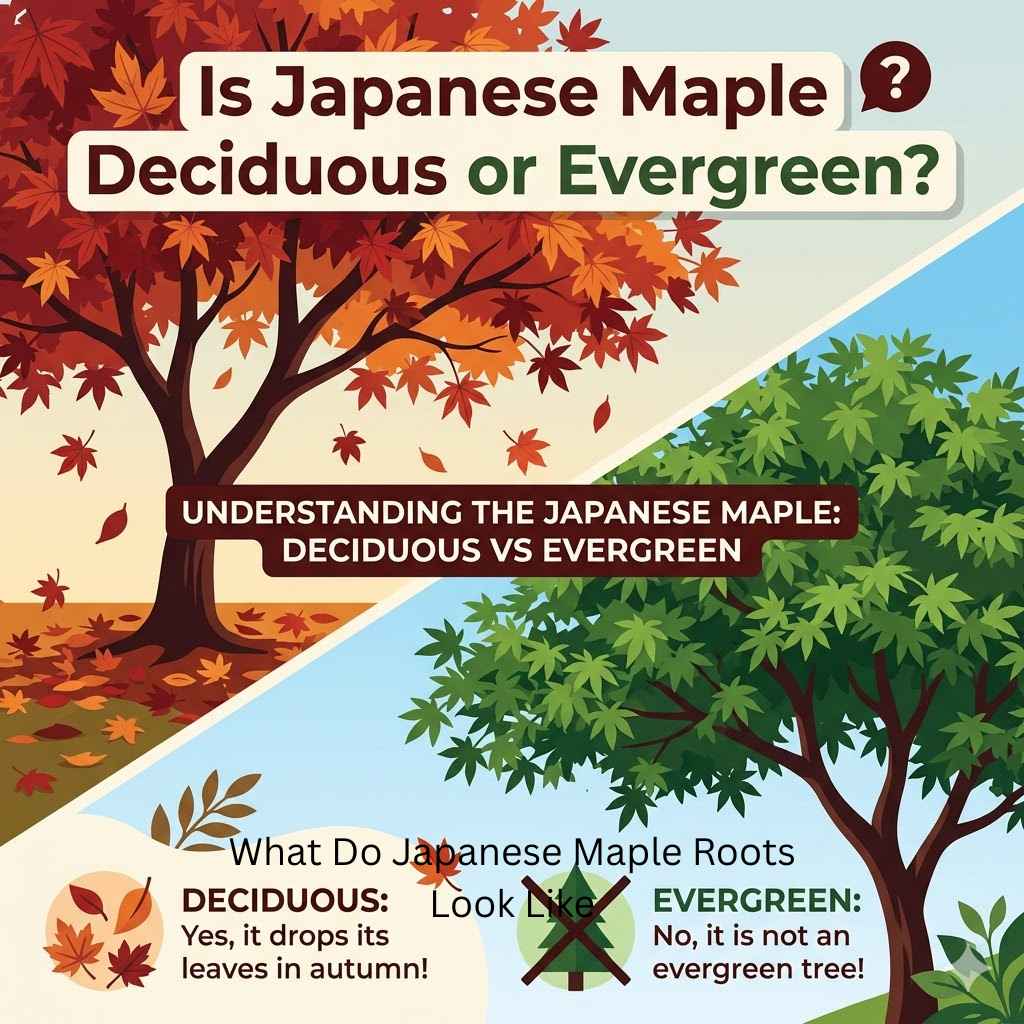
So, to finally answer the question Is Japanese Maple Deciduous or Evergreen? the straightforward answer is that most Japanese maple varieties are deciduous. This means they will lose their leaves in the fall and remain bare throughout the winter.
However, it’s important to know that this is the general rule. There are some specific cultivars and related species that might behave differently or have characteristics that can cause confusion.
Understanding this fundamental difference is key to appreciating the Japanese maple’s seasonal beauty. Knowing your tree will shed its leaves helps you prepare for winter and anticipate the spring return of its vibrant foliage. It also means you don’t need to worry if it looks bare in the cold months.
This characteristic is a normal and expected part of its life cycle.
The Majority Are Deciduous
When people talk about the common, well-loved Japanese maple trees, they are almost always referring to deciduous types. These are the trees that give us those stunning red, orange, and yellow colors in autumn. They are highly prized for this dramatic seasonal show.
If you have a typical Japanese maple in your garden, chances are it is deciduous.
These deciduous varieties have been cultivated for centuries for their ornamental value. Their leaf shapes are often very intricate, adding to their appeal. The change from lush green in summer to fiery hues in fall, followed by bare branches in winter, is a celebrated aspect of their character.
This cycle is what makes them such dynamic garden features.
Why This Matters for Gardeners
Knowing your Japanese maple is deciduous is important for several reasons. First, it helps manage expectations. You won’t be surprised when it sheds its leaves.
Second, it affects pruning. Pruning is often best done when the tree is dormant, meaning when it has no leaves. This makes it easier to see the tree’s structure and identify branches that need to be removed.
Also, this knowledge helps in garden planning. You can plant bulbs or other smaller plants near the base of a deciduous Japanese maple that will bloom in early spring before the maple leafs out, or in the fall after its leaves have fallen. The bare branches in winter also offer an opportunity to hang decorative lights or ornaments for seasonal displays.
Common Deciduous Japanese Maple Varieties
There are many popular cultivars of Japanese maples, and the vast majority are deciduous. Some of the most well-known include Acer palmatum ‘Bloodgood’, known for its deep red leaves, and Acer palmatum ‘Crimson Queen’, a stunning weeping variety with lacy, red foliage. Another popular one is Acer palmatum ‘Sango-kaku’, or coral bark maple, famous for its bright coral-red bark that shows off in winter.
All these varieties, and many more like them, follow the deciduous cycle. They will produce beautiful foliage in spring and summer, turn brilliant colors in autumn, and then drop their leaves for winter. Their appeal lies in this predictable, yet spectacular, yearly transformation.
The focus on their colorful leaves and bark makes them garden stars.
Are There Any Evergreen Japanese Maples?
This is where things can get a little confusing for some. While the typical Japanese maple (Acer palmatum) is deciduous, there are related species and some specific cultivars that blur the lines or are truly evergreen. It’s important to distinguish between true evergreens and those that might hold their leaves longer than usual due to mild conditions.
However, when most people ask Is Japanese Maple Deciduous or Evergreen?, they are thinking of the popular Acer palmatum. For these, the answer is predominantly deciduous. True evergreen Japanese maples are rare and not what most gardeners encounter.
It is crucial to identify the specific species or cultivar you have for accurate care and expectation.
Confusion with Related Species
Some other maple species can be evergreen or semi-evergreen, and this might lead to confusion. For instance, some species native to warmer climates might retain their leaves longer or even be evergreen. However, these are not typically what is referred to as a Japanese maple in general gardening discussions.
The term “Japanese maple” most commonly refers to Acer palmatum and its close relatives.
It is possible to find trees that look like Japanese maples but belong to different botanical groups. These can sometimes be evergreen. Always check the botanical name of your tree to be absolutely sure of its characteristics.
This ensures you are not misidentifying its needs for water, light, and winter protection.
Semi-Evergreen Behavior
In very mild climates, some Japanese maple cultivars that are considered deciduous might behave as semi-evergreen. This means they may hold onto some of their leaves throughout the winter, especially if the winter is not harsh. They might not shed all their leaves, or they might retain them for a much longer period than they would in colder regions.
This semi-evergreen behavior is not because the tree is truly evergreen, but rather a response to favorable environmental conditions. The leaves that are retained are still old and will eventually fall in the spring when new growth begins. So, while the tree might appear to have leaves in winter, it is not the same as a true evergreen.
Identifying Your Japanese Maple Type
The best way to know for sure if your Japanese maple is deciduous or evergreen is to observe it throughout the year. Pay attention to its behavior during the fall and winter months. If it drops all its leaves and stands bare, it’s deciduous.
If it retains green foliage, it’s likely an evergreen or semi-evergreen variety.
Another helpful step is to look for a plant tag or the original purchase information. This often includes the botanical name (e.g., Acer palmatum ‘Crimson King’). Once you have the specific cultivar name, you can easily research its characteristics online or in gardening books.
This will confirm whether it is deciduous or evergreen.
Observation Through the Seasons
Observing your tree through the four seasons is the most reliable method. In autumn, watch how its leaves change color and then fall. If the tree becomes completely bare by early winter and stays that way until spring, it’s a classic deciduous Japanese maple.
This cycle is its natural rhythm.
Conversely, if your tree consistently keeps its leaves, or at least a significant amount of them, throughout the winter, and they remain green, then you likely have an evergreen or semi-evergreen type. This observation method is simple, practical, and directly answers the question based on your tree’s actual performance.
Checking the Botanical Name
The botanical name is your definitive guide. For example, Acer palmatum is the species name for the Japanese maple, and it is overwhelmingly deciduous. If your tree’s tag says Acer palmatum ‘Name Of Cultivar’, then it is a variety of the deciduous Japanese maple.
If it were a rare evergreen, it would likely have a different species name, such as Acer sempervirens (though this is not a typical “Japanese maple” found in gardens).
Researching the specific cultivar name will provide detailed information on its growth habits, hardiness, and whether it is deciduous or evergreen. This step removes any guesswork and ensures you have accurate horticultural knowledge about your plant. Always trust the scientific classification when in doubt.
Factors Influencing Leaf Retention
Several environmental factors can influence how long a deciduous Japanese maple holds its leaves. These are usually temporary conditions, not a change in the tree’s fundamental nature. Understanding these can help explain why your tree might look different from others of the same variety in a different location.
For instance, a very mild winter might encourage some deciduous trees to retain their foliage longer. Similarly, where the tree is planted – in a sheltered spot versus an exposed one – can make a difference. These factors do not make a deciduous tree evergreen, but they can alter its appearance temporarily.
Climate and Winter Hardiness
Climate plays a significant role. In regions with very mild winters, deciduous trees may experience less frost and cold. This reduced stress can sometimes lead to leaves persisting on branches for longer periods.
However, these leaves are often aged and will still be shed naturally as spring approaches. True leaf drop is a programmed response to seasonal changes, not just a reaction to immediate cold.
Trees are adapted to their native climates. Japanese maples, originating from Japan, are generally hardy in specific zones. In warmer zones, they might exhibit semi-evergreen tendencies.
In colder zones, their deciduous nature will be much more pronounced. It’s about the tree’s genetic programming responding to environmental cues.
Microclimates and Shelter
A microclimate is a small area that has a different climate from the surrounding area. A Japanese maple planted in a sheltered courtyard, near a south-facing wall, or protected by other larger trees might experience less wind and colder temperatures. This protection can slow down the leaf drop process.
Conversely, a Japanese maple planted in an open, windswept area will likely experience faster leaf drop. The wind can dry out the leaves and branches, accelerating the natural shedding process. This difference in microclimate is a common reason why two identical trees might appear to behave differently in terms of leaf retention.
Caring for Your Japanese Maple Based on Type
Knowing whether your Japanese maple is deciduous or evergreen guides how you care for it, especially through winter. Deciduous trees need different considerations than evergreens during the colder months. Understanding these differences ensures your tree thrives.
Proper care means providing the right conditions for your tree’s specific needs. This includes watering, pruning, and protection. For deciduous maples, the focus is on winter dormancy and spring renewal.
For any semi-evergreen types, adjustments may be needed based on your local climate.
Winter Care for Deciduous Japanese Maples
Deciduous Japanese maples enter a period of dormancy in winter. They need rest. For young trees, especially, protecting the roots from harsh freezes is important.
Mulching around the base of the tree helps insulate the soil and retain moisture.
Watering is less critical during winter for deciduous maples because they are not actively growing and transpiring water through leaves. However, if the ground is not frozen and there has been no precipitation for an extended period, a light watering might be beneficial, especially for young trees. Avoid overwatering, as this can lead to root rot.
Pruning Dormant Branches
The best time to prune deciduous Japanese maples is during their dormant season, typically in late winter or early spring before new growth begins. With no leaves, you can clearly see the tree’s structure. This makes it easier to identify and remove dead, damaged, or crossing branches.
Pruning helps maintain the tree’s shape, improve air circulation within the canopy, and remove any weak growth. It’s also a good time to address any structural issues. Proper pruning promotes healthy growth and a more aesthetically pleasing form for the next growing season.
Protecting Against Frost and Wind
Young or newly planted deciduous Japanese maples can benefit from winter protection. A layer of mulch around the base can protect the roots. In areas with very harsh winters or strong winds, you might consider wrapping the trunk of very young trees with burlap or a protective sleeve.
This shields them from extreme cold and drying winds.
Older, established trees are generally more resilient. However, it’s always wise to monitor them, especially after unusual weather events. Ensuring the tree is healthy going into winter provides it with the best defense against the elements.
Winter Care for Evergreen or Semi-Evergreen Maples
If you have a Japanese maple that behaves as an evergreen or semi-evergreen, its winter care will differ slightly. While they still benefit from dormancy, they are not fully dormant in the same way. They continue to photosynthesize to some extent.
Protection is still important, especially for young trees, as their leaves can still suffer from frost damage and desiccation (drying out). The key is to provide consistent moisture and protection from harsh elements.
Watering Needs in Winter
Evergreen and semi-evergreen varieties may require more attention to watering during winter, especially in drier climates. Their leaves are still present, meaning they lose some water through transpiration. If the ground is not frozen, and there’s no rain or snow, they may need occasional watering.
The goal is to keep the soil consistently moist but not waterlogged. Overwatering can be as harmful as underwatering, particularly in cooler temperatures when the tree’s metabolic rate is slower. Check the soil moisture regularly by sticking your finger a few inches into the ground.
Protecting Foliage from Damage
The leaves of evergreen and semi-evergreen maples can be susceptible to frost and wind. Strong winds can dry out the leaves, leading to browning and potential leaf drop. Frost can damage tender new growth.
Providing shelter can greatly reduce this risk.
Planting these varieties in a location that offers protection from harsh winds and intense winter sun is beneficial. In severe weather, temporary coverings like horticultural fleece or burlap screens can help shield the foliage. This ensures the leaves remain healthy and green throughout the winter months.
Real-Life Examples and Scenarios
To truly understand the difference between deciduous and evergreen Japanese maples, looking at real-life examples and scenarios helps. These stories show how the type of tree affects garden appearance and care.
Imagine two neighbors, Sarah and John, who both planted Japanese maples around the same time. Their experiences will highlight the distinct behaviors of deciduous and evergreen types.
Scenario 1 A Beautiful Fall Show
Sarah planted an Acer palmatum ‘Fireglow’. Every autumn, her tree puts on a spectacular show of deep red and orange leaves. By late November, almost all the leaves have fallen, leaving the tree’s delicate branches exposed.
In winter, it’s a bare silhouette against the snow. In spring, tiny new leaves emerge, gradually unfurling into their summer green.
Sarah enjoys this cycle. She knows to prune in late winter and appreciates the shade it provides in summer. The bare branches in winter are beautiful, and she sometimes decorates them for the holidays.
Her tree’s deciduous nature defines its yearly presence and garden role.
Scenario 2 Year-Round Greenery
John planted a less common variety, Acer buergerianum ‘Trident Maple’, which is known for being semi-evergreen to evergreen in milder climates. In his garden, located in a warmer region, his tree keeps most of its leaves throughout winter, though they may turn shades of brown and red before falling gradually. He doesn’t get the dramatic fall color change, but his tree always looks full.
John waters his tree more consistently through winter. He prunes it in spring after it has started to grow new leaves. While he doesn’t get the stark winter beauty of bare branches, he appreciates the constant greenery and shade it offers.
His tree’s semi-evergreen nature provides a different, yet equally valuable, garden feature.
Statistics on Japanese Maple Cultivars
While exact statistics on the evergreen vs. deciduous ratio of all Japanese maple cultivars are hard to pinpoint, the overwhelming majority of widely cultivated varieties of Acer palmatum are deciduous. Estimates suggest that over 95% of popular Japanese maple cultivars are deciduous, prized for their fall color and spring foliage.
This dominance of deciduous types explains why the question “Is Japanese Maple Deciduous or Evergreen?” is so common. Most people encounter and grow deciduous varieties. Evergreen or semi-evergreen forms are less common in general garden centers and often belong to different species or less-known cultivars.
Frequently Asked Questions
Question: Do all Japanese maples lose their leaves
Answer: No, most Japanese maples are deciduous and lose their leaves, but some varieties and related species can be semi-evergreen or evergreen, especially in milder climates.
Question: When do deciduous Japanese maples lose their leaves
Answer: Deciduous Japanese maples typically lose their leaves in the fall, with the process often completing by early winter, depending on the specific cultivar and climate.
Question: Can I plant a Japanese maple in a windy area
Answer: While established trees can tolerate some wind, young deciduous Japanese maples might benefit from a sheltered location to protect them from harsh winds that can cause leaf and branch damage.
Question: How do I tell if my Japanese maple is evergreen
Answer: Observe your tree through winter. If it consistently retains green leaves, it’s likely evergreen or semi-evergreen. Deciduous types will be bare during the cold months.
Question: Is it normal for my Japanese maple to have some leaves in winter
Answer: Yes, if you live in a mild climate, it is normal for some deciduous Japanese maples to hold onto a few leaves longer, appearing semi-evergreen, but they will still shed them in spring.
Summary
Most Japanese maples are deciduous, meaning they shed their leaves annually in the fall. This provides beautiful autumn colors and bare winter branches. A few rare types or those in warm regions can be semi-evergreen.
Always check your specific tree’s variety. Knowing this helps you care for it properly.