Wood Load Capacity Calculator: Plywood, Shelf & Screw Limits
A wood shelf almost always sags past its span ÷ 360 limit long before it breaks. By the APA tables, a 3/4-inch plywood shelf on one 32-inch span carries about 33 psf at that limit, roughly 88 lb on a 12-inch-deep shelf. These calculators cover shelf strength and sag, plywood load, screw capacity and lumber cost using Wood Handbook, APA and NDS data. Planning estimates only, not engineering advice.
Quick Answer
Wood load capacity has two separate limits: strength (when it breaks) and stiffness (when it sags too much), and sag almost always governs first. This page combines the load and deflection math with the plywood, screw, board-foot and lumber-cost calculators so you can plan a whole build in one place. For anything structural, check your local code or ask an engineer.
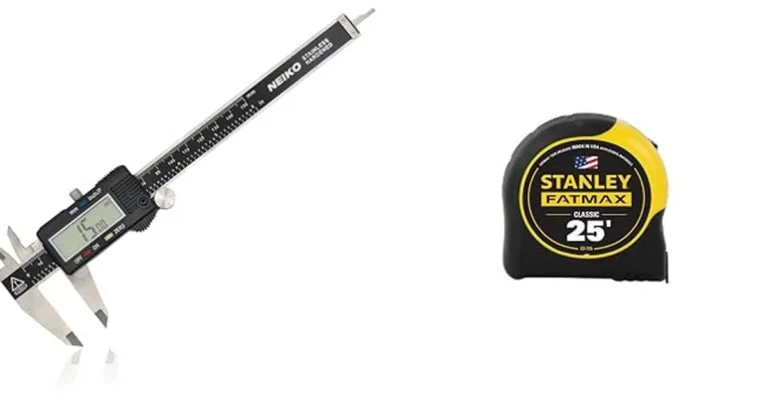
Best Screw Kit for Shelf Builds
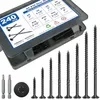 | #8 and #10 Wood Screws Assortment Kit, 240 pcs, $21.99 A starter set of #8 screws from 1 to 2-1/2 inches and #10 screws from 2-1/2 to 4 inches, the same two gauges used in the screw capacity table on this page.
|
As an Amazon Associate we earn from qualifying purchases.
Which Tool Fits Your Question?
Several pages on this site touch wood strength, so here is how they differ. This page is the all-in-one set, with design values taken from the NDS and APA tables rather than rules of thumb.
- One shelf board and how far it bends: the wood sag calculator is a single-purpose sag check, while the shelf tool below also compares strength to sag.
- Floor joists, rafters and deck beams: the American Wood Council span calculator works from a span table at a 40 psf live load.
- A plywood panel or shelf, explained in prose: how much weight plywood can hold walks through the APA span ratings and grain direction. The plywood tool below runs the numbers.
- A solid board by species: the wood weight load calculator linked in the paragraph above.
Wood Load Capacity & Deflection Calculator
Estimate deflection and bending stress for a uniformly loaded, simply supported wood beam or shelf member. This is a planning estimate, not structural approval — real design depends on species, grade, load duration, fasteners, bearing, and local code.
Enter your values and click calculate.
Formula & Example
Deflection = 5wL&sup4; / 384EI | Bending stress = M / S, with M = wL²/8 and S = bd²/6. For a 6 ft span under 50 lb/ft on a 2×8 (1.5 × 7.25 in) of southern pine, the calculator gives 0.022 in of sag and 205 psi of bending stress, far inside the L/360 and design-value limits. The E and Fb you enter should be design values for the species and grade, not clear-wood averages.
Reference Table
Reference design values for common framing lumber, from the AWC NDS Supplement (Tables 4A and 4B, normal load duration, dry service). These are base values: the NDS adjusts Fb for member size and repetitive use, so treat them as a starting point.
| Species and grade | Bending Fb (psi) | Stiffness E (psi) |
|---|---|---|
| Douglas fir-larch No.2 | 900 | 1,600,000 |
| Spruce-pine-fir No.1/No.2 | 875 | 1,400,000 |
| Southern pine No.2, 2×8 | 925 | 1,400,000 |
| Northern red oak No.2 | 975 | 1,300,000 |
| Mixed maple No.2 | 700 | 1,100,000 |
Common Mistakes
- Using nominal instead of actual dimensions.
- Ignoring concentrated (point) loads.
- Using this for permit or code approval.
- Forgetting bearing, fasteners, and load path.
- Using the clear-wood stiffness from a handbook table for a graded board with knots.
Wood Shelf Breaking Load & Sag Calculator
The deflection calculator above checks bending stress against a code-style limit for a general beam. This tool answers the more everyday question, “how much weight can this shelf actually hold?”, by comparing the board’s allowable bending load (a design-level number, not the point where it snaps) against the load at which it hits the common L/360 sag limit. In practice, sag usually sets the real-world safe load long before the wood is anywhere near breaking.
Formula & Example
S = bd²/6, I = bd³/12, Allowable bending load = kFbS/span (k=8 distributed, 4 point), Sag = 5×load×span³/(384EI), sag limit = span/360. Example: a 2×8 pine shelf (7.25 x 1.5 in) on a 36 in span has an allowable bending load of ~529 lb, but hits the 0.10 in L/360 sag limit at only ~470 lb, so sag governs, not strength. The 529 lb is built from the design value Fb = 875 psi, which already includes safety margin. The real breaking load of a clear board is several times higher, which is why these calculators never promise a failure point.
Strength vs Sag Reference
The calculator uses grade-based design values (left) because real boards have knots. The Wood Handbook figures (right) are averages from clear, defect-free specimens at 12% moisture, so they show how much margin the design values carry. Species matter: bur oak is far softer in bending than water oak or white oak.
| Wood type | Calculator Fb / E (design) | Clear-wood MOR / E (Wood Handbook, 12%) |
|---|---|---|
| Pine / SPF | 875 psi / 1.4M psi (SPF No.1/No.2) | Eastern white pine 8,600 psi / 1.24M psi |
| Douglas Fir-Larch | 900 psi / 1.6M psi (No.2) | Coast Douglas-fir 12,400 psi / 1.95M psi |
| Southern pine | 925 psi / 1.4M psi (No.2, 2×8) | Loblolly 12,800 psi / 1.79M psi; longleaf 14,500 psi / 1.98M psi |
| Red oak | 1,000 psi / 1.4M psi (No.1) | Northern red oak 14,300 psi / 1.82M psi |
| White oak | not in the calculator | White oak 15,200 psi / 1.78M psi; bur oak 10,300 psi / 1.03M psi |
| Plywood | 1,000 psi / 1.5M psi (rough) | not applicable (panel properties depend on layup) |
Plywood caution: treating a plywood shelf as a solid board of the same thickness overstates it. Working back from APA’s 3/4-inch values, the effective stiffness is nearer 1.0 million psi than 1.5 million, and the effective bending stress nearer 700-800 psi (1/2-inch panels work out nearer 1.4 million psi and 940 psi, so it varies by panel). Use the plywood calculator below for panels.
Common Mistakes
- Checking only breaking strength and ignoring sag — sag usually governs.
- Laying a board flat instead of on edge; depth drives both strength and stiffness.
- Forgetting creep: the NDS multiplies the sustained-load part of deflection by 1.5 for seasoned lumber (2.0 for unseasoned lumber), so a shelf that loads up for years sags up to 50% more than the day-one number.
- Loading to the calculated maximum with no safety margin.
Plywood Load Capacity Calculator
Plywood load capacity depends on thickness, support spacing, grain direction and whether the panel runs over several supports or just one. Pick yours, and this calculator returns the APA allowable uniform load in pounds per square foot (the lowest of the L/360 sag, bending and shear limits) for your panel size.
Enter your values and click calculate.
Formula & Example
Allowable load (lbs) = panel area (sq ft) × allowable psf. Load with margin = allowable load / planning margin. Example: a 4×8 ft sheet of 1/2″ plywood across 16″ supports, face grain perpendicular, is limited to 220 psf by bending (APA Table 3), so 220 × 32 = 7,040 lbs spread evenly over the whole sheet, or about 4,693 lbs with the default 1.5 margin. That is a uniform pressure over a fully supported panel, not a weight you can stand on one spot.
Plywood Load Capacity Chart (by Thickness & Span)
Allowable uniform load in pounds per square foot (psf) for Group 1 sanded plywood (A-A and A-C design capacities), multi-span, dry conditions, normal load duration. Each value is the lowest of the L/360 deflection, bending and shear limits. Source: APA Technical Note Q225G, Load-Span Tables for APA Structural-Use Panels, Table 3. See also APA structural-use panel grades.
| Thickness | 16″ span, grain across supports | 24″ span, grain across supports | 16″ span, grain parallel | 24″ span, grain parallel |
|---|---|---|---|---|
| 1/4″ | 25 psf | 7 psf | not tabulated | not tabulated |
| 3/8″ | 80 psf | 21 psf | 5 psf | not tabulated |
| 1/2″ | 220 psf | 61 psf | 25 psf | 9 psf |
| 5/8″ | 314 psf | 100 psf | 79 psf | 27 psf |
| 3/4″ | 382 psf | 154 psf | 188 psf | 64 psf |
| 1″ | 609 psf | 271 psf | 539 psf | 182 psf |
For rated sheathing the numbers are in the same range: APA lists 173 psf at 16″ and 54 psf at 24″ for 32/16 sheathing (15/32 and 1/2 inch), and 293 psf and 108 psf for 40/20 (19/32 to 3/4 inch), grain across supports (Table 1a).
Plywood Shelf on a Single Span
The chart assumes a panel running continuously over three or more supports. A shelf sits on two, which cuts the sag-limited load roughly in half, so the calculator’s “One span” setting applies APA’s own adjustment (Table 5: 0.53 on deflection and 0.80 on bending for three-span tables, 0.42 and 1.00 for two-span tables). Results for a 3/4-inch panel, 12 inches deep, face grain running across the supports, load spread evenly, sag held to L/360:
| Span between supports | Allowable psf | Total load on a 12″ deep shelf |
|---|---|---|
| 24″ | 82 psf | about 163 lb |
| 32″ | 33 psf | about 88 lb |
| 36″ | 23 psf | about 68 lb |
| 48″ | 10.5 psf | about 42 lb |
So a 32-inch, 3/4-inch plywood shelf does not hold a 500 lb appliance. It would need a much thicker panel, a closer support spacing, or a solid frame underneath. Sag is the limit, and span matters enormously: going from a 48-inch to a 24-inch span raises the allowable load roughly eight times.
Important: these values apply to evenly distributed loads. APA states that residential floors are not controlled by uniform load: their spans are set by concentrated loads and how the floor feels underfoot, so do not stretch a span beyond the panel’s span rating just because the uniform number looks large. Wet conditions, long-term loading and point loads all reduce capacity. Have an engineer check anything safety-critical.
Common Mistakes
- Using the face-grain-across-supports psf when the panel is actually installed with the grain parallel to the supports, which cuts the allowable load by about half for 3/4-inch panels and by 90% or more for thinner ones.
- Applying a continuous-panel value to a shelf that rests on only two supports.
- Confusing a uniform load rating with a point-load rating: the tables above do not cover concentrated loads.
- Using sanded or cabinet-grade plywood values for rated sheathing, or the reverse. The tables above are separate for each.
Wood Screw Length Calculator
Find the right screw length for joining two boards using the 2/3 rule, with gauge, pilot-hole, and countersink guidance so the screw grips without breaking through.

Formula & Example
Screw length = top thickness + (2/3 × base thickness) (use 3/4 × base for softwoods). Never exceed top + base thickness. Example: two 3/4-inch boards = 0.75 + (2/3 × 0.75) = 1.25 in, so a 1-1/4 inch #8 screw is ideal. For a structural connection the NDS counts only the thread that sits in the receiving piece: its tabulated sideways values assume thread penetration of 10 screw diameters (about 1.64 in for a #8) and are reduced in proportion down to a 6-diameter minimum (about 0.98 in).
Screw Length by Application
| Application | Material | Typical screw length |
|---|---|---|
| Wood to wood (cabinet) | 3/4 in to 3/4 in | 1-1/4 to 1-1/2 in |
| Plywood to stud | 3/4 in | 1-5/8 to 2 in |
| 2×4 to 2×4 (framing) | 1-1/2 in | 3 in |
| Deck boards to joist | 1 in board | 2-1/2 to 3 in |
Gauge & Pilot Hole Reference
| Gauge | Diameter | Pilot (hardwood) | Pilot (softwood) |
|---|---|---|---|
| #6 | 0.138 in | 5/64 in | 1/16 in |
| #8 | 0.164 in | 3/32 in | 5/64 in |
| #10 | 0.190 in | 7/64 in | 3/32 in |
| #12 | 0.216 in | 1/8 in | 7/64 in |
Common Mistakes
- Choosing a screw as long as the combined thickness — it breaks through the back.
- Using the same penetration for softwood as hardwood.
- Skipping pilot holes in hardwood, causing splits.
- Picking a diameter more than 1/4 of the thinner board.
Linear Foot / Board Foot Calculator
Convert between linear feet and board feet for any board size, and get the total cost — so you can compare lumber priced per foot or per board foot.
Formula & Example
Board feet = thickness × width × linear feet / 12 | Linear feet = board feet × 12 / (thickness × width) (inches). Example: 96 linear feet of 1×6 stock = 1×6×96/12 = 48 board feet. In reverse, 100 board feet of 2×4 = 100×12/(2×4) = 150 linear feet.
Linear Feet per Board Foot
| Board (nominal) | Linear feet per board foot |
|---|---|
| 1×4 | 3.0 |
| 1×6 | 2.0 |
| 1×8 | 1.5 |
| 2×4 | 1.5 |
| 2×6 | 1.0 |
Common Mistakes
- Mixing nominal (2×4) and actual (1.5 x 3.5) sizes in the conversion.
- Comparing a per-linear-foot price to a per-board-foot price without converting.
- Forgetting waste and offcuts when buying by linear feet.
- Assuming all 1×6 boards are exactly 6 inches wide.
Lumber Price Calculator
Estimate lumber cost before you visit a sawmill, hardwood dealer, or home center — board feet times price per board foot, plus waste, tax, delivery, and any discount.
Enter your values and click calculate.
Formula & Example
Total cost = board feet × price/board foot × (1 + waste%) × (1 – discount%) + tax + delivery. Example: 50 board feet at $8/bf = $400 base; with 15% waste the material budget becomes $460 before tax and fees.
Typical Lumber Costs
Common softwoods like pine and fir run $1-$3 per board foot at most home centers; hardwoods such as oak or maple average $5-$10+ per board foot depending on grade and region. A basic 10×12 ft deck (5/4 deck boards, 2×8 joists at 16 in., two doubled 2×10 beams, 4×4 posts) adds up to roughly 450-550 board feet; a simple 8×10 garden shed needs 300-500 board feet for framing. Species, grade, moisture content (green vs. kiln-dried), and regional supply all move price — softwood framing lumber can swing 30-50% between seasons, and buying in late fall or winter often saves 10-20% versus spring peak demand.
Reference Table
| Project factor | Planning guidance |
|---|---|
| Simple shelves | 10% waste |
| Furniture | 15% waste |
| Cabinets | 15-20% waste |
| Rough slabs or defects | 20-30% waste |
Common Mistakes
- Comparing linear-foot pricing with board-foot pricing.
- Forgetting milling loss.
- Ignoring sales tax and delivery fees.
- Buying too little for color and grain matching.
Wood & Board Weight Calculator
Estimate how much a board, slab, panel, or LVL beam weighs before moving, shipping, shelving, or planning a build. This is different from the load-capacity tools above — those tell you how much a piece can hold; this tells you how much the piece itself weighs.
Formula & Example
Weight = volume in cubic feet × species density × moisture factor. A 1 in × 8 in × 8 ft red oak board has about 0.44 ft3 of volume and weighs around 19.6 lb before moisture adjustment; at typical air-dry moisture (1.12×) that is closer to 22 lb.
Quick Reference: Common Board & Beam Weights
| Item | Typical weight | Notes |
|---|---|---|
| 8 ft kiln-dried 2×6 (SPF) | ~13.5 lb | ~1.7 lb per linear foot (specific gravity 0.42); southern pine, at 0.55, is ~17.6 lb |
| 8 ft pressure-treated 2×6 | ~25.6 lb | ~3.2 lb per linear foot as sold wet; varies widely, so weigh one before hauling a load |
| 12 ft × 9.5 in × 1.75 in LVL ply | ~53 lb | LVL density typically 35-41 lb/ft3 per manufacturer spec |
| 4×8 sheet, 3/4 in plywood | 60-70 lb | Half-inch sheets run 40-50 lb; quarter-inch about 22 lb |
Waste Weight Calculator (Sawdust, Shavings & Offcuts)
Shop waste is far lighter per cubic foot than solid lumber — useful for staying under a dumpster or hauler’s weight limit instead of just its volume limit.
Formula & Example
Waste weight = volume (cu ft) × material density. Loose sawdust runs about 12-13 lb/ft3, wood shavings/chips about 11-12 lb/ft3, and solid offcuts weigh close to full lumber density (roughly 30-45+ lb/ft3, species dependent). Example: 10 cubic feet of loose sawdust ≈ 10 × 12.5 = 125 lb.
Rick (Face Cord) of Firewood Calculator
There is no such thing as wood measured “in a rock” — the real firewood term is a rick (also called a face cord). A rick is 4 ft × 8 ft, one row deep, with depth equal to log length; it is not a legally standardized unit, unlike a full 128 cubic foot cord.
Formula & Example
Cubic feet per rick = 32 × (log length in inches / 12). A rick of 16-inch logs is about 42.7 cubic feet, roughly one-third of a full 128 cubic foot cord.
Screw Weight Limit Calculator (Shear & Pullout)
This is different from the Wood Screw Length calculator above. That one sizes a single screw; this one estimates how much load a group of screws in a joint can safely carry, checking both shear (sideways force) and pullout (withdrawal force) and using whichever is lower. Enter design values for your screw and wood from the table below; the defaults are a #8 screw in spruce-pine-fir.
Formula & Example
Shear limit = n × shear/screw × condition × load-type ÷ safety factor (pullout limit uses the same formula with the pullout value); the design limit is the lower of the two, and the recommended load is 80% of that.
NDS Screw Values by Wood
Withdrawal is the NDS reference value W = 2850 × G² × D in pounds per inch of thread in the receiving piece (G is specific gravity, D is the screw diameter in inches; the NDS gives no withdrawal value for screws in end grain). Sideways values Z are from NDS Table 12L for a screw through a 3/4-inch wood side member into a main member with 10 diameters of penetration. All are design values for dry service and normal load duration.
| Wood (specific gravity) | #8 withdrawal (lb per in. of thread) | #8 sideways Z (lb) | #10 withdrawal (lb per in.) | #10 sideways Z (lb) |
|---|---|---|---|---|
| Spruce-pine-fir (0.42) | 82 | 69 | 96 | 83 |
| Douglas fir-larch (0.50) | 117 | 88 | 135 | 107 |
| Southern pine (0.55) | 141 | 101 | 164 | 122 |
| Red oak (0.67) | 210 | 120 | 243 | 153 |
A myth worth correcting: screws are often called strong in shear and weak in pullout. By these numbers it is nearly the other way round. With 1.5 inches or more of thread in the receiving piece, a #8 screw’s withdrawal design value (124 lb in SPF) is well above its sideways value (69 lb), so sideways load is usually the limit. Pullout only governs when the thread is short, such as in thin material, or when a deep shelf levers the top screws outward.
How Accurate Are These Calculators?
All ten tools above are planning-level estimates. They are not engineering advice and not code approval. Real capacity and cost depend on species, grade, moisture content, defects, fastening pattern, support condition, and regional pricing. For floors, decks, stairs, or any load-bearing or code-regulated work, check your local building code and have a qualified engineer or inspector confirm the design before you build or buy.
Frequently Asked Questions
Wood Load, Weight & Deflection
Can I use this for structural approval?
No. It is for planning and education only. Consult a qualified professional for structural decisions.
Why does depth matter so much?
Moment of inertia increases with depth cubed, so deeper members are much stiffer.
What is L/360?
L/360 is the common deflection limit: maximum acceptable sag equals the span divided by 360. A 36-inch shelf should sag no more than 0.10 inch. Many woodworkers target a tighter 0.02 inch per foot of span (L/600) to allow for long-term creep.
How much weight can a wood shelf hold?
It is limited by two things: strength (when it breaks) and stiffness (when it sags too much). Usually sag is the real limit. Enter your span, board size, and species in the Shelf Breaking Load & Sag calculator above to see both the allowable bending load and the load at which sag reaches the L/360 standard.
How much will my shelf sag under load?
Sag depends on load, span, board stiffness (modulus of elasticity), and the moment of inertia (width x thickness cubed / 12). The calculator shows the sag at your planned load and compares it to the L/360 limit. Wood also creeps, sagging up to ~50% more over time.
How do you make a shelf hold more weight?
Increase thickness first, since capacity rises with the cube of depth, so going from 3/4 to 1.5 inch is about 8x stiffer. Shorten the span or add a center support, choose a stiffer species or plywood, or add a front edge/apron to act as a beam.
Plywood Load Capacity
How much weight can 1/2 inch plywood hold?
By APA’s load-span tables, 1/2-inch plywood over several supports allows about 220 psf spread evenly at 16-inch spacing with the face grain across the supports, dropping to about 61 psf at 24 inches. As a shelf on only two supports with a 24-inch span it is closer to 32 psf, about 65 lb on a 12-inch-deep shelf.
Does grain direction really matter that much?
Yes, and more than most guides say. APA’s tables give 1/2-inch panels 25 psf at 16-inch spacing with the face grain parallel to supports, against 220 psf with it across them; for 3/4-inch panels it is 188 psf against 382 psf. Always run the face grain across the supports.
Should I use the full rated capacity when designing?
No. APA’s values are allowable design loads for dry conditions, normal load duration and evenly spread weight. Point loads, damp conditions, long-term loading and single-span use all reduce them, so keep an extra margin (the calculator defaults to 1.5x) and have an engineer check anything safety-critical.
Wood Screw Length
How long should a screw be for two pieces of wood?
Use the 2/3 rule: the screw should pass through the top board and penetrate at least two-thirds into the base board, without poking through the back. Screw length = top thickness + (2/3 x base thickness). For two 3/4-inch boards that is about 1-1/4 inches.
What is the 2/3 rule for wood screws?
The 2/3 rule says the threaded part should embed at least two-thirds of the way into the receiving (base) piece for solid holding power. In soft woods like pine, increase this to about three-quarters because the fibers grip less.
What size screw for 3/4 inch wood?
For joining 3/4-inch to 3/4-inch stock, a 1-1/4 inch #8 screw is the go-to: it clears the top board and bites about 1/2 inch into the base. Go to 1-1/2 inch if you want maximum grip without breaking through.
Can a wood screw be too long?
Yes. A screw longer than the combined thickness of both boards will poke through the back face, creating a sharp hazard and a weak, split-prone joint. Never exceed the total stacked thickness, and stay a hair under it.
What gauge wood screw should I use?
#8 is the most versatile for furniture and cabinetry. Use #6 for small trim, #10 or #12 for structural or heavy joints. Keep the screw diameter under one-quarter of the thinner board’s thickness, and drill a pilot hole in hardwoods to prevent splitting.
Linear Feet & Board Feet
How do you convert board feet to linear feet?
Use LF = board feet x 12 / (thickness x width), with thickness and width in inches. For example, 100 board feet of 2×4 lumber is 100 x 12 / (2 x 4) = 150 linear feet. Wider or thicker boards give fewer linear feet from the same volume.
What is a linear foot of lumber?
A linear foot measures length only — one foot along the board, regardless of its width or thickness. It is used for trim, moulding, and boards sold by length. A board foot, by contrast, measures volume (12 x 12 x 1 inch).
How many linear feet are in a board foot?
It depends on the board size. Linear feet = 12 / (thickness x width). A 1×6 board has 2 linear feet per board foot; a 2×4 has 1.5 linear feet per board foot. Thinner, narrower stock gives more linear feet per board foot.
Should I price lumber by linear foot or board foot?
Dimensional lumber, trim, and moulding are usually priced per linear foot; rough and hardwood lumber is usually priced per board foot. Convert to the same unit before comparing suppliers so you are not caught out on price.
Do I use nominal or actual size to convert?
Ask your supplier. A 2×4 is nominally 2 x 4 inches but actually 1.5 x 3.5 inches after milling. Using nominal size overstates volume; use the size your supplier prices on so board-foot and cost figures match the invoice.
Lumber Price
What is price per board foot?
It is the cost for one board foot of lumber volume — the standard unit hardwood and rough lumber is priced by.
How much waste should I add?
Use 10-20% for most projects; go to 20-30% for rough slabs or boards with visible defects.
Does this work for plywood?
Plywood is usually sold by the sheet, not the board foot. Use the Plywood Load Capacity calculator above for panel-level planning and price sheets directly.
How much does lumber cost per board foot?
Common softwoods like pine and fir run $1-$3 per board foot at most home centers. Hardwoods such as oak or maple average $5-$10+ per board foot depending on grade and region. Prices shift with supply — always use your current store price in the calculator for an accurate total.
How much does lumber cost for a typical deck or shed?
A basic 10×12 ft deck (5/4 deck boards, 2×8 joists at 16 in., two doubled 2×10 beams, 4×4 posts) adds up to roughly 450-550 board feet, which at $1-$3 per board foot is about $450-$1,650 before hardware. A simple 8×10 garden shed needs 300-500 board feet for framing. Enter your exact numbers in the Lumber Price calculator above for a project-specific total.
What drives lumber price changes?
Species, grade, moisture content (green vs. kiln-dried), and regional supply all affect price. Softwood framing lumber follows commodity futures and can swing 30-50% between seasons. Buying during late fall or winter often saves 10-20% compared to spring peak demand.
Board & Panel Weight
Why does green wood weigh more?
Green wood contains more water.
Can I use this for shipping?
Yes for estimates, but weigh the actual piece before buying labels.
Is plywood density the same as solid wood?
No. Plywood varies by veneer species, glue, and construction.
How much does wood weigh per board foot?
Weight depends on species and moisture content. Dry pine averages about 2.3 lb per board foot at 28 lb/ft3; red oak runs about 3.7 lb; dense hardwoods like shagbark hickory reach about 4.2 lb. Green (freshly cut) lumber weighs 30-100% more due to water content.
How much does a 4×8 sheet of plywood weigh?
A 3/4-inch (19 mm) 4×8 sheet of standard softwood plywood weighs roughly 60-70 lb. Half-inch sheets run 40-50 lb and quarter-inch sheets about 22 lb. Hardwood plywood is slightly heavier.
How do I calculate lumber weight for shipping?
Use the calculator to get the dry weight, then add 10-15% if the lumber has not been kiln-dried. For freight quotes, round up to the nearest 10 lb. Always weigh the actual bundle on a scale before purchasing shipping labels — moisture variation makes estimates approximate.
How much does an 8-foot 2×6 weigh?
A kiln-dried 8-foot 2×6 weighs about 13.5 lbs in spruce-pine-fir and about 17.6 lbs in southern pine, worked out from NDS specific gravity. Pressure-treated 2x6x8 sold wet is often near 25 lbs because of retained water and preservative.
What is the actual size of a 2×6?
A 2×6’s actual finished dimensions are 1.5 inches by 5.5 inches, not the full 2 in by 6 in nominal size — this is standard for all dimensional lumber after milling and drying.
Why does pressure-treated lumber weigh more?
The pressure-treatment process forces water-based preservative deep into the wood fibers, significantly increasing moisture content and therefore weight. Treated lumber that is still wet from the plant can weigh far more than kiln-dried lumber of the same size.
Does wood species affect 2×6 weight?
Yes. Southern pine (about 2.2 lb/ft; longleaf about 2.4) is one of the heaviest common framing species, while Sitka spruce (about 1.6 lb/ft) is among the lightest, a difference of roughly 40-50% at the same length.
Is LVL heavier than regular lumber?
LVL runs about 35-41 lb/ft3, similar to or slightly denser than solid softwood framing lumber, because the glue lines between veneers add a small amount of extra weight.
How much does a 12 ft LVL beam weigh?
A 12 ft x 9.5 in x 1.75 in single LVL ply at 38 lb/ft3 weighs about 53 lb; multi-ply built-up beams multiply that by the number of plies bolted or nailed together.
Why does LVL density vary?
LVL density depends on the wood species used for the veneers, the glue formulation, and the modulus of elasticity (MOE) grade — higher-MOE LVL is typically denser.
Waste Weight
How much does a 5-gallon bucket of sawdust weigh?
A 5-gallon bucket holds about 0.67 cubic feet, so at ~12.5 lb/ft3 for loose sawdust that is roughly 8-9 lb; packed sawdust can weigh somewhat more.
Do dumpster companies charge by weight or volume?
Most charge by volume (the size of dumpster rented) but enforce a maximum weight limit, and overage fees apply per ton over that limit — which is why converting waste volume to weight matters before a pickup.
Does wet sawdust weigh more than dry sawdust?
Yes, significantly. Wet or green sawdust can weigh 30-50% more than kiln-dried sawdust of the same volume due to absorbed moisture.
Rick of Firewood
Is a rick the same as a face cord?
Yes, the two terms are used interchangeably for a stack that is one log-length deep, 4 ft high, and 8 ft long.
How many ricks are in a full cord?
It depends on log length, since a rick isn’t standardized — but ricks of 16-inch logs run about 3 to a full 128 cubic foot cord.
Why does my search show “how much wood is in a rock”?
That phrase is a common mis-hearing or typo of “rick” — the actual firewood measurement term. There is no standard unit called a wood “rock.”
Why isn’t a rick a standardized measurement?
Unlike a full cord (legally defined as 128 cubic feet), a rick’s volume depends entirely on the seller’s log length, so the same-looking stack can vary significantly between sellers — always ask for the log length before buying.
Screw Weight Limit
How much weight can a wood screw hold?
By NDS design values, a #8 wood screw through a 3/4-inch side member with about 1.6 inches of thread in the main piece carries 69 lb sideways in spruce-pine-fir, 88 lb in Douglas fir-larch and 101 lb in southern pine. In withdrawal it carries 82 to 141 lb per inch of thread. These are already design values with a safety margin, so the 3x factor is for ultimate or test numbers.
How many screws do I need for a shelf?
For a 50 lb static load, four #8 screws with 1.5 inches of thread in spruce-pine-fir studs have a combined NDS withdrawal value of about 4 × 82 × 1.5 = 494 lb, so four is plenty. Screws must hit studs, and a deep shelf levers the top screws outward, so check pullout, not just shear. Screws into drywall alone are not covered by NDS values.
Should I use manufacturer values?
Yes. Manufacturer technical data sheets give exact shear and pullout values per screw size and wood species, and are more accurate than generic estimates.
Does screw length affect weight limit?
Yes. The NDS withdrawal value is per inch of thread in the receiving piece, so a screw embedded 2 inches holds twice the pullout of one embedded 1 inch. Sideways values assume about 10 screw diameters of penetration and drop in proportion below that, down to a 6-diameter minimum.
Do screws in end grain hold less weight?
Yes, far less. The NDS does not allow a wood screw to be loaded in withdrawal from end grain at all (its end-grain factor is zero). Drive screws into face or edge grain, or use a different fastener or a glued joint when you must connect into an end.
What is the difference between shear and pullout strength?
Shear strength resists sideways forces (a shelf bracket under load). Pullout strength resists forces pulling the screw straight out. With 1.5 inches or more of thread in the receiving piece, NDS withdrawal values for a #8 screw exceed its sideways values, so shear is usually the limit; pullout governs with short thread engagement or when a deep shelf levers the screws outward.
Sources and Methodology
These are original Woodworking Advisor calculator guides combining standard beam-bending, deflection, and lumber-measurement formulas with conservative planning assumptions and clear limitations.
- Bending: S = bd²/6, allowable bending load = kFbS/L. Deflection: I = bd³/12, sag = 5WL³/(384EI) distributed or WL³/(48EI) point; limit L/360. Fb and E are design values from the AWC National Design Specification (NDS Supplement Tables 4A and 4B); clear-wood averages come from Chapter 5, Table 5-3 of the USDA Forest Products Laboratory Wood Handbook. Creep follows NDS 3.5.2 (factor 1.5 for seasoned lumber).
- Plywood loads come from APA Technical Note Q225G, Load-Span Tables for APA Structural-Use Panels (2011), Table 3 (Group 1 sanded plywood) and Table 1a (rated sheathing), with the single-span adjustments from its Table 5. APA lists them as allowable design loads for dry conditions and normal load duration.
- Screw length uses the standard 2/3 (hardwood) / 3/4 (softwood) penetration rule, capped at combined board thickness. Screw capacity values use NDS withdrawal equation 12.2-2 (W = 2850 G² D) and NDS Table 12L sideways values; gauge diameters and pilot sizes follow standard fastener references.
- Board foot = thickness × width × length / 12 (inches and feet); linear feet convert as BF × 12 / (t × w). Nominal vs. actual sizing changes results — use the dimensions your supplier prices on.
- Lumber prices are user-entered planning estimates; species, grade, length, and region all change real pricing. None of these tools are a substitute for engineered span tables or professional review on safety-critical work.
Sponsored / affiliate links. As an Amazon Associate I earn from qualifying purchases. I may earn additional commission from eligible campaigns.