Metal Paint and Primer in One: Where It Works, Where It Fails
Metal paint and primer in one saves a coat only on clean, sound metal: bare shiny steel, scaled rust and galvanizing are where it stops working. Makers’ data sheets differ on this, so a wrong assumption means peeling. Below: label prep, touch, handle and recoat times side by side, a surface-by-surface decision table, and the safety points on the cans.
What Paint and Primer in One Actually Means on Metal
Best Paint and Primer Spray for Metal
 |
Krylon Fusion All-In-One Satin Black Spray Paint and Primer (12 oz), $6.98 The maker’s own data sheet lists this as a no-sand, no-prime paint for all metals, and it is the product whose label times anchor the comparison table below. It still expects a clean, dull, dry surface.
|
As an Amazon Associate we earn from qualifying purchases.
A paint and primer in one is a single can whose resin is meant to stick to the surface and also carry the color. It removes the separate priming coat. It does not remove the prep. Every sheet read for this guide (Krylon, Rust-Oleum Universal, Rust-Oleum Stops Rust) still tells you to remove loose paint and rust, and the Rust-Oleum sheets also say to wash off oil, grease and salt first.
The wording also varies by maker. Krylon’s data sheet says its Fusion All-In-One offers a “no sand, no prime application” and lists all metals. Rust-Oleum’s Universal data sheet calls the line “all-surface paints” and says previously coated surfaces must be sound, with glossy ones sanded to create a profile. The Stops Rust enamel sheet goes further and says a primer is especially recommended for bare metal. Same shelf, three different promises, which is why this page compares the sheets rather than the packaging.
Label Times and Prep Compared: Four Metal Sprays
All times come from the data sheets for Krylon Fusion All-In-One, Rust-Oleum Universal (UNI-02), Rust-Oleum Stops Rust Enamel (SRT-01) and Rust-Oleum Stops Rust Primer (SRT-10). Rust-Oleum bases its times on 70 F and 50 percent humidity; Krylon on 77 F and 50 percent. Cooler or damper air means longer waits.
| Product (aerosol) | Touch / handle | Recoat window | Application range on sheet | Galvanized |
|---|---|---|---|---|
| Krylon Fusion All-In-One | 20 minutes / 1 hour | Within 2 hours or after 48 hours | 55 to 75 F, humidity below 60% (best results) | Sheet lists all metals, no exclusion stated |
| Rust-Oleum Universal (metallic line) | 30 minutes / 1 hour; fully dry 24 hours | Within 1 hour or after 48 hours | 50 to 90 F, humidity below 65% | Sheet says do not apply |
| Rust-Oleum Stops Rust Enamel | Tack free 2 to 4 hours / handle 5 to 9 hours; fully dry 24 hours | Within 1 hour or after 48 hours | 50 to 90 F, humidity below 70% | Sheet says do not apply |
| Rust-Oleum Stops Rust Primer (separate primer, for comparison) | 15 to 30 minutes / 1 to 2 hours | Topcoat or recoat within 1 hour or after 48 hours | 50 to 90 F, humidity below 65% | Sheet says do not apply to galvanized steel |
Two things stand out that the packaging does not make obvious. First, none of these sheets gives a recommended recoat time between the short window and 48 hours: that gap is simply not a recoat window. Second, the Stops Rust enamel sheet lists much slower handling (5 to 9 hours) than its primer (1 to 2 hours), so a primer plus enamel job on that line is slower than either can alone. What a one-can product really saves is the second can, the second prep pass and the second wait, not necessarily drying time.
The recoat trap: the sheets give a window and then a gap, and they do not explain why the gap exists. Treat it as a rule: second coat inside the window, or leave the piece alone for 48 hours. Spray the additional light coats a few minutes apart on the first pass, which is what the Rust-Oleum sheets instruct, and do not come back at hour six to fix a thin spot.
Which Metal Surfaces Work With a One-Can Product
The decision depends more on what the metal is and what is on it than on the brand. Use this table, then read the sheet for your exact can, because the sheets disagree in places.
| Surface | One-can paint and primer? | What the sheets say |
|---|---|---|
| Previously painted steel, coating sound | Yes, this is the best case | Rust-Oleum: previously coated surfaces must be sound and in good condition; sand glossy finishes. Krylon: surface clean, dull and dry. |
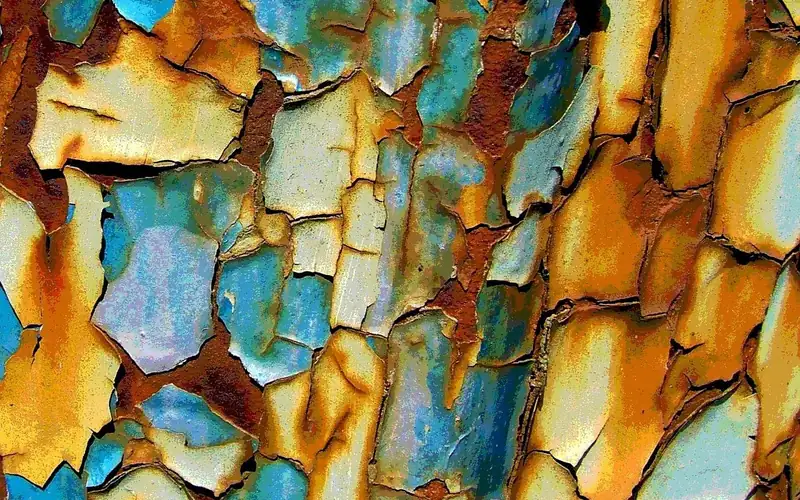
| Lightly rusted steel, loose rust removed | Often, after wire brushing | All sheets: remove loose rust and paint with a wire brush or sandpaper before coating. The Stops Rust Clean Metal Primer sheet is the one written for lightly rusted metal. |
| Heavy rust or scale | No, use a rust-rated primer or reformer first | Stops Rust Rusty Metal Primer is “designed for heavily rusted surfaces only”; the Rust Reformer sheet says one aerosol coat, 24 hours dry, then topcoat. |
| Bare, shiny steel | Maker dependent | Krylon lists no sanding or priming. Rust-Oleum Stops Rust says a primer is especially recommended for bare metal. When in doubt, scuff and prime. |
| Galvanized steel | Read the can first | Rust-Oleum Universal and Stops Rust sheets say do not apply to galvanized steel. Krylon does not exclude it, but see our galvanized guide before trusting any one-can product. |
| Aluminum | Possible, with prep | The Rust-Oleum Universal metallic sheet lists aluminum as an ideal surface. Etching primers and oxidation have their own rules. |
For the metal-by-metal breakdown, including stainless, copper and brass, see can metal be painted. Aluminum prep has its own page at can aluminum be painted, and the zinc coating on galvanized parts is covered in can you paint galvanized steel. This page stays on the one-can question rather than repeating those.
Paint and Primer in One vs Separate Primer: How to Decide
| Situation | Pick | Reason |
|---|---|---|
| Repainting a sound painted railing, bracket or chair | One-can | Surface is already primed by the old coating; you are adding color and protection |
| Small decorative parts, one color change | One-can | Saves a can and a wait; prep still required |
| Bare steel that will live outdoors | Separate primer, then topcoat | Rust-Oleum recommends primer for bare metal, and a primer sheet gives its own recoat window |
| Rusted steel with visible scale or flaking | Rust-rated primer or reformer, then topcoat | The Rusty Metal Primer sheet is written for heavily rusted surfaces; see best paint for rusty metal and what the Rust-Oleum data sheets say about rust |
| Galvanized or aluminum | Primer made for that metal | Several sheets exclude galvanized; aluminum has dedicated etching primers |
| Large job in cool weather | Separate products with room to wait | One-can sheets set narrow temperature and humidity ranges; see spray paint in cold weather |
Prep That the Labels Actually Require
The prep is the same few steps whichever can you buy, and skipping them is the usual cause of failure with a one-coat product. Our guide to cleaning metal before painting covers degreasers and the water-break test in depth. The label sequence is short.
- Wash: remove dirt, grease, oil and salt with detergent, rinse and let the metal dry fully (Rust-Oleum sheets).
- Remove loose material: wire brush or sand off loose rust, flaking paint and scale (all sheets).
- Scuff glossy coatings: Rust-Oleum says smooth, hard or glossy finishes should be sanded to create a surface profile; Krylon says the surface should be clean, dull and dry.
- Test spray: Krylon’s sheet says to test spray in an inconspicuous area for compatibility.
- Shake and spray: Rust-Oleum says shake for one minute after the ball rattles; Krylon says 1 to 2 minutes. Hold the can 8 to 12 inches away for Universal, 8 to 10 for Krylon, and keep it moving.
- Several light coats: Rust-Oleum says light coats a few minutes apart; Krylon says multiple thin coats with a 1 minute wait. Heavy coats run.
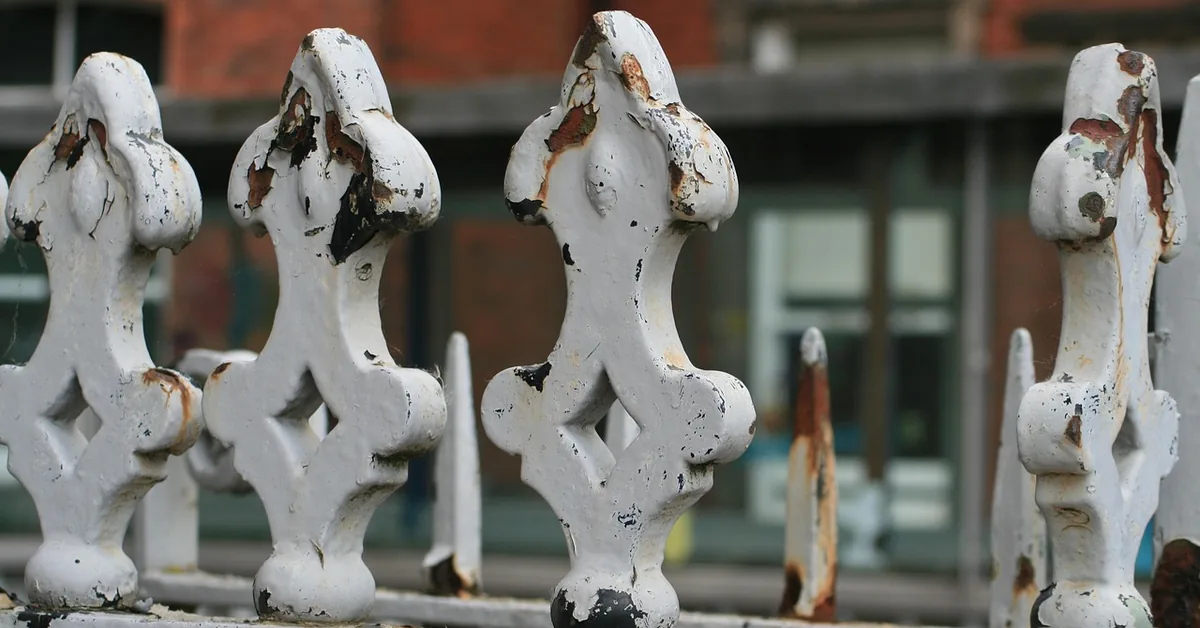
If the metal has been painted for decades, treat the old coating as lead paint until proven otherwise. The manufacturers’ sheets carry the lead warning shown in the safety section below, and our guide to painting bare metal covers stripping and priming from scratch when the old finish has to go.
Indoor and Outdoor Use, Brush and Spray
Krylon’s product page lists Fusion All-In-One as interior and exterior, and its sheet gives the 55 to 75 F best-results range. Rust-Oleum’s Universal and Stops Rust sheets give wider windows of 50 to 90 F but have humidity limits of 65 to 70 percent. A garage that sits at 45 F in the morning is outside every one of those ranges. For cold or damp spells, read our cold-weather spray paint guide.
All four sheets used for this page are aerosols. Brush-on paint and primer in one cans exist, but no brush-on data sheet was read for this guide, so check that can’s own label for wait times. Our page on latex paint on metal explains when a water-based brush-on coat makes sense.
Safety Notes From the Sheets
These are the points on the manufacturers’ own pages. They are not a substitute for reading your can.
- Extreme flammability: Krylon’s sheet says “EXTREMELY FLAMMABLE” and tells you to extinguish flames, pilot lights and heaters and turn off stoves and electric tools. Rust-Oleum says not to use near open flame.
- Ventilation and breathing: spray outdoors or in a well-ventilated area. Krylon says the vapor is harmful and to wear NIOSH-approved respiratory protection or leave the area if you get dizzy, headachy or your eyes water.
- Rags and sanding dust: Krylon warns that rags, steel wool and sanding residue soaked with the product may spontaneously catch fire, and says to place them in a sealed, water-filled metal container.
- Heat and storage: do not puncture or burn the can, and keep it out of sunlight and away from heat.
- Lead: all the sheets warn that scraping, sanding or removing old paint may release lead dust, which is toxic, especially to children and pregnant women. They tell you to wear a NIOSH-approved respirator, clean up with a HEPA vacuum and wet mop, and contact the National Lead Information Hotline (1-800-424-LEAD) or see EPA lead guidance. Our guide to spray painting inside safely covers ventilation and respirator choices.
Frequently Asked Questions
Is paint and primer in one good enough for metal?
Yes on clean, sound metal, particularly previously painted steel. On heavy rust, scale or galvanizing it is not. The Rust-Oleum Rusty Metal Primer sheet says it is designed for heavily rusted surfaces only, and the Universal and Stops Rust sheets say not to apply to galvanized steel. Krylon says no sanding or priming, yet still wants a clean, dull, dry surface.
Do you still have to sand metal before using paint and primer in one?
Remove loose rust and flaking paint every time. Rust-Oleum also says to sand smooth, hard or glossy finishes to create a profile, while Krylon says the surface should be clean, dull and dry. So the maker’s no-sanding claim applies to a sound surface, not to glossy old paint or scale.
How long should you wait between coats of paint and primer in one?
Follow the label window. Krylon Fusion All-In-One says within 2 hours or after 48 hours. Rust-Oleum Universal and Stops Rust Enamel say within 1 hour or after 48 hours. The sheets give no recommended recoat time between those points, so do not recoat in between.
Can you use paint and primer in one on rusty metal?
Only on light rust, after the loose rust is wire brushed off. For heavy rust, Rust-Oleum’s Rusty Metal Primer is designed for heavily rusted surfaces. Its separate Rust Reformer converts rust and takes a topcoat after 24 hours (aerosol), and its sheet says not to use it on metal that is not rusted.
Can you use paint and primer in one on galvanized steel?
Check the can. The Rust-Oleum Universal and Stops Rust data sheets say not to apply to galvanized steel. Krylon’s sheet lists all metals without excluding galvanizing, but it gives no galvanized-specific prep either, so test a hidden spot and read our galvanized steel guide first.
Bottom Line
Use paint and primer in one on metal that is clean, dry and already wearing sound paint, and respect the recoat window on the can. Use a separate, rust-rated or metal-specific primer when the metal is bare, scaled, galvanized or heavily rusted. If you are unsure, the extra can costs far less than stripping a failed finish. See our guide to sealing metal from rust for options after painting.
Sponsored / affiliate links. As an Amazon Associate I earn from qualifying purchases. I may earn additional commission from eligible campaigns.