Gray-Stained Oak Floors: White vs Red Oak (Avoid Blotching)
Gray stain transforms oak floors, but only white oak takes it evenly — red oak’s warm undertones fight the gray and can turn muddy or blue-tinted without a pre-stain conditioner. Skip the conditioner on blotch-prone boards, or top-coat with oil-based polyurethane instead of waterborne, and the gray tone ambers yellow within months. This guide covers which oak species works best, the rag-on rag-off method pros use, and how to pick a shade that won’t look patchy.
White Oak vs Red Oak: Which Takes Gray Stain Better?
Best Gray Stain Pick
 |
Varathane Weathered Gray Wood Stain (Quart) – $14.87 A one-coat, fast-dry oil-based stain in the Weathered Gray shade covered above — nano-pigment formula is built to reduce blotching on open-grain wood like oak without a separate conditioner step.
|
As an Amazon Associate we earn from qualifying purchases.
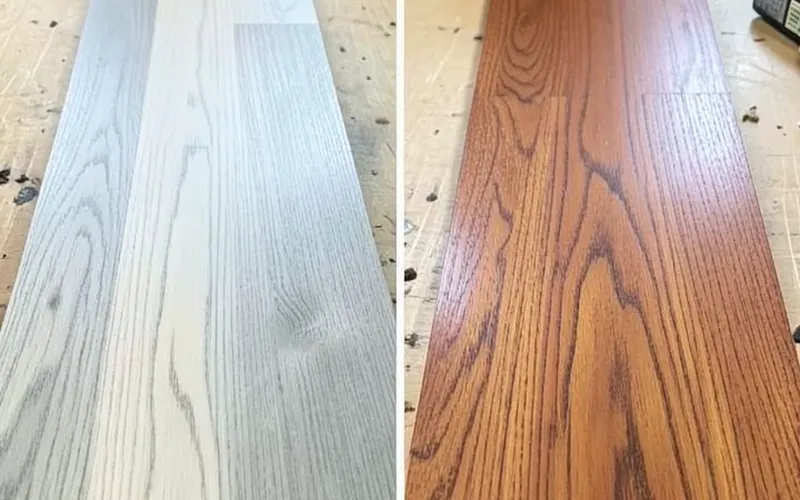
White oak is the better base for gray stain because its natural color runs beige-to-olive with almost no red pigment, so a gray stain sits on top of the wood without a competing undertone. Red oak carries a pink-to-red undertone that fights the gray from underneath, which is why red oak floors stained gray often read muddy, purple, or blue-tinted instead of a clean neutral gray.
If you’re working with red oak, don’t switch to white oak just for this — instead choose a darker or warmer-leaning gray shade (a “warm gray” or “greige”) that has enough pigment to override the red, and always test on a scrap piece or an inconspicuous closet corner first. A stain that looks perfectly neutral on a white oak sample can shift noticeably warmer on red oak boards from the same room.
How to Prevent Blotchy Gray Stain on Oak Floors
Oak is an open-grain wood, which means it absorbs stain unevenly across soft and hard grain areas — the exact cause of blotching. A pre-stain wood conditioner puts a temporary barrier in the wood’s pores that limits how much stain any one spot can soak up, evening out the color before it goes patchy. Apply the conditioner and stain within about a two-hour window; wait longer and the conditioner stops doing its job.
Some fast-dry, nano-pigment stains are formulated to skip the conditioner step entirely — check the product’s own instructions rather than assuming every stain needs one, and test a small area first either way.
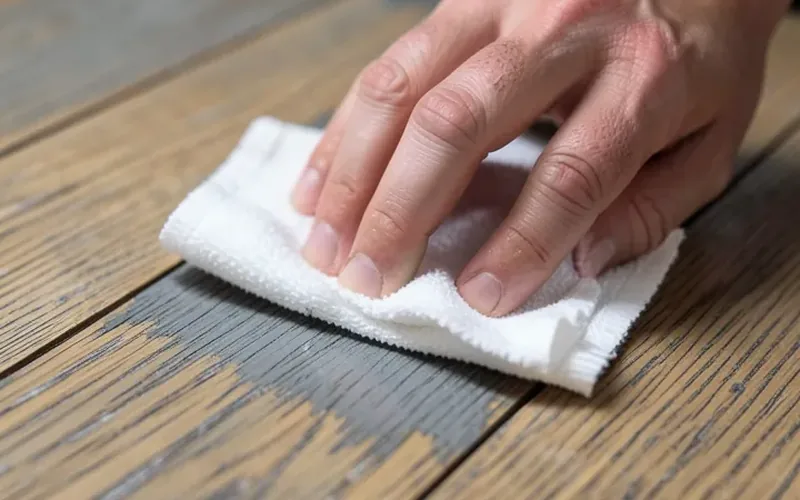
- Apply with a rag, not a brush: professionals rag the stain on and then rag it off in the direction of the grain — brushing or buffing tends to leave streaks on open-grain oak.
- Wipe off excess immediately: letting stain sit too long before wiping is the single biggest cause of dark blotches and lap marks.
- Finish with waterborne polyurethane: oil-based polyurethane carries an amber tint and ambers further with age, which pulls a gray floor toward yellow-brown within months. Waterborne poly dries clear and keeps the gray true.
Choosing a Gray Stain Shade
Gray stain shades for oak floors run from light and cool to dark and warm. Common options from major stain brands include:
- Weathered Gray — a mid-tone, slightly warm gray that mimics naturally aged, sun-bleached wood.
- Classic Gray / Silvered Gray — a cooler, more neutral gray with minimal brown undertone.
- Smoke Gray / Charcoal — a darker gray with enough pigment to override red oak’s warm undertone.
Warm undertones in your room (yellow-toned walls, warm lighting) generally pair better with a warmer gray like Weathered Gray, while cool undertones and north-facing rooms suit a cooler shade like Classic or Silvered Gray.
DIY Aging Technique: Vinegar and Steel Wool
For a naturally aged, driftwood-style gray — without buying a commercial stain — submerge fine steel wool in white vinegar for at least 24 hours (longer soaks make a darker solution). The vinegar dissolves iron from the steel wool, which then reacts with the tannins in the oak to turn it gray. Brush the solution on evenly and let it dry; because it’s a chemical reaction with the wood’s own tannins rather than a pigment sitting on top, it won’t chip or fade like a topical stain can.
Refreshing Worn Gray Hardwood Floors
If existing gray floors look worn or patchy, sand down the old finish first to get to bare, level wood — stain won’t hide sanding scratches or an uneven old finish, it will highlight them. Apply a pre-stain conditioner if the boards are red oak or previously showed blotching, then apply the new gray stain evenly with a rag. Once dry, seal with two coats of waterborne polyurethane for durability and to keep the gray tone from ambering over time.
Where to Buy Gray Stain for Oak Floors
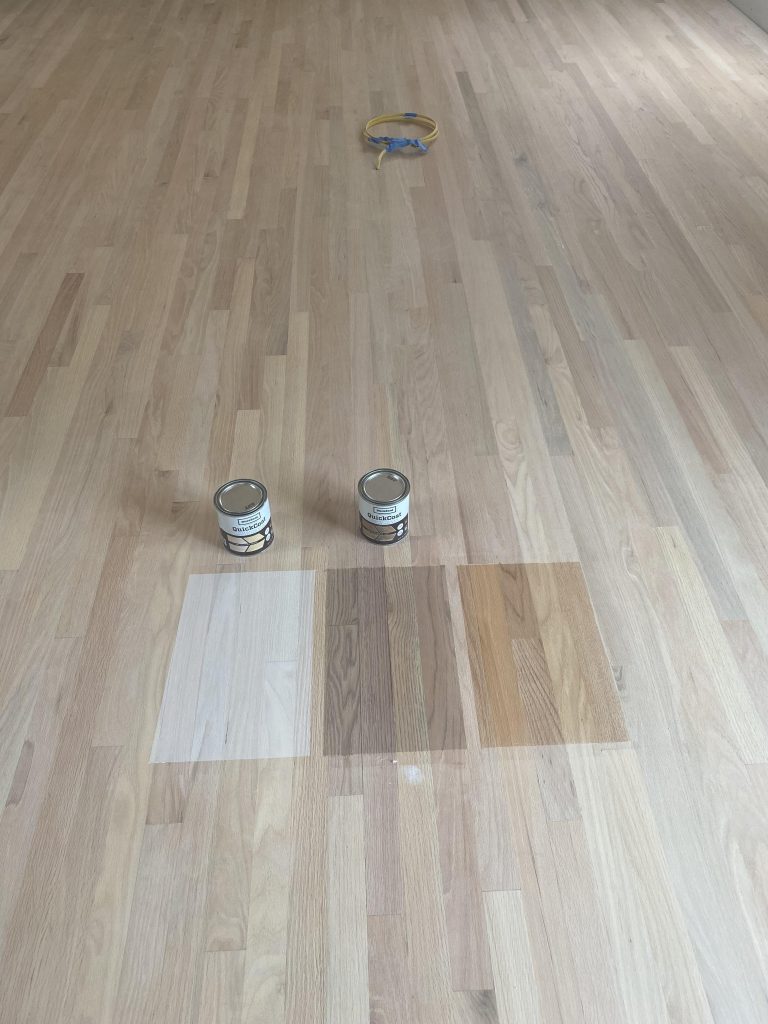
Gray wood stain for oak floors is sold at most home improvement and flooring retailers, including Home Depot, Lowe’s, and Floor & Decor, as well as directly from Amazon — brands like Varathane, Minwax, and Duraseal all offer multiple gray shades. Prices and in-stock shades vary by store and change over time, so check current pricing at checkout rather than relying on a quoted price. If you want to see a shade in person before committing your whole floor to it, buy a small sample can and test it on a scrap board or hidden closet corner first.
Frequently Asked Questions About Gray-Stained Oak Floors
Can oak floors be stained gray?
Yes. White oak takes gray stain evenly because it has almost no red undertone. Red oak can also be stained gray, but it needs a darker or warmer gray shade to override its natural pink-red tone, or it can look muddy or blue-tinted.
Do you need a pre-stain conditioner for gray stain on oak?
Usually yes, especially on red oak or any board that has shown blotching before. Oak’s open grain absorbs stain unevenly, and a pre-stain conditioner limits absorption so the color goes on more consistently. Some fast-dry, nano-pigment stains are formulated to skip this step — check the specific product’s instructions.
How do you get gray out of hardwood floors?
Use a wood bleach to lighten the gray-stained area, then sand the spot and apply a new stain that matches the rest of the floor. Seal and finish the repaired area so it blends with the surrounding boards.
Should you use oil-based or waterborne polyurethane over gray stain?
Waterborne polyurethane. Oil-based poly has an amber tint that intensifies with age and pulls a gray floor toward yellow or brown within months. Waterborne poly dries clear, which is what keeps a gray stain looking true gray long-term.
Is gray hardwood flooring too trendy?
Gray hardwood has been a mainstream flooring choice for over a decade now, which puts it past the point of a short-lived fad — it behaves more like a modern classic alongside natural and walnut tones. Because it’s a neutral, it also tends to be easier to sell a home with than a bold or very dark color, though very cool or blue-toned grays are more polarizing than a warmer, weathered gray.
Conclusion
Gray stain gives oak floors a modern, neutral look, but the species matters: white oak takes it evenly, while red oak needs a darker shade and usually a pre-stain conditioner to avoid blotching. Apply with a rag, wipe off excess promptly, and finish with waterborne polyurethane so the gray stays true instead of ambering yellow.
Sponsored / affiliate links. As an Amazon Associate I earn from qualifying purchases. I may earn additional commission from eligible campaigns.