Snap-on Screw Extractors: What Makes Them Different?
Snap-on’s REX-series multispline screw extractors use a left-hand spiral, hex-head design that grips a broken fastener without expanding it — unlike older spiral-flute extractors, which can crack brittle metal. Snap-on sells them only through dealer trucks and shop.snapon.com, not Amazon, with REX13C/15A/25B sets running roughly $60–$225 depending on piece count. This guide covers the multispline design, set differences, wood-specific technique, and comparable sets you can actually buy today.
Quick Answer
Snap-on screw extractors are the brand’s REX-series multispline extractor sets (REX13C, REX15A/B, REX25B), sold only through Snap-on dealer trucks and shop.snapon.com — not Amazon or Home Depot. If you need one today, Amazon-available multispline sets from NEIKO, RIMKOLO, and Topec use the same hex-head, left-hand-spiral design for a fraction of the price.
What Makes Snap-on’s Multispline Design Different
Best Multispline Extractor Pick
NEIKO 04204A 25-Piece Multispline Extractor Set – $64.99
The same hex-head, left-hand-spiral multispline mechanics as Snap-on’s REX25B — chrome-molybdenum steel with laser-etched sizes from 1/8″ to 7/8″, matching the size range covered in the lineup table above.
- Best for: Shops that want REX25B-style range without a dealer-truck relationship
- Why we picked it: Same multispline hex-head design and CrMo steel as the Snap-on lineup, laser-etched sizing
- Main drawback: Not Snap-on branded — no dealer-network warranty or exchange
Compare more multispline extractor options
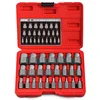 Option 1 RIMKOLO 25-Piece Extractor Set – $39.99
|
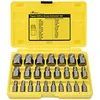 Option 2 Topec 25-Piece Extractor Kit – $31.99
|
 Option 3 IRWIN Hanson 10-Piece Starter Set (11119)
|
As an Amazon Associate we earn from qualifying purchases.
A screw extractor is a tapered, reverse-threaded tool that bites into a broken or stripped fastener and backs it out counter-clockwise. It’s a standard part of any well-stocked drilling toolkit, alongside the left-hand drill bits used to start the pilot hole. Most budget extractors use a single spiral flute that wedges into the fastener as you turn it — effective, but the wedging action can expand or crack a brittle or thin-walled bolt. Snap-on’s REX-series extractors use a multispline hex-head design instead: several small splines and a shoulder on the socket grip the fastener from multiple points at once, so the bolt doesn’t get pushed outward the way it does under a single spiral flute.
Snap-on built the REX-series multispline head specifically so it grips a broken bolt from several points at once, rather than wedging into it the way a single-flute spiral extractor does — the mechanical difference is what removes the risk of expanding or cracking a brittle fastener.
Types of Snap-on Screw Extractors
Snap-on covers both major extractor styles across its catalog, and knowing which one you’re holding changes how you use it.
Spiral Flute Extractors
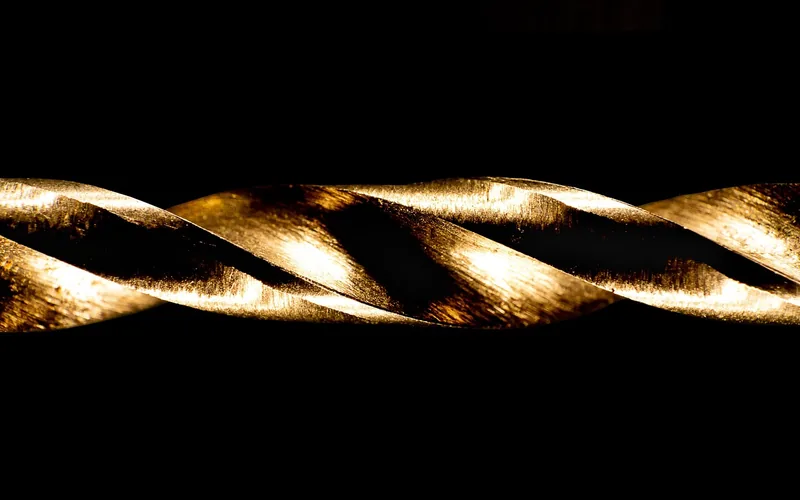
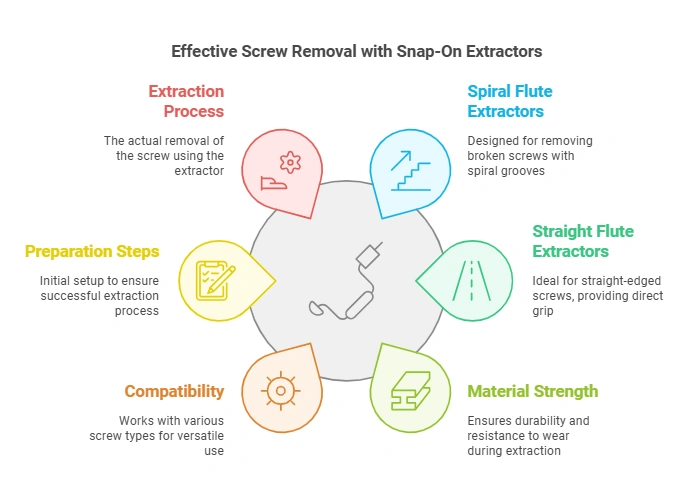
A spiral flute extractor has a single helical, reverse-thread flute. Drive it into a pilot hole and turn counter-clockwise — the flute bites deeper as it turns. It’s the traditional design and still effective on softer fasteners, but the wedging action is what can crack brittle or thin-walled bolts.
Multispline (Hex-Head) Extractors
Multispline extractors — Snap-on’s REX-series and the design most Amazon-available sets now copy — use a hex-drive head with multiple gripping splines instead of one flute. Turn them with a wrench, ratchet, or pliers rather than just twisting by hand, which gives more controlled torque on stubborn or rounded-off screw heads.
Snap-on’s Screw Extractor Set Lineup
Snap-on sells its multispline extractors as three main sets, sized by how many pieces (and what size range) you get:
| Set | Pieces | Best For |
|---|---|---|
| REX13C | 13-piece, alloy steel | Compact automotive kits, tight engine-bay spaces |
| REX15A / REX15B | 15-piece | General shop use — the most common mid-size set |
| REX25B | 25-piece, 1/8″–7/8″ range, hard case | Full-range shops needing every size on hand |
📊 Used REX25B (25-piece) sets typically resell for $100–$225 depending on condition and whether the case and matching drill bits are complete — new pricing isn’t posted publicly since Snap-on sells through dealer trucks rather than open retail. Source: Snap-on Multispline Extractors, shop.snapon.com
Key Features To Look For
Whether you’re buying the Snap-on original or an Amazon-available alternative, the same features determine how well an extractor set performs.
Material Strength
The material strength of the screw extractor determines its durability under torque. Look for extractors made from hardened steel or chrome-molybdenum alloy — a soft extractor will round off or snap before the fastener gives.
Compatibility With Different Screws
Ensuring compatibility with a variety of screw types matters when selecting a set. Look for one that covers Phillips, flathead, hex, and Torx-adjacent sizes so a single kit handles most jobs instead of forcing a second purchase.
Steps For Using Snap-on Screw Extractors
The same process works whether you’re holding a Snap-on REX set or one of the Amazon alternatives above — the tools use the same mechanics. If the head is only stripped and hasn’t sheared off, our no-drill removal guide is worth trying first — it can save you from drilling at all.
Preparation
- Assess the problem: Identify the screw’s size and material to pick the right extractor from the set.
- Gather tools: Extractor, drill, the matching left-hand drill bit, safety glasses, and gloves.
- Clear the area: Remove debris around the screw so the drill bit can enter dead-center.
Extraction Process
- Drill a pilot hole: Center a small guide hole in the screw head using the matching left-hand bit.
- Attach the extractor: Seat the extractor into the pilot hole firmly.
- Turn counter-clockwise: Use a wrench, ratchet, or locking pliers — multispline extractors are built for wrench torque, not just hand-twisting.
- Remove and inspect: Once the screw backs out, check the hole for damage before reinstalling a fastener.
Using Screw Extractors On Wood Vs. Metal
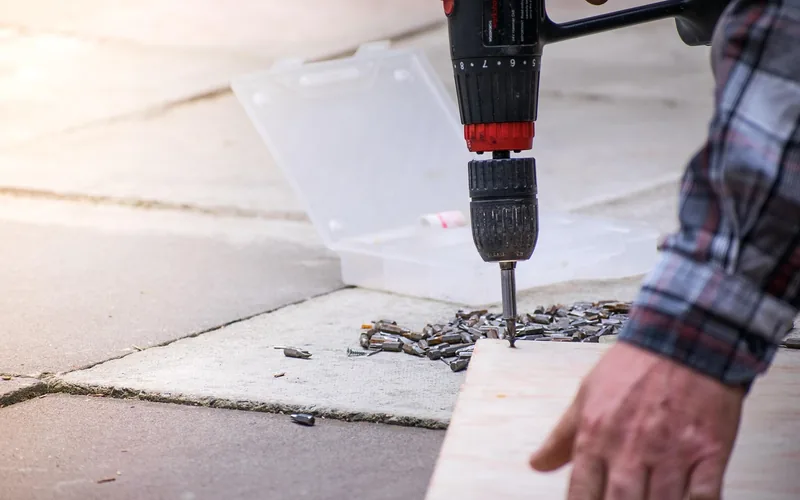
Screw extractors behave differently in wood than in metal. In metal, the pilot hole and the extractor stay centered because the surrounding material resists the drill bit evenly. In wood, there’s far less resistance once the bit is through the screw head — it’s easy for the bit to walk off the screw and drill into the surrounding wood fiber instead, widening the hole and weakening the joint.
Two adjustments help on wood and furniture: use a slower drill speed than you would on metal, and back off the moment you feel the bit lose resistance from the screw head. If the screw is already broken flush or below the surface in a wood project, see our full guide to removing a broken wood screw for wood-specific methods and how to repair the hole afterward.
Tips For Effective Screw Removal
Proper Drill Speed
Too fast, and you risk snapping the screw or the extractor itself. Too slow, and you won’t generate enough torque. Start at a medium drill speed, apply steady pressure, and adjust from there — patience matters more than speed here.
Applying Adequate Pressure
Too much pressure strips or damages threads; too little lets the extractor slip instead of biting in. Seat the extractor firmly in the pilot hole, apply moderate downward pressure while turning counter-clockwise, and let the splines do the gripping rather than forcing it.
Frequently Asked Questions
What Are Snap-on Screw Extractors Used For?
Snap-on screw extractors are tools used for removing broken or stripped screws and bolts. Their multispline hex-head design grips the fastener from several points at once so it can be backed out without expanding or cracking the surrounding material.
How Do Multispline Extractors Work?
They drill into the broken or stripped screw head, and the internal splines grip the sides of the hole. Turning the extractor counter-clockwise with a wrench or ratchet backs the fastener out — the reverse-thread design tightens the extractor’s own grip as you turn.
Where Can I Buy Snap-on Screw Extractors?
Only through a local Snap-on dealer truck route or shop.snapon.com — Snap-on doesn’t sell through Amazon, Home Depot, or Lowe’s. If you need a set immediately, NEIKO, RIMKOLO, and Topec sell multispline extractor sets with the same hex-head design on Amazon.
Can Snap-on Screw Extractors Be Used On Different Screw Sizes?
Yes — each set (REX13C, REX15A/B, REX25B) covers a range of sizes, up to 1/8″–7/8″ in the 25-piece REX25B. Match the extractor size to the screw before drilling; an undersized extractor won’t bite, and an oversized one can enlarge the hole too much.
Do Screw Extractors Work The Same On Wood As On Metal?
No. In wood, there’s less resistance around the screw head, so the drill bit is more likely to walk off-center into the surrounding wood fiber. Go slower, keep the bit centered on the screw head, and back off at the first sign of drift.
Conclusion
Snap-on’s REX-series multispline extractors are a genuine step up from traditional spiral-flute designs — the multi-point grip removes fasteners without expanding or cracking them, which matters most on hardened or brittle screws and bolts. They’re only available through Snap-on dealers, though, so most readers comparing options will end up choosing between the REX lineup and one of the Amazon-available multispline sets built on the same mechanics.
Sponsored / affiliate links. As an Amazon Associate I earn from qualifying purchases. I may earn additional commission from eligible campaigns.
 1-5pcs Hex Screw Extractors Tool Broken Damaged Screw Extractor Drill Bit Guide Set Broken Bolt Remover Easy Out Set Power Tools (Color : 5pcs)
 SPEEDWOX 26pcs Screw Extractor and Left Hand Drill Bits Set Easy Out Screw Extractor Kit Multi-Spline Bolt Remover Tools Left Hand Drill Bit Hex Head Extractor Bolt Extractor & Reverse Drill Bit