Who Buys Wooden Pallets Near Me? 4 Buyer Types and What They Pay
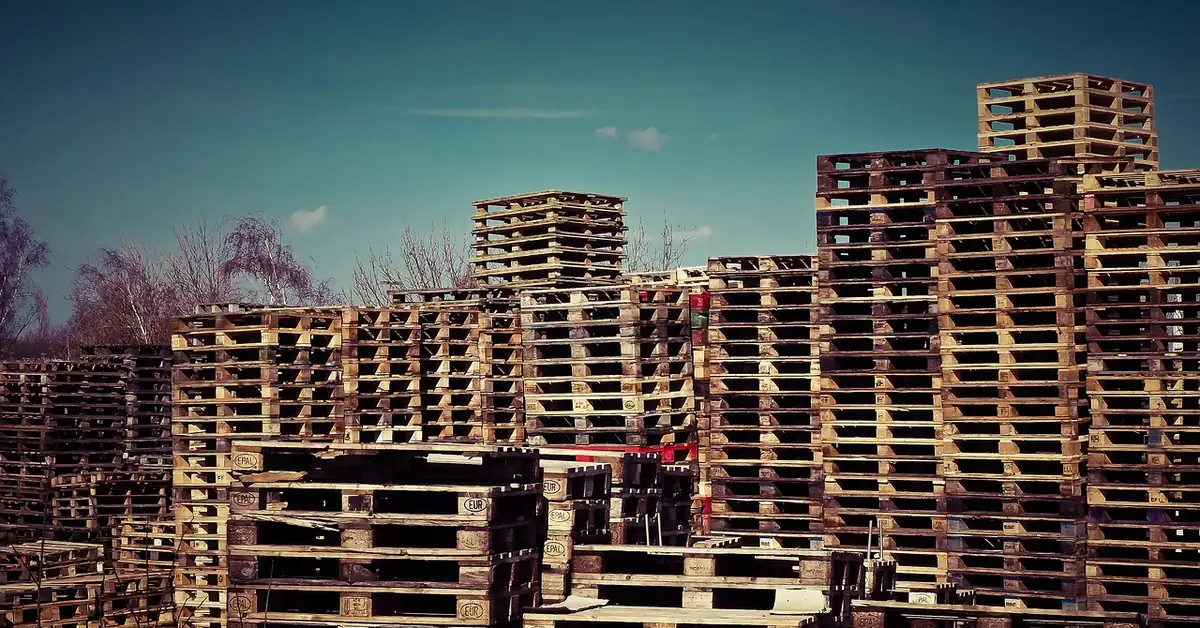
Pallet recyclers, pallet brokers, local businesses and online marketplaces are the four groups that buy used wooden pallets, and the right one depends mostly on how many pallets you have. Large recyclers such as Kamps typically buy 400 or more at a time, so a small batch usually sells through a marketplace or to a nearby business instead. This guide covers who buys, what each grade sells for, which pallets you cannot sell, and a break-even table so you know whether the effort pays.
Who Buys Used Wooden Pallets Near You
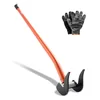 |
Best Pallet Buster Pick VEVOR 50 Inch Pallet Buster Pry Bar, $47.40 A long-handled lever for pulling deck boards off pallets that buyers will not take whole, so you can reuse or sell the good boards instead of paying to haul away broken stock.
|
As an Amazon Associate we earn from qualifying purchases.
Almost every region has all four buyer types, but the actual businesses are local, so use the descriptions below to decide what to search for rather than looking for one national phone number.
Pallet recyclers
Recyclers buy, repair and resell pallets. Kamps Pallets says it buys by the truckload, typically 400 or more at one time, or at least 100 for custom sizes, and grades everything on a national GMA 48×40 system. PalletOne says it buys from businesses and the general public and lists no minimum on that page, so call the nearest plant and ask what they accept before you load a truck. Search Maps for “pallet recycling” rather than “scrap yard”, since a general scrap yard may not take wood at all.
Pallet brokers
A broker matches your stock to a buyer who needs a specific size or grade. Repackify lists brokers as full-truckload buyers (480 to 680 pallets) paying $5-$10 per Grade A 48×40 pallet. That makes brokers a fit for warehouses and businesses clearing large volume, not for a garage stack.
Local businesses that ship on pallets
Farms, landscape suppliers, small manufacturers, craft producers and shops that ship product often need a steady supply of standard pallets and may take them with no minimum. Repackify’s guide says direct sales run 20 to 50 percent above recycler prices. The cost is your time: you have to call or visit and ask who handles receiving.
Online marketplaces and local listings
Facebook Marketplace, Craigslist and pallet-specific platforms reach DIY builders and small buyers who want one to twenty pallets. The same guide says hobbyists pay $5-$15 each for Grade B pallets in small quantities, which can beat recycler rates. Photograph the actual stack and say how many you have and what size.
Scrap and wood-waste outlets
Pallets too damaged to resell whole still go somewhere. PalletOne says it accepts scrap pallets for removal. Some local wood-waste and mulch processors may take clean pallet wood, but rules differ by operator, so ask first whether they accept pallets and whether they want nails removed. If you plan to burn pallet wood instead, read the firewood guide first, since the stamp on the pallet matters for fuel use.
Match Your Pallet Count to the Buyer
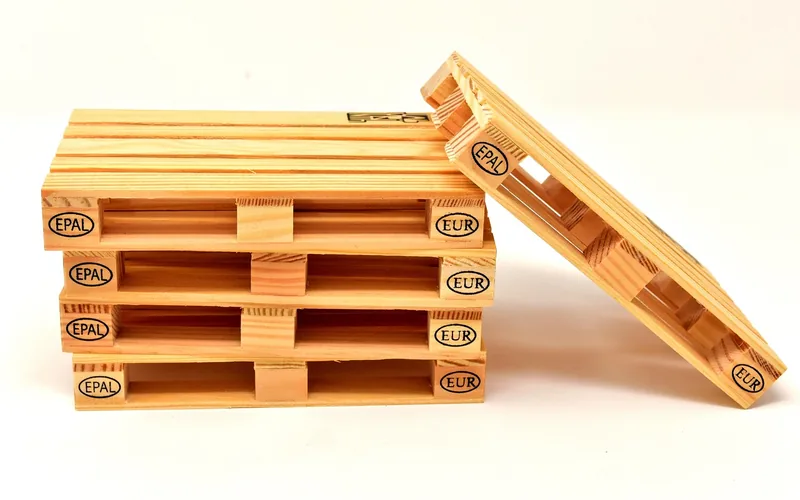
Volume is the filter most sellers miss. The thresholds below come from the buyer pages cited above, so they describe what those specific companies say, not a rule for every region.
| How many pallets | Likely route | What the sources say |
|---|---|---|
| 1 to 20 | Marketplace listing, local business | Hobbyists pay $5-$15 each for Grade B in small lots (Repackify) |
| 20 to 100 | Local business, small recycler, marketplace | PalletOne’s page states no minimum; call to confirm |
| 100 to 400 | Recycler (custom sizes) or broker inquiry | Kamps: at least 100 for custom sizes |
| 400 and up | Recycler, broker, drop trailer | Kamps: typically 400 or more per load; Repackify: full truckload is 480 to 680 |
What Used Pallets Are Worth by Grade
Grade sets the price more than anything else. The ranges below are from Repackify’s published guide for standard 48×40 pallets. Treat them as one seller’s numbers, not an industry price list.
| Grade | Sold to a recycler | Sold direct | Condition |
|---|---|---|---|
| Grade A | $4-$8 | $8-$14 | Like new, no repairs |
| Grade B | $2-$5 | $4-$7 | Most common reused tier, minor repair |
| Grade C | $0.50-$2 | $1-$3 | Visible repair, still sound |
| Scrap or unrepairable | $0-$0.50 | not listed | Broken down or removed |
Selling prices are not buyback prices
The most common mistake in pallet price searches is reading what a pallet company charges and assuming it pays that. One recycler’s site, AAA Pallet, lists national averages of about $6.27 for Grade A used, $4.19 for Grade B and $1.42 for cores, and another pallet site lists Grade A at $8-$15 and Grade B at $5-$10. Those are what buyers pay to purchase pallets. A recycler pays you less because it has to sort, repair and resell, and the 20 to 50 percent direct-sale premium mentioned above is that gap.
Quick seller math
Here is the arithmetic for a batch of 20 pallets using only the ranges in the table above, before fuel and time.
| Batch of 20 | Recycler range | Direct range |
|---|---|---|
| Grade A pallets | $80-$160 | $160-$280 |
| Grade B pallets | $40-$100 | $80-$140 |
| Grade C pallets | $10-$40 | $20-$60 |
If the drive to a buyer costs you $20 in fuel, a batch of 20 Grade C pallets can land near break-even, which is why low-grade pallets are often better dismantled and reused than sold.
Check These Before You List Pallets for Sale
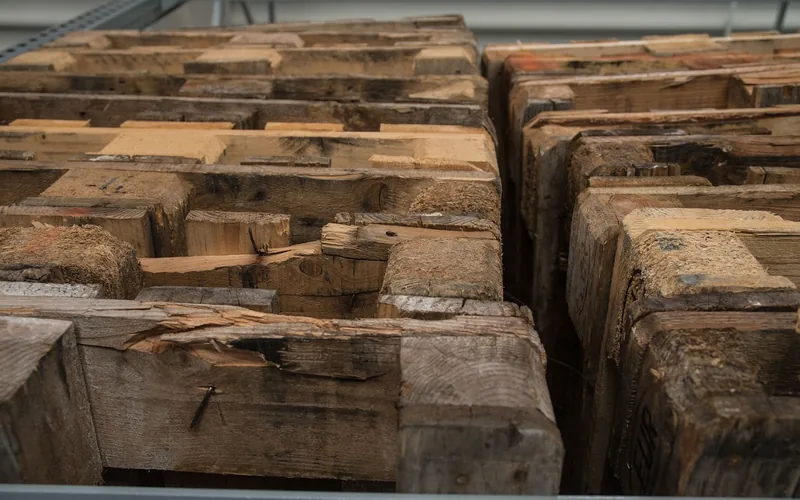
- Blue pooled pallets. CHEP says it owns its blue pallets and prohibits buying, selling or trading them. If yours are blue, do not list them. This is general information, not legal advice.
- Heat-treated vs fumigated stamps. An HT mark means heat treated, and an MB mark means the wood was fumigated with methyl bromide. The difference matters if you or your buyer plan to burn or build with it. See our guide on HT vs MB pallet stamps and the explainer on whether pallets are pressure treated.
- Chemical or food spills. Do not sell or reuse pallets with oily, chemical or biological stains as clean stock. Say so honestly when you list them, or leave them out of the sale.
- Where the pallets came from. Pallets left at a business, job site or loading dock may belong to someone. Ask before taking or selling them.
- Size. Standard 48×40 pallets move fastest. Kamps also lists 48×42, 48×48 and several smaller sizes, so odd sizes may still find a buyer, usually at a lower price.
How to Find a Pallet Buyer Near You
- Count and sort first: Separate intact pallets from cracked ones so a mixed lot is not priced at its lowest grade.
- Search Maps for “pallet recycling” and “pallet buyer”: Call the three nearest and ask the minimum quantity, accepted sizes, whether they pay or only pick up, and whether you must deliver.
- List a small batch locally: Put quantity, size, grade and photos of the actual stack in the listing, and say whether the stamp is visible.
- Call businesses that ship on pallets: Ask for the person who handles receiving.
- Ask about pickup: Repackify lists free pickup for truckload sales, so price your time accordingly if you must deliver.
Sell Whole, or Break Them Down for the Boards?
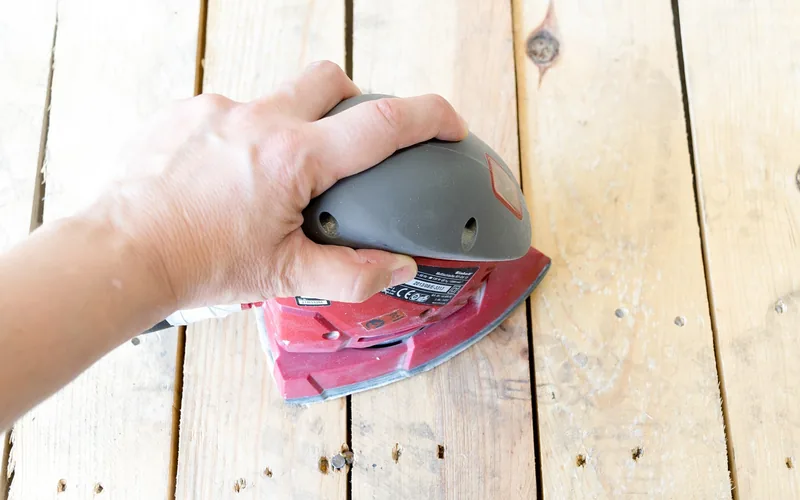
Pallets that fall to Grade C or core are often worth more as lumber you use yourself. Deck boards from a pallet are usually thin and short, but they suit small furniture, shelving and doors, and our guide to a barn door from pallet wood shows what that looks like. Dismantling is slow, hard on hands and splits boards if you hammer them off, which is where a long pry bar helps. Wear gloves and eye protection because old nails are common.
Frequently Asked Questions
How much can I sell used pallets for?
It depends on grade, size and who buys. Repackify’s published guide puts a Grade A 48×40 pallet at $4-$8 sold to a recycler and $8-$14 sold direct, Grade B at $2-$5 to a recycler, and damaged Grade C at $0.50-$2. These are one company’s ranges, so treat them as a starting point and get a local quote.
What is the minimum number of pallets a recycler will buy?
It varies by buyer. Kamps Pallets says it typically buys by the truckload, usually 400 or more standard pallets, or at least 100 for custom sizes. PalletOne’s page lists no minimum, so call your local plant. With fewer than about 100 pallets, a marketplace listing or a local business is usually the realistic route.
Can I sell blue CHEP pallets?
No. CHEP states that it owns its blue pallets and never sells or gives up ownership, and that buying, selling, trading or discarding them is prohibited. If you have some, CHEP asks that they be returned through its collection service. This is general information, not legal advice, so contact CHEP if you are unsure.
Do pallet buyers pick up for free?
Often, but usually only for larger loads. Repackify lists free pickup for truckload sales to recyclers and brokers, and Kamps offers scheduled pickup and drop-off options. For a small batch you should expect to deliver the pallets yourself or have the buyer collect them from a marketplace listing.
Will anyone buy broken or damaged pallets?
Sometimes, at very low prices. Repackify lists $0 to $0.50 for unrepairable scrap pallets, and PalletOne says it takes scrap pallets for removal. Another option is to dismantle them and reuse the good boards, since a cracked pallet often still has several sound deck boards.
Selling pallets comes down to three questions: how many you have, what grade they are, and whether they are really yours to sell. Match those to the buyer types above, call before you haul, and treat every price here as a range to confirm locally.
Sponsored / affiliate links. As an Amazon Associate I earn from qualifying purchases. I may earn additional commission from eligible campaigns.