Will Staining Wood Prevent Rot? It Helps, Not Cures
Staining wood slows rot — it doesn’t prevent it. Stain forms a surface barrier that blocks some moisture and repels insects, but it is not a wood preservative, and it needs reapplying every 2 to 3 years to keep working. If your wood is in ground contact, already showing soft spots, or exposed to constant moisture, stain alone won’t be enough — here’s what the research actually shows, and what to use instead.
Quick Answer
Staining slows wood rot by blocking surface moisture and deterring insects, but it is not a preservative treatment. According to USDA Forest Products Laboratory research, a single coat of stain typically lasts only 2 to 3 years before it needs reapplying, and stain alone is not recommended for wood in ground contact or wood already affected by decay — that wood needs a commercial preservative treatment instead.
How Staining Actually Slows Wood Rot
Real Rot Protection: Wood Preservative for Ground Contact
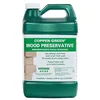
Copper-Green Wood Preservative (1 Gallon)
A copper-based preservative rated for above- and below-water-line use. Unlike stain, it’s formulated to protect wood that stays in ground or water contact — check Amazon for current pricing and pack size.
- Best for: fence posts, deck footings, and other wood that stays in ground or water contact
- Why we picked it: copper-based preservative rated for below-water-line use, not just surface color
- Main drawback: sold in a multi-gallon case — more than a single small post repair needs
Compare more rot-prevention supplies
 Option 1 Woodlife CopperCoat Preservative
|
 Option 2 Klein Tools ET140 Moisture Meter
|
 Option 3 Thompson’s WaterSeal Clear Sealer
|
As an Amazon Associate we earn from qualifying purchases.
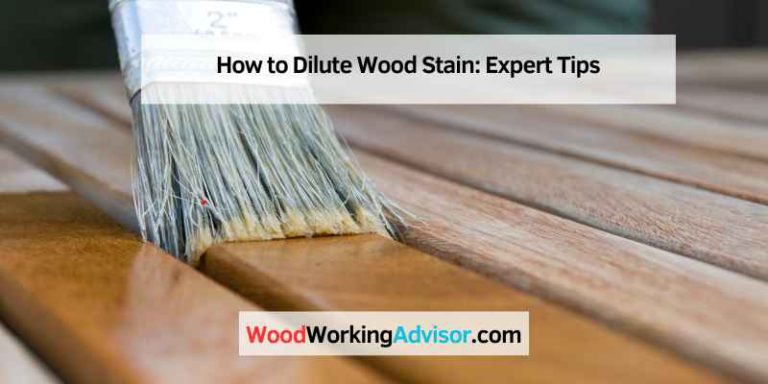
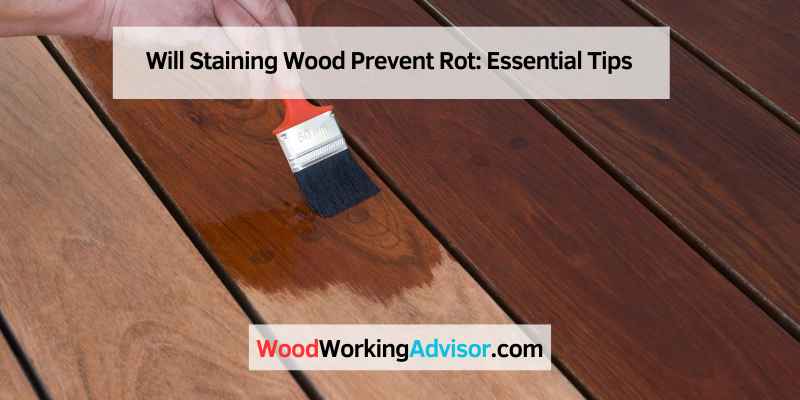
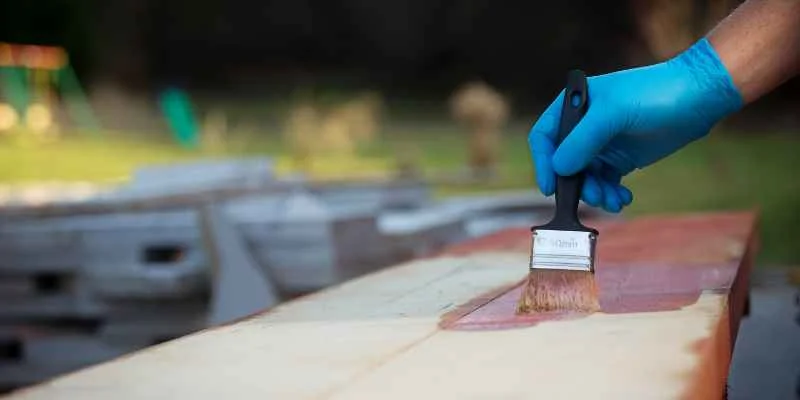
Wood rot happens when moisture sits in the wood fibers long enough for decay fungi to take hold. Stain slows this process by penetrating the wood surface and forming a water-repellent layer, so less moisture soaks in during rain or humid weather. Many stains also contain a mildewcide, which discourages the mold and fungi that cause early-stage decay, and some pigmented stains add a layer of UV protection that keeps the wood surface from breaking down and becoming more absorbent over time.
What stain does not do is stop water from reaching the wood entirely, and it does nothing for wood that’s already in contact with soil, concrete, or standing water. Regular re-coating matters because the moment the stain’s surface layer wears thin — from foot traffic, weathering, or UV exposure — water starts getting back in, and the clock on rot resets.
What Stain Can’t Do: Stain vs. a Real Wood Preservative
This is the gap most articles on this topic skip: stain and a wood preservative are not the same product, and they don’t do the same job. According to the USDA Forest Service’s Forest Products Laboratory (FPL), which has researched exterior wood finishes since the 1950s, “water is one of wood’s worst enemies… water causes decay or rot of the wood and early failure of the finish.” Their guidance draws a clear line between surface-level protection and actual preservative treatment:
“In areas where decay is a serious problem or where wood will be in contact with the ground (wood foundations or fence posts, for example), wood will need far more protection than that afforded by surface treatment with a [stain or] water-repellent preservative. In such cases, wood properly protected by treatment with a commercial preservative is recommended.”
USDA Forest Products Laboratory, General Technical Report FPL-GTR-106
In plain terms: stain is a surface finish, not a preservative. Pressure-treated lumber and dedicated preservative products (like copper-based wood preservatives) push protective chemicals deep into the wood fibers, which is why they’re rated for ground contact and stain isn’t.
How Long Does Stain’s Rot Protection Actually Last?
Per FPL testing, a single coat of oil-based semitransparent stain on a smooth, new wood surface typically lasts 2 to 3 years before it needs to be reapplied. If the wood is allowed to weather first and then refinished, that same stain can last 8 to 10 years on rough-sawn or weathered surfaces, because weathered wood absorbs stain more evenly and in greater volume. This is the real-world basis for the “regular re-coats” advice you’ll see everywhere — it’s not a vague suggestion, it’s the actual service-life window before the moisture barrier breaks down.
Stain vs. Sealant vs. Preservative: Which Do You Actually Need?
- Stain — adds color, UV protection, and a light moisture barrier. Best for above-ground siding, fences, and furniture that just need routine upkeep.
- Sealant/water-repellent preservative — a clear or lightly tinted coating focused on blocking water intake. Often paired with stain for decks and outdoor furniture. See our comparison on whether to stain or seal pressure-treated wood.
- Preservative treatment (pressure treatment or a commercial preservative like copper naphthenate) — pushes protective chemicals into the wood itself. Required for any wood touching soil, concrete, or standing water.
If you’re weighing stain against general wood protection more broadly (UV fading, water spotting, general wear — not just rot), our guide on whether staining wood protects it covers that wider comparison.
When Staining Isn’t Enough
Reach for a preservative instead of (or in addition to) stain when the wood is:
- In direct ground contact, like fence posts or deck footings — see our guide on keeping wood and fence posts from rotting.
- Already showing soft, dark, or spongy spots — stain won’t reverse existing decay; you’ll need to address it directly, as covered in how to fix wood rot.
- Exposed to standing water or poor drainage, regardless of how recently it was stained.
Frequently Asked Questions For Will Staining Wood Prevent Rot
Is Stain Enough To Protect Wood?
Stain gives wood some protection — it preserves natural color, blocks UV rays, and repels surface water. But for wood in ground contact or high-moisture areas, stain alone isn’t enough; you need a wood preservative or pressure-treated lumber for full rot protection.
Does Staining Wood Make It Weatherproof?
No. Staining improves color retention, UV resistance, and water repellency, but it doesn’t fully weatherproof wood. For complete protection, pair stain with a sealer or water-repellent preservative, and reapply on the 2-3 year schedule stain actually needs.
Will Stain Stop Wood Rot?
Stain slows the onset of rot by blocking surface moisture, but it won’t stop rot that’s already started, and it won’t protect wood that’s constantly wet or in ground contact. Preventing rot before it starts is realistic with stain; reversing active rot is not.
How Do You Seal Wood To Prevent Rot?
Seal wood with a water-repellent preservative or a stain-and-sealer combination product, applied to all exposed surfaces including end grain, which absorbs water fastest. For wood touching soil or water, use rot-resistant lumber or a commercial preservative rather than relying on surface sealing alone. (Bleach is not a substitute for sealing — see whether bleach actually stops wood rot for why.)
Is Wood Preservative Better Than Stain for Preventing Rot?
For rot prevention specifically, yes — a commercial wood preservative is formulated to penetrate the wood and resist decay fungi even in ground or water contact, while stain only slows surface moisture intake above ground. Many woodworkers use both: preservative for structural protection, stain for color and UV resistance.
Conclusion
Staining wood is a real, useful step in slowing rot — it blocks surface moisture, deters insects, and protects color and UV resistance. But it’s a surface finish, not a preservative, and per USDA Forest Products Laboratory research it needs reapplying every 2 to 3 years to keep working. For wood in ground contact, constant moisture, or already showing decay, pair stain with a genuine wood preservative or use pressure-treated lumber — stain alone was never designed to carry that load.
Sponsored / affiliate links. As an Amazon Associate I earn from qualifying purchases. I may earn additional commission from eligible campaigns.