4×4 Post Feet: Choosing the Right Base & Standoff Height
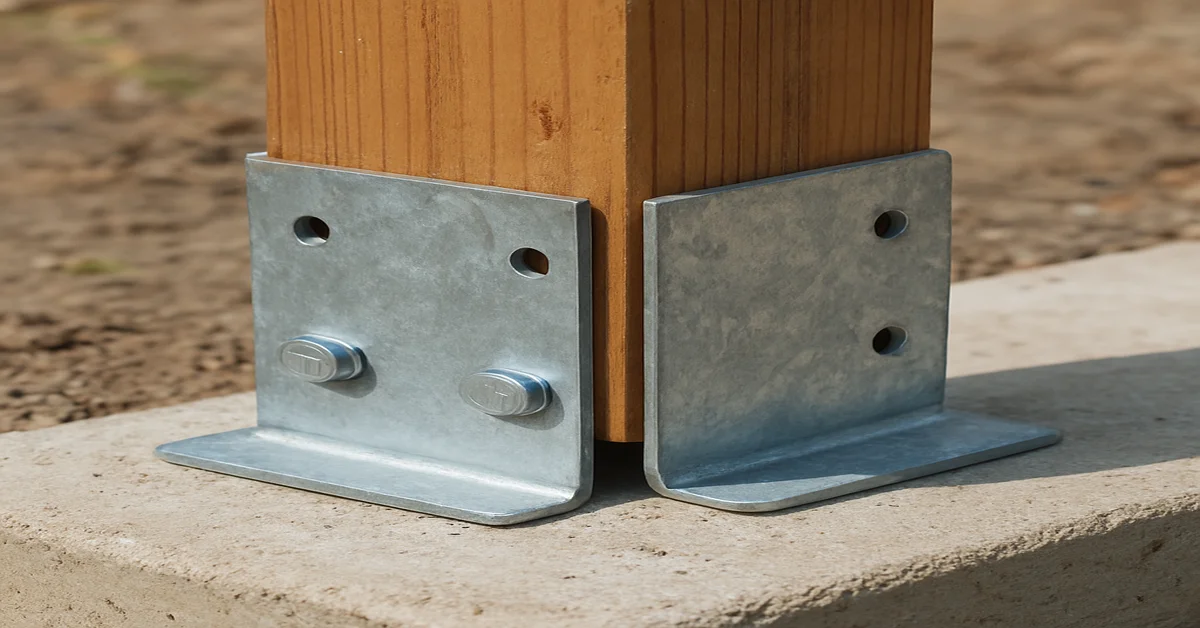
4×4 post feet are metal brackets that anchor a wood post to a concrete footing, deck, or slab without burying the wood end in soil or concrete. The detail that matters most: a quality post base holds the post roughly 1 inch above the concrete surface, so the end grain never sits in standing water – that standoff gap is what actually prevents rot, not the bracket’s strength alone.
Post feet (also called post bases or post anchors) matter for two separate reasons: structural connection (resisting wind uplift and lateral load) and moisture management (keeping the post’s end grain, its most rot-prone surface, away from standing water). A lot of buying advice covers the first and skips the second, even though rot at the base is the single most common reason a deck or fence post fails.
The Two Post Foot Categories, And Which One You Need
Best Post Base Pick
Simpson Strong-Tie ABU44Z Adjustable Standoff Post Base – $28.94
This is the widely trusted structural post base discussed above – adjustable, ZMAX-galvanized, and rated for real load.
- Best for: Load-bearing deck, pergola, or structural fence posts
- Why we picked it: Industry-standard structural rating with the adjustable standoff this guide recommends
- Main drawback: Utilitarian galvanized look, not decorative
Compare more post base options
 Option 1 Simpson Strong-Tie FPBB44 E-Z Base (Black) – $29.75
|
 Option 2 Stainless Steel Adjustable 4×4 Post Anchor (2-Pack) – $21.99
|
 Option 3 OZCO Laredo Sunset Decorative Post Base Kit – $43.21
|
As an Amazon Associate we earn from qualifying purchases.
Not all “post feet” do the same job – picking the wrong category is a common mistake:
| Type | What It’s For | Example |
|---|---|---|
| Structural post base (galvanized/stainless steel bracket) | Load-bearing posts: deck supports, pergola posts, structural fence posts subject to code | Simpson Strong-Tie ABU/ABA/CBSQ series |
| Adjustable post base | Uneven or sloped concrete/ground where the post needs to be leveled independent of the footing | Adjustable ABA-style bases with a slotted plate |
| Surface-mount / decorative post foot | Non-structural posts: mailbox posts, low garden edging, decorative accent posts | Cast pyramid or ball-cap surface feet |
If the post is holding up anything with real load – a deck, a pergola roof, a structural fence – use a rated structural post base, not a decorative one. Local building code in most areas actually requires an approved metal connector for any structural post-to-concrete connection; it isn’t just a durability upgrade.
Why The Standoff Height Is The Real Durability Factor
Wood rots fastest where it stays wet longest, and a post’s end grain (the cut cross-section at the bottom) absorbs water far faster than its sides because it’s essentially a bundle of open straws pointed straight at the ground. A post base that lifts the post about 1 inch above the concrete does more to prevent rot than upgrading to a thicker-gauge bracket, because it keeps that end grain out of the puddle that forms on concrete after rain.
Even pressure-treated 4x4s benefit from this standoff – pressure treatment slows rot, it doesn’t stop it indefinitely if the end grain sits in standing water for years. A sealant on the cut end helps further, but it’s a supplement to the standoff gap, not a replacement for it.
Material And Load Considerations
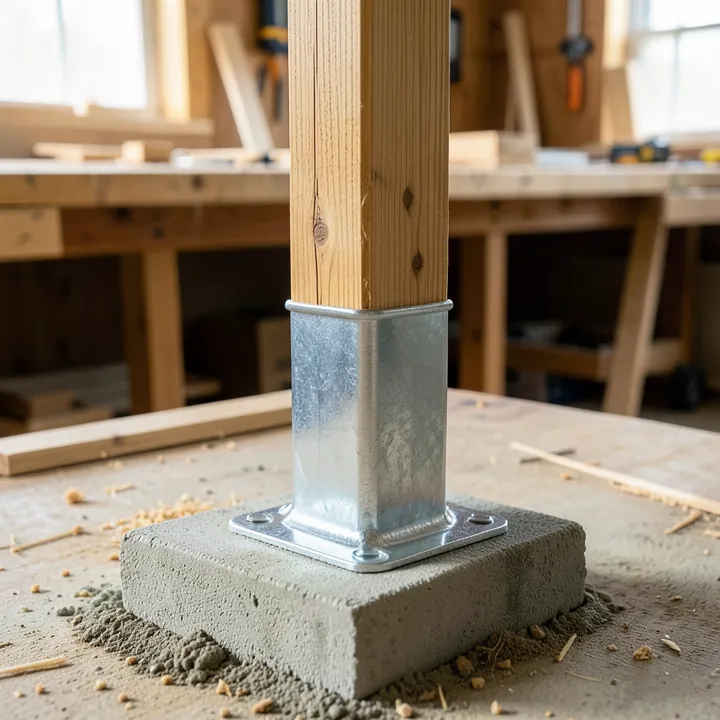
Post bases are rated by manufacturers for specific load capacities – a genuine structural base will list an allowable load in its spec sheet, not just a generic “heavy duty” claim. Match that rating to what the post is actually holding.
- Galvanized steel: the standard choice, adequate for most outdoor uses when properly coated.
- Stainless steel or ZMAX/triple-zinc coated: worth the upgrade near coastal areas, pools, or anywhere exposed to deicing salt, since standard galvanizing corrodes faster in those conditions.
- Cast/decorative feet: fine for non-structural, low-load posts only – don’t use these where a rated structural base is what code or safety actually requires.
Proper Installation
Setting The Footing
Pour or set the concrete footing first, with the post base’s anchor bolt embedded while the concrete is still wet (a wet-set base) or drilled and epoxied into cured concrete (a retrofit base) – both work, but a wet-set connection is generally stronger and is what most structural specs assume.
Mounting The Post
Set the post in the base, confirm it’s plumb on two adjacent faces with a level, and drive the fasteners the manufacturer specifies – typically structural screws or nails sized to the bracket, not just whatever is on hand. Undersized fasteners are one of the most common ways a correctly chosen post base still fails to perform to its rating.
Maintenance
Inspect post bases annually for rust bleeding through the galvanizing, loose fasteners, or standing debris trapped against the post’s end grain inside the bracket – leaves and dirt packed into a post base defeat the standoff gap’s purpose by holding moisture right against the wood anyway. Clear that debris out as part of routine deck or fence maintenance, not just when something looks obviously wrong.
Frequently Asked Questions
What Are 4×4 Post Feet?
4×4 post feet are metal brackets that anchor a wood post to a concrete footing or slab, typically holding the post about an inch above the concrete surface to keep the moisture-prone end grain out of standing water. They’re used for decks, fences, pergolas, and similar outdoor structures.
How Do 4×4 Post Feet Work?
A post base bolts or embeds into a concrete footing, then the post sits inside the bracket and is fastened with structural screws or nails. The standoff gap between the post’s bottom and the concrete is the key detail – it prevents the end grain from sitting in water, which is the leading cause of post rot at ground level.
Do I Need A Structural Post Base Or A Decorative One?
Use a rated structural post base (like Simpson Strong-Tie’s ABU/ABA series) for anything load-bearing – deck posts, pergola supports, structural fencing – since most building codes require an approved connector for these. Decorative or cast surface feet are only appropriate for non-structural posts like mailbox or garden edging posts.
Are 4×4 Post Feet Adjustable?
Yes, adjustable post bases exist specifically for uneven or sloped concrete, letting you level the post independent of the footing’s surface. They’re especially useful on patios or slabs that weren’t poured perfectly level.
Conclusion
4×4 post feet do their real job through a combination of load rating and standoff height – not appearance. Match a rated structural base to any load-bearing post, keep the end grain lifted off the concrete, and use the correct fasteners, and the post foot will outlast a decorative option by years even though it costs more upfront.
Sponsored / affiliate links. As an Amazon Associate I earn from qualifying purchases. I may earn additional commission from eligible campaigns.