Are Lawn Mower Blade Bolts Reverse Thread?
Lawn mower blade bolts are not universally reverse-threaded — the direction depends on the mower type and brand. Most walk-behind push mowers use a standard right-hand thread (turn counterclockwise to loosen), while many riding and zero-turn mowers use a left-hand (reverse) thread on the blade bolt or nut specifically so the blade’s own rotation cannot spin it loose. Getting the direction wrong can strip the bolt or shear the mounting boss. This guide covers how to tell which thread your mower uses, which brands lean reverse-threaded, and how to remove a stuck bolt safely.
Insert your Affiliate Disclosure reusable block here
Quick Answer
Lawn mower blade bolts are usually standard right-hand thread on walk-behind push mowers — turn counterclockwise to loosen. Many riding and zero-turn mowers use a reverse (left-hand) thread instead, which loosens clockwise. There is no single rule for every brand; check your owner’s manual or look for an “LH” stamp on the bolt head before you apply force.
Why Some Blade Bolts Are Reverse-Threaded in the First Place
Best Blade Bolt Removal Pick
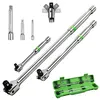
SWANLAKE 6-Piece Breaker Bar Set (1/4", 3/8", 1/2" Drive)
A dedicated breaker bar gives far more leverage than a standard ratchet on a rusted or over-torqued mower blade bolt.
- Best for: Stuck or seized blade bolts that won’t budge with a regular wrench
- Why we picked it: Covers 1/4", 3/8", and 1/2" drive sizes, so it fits the socket you already own
- Main drawback: Longer bars need clearance under the deck — awkward on very low-profile mowers
Compare more blade-bolt maintenance options
 Option 1 DEWALT 20V MAX Cordless Impact Wrench
|
 Option 2 Adjustable Universal Socket Wrench Set (10–19mm)
|
 Option 3 Mower Blade Sharpener & Balancer Kit
|
As an Amazon Associate we earn from qualifying purchases.
A spinning blade puts constant rotational force on its mounting bolt. On a standard right-hand thread, if that rotation happens to run the same way the bolt would naturally loosen, thousands of start-stop cycles can walk the bolt out over time — a real safety issue on a part spinning at 3,000+ RPM under the deck. Manufacturers who run into this on a specific deck design switch that one bolt to a left-hand (reverse) thread, so the blade’s own spin direction tightens it further instead of loosening it. This is the same logic used on some rotary mower blade assemblies and on left-side lug nuts of older vehicles — it is a deliberate engineering choice tied to which way that specific spindle turns, not a universal standard.
Because the decision comes down to which way an individual deck’s spindle rotates, two mowers that look nearly identical can use opposite thread directions. That is also why online advice conflicts so often — a true statement about one model gets repeated as if it applies to every mower.
How to Tell If Your Blade Bolt Is Reverse-Threaded
- Check the owner’s manual first. The blade removal section will state the thread direction and the torque spec directly — this is the only fully reliable source for your exact model.
- Look for an “L” or “LH” stamp on the bolt or nut head. Manufacturers that use reverse thread often mark the fastener so a technician does not guess.
- Test gently in the standard direction first. Apply moderate pressure turning the bolt counterclockwise (as if loosening a normal bolt). If it will not budge at all with reasonable force, stop and try clockwise instead — do not keep forcing a bolt that will not move, since that is the fastest way to round off the head.
- Note the spindle rotation. If you can safely see which way the blade spins from underneath (with the spark plug disconnected and the mower off), a bolt is generally cut so spinning tightens it, not loosens it.
Which Mower Brands Use Reverse-Threaded Blade Bolts?
Thread direction varies within a single brand’s lineup, not just between brands, so treat the table below as a starting point — not a substitute for checking your specific model’s manual.
| Brand / Mower Type | Common Thread Direction | Notes |
|---|---|---|
| Craftsman (many push mowers) | Reverse (left-hand) | Several documented push-mower models use reverse thread; some newer models do not — verify with your manual. |
| Toro (walk-behind) | Standard (right-hand) | Toro’s published removal steps use standard tightening/loosening direction on most walk-behind models. |
| Cub Cadet (riding mowers) | Varies by model | Some riding models use reverse-threaded blade retainer nuts; others are standard. Cub Cadet support recommends checking per model. |
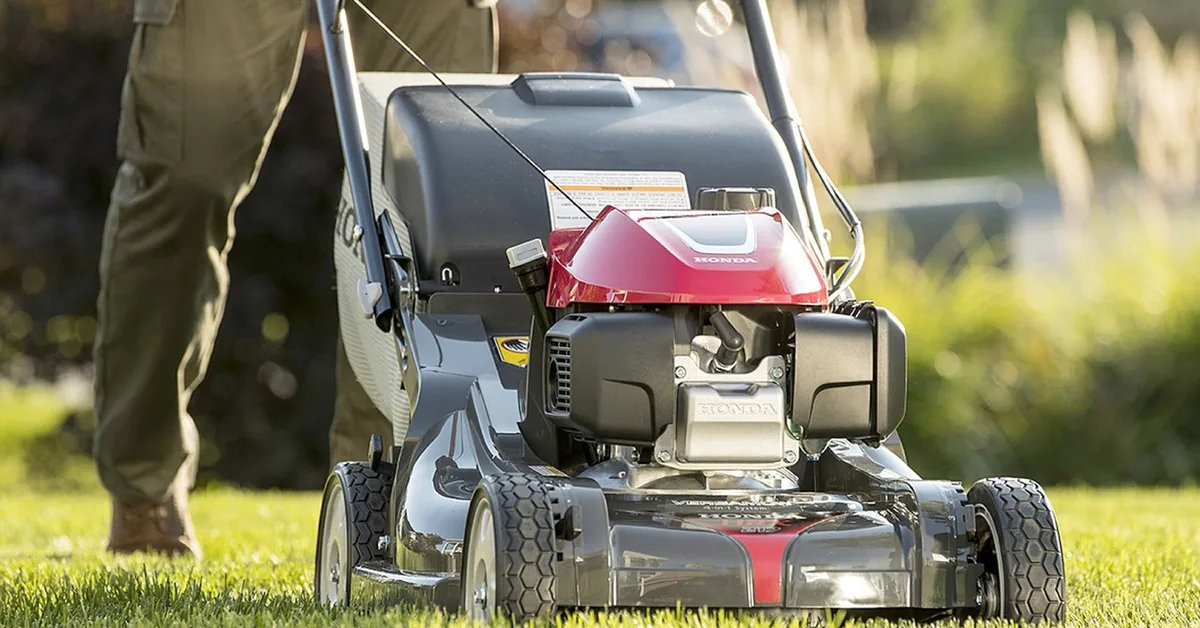
| Honda (walk-behind) | Standard (right-hand) | Typical for Honda’s single-blade push mower line, but always confirm before force-loosening. |
| Riding & zero-turn mowers (general) | Reverse more common | Deck spindle direction on riding/zero-turn decks more often calls for reverse thread than on push mowers. |
How to Remove a Lawn Mower Blade
Once you know (or have safely tested) which way the bolt turns, removal follows the same basic process on nearly every rotary mower.
- Disconnect the spark plug. This prevents the engine from accidentally starting while your hand is near the blade — never skip this step.
- Drain or plug the fuel and oil. Flip the mower on its side with the air filter and carburetor facing up, using a rag or oil pan to catch any drips.
- Wedge the blade. Jam a block of wood between the blade and the deck to stop it from spinning while you turn the bolt.
- Loosen the bolt. Use a socket wrench in the direction confirmed above. If it will not move, switch to a breaker bar for extra leverage rather than forcing the same wrench harder.
- Remove the blade and note orientation. Mark which side faced down — reinstalling it upside-down ruins cutting performance and can throw the blade out of balance.
With the blade off, it is a good time to sharpen the mower blade and check it for cracks or bends before reinstalling.
Removing a Stuck or Seized Blade Bolt
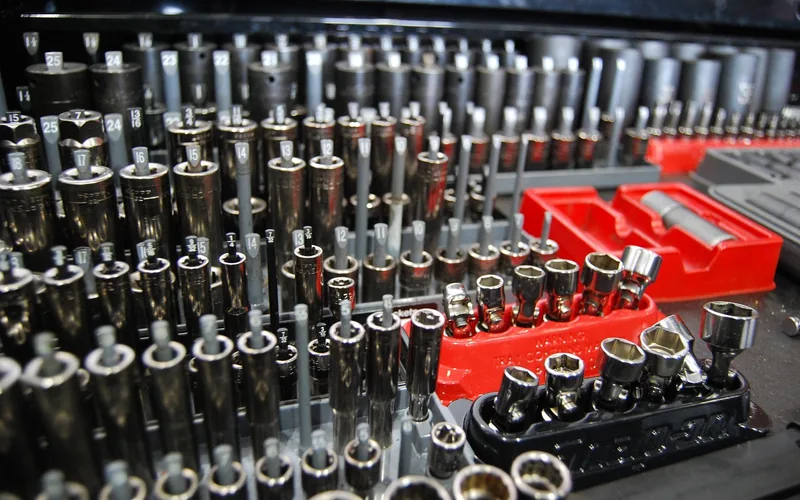
A blade bolt that will not budge is usually rusted or over-torqued, not necessarily reverse-threaded. Before assuming the thread direction is the problem, try these steps in order.
- Soak it in penetrating oil. Apply to the threads and let it sit for 10–15 minutes before trying again.
- Switch to a breaker bar. The extra leverage of a longer bar loosens far more stuck bolts than a standard ratchet without stripping the head.
- Apply gentle heat. A heat gun on the nut or bolt head (not the plastic deck) can help break loose corrosion by expanding the metal slightly. Keep it well away from any fuel residue.
- Confirm the thread direction again. If a bolt refuses to move in either direction after these steps, double-check you have not been fighting a reverse thread the whole time — this is the single most common reason a “seized” bolt is actually just being turned the wrong way.
Reinstalling and Torquing the Blade Bolt
Reinstall the blade with the cutting edge facing the same way it came off, then tighten the bolt in whichever direction is correct for your mower’s thread. Most residential push mowers call for roughly 35–60 ft-lbs of torque; some riding mower decks specify higher torque in the 70–90 ft-lbs range. Both figures vary by model, so use your manual’s exact spec rather than a general number — over-tightening can crack the blade adapter, and under-tightening lets the bolt work loose during use.
Common Mistakes to Avoid
- Assuming every mower is the same. A tip that worked on your neighbor’s riding mower may be backward for your push mower.
- Forcing a bolt that won’t move. This rounds the head or shears the bolt, turning a five-minute job into a drilled-out extraction.
- Skipping the spark plug disconnect. This is the single most common cause of hand injuries during blade removal.
- Reinstalling the blade upside-down. This throws off balance and cutting performance, and can damage the spindle bearing over time.
Which Way Do You Turn the Bolt to Remove a Lawn Mower Blade?
On most walk-behind push mowers, turn the bolt counterclockwise to loosen it, since these use a standard right-hand thread. On mowers with a reverse-threaded blade bolt (common on some riding and zero-turn decks), you turn it clockwise to loosen it instead. Always wedge the blade and disconnect the spark plug first.
Does a Lawn Mower Blade Bolt Turn Clockwise or Counterclockwise to Remove?
It depends on the thread direction of your specific mower. Standard right-hand threaded bolts loosen counterclockwise; reverse (left-hand) threaded bolts loosen clockwise. Check your owner’s manual or look for an “LH” stamp on the bolt head to confirm before applying force.
Are Cub Cadet Mower Blade Nuts Reverse Threaded?
It varies by model. Some Cub Cadet riding mowers use a reverse-threaded blade retainer nut, while other models use a standard thread. Cub Cadet’s own support guidance recommends checking your specific model’s manual rather than assuming either direction.
How Tight Should a Lawn Mower Blade Bolt Be?
Most residential push mowers call for roughly 35–60 ft-lbs of torque, while some riding mower decks specify 70–90 ft-lbs. Always use your model’s exact manual spec with a torque wrench — over-tightening can crack the blade adapter, and under-tightening risks the bolt loosening during operation.
Why Won’t My Lawn Mower Blade Bolt Turn?
Usually rust, over-torquing, or corrosion, not thread direction. Try penetrating oil, a breaker bar, and light heat on the bolt head before assuming it needs to be turned the opposite way. If it still won’t move after those steps, double-check the thread direction — you may have been turning it the wrong way the entire time.
Knowing whether your mower’s blade bolt is standard or reverse-threaded before you start saves stripped bolts, rounded heads, and wasted trips to the hardware store. When in doubt, your owner’s manual or an “LH” stamp on the bolt head settles it — test gently rather than guessing, and if your mower deck needs more than a blade swap, our mower deck repair guide covers the rest of the maintenance checklist.
Sponsored / affiliate links. As an Amazon Associate I earn from qualifying purchases. I may earn additional commission from eligible campaigns.