Ash vs Maple Bats: Essential Guide
Choosing the right wood for a baseball bat can seem tricky, but it’s simpler than you think! Ash bats are known for their flexibility and vibration dampening, great for beginners starting out. Maple bats offer a more solid feel and incredible durability, perfect for those looking to make consistent contact. We’ll explore what makes each wood unique, helping you pick the perfect bat for your swing.
Hey there, fellow woodworkers and DIY enthusiasts! Md Meraj here. Ever stood in front of a pile of wood and wondered, “Which one is right for this project?” It’s a common feeling, especially when you’re starting out. Today, we’re diving into a topic that might sound complex but is actually pretty straightforward: the difference between ash and maple for baseball bats. It’s a choice many aspiring ballplayers and even bat makers ponder. Don’t worry, I’m here to break it all down in a way that makes sense. We’ll look at what makes each wood special and how that affects your game. Get ready to understand the grain, the flex, and the power behind ash and maple like never before!
Why Wood Type Matters for Baseball Bats
So, why all the fuss about wood types for a baseball bat? It’s a great question! Different woods have unique properties that directly impact how a bat performs. These properties can affect everything from the feel in your hands to how far the ball travels off the sweet spot. For a beginner, understanding these differences can mean hitting the ball more consistently and enjoying the game even more. It’s about finding the right tool for the job, and in baseball, that tool is your bat.
Think of it like choosing sandpaper – you wouldn’t use rough 60-grit for a final finish, right? Similarly, the wood choice for a bat can make a big difference in how solid hits feel, how forgiving the bat is on off-center swings, and even how long the bat lasts. For anyone stepping up to the plate, whether it’s for the first time or just looking to improve, knowing your wood is a key step toward better performance and a more enjoyable experience. It’s not about complex physics; it’s about understanding the nature of the material.
A Tale of Two Woods: Ash vs. Maple
For decades, ash was the undisputed king of baseball bats. Its natural properties made it a favorite for both players and bat manufacturers. However, in recent years, maple has surged in popularity, becoming a dominant force in professional baseball. What happened? It’s a story of innovation, player preference, and the subtle but significant differences between these two fantastic hardwoods.
Both ash and maple are hardwoods, meaning they are dense and strong, which is crucial for a tool designed to hit a small, hard ball with significant force. However, their internal structures and grain patterns lead to distinct characteristics that players experience firsthand.
Ash Bats: The Traditional Choice
Ash bats have been the go-to for generations. Their popularity stems from a combination of factors that make them forgiving and comfortable for a wide range of players.
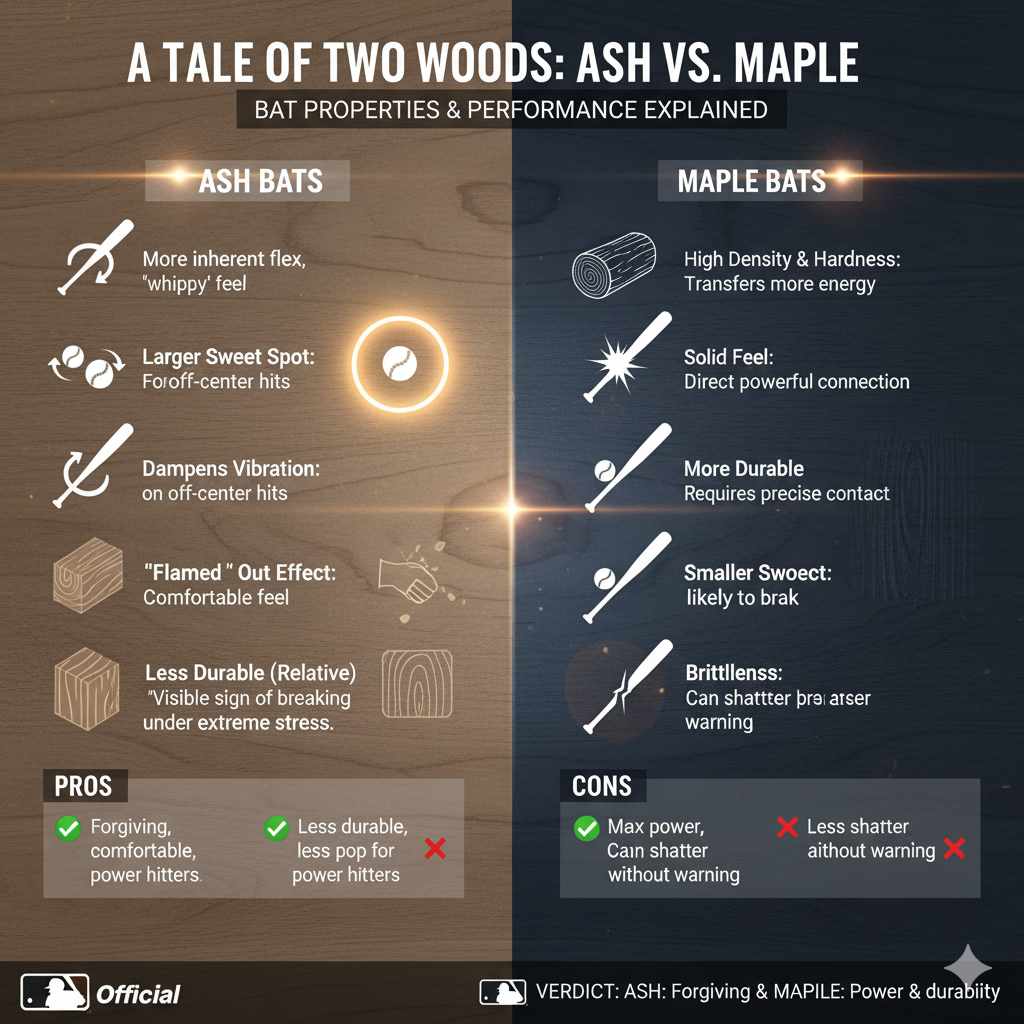
- Flexibility: Ash has a more inherent flex compared to maple. This means when you swing, the bat can bend slightly. This flexibility is often described as providing a “whippier” feel.
- Larger Sweet Spot: Due to its tendency to compress and flex, ash bats are often considered to have a more forgiving sweet spot. This means off-center hits can still travel well, making them a great choice for players who are still developing their hitting consistency.
- Vibration Dampening: Ash’s grain structure helps absorb some of the vibrations that travel up the bat when you make contact. This often translates to a more comfortable feel in a player’s hands, especially on mishits.
- “Flamed” Out Effect: Ash bats tend to flake or splinter on the surface over time, a phenomenon often called “flame out” or “flaking.” This is a visual cue that the bat is nearing the end of its life and is losing its structural integrity. This flaking is less about structural failure and more about the wood’s surface layers wearing down.
- Durability (Relative): While durable, ash is generally considered less dense and therefore less durable than maple. It’s more prone to breaking under extreme stress or repeated hard impacts.
The flexibility of ash is a double-edged sword. While it provides that forgiving feel and larger effective hitting area, it also means the bat is more susceptible to breaking. Imagine bending a piece of wood repeatedly; eventually, it might snap. Ash behaves similarly, though it gives ample warning with its surface flaking.
Maple Bats: The Modern Powerhouse
Maple bats have revolutionized the game, particularly in professional leagues. Their density and hardness offer a different kind of performance that many power hitters crave.
- Density and Hardness: Maple is significantly denser and harder than ash. This means it transfers more energy to the ball upon impact, potentially leading to harder-hit balls and more distance.
- Solid Feel: Batters often describe maple bats as having a more “solid” feel. There’s less perceived flex, providing a more direct and powerful connection to the ball.
- Durability: Due to its density, maple is generally much more durable than ash. Maple bats are less likely to break, and when they do, it’s often a clean break rather than a splintering or flaking failure.
- Smaller Sweet Spot: The trade-off for maple’s hardness is that it’s often considered to have a smaller and less forgiving sweet spot. Off-center hits are more likely to result in weak ground balls or fouls.
- No Noticeable Flaking: Unlike ash, maple doesn’t typically flake. When a maple bat fails, it’s usually a clean snap, often because the wood’s integrity has been compromised.
- Grain Structure: Maple has a tighter, more uniform grain structure than ash. This contributes to its hardness and durability but can also mean it’s less forgiving on mishits.
The allure of maple lies in its raw power and longevity. Batters who consistently hit the sweet spot can benefit immensely from the energy transfer and the bat’s resistance to breaking. However, for those still honing their swing, the margin for error can be smaller.
Key Differences Summarized
To make it even clearer, let’s put the main differences side-by-side. Understanding these points will help you connect the wood’s properties to your own playing style.
| Feature | Ash Bats | Maple Bats |
|---|---|---|
| Flexibility | More flexible, “whippier” feel. | Less flexible, “solid” feel. |
| Sweet Spot Forgiveness | More forgiving, larger effective area. | Less forgiving, smaller effective area. |
| Vibration Dampening | Good vibration absorption, comfortable feel. | Less inherent vibration dampening, can feel firmer. |
| Durability | Less durable, prone to flaking/splintering. | More durable, less prone to breakage (though can snap cleanly). |
| Weight Distribution | Often feels lighter due to flex and slightly lower density. | Can feel more end-loaded due to density. |
| Signs of Wear | Surface flaking (“flame out”). | Typically a clean break if it fails. |
This table really highlights the core distinctions. When you’re holding a bat, you’re holding a piece of carefully selected and crafted wood, and its type dictates a lot of what you’ll experience on the field. Don’t underestimate how these subtle differences can influence your game.
Ash vs. Maple: Which Bat is Right for You?
Now for the big question: which wood should a beginner choose? The answer often comes down to your personal hitting style, your stage of development, and what you prioritize in a bat.
For the Beginner Hitter
If you’re new to baseball or still developing your swing, an ash bat might be your best friend. Here’s why:
- Forgiveness: The larger, more forgiving sweet spot means you’re more likely to get a good hit even if you don’t catch the ball perfectly on the barrel. This builds confidence and helps you make solid contact more often.
- Comfort: The vibration-dampening qualities of ash make it more comfortable on your hands and arms, especially when you’re learning and might not have perfect form yet.
- Learning Curve: Ash allows you to learn the timing and feel of hitting without being overly penalized for minor imperfections in your swing. You can focus on the mechanics rather than worrying about breaking your bat or getting jammed.
Think of an ash bat as a training wheel for your hitting. It’s designed to help you learn and develop in a more forgiving environment. You can still hit the ball hard and far with an ash bat, but it’s less demanding on perfect technique.
For the Developing Power Hitter
As you improve and start driving the ball with more authority, you might find yourself drawn to maple.
- Power Transfer: If you’re consistently hitting the sweet spot, the density of maple means you’re transferring more energy to the ball. This can lead to that extra bit of velocity and distance on your hits.
- Durability for Practice: If you practice a lot and swing hard, a maple bat’s durability can be a significant advantage, meaning you won’t have to replace it as often.
- Solid Feel: Many players who are comfortable with their swing prefer the direct, solid feel of maple. It provides immediate feedback on contact.
A maple bat can feel like an upgrade once your fundamentals are solid. It’s a tool for players who are looking to maximize their power and consistency. However, it’s also important to remember that a bat doesn’t hit the ball; the player does. Developing solid mechanics is the most crucial step, regardless of the bat material.
The Role of Grain Orientation and Bat Construction
Beyond just the type of wood, how the bat is constructed also plays a vital role. Bat makers are skilled artisans who select specific pieces of wood and cut them in particular ways to maximize performance and durability.
Grain Orientation: End Grain vs. Horizontal Grain
The way the wood is cut relative to its grain is a significant factor.
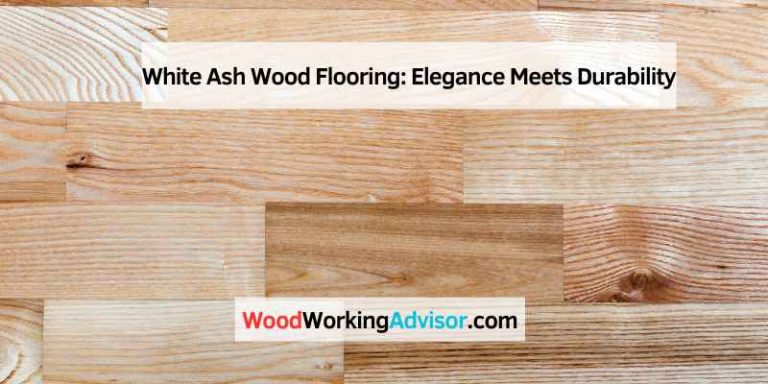
- End Grain (or Close-Grained): This refers to bats where the grain lines run mostly perpendicular to the knob and the barrel. Ash is often cut this way. This orientation allows the bat to flex more easily. When the bat flexes, the wood fibers compress and then spring back, which contributes to the feeling of whip and forgiveness. The horizontal grain, which is visible on the surface of the bat, tends to be wider and more pronounced in ash due to its growth patterns.
- Horizontal Grain (or Straight-Grained): Maple is typically cut so the grain lines run more parallel to the length of the bat. This “straight” or “horizontal” grain means the wood is less inclined to flex. This leads to a more rigid, solid bat that transfers energy more directly. The grain lines on a maple bat are usually much tighter and less visible than on an ash bat.
This difference is key to understanding why ash feels flexible and maple feels solid. It’s all about how the wood’s inherent structure behaves under stress.
Bat Models and Features
Bat manufacturers offer various models with different weights, lengths, and balance points. While the wood type is fundamental, these other features can also tailor the bat to your needs:
- Weight: Lighter bats are easier to swing faster, while heavier bats can provide more power if you can handle them.
- Balance: Some bats are end-loaded (heavier toward the barrel), while others are more balanced. End-loaded bats can offer more power, while balanced bats are easier to control and swing quicker.
- Handle Thickness: A thicker handle can offer more stability and grip, while a thinner handle might allow for a better feel and more control for some players.
When you’re choosing a bat, consider not just the wood type (ash vs. maple) but also the specific model’s design and how it complements your physique and swing.
Caring for Your Baseball Bat
No matter which wood you choose, proper care will extend the life of your bat and help maintain its performance. Wood bats require more attention than metal or composite bats.
Storage is Key
- Avoid Extreme Temperatures: Never leave your wood bat in a hot car trunk or in freezing conditions. Fluctuations in temperature can cause the wood to expand and contract, leading to cracks and weakening the bat.
- Dry Environment: Store your bats in a cool, dry place. High humidity can cause the wood to swell, while very dry conditions can make it brittle.
- Bat Bag Care: If possible, use a bat bag with individual compartments or at least keep your wood bats away from metal bats, which can dent or damage the wood.
Inspection and Maintenance
Regularly inspect your bat for any signs of damage.
- Look for Cracks: Check the entire surface of the bat, especially around the barrel and handle, for any small cracks or splinters.
- Listen for Cracks: Sometimes, you can hear a crack forming if you tap the bat lightly.
- Ash Flaking: As mentioned, ash bats will develop surface flaking. This is normal wear and tear for ash, but if you see deep cracks forming under the flakes, it’s time to retire the bat.
- Maple Snaps: Maple bats are less likely to show warning signs before breaking. If you notice any dents or deep scratches, it might be a sign of internal damage.
Treating your bat with respect and care ensures it performs at its best for longer. Think of it as a partnership – you take care of the bat, and it helps you deliver powerful hits.
The Economics: Cost Considerations
For many beginners and DIY enthusiasts, budget is always a consideration. Generally, ash and maple bats fall into similar price ranges, but there can be slight variations.
- Ash: Traditionally, ash bats were often slightly less expensive than maple due to availability and the established manufacturing processes. However, this isn’t always the case today, especially for high-end ash bats.
- Maple: Maple, being denser and requiring more careful selection and processing, can sometimes command a slightly higher price. However, its superior durability means it can offer better long-term value if you play frequently.
When comparing prices, always look at the specific model, brand, and any features. For beginners, there are plenty of affordable ash options available that offer excellent value for learning and development. The key is to find a bat that fits your budget and your skill level.
External Resources for Further Learning
To deepen your understanding of wood properties and baseball equipment, consider checking out resources from reputable organizations and experts.
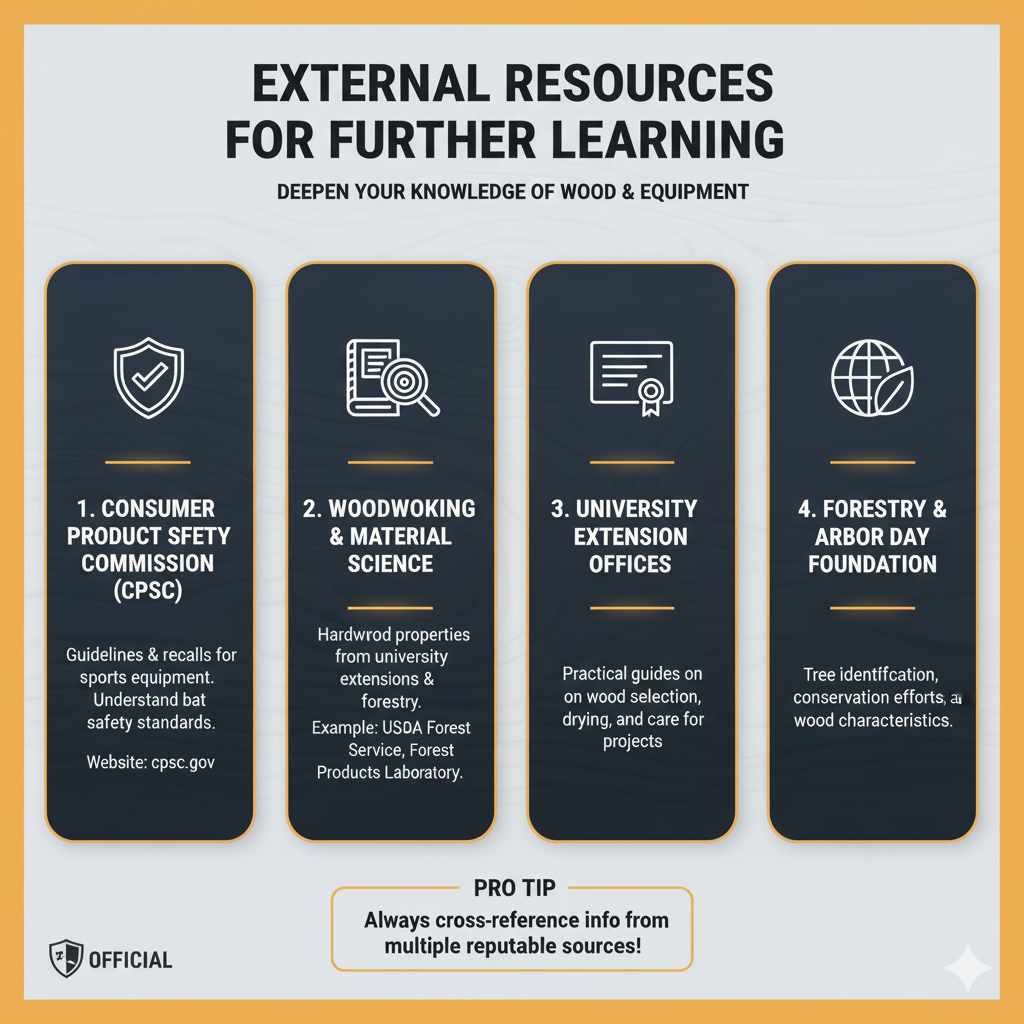
- Consumer Product Safety Commission (CPSC): The CPSC provides guidelines and recalls related to sports equipment, including baseball bats. Understanding bat safety standards can be very informative. You can find relevant information on their website, cpsc.gov.
- Woodworking and Material Science Websites: For those interested in the wood itself, resources on hardwood properties from university extension offices or forestry departments (e.g., Forest Products Laboratory Hardwood Glossary from the USDA Forest Service) can offer fascinating technical details about wood structure, density, and strength.
These resources can provide a wealth of information that goes beyond typical sporting goods advice, giving you a more comprehensive perspective on the materials that make your equipment work.
Frequently Asked Questions (FAQ)
Here are some common questions beginners have about ash versus maple bats:
Q1: Which wood is better for a beginner, ash or maple?
For most beginners, ash is often recommended. Its larger, more forgiving sweet spot and vibration-dampening qualities make it more comfortable and easier to hit with while learning. It helps build confidence with more consistent contact.
Q2: Can ash bats break easily?
Ash bats are more prone to breaking than maple bats, especially if they sustain repeated hard impacts or are used improperly. They often show signs of wear through surface flaking before they break, giving a warning.
Q3: Is a maple bat harder to swing?
Maple bats can feel more solid and less flexible, which some players find requires a more precise swing. They transfer energy very efficiently, but if you don’t hit the sweet spot, the result might be less favorable than with ash.
Q4: Do maple bats make a different sound when hitting the ball?
Yes, maple bats often produce a sharper, more distinct “crack” sound upon impact compared to the slightly more muted thud or “thwack” some ash bats might produce. This is due to maple’s superior density and rigidity.