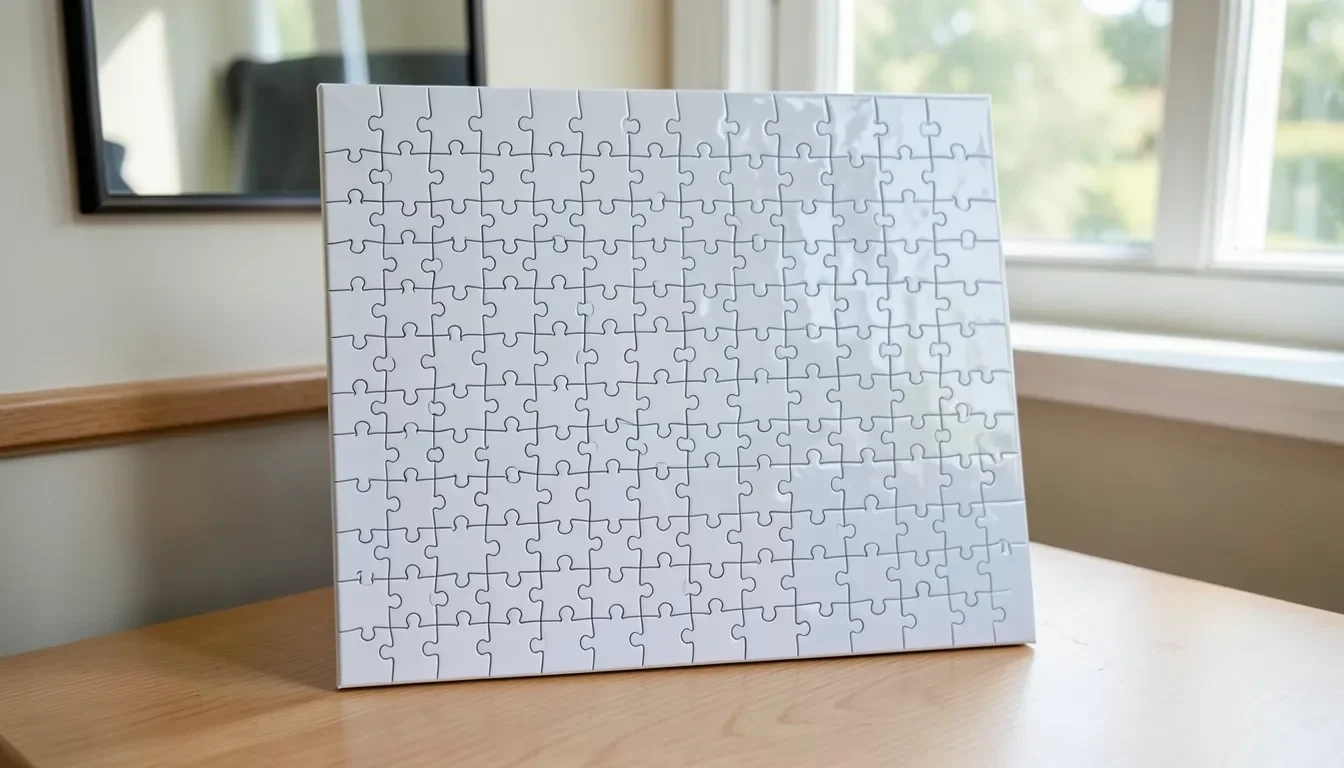
Can You Use Mod Podge as Puzzle Glue? Easy Guide
Yes, standard Mod Podge works as puzzle glue — it’s a water-based glue/sealer/finish in one product, which is exactly the combination a glued puzzle needs. Mod Podge also makes a dedicated “Puzzle Saver” version formulated specifically for this use, which is worth the small price difference if you’re gluing puzzles regularly rather than a one-off.
Why Mod Podge Works For This
Literally Made For This
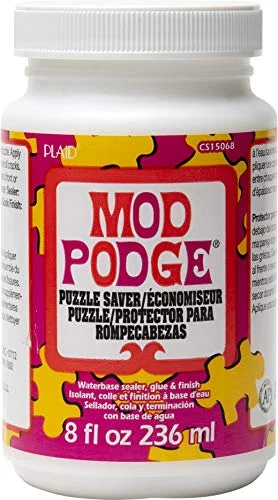 |
Mod Podge Puzzle Saver, 8 oz – $8.49 Not a repurposed craft glue — this is Mod Podge’s own product specifically formulated for gluing completed puzzles, with the same easy application as standard Mod Podge.
|
Mod Podge is a water-based glue, sealer, and finish combined into one product, which is why it works well on puzzles: it adheres the individual pieces together, dries clear, and leaves a protective topcoat all in a single application. It’s affordable, widely available, versatile across paper and cardboard, and protects the finished puzzle against moisture and dust once fully cured — real, practical reasons it’s become a go-to for this specific craft use, not just a coincidental fit.
How To Apply It
- Make sure the puzzle is fully assembled and on a flat, stable surface you can leave undisturbed while it dries — moving a puzzle mid-glue risks shifting pieces before the bond sets.
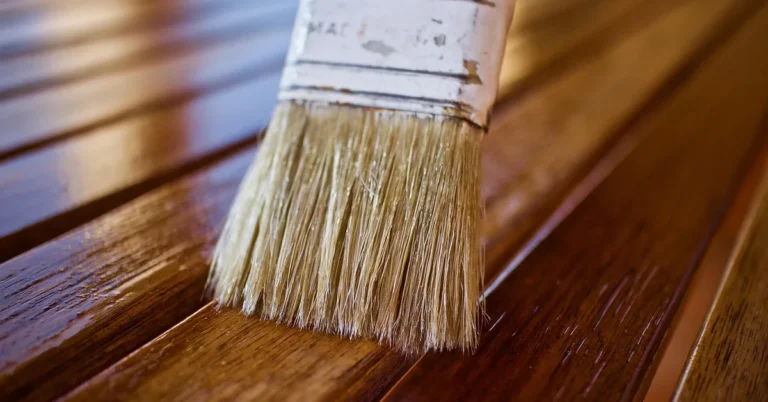
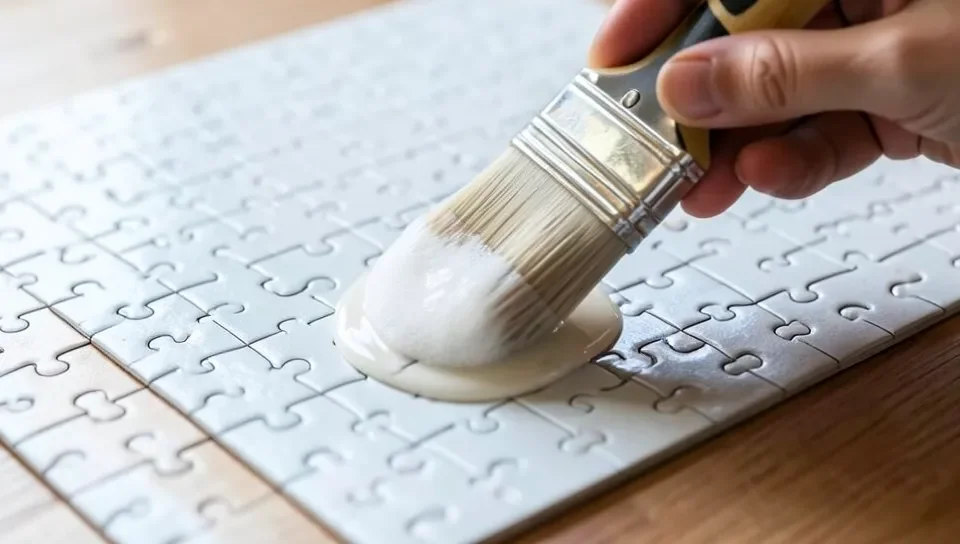
- Apply the first coat thin and even with a foam brush, working from the center outward to push out air rather than trapping it under the glue layer.
- Let the first coat dry fully before adding a second coat — rushing this step is the most common cause of a cloudy or uneven finish.
- Apply a second thin coat for full coverage and durability, again working outward and checking for missed spots at the edges.
- Let it cure completely (longer than just surface-dry) before moving, framing, or displaying the puzzle.
Fixing Common Problems
- Bubbles: usually caused by applying too thick a coat or brushing over an area repeatedly once it’s started to tack up — apply thinner coats and use fewer brush strokes per area to avoid reworking partially-dried glue.
- Streaks or visible brush marks: often from an overloaded brush or uneven pressure — use a foam brush (not bristle) loaded lightly, and keep consistent, light pressure across each pass.
- Edges not sealed: the border pieces need just as much attention as the center — run the brush right to the puzzle’s outer edge on every coat, since an unsealed edge is where pieces are most likely to eventually lift.
Alternatives Worth Knowing
- Dedicated puzzle glues: formulated specifically for this use, often with strong clear bonds and quick-dry options — a reasonable step up if Mod Podge isn’t giving you the result you want, at a real cost premium since they’re single-purpose products.
- Spray adhesives/sealants: a clear craft sealant spray gives quick, even coverage without brush marks, but requires good ventilation, carries real overspray risk, and can yellow over time unless you specifically choose an acid-free formula.
- PVA glue or clear varnish: workable budget options, though they may not dry as clear or hard as Mod Podge, can be prone to yellowing, and generally give a less secure bond — reasonable for a low-stakes project, not the best choice for a puzzle you want to frame long-term.
Whichever product you choose, test it on a scrap piece or a corner first — drying clarity and finish sheen can vary enough between brands and formulas that it’s worth confirming before committing to the whole puzzle.
Before You Glue: A Few Real Considerations
- Gluing is permanent: a glued puzzle can’t be broken down and reassembled again or passed along to reuse — decide whether you actually want to keep this specific puzzle as a finished piece before committing.
- Work on a surface you can leave undisturbed: a puzzle board or a flat surface in a low-traffic area avoids the risk of bumping the puzzle mid-glue, which can shift pieces before the bond sets.
- Consider framing plans before choosing a sheen: a glossy finish can create glare behind glass, while a matte finish generally photographs and displays better under most lighting — factor this in if the puzzle is headed for a frame.
- Let it cure fully, not just surface-dry, before moving it — picking up a puzzle that’s dry to the touch but not fully cured underneath risks cracking the glue layer.
Frequently Asked Questions
Will Mod Podge ruin a puzzle?
No, when applied correctly — thin, even coats with full drying time between them. It’s specifically designed to adhere puzzle pieces and protect the surface without damaging the printed image.
How much Mod Podge should you use on a puzzle?
Thin, even coats are best — avoid thick, goopy layers, which are more likely to cause bubbles and uneven drying. Two thin coats generally give better results than one thick one.
Can you use any Mod Podge formula for puzzles?
Standard Matte or Gloss formulas work fine. Avoid textured or colored/tinted formulas, which aren’t designed for this use, and if the finished puzzle will be somewhere humid, an outdoor-rated formula holds up better.
Conclusion
Mod Podge genuinely works as puzzle glue — it’s affordable, dries clear, and combines adhesive and protective topcoat in one product. Apply it in thin, even coats worked from the center outward, and a dedicated Puzzle Saver formula is worth it if you’re gluing puzzles often enough for the small upgrade to matter.
Sponsored / affiliate links. As an Amazon Associate I earn from qualifying purchases. I may earn additional commission from eligible campaigns.