Can A Japanese Maple Recover From Root Rot
It’s worrying when your beautiful Japanese maple starts looking sad. Many plant lovers wonder, Can a Japanese Maple Recover from Root Rot? This is a common question, especially for those new to gardening, because root rot can seem like a death sentence for these delicate trees. But don’t lose hope!
With the right steps, there’s a good chance your maple can bounce back. We’ll walk you through exactly what to do, step by step, to help your tree heal.
Identifying Root Rot in Japanese Maples
Root rot is a serious issue for Japanese maples, often caused by overwatering or poorly draining soil. It’s when fungi attack the tree’s roots, preventing them from taking up water and nutrients. This leads to visible signs of distress in the tree’s leaves and overall health.
Signs of Trouble
Spotting root rot early is key to giving your tree the best chance of survival. Look for several common symptoms that appear on the leaves and branches. These are your first warnings that something is seriously wrong below the soil line.
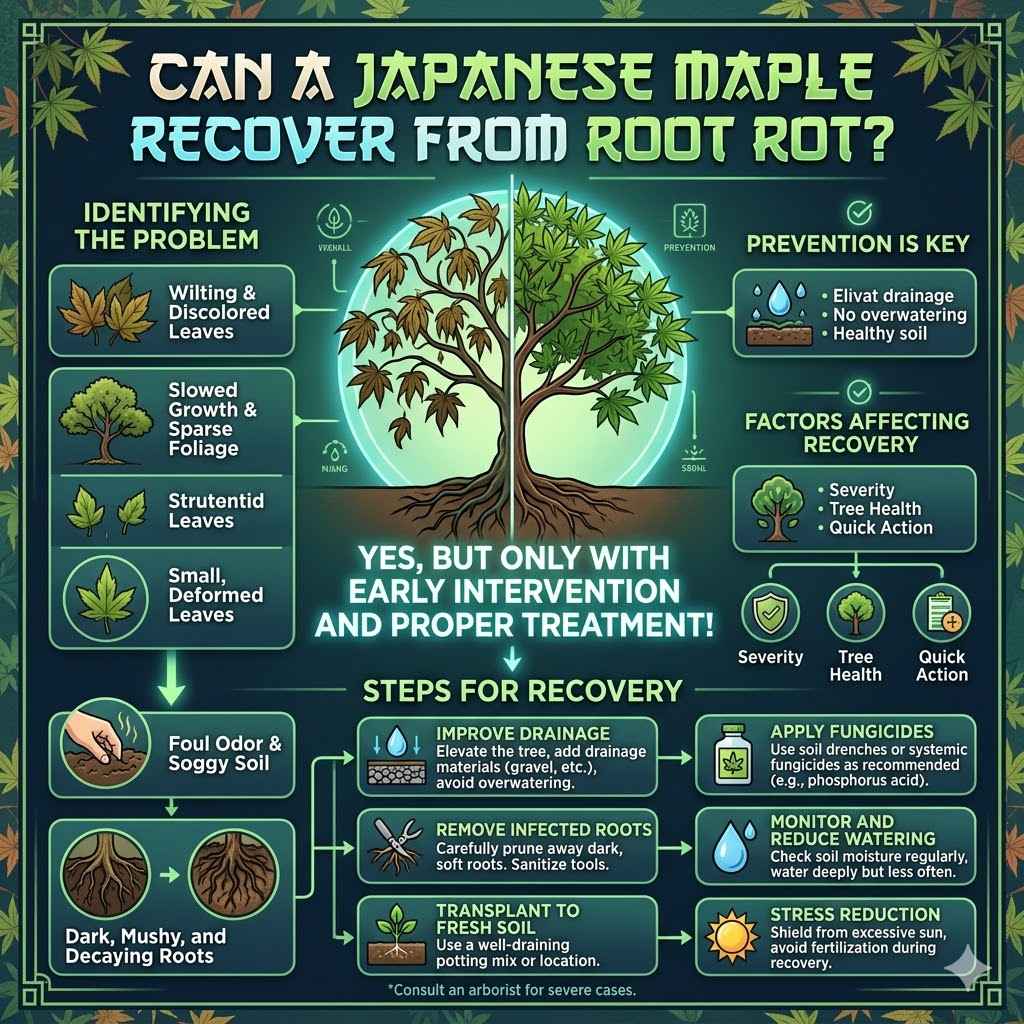
- Wilting LeavesEven when the soil is moist, your Japanese maple’s leaves might start to droop and wilt. This is a classic sign that the roots are not functioning properly. They can’t absorb the water the tree needs, so the leaves signal this lack of hydration.
The wilting can start on one branch or spread across the entire tree, depending on how far the rot has progressed.
- Yellowing and Browning FoliageAs root rot worsens, the leaves will often turn yellow. This is because the damaged roots can’t supply enough nutrients to keep the leaves green and healthy. Eventually, the yellow leaves will turn brown and crispy, and they may fall off prematurely.
You might see this happen even in the middle of the growing season.
- Stunted GrowthA Japanese maple affected by root rot will show a noticeable slowdown in its growth. New shoots might be shorter, and the tree may not produce as many leaves as it normally would. This lack of vigor is a direct result of the compromised root system’s inability to support new development.
- Mushy or Dark RootsIf you suspect root rot, you can carefully examine the roots. Gently dig around the base of the tree and expose some of the root ball. Healthy roots are typically firm and light-colored.
Roots affected by rot will often be soft, mushy, dark brown, or black. They might also have a foul smell, which is a strong indicator of fungal activity.
Causes of Root Rot
Understanding what leads to root rot helps in preventing it. It’s almost always related to the environment around the tree’s roots, particularly moisture levels and soil conditions. Addressing these factors is crucial for both recovery and future health.
- OverwateringGiving your Japanese maple too much water is the most common cause of root rot. The roots need air to breathe, and when they are constantly saturated, they can’t get oxygen. This creates a perfect breeding ground for the fungi that cause root rot.
It’s easy to overwater, especially if you’re unsure about how much moisture the soil needs or if you’re watering on a fixed schedule without checking the soil first.
- Poor DrainageIf the soil where your Japanese maple is planted doesn’t drain well, water can sit around the roots for too long. This is especially problematic in heavy clay soils that hold a lot of moisture. Even if you don’t water excessively, water can pool if the drainage is poor.
Good drainage allows excess water to flow away, preventing the roots from staying waterlogged.
- Compacted SoilWhen soil becomes compacted, it reduces the air pockets that roots need. This can happen from foot traffic or heavy equipment. Compacted soil also hinders water drainage.
It makes it harder for roots to grow and access oxygen, increasing their susceptibility to rot.
- Planting Too DeepIf the tree is planted too deep in the ground, the base of the trunk can stay wet. This moist environment can encourage fungal growth and rot to start in the roots and even up into the trunk. The root flare, where the roots begin to spread out from the trunk, should be visible at or slightly above soil level.
Assessing the Damage and Recovery Potential
Once you’ve identified signs of root rot, the next crucial step is to figure out how badly the tree is affected. This assessment will guide whether recovery is even possible and what actions you should take. It’s about being realistic with the situation.
Determining the Severity
The extent of the root rot is the biggest factor in a Japanese maple’s ability to recover. A tree with only mild rot might bounce back with some care, while severe rot can be very difficult or impossible to overcome. It’s like a medical diagnosis for your tree.
- Extent of Root SuffocationRoot rot essentially suffocates the roots. If a large percentage of the root system is already gone or completely rotted away, the tree has a much harder time surviving. A tree with healthy roots that are only just beginning to show signs of rot has a better prognosis.
You need to estimate how much of the root ball is healthy versus diseased.
- Overall Tree VigorA healthy, strong Japanese maple will have a better chance of fighting off the infection and regrowing damaged roots. A tree that was already stressed or unhealthy before the rot set in might not have the reserves to recover. Look at the tree’s previous growth habits and its current overall appearance, besides the wilting.
- Presence of Fungal StructuresSometimes, you might see visible signs of fungal growth, like mushrooms or white, powdery mold, around the base of the tree or on the roots. The presence of these fungal structures can indicate a more advanced or aggressive infection.
Factors Favoring Recovery
Certain conditions can significantly improve your Japanese maple’s chances of recovering from root rot. Think of these as helping the tree build strength and resilience.
- Early DetectionThe sooner you catch root rot, the better. If you address the problem when only a small portion of the roots are affected, the tree has a much higher chance of surviving. Early intervention is always more effective in any healing process.
- Good Water Management PracticesIf you can implement proper watering and drainage techniques immediately, you help stop the rot from spreading. This includes watering only when needed and ensuring the soil can dry out between waterings.
- Healthy Companion Plants or Soil MicrobesIn some cases, a healthy soil ecosystem with beneficial microbes can help suppress the fungi that cause root rot. While not a direct cure, a strong microbial community can create a less favorable environment for pathogens.
- Adequate Sunlight and Air CirculationEnsuring the tree gets enough sunlight and that air can circulate around its canopy can help improve its overall health and ability to recover. A stressed tree might be more susceptible, so good growing conditions are important.
Japanese maples are known for being somewhat sensitive, and root rot is a major threat to their well-being. However, their ability to recover depends heavily on how quickly the problem is identified and addressed. A tree with extensive rot might not survive, but with prompt action, many can be saved.
Steps to Help Your Japanese Maple Recover
If you’ve assessed your Japanese maple and believe it has a chance to recover, it’s time to take action. These steps focus on correcting the conditions that led to the rot and supporting the tree’s healing process. It requires patience and careful attention.
Improving Soil and Drainage
The most critical step is to fix the environment around the roots. This means ensuring water can drain away freely and that the soil isn’t staying too wet for too long. This is the foundation for recovery.
- Assess Current Soil ConditionsBefore you do anything, dig around the tree and feel the soil. Is it constantly soggy? Does water sit on the surface after rain?
Does it feel dense and heavy, like clay? Knowing the current state of the soil will help you choose the right amendments or actions.
- Improve Drainage with AmendmentsIf your soil is heavy or compacted, you’ll need to add organic matter to improve drainage. Compost, well-rotted manure, or coir can help break up heavy soil. Mix these amendments into the top 6-12 inches of soil around the tree.
Avoid using gravel at the bottom of planting holes, as this can create a “bathtub effect” where water pools.
- Consider Raised Beds or MoundingFor severely problematic soils, planting your Japanese maple in a raised bed or creating a soil mound can be very effective. This elevates the root ball above the surrounding ground, ensuring water drains away quickly. Ensure the mound is wide enough to accommodate the root system.
- Adjust Watering ScheduleWatering is crucial. Water deeply but infrequently. Allow the top 2-3 inches of soil to dry out before watering again.
Stick your finger into the soil to check moisture levels. During periods of heavy rain, you may not need to water at all.
Treating the Infected Roots
Once the environmental conditions are being addressed, you can focus on the roots themselves. This involves removing the rotted parts and, in some cases, applying treatments to prevent further spread.
- Carefully Expose the Root BallGently remove some of the soil from around the base of the tree to expose the upper part of the root ball. You want to see the extent of the rot without causing further damage to healthy roots. Use a soft brush or your fingers to clear away soil.
- Prune Away Rotted RootsUsing clean, sharp pruning shears, carefully cut away any roots that are black, mushy, or have a foul odor. Make clean cuts back to healthy root tissue, which will be firm and white or light tan. Sterilize your tools between cuts with rubbing alcohol or a bleach solution to prevent spreading the disease.
- Apply Fungicide (Optional and with Caution)In some cases, a fungicide might be recommended. However, many general fungicides are not effective against the types of fungi causing root rot in trees. If you choose to use a fungicide, select one specifically labeled for root rot diseases on ornamental trees and follow the application instructions precisely.
It is often better to focus on improving the soil and drainage.
- Allow Roots to Air Dry (Briefly)After pruning, some arborists recommend allowing the exposed roots to air dry for a few hours. This can help the cut surfaces heal and make them less susceptible to reinfection. Ensure the tree is in a shaded, protected spot if doing this.
Post-Treatment Care and Monitoring
The journey to recovery doesn’t end with the initial treatment. Ongoing care and vigilant monitoring are essential to ensure the tree heals and thrives.
- Mulch ProperlyApply a layer of organic mulch, such as wood chips or shredded bark, around the base of the tree. Keep the mulch a few inches away from the trunk itself to prevent moisture from accumulating against the bark. Mulch helps retain soil moisture, regulate soil temperature, and suppress weeds, but it must be applied correctly.
- Fertilize Sparingly (If At All)Avoid fertilizing a tree that is stressed by root rot. Fertilizers can encourage new growth that the weakened root system may not be able to support. If the tree shows significant signs of recovery after a year or two, you can consider a very light application of a balanced fertilizer.
- Monitor for New Growth and Signs of StressKeep a close eye on your Japanese maple throughout the growing season. Look for signs of new, healthy leaf growth. Also, continue to watch for any return of wilting or yellowing, which could indicate the rot is persisting or returning.
Regular inspection is key.
- Provide Adequate Water, But Don’t Drown ItContinue to water as needed, checking soil moisture regularly. The goal is consistently moist, but not waterlogged, soil. This balance is crucial for the tree to re-establish its root system.
Adjust your watering based on weather conditions and the tree’s needs.
Example Scenario
Let’s imagine Sarah noticed her Japanese maple’s leaves were drooping in mid-summer, even though she watered it regularly. She dug around the base and found the soil was constantly soggy and smelled a bit off. The roots she exposed looked dark and soft.
- Sarah decided to improve drainage by mixing compost into the top layer of soil around the tree.
- She gently exposed the root ball and used clean pruners to cut off all the rotted, mushy roots.
- She then applied a layer of mulch, keeping it a few inches away from the trunk.
- For the next few months, she checked the soil moisture every few days, watering only when the top inch felt dry.
- By the following spring, her maple showed new, vibrant green leaves, indicating a successful recovery.
This scenario shows that with the right actions, a Japanese maple can indeed recover from root rot. The key is addressing the underlying causes and giving the tree the best possible environment to heal.
When Recovery Is Unlikely
While many Japanese maples can be saved from root rot, there are situations where recovery is unfortunately not possible. Recognizing these signs can help you make difficult decisions and focus your efforts elsewhere.
Signs of Irreversible Damage
Sometimes, the damage to the root system is too extensive for the tree to bounce back. If the majority of the roots are gone, the tree simply doesn’t have the foundation to survive, no matter what you do.
- Extensive Root LossIf, when examining the roots, you find that more than 50-75% of the root system is rotted, mushy, and black, the tree likely cannot be saved. A healthy root system is essential for anchoring the tree and absorbing nutrients and water. Without it, the tree will eventually die.
- Trunk and Branch DiebackIf large sections of the trunk or major branches have turned black, are mushy, or show no signs of life, it indicates that the rot has progressed significantly. This severe dieback suggests the vascular system of the tree is compromised, preventing the flow of water and nutrients.
- Complete Lack of New GrowthIf you’ve tried to improve conditions for a full growing season or more and see absolutely no new buds or leaves forming, the tree might be beyond recovery. While some trees can take time to show signs of life, a complete absence of any new growth is a dire sign.
- Persistent, Foul OdorA strong, persistent foul odor emanating from the root zone, even after attempting to improve drainage, can indicate aggressive and widespread fungal infection that is difficult to eradicate. This smell is a sign of active decomposition.
Statistics on Root Rot Recovery
While precise statistics for Japanese maple root rot recovery are hard to pinpoint, general data on tree diseases provides context. Root rot is a serious pathogen that can devastate ornamental trees when conditions are favorable for the fungi.
A study by the Arboricultural Research and Information Service indicated that trees suffering from significant root disease have a reduced survival rate. While specific figures vary by species and disease severity, it’s generally accepted that proactive prevention and early intervention are key to successful treatment.
For many fungal root diseases, including those affecting maples, survival rates can drop below 50% once the disease has progressed to a moderate to severe stage. This highlights the importance of diagnosing the problem quickly and accurately.
Making the Difficult Decision
Sometimes, despite your best efforts, a Japanese maple may not recover. It’s important to recognize when to let go and consider replacing the tree. Holding onto a tree that has no chance of survival can be disheartening and can even spread disease to other plants.
- Assess the Financial and Emotional InvestmentConsider how much time, effort, and money you’ve already put into trying to save the tree. If it continues to decline, you might be better off investing those resources in a new, healthy tree and focusing on proper planting and care from the start.
- Preventing Further SpreadIf the root rot is caused by a particularly aggressive pathogen, leaving the infected tree in the ground could pose a risk to other plants in your garden. Removing and properly disposing of the diseased tree and soil can help prevent the spread of the disease.
- Consider the Tree’s Age and ValueAn old, mature Japanese maple might be harder to replace and may have significant sentimental value. However, even these trees have a limit to their resilience. A younger, smaller tree might be easier to replace and recover more quickly from the setback of losing a tree.
Sample Scenario of Non-Recovery
Mr. Henderson had a beloved Japanese maple that had been in his yard for 15 years. One spring, it showed severe yellowing and leaf drop.
He dug it up and found almost the entire root ball was black, mushy, and smelled terrible. The trunk also showed signs of rot near the base.
- Despite his efforts to improve drainage and prune roots, the tree continued to decline.
- New growth failed to appear the following spring.
- Mr. Henderson decided it was time to remove the tree to prevent any potential spread of disease to his other plants.
- He
This situation illustrates that while recovery is possible, it’s not always the outcome. The extent of damage and the tree’s overall health play a crucial role.
Preventing Root Rot in the Future
Once you’ve gone through the process of trying to save a Japanese maple, or if you’re starting with a new one, preventing root rot is the best strategy. This involves understanding the tree’s needs and creating the ideal growing conditions.
Choosing the Right Location
Where you plant your Japanese maple is perhaps the most important decision for preventing root rot. The location sets the stage for its long-term health.
- Well-Draining Soil is ParamountSelect a spot where water does not pool. If your garden soil is heavy clay, consider amending it heavily with compost or planting in a raised bed. You can test drainage by digging a hole about a foot deep and filling it with water.
If the water drains away within a few hours, the drainage is likely adequate. If it stays for a long time, you need to improve it.
- Avoid Waterlogged AreasNever plant a Japanese maple in a low-lying area that tends to stay wet after rain or near downspouts that constantly saturate the ground. These conditions are a direct invitation for root rot to develop. Think about how water naturally flows in your yard.
- Consider Sunlight and AirflowWhile not directly related to root rot, good airflow around the canopy can help the leaves dry faster, reducing the risk of other fungal issues. Japanese maples generally prefer partial shade, especially in hotter climates, but ensure the spot isn’t overly humid and stagnant.
Proper Planting Techniques
How you plant the tree is as important as where you plant it. Correct planting ensures the roots have room to grow and are not set up for failure from day one.
- Plant at the Correct DepthThe most critical aspect of planting is ensuring the root flare is visible at or slightly above soil level. The root flare is where the trunk widens out into the main roots. Planting too deep is a common mistake that leads to trunk rot and root problems.
Dig a hole that is only as deep as the root ball and about two to three times as wide.
- Loosen the Root BallGently loosen any circling roots around the outside of the root ball before planting. If the roots are tightly bound, they may not grow outward into the surrounding soil. You can make a few vertical cuts with a clean knife or spade if the roots are severely pot-bound.
- Backfill with Native Soil (Mostly)Fill the hole with the soil you removed, rather than a completely different soil mix. This encourages the roots to grow out into the surrounding soil. You can amend the native soil with about 20-30% compost to improve its structure and fertility, but avoid creating a “bathtub” effect with a rich, loose mix surrounded by dense soil.
Watering Wisdom
Mastering the watering needs of a Japanese maple is key to its health and preventing root rot.
- Check Soil Moisture Before WateringThis cannot be stressed enough. Do not water on a schedule. Instead, check the soil by sticking your finger 2-3 inches down.
If it feels dry at that depth, it’s time to water. If it feels moist, wait longer.
- Water Deeply and InfrequentlyWhen you do water, water thoroughly so that moisture penetrates deep into the root zone. This encourages roots to grow downwards. Watering shallowly and frequently encourages shallow root growth, making the tree more susceptible to drought and stress.
- Adjust for Weather ConditionsWater needs change with the seasons, temperature, and rainfall. During hot, dry periods, you’ll need to water more often. During cooler, wet periods, you’ll need to water less or not at all.
Always consider recent weather before watering.
Mulching Best Practices
Proper mulching offers many benefits, but it must be done correctly to avoid creating problems.
- Apply a Layer of Organic MulchUse organic materials like wood chips, shredded bark, or compost. Apply a layer 2-4 inches deep. Mulch helps retain soil moisture, suppresses weeds, and moderates soil temperature.
- Keep Mulch Away from the TrunkThis is vital. Create a “mulch-free ring” about 2-3 inches wide around the base of the trunk. This prevents moisture from accumulating against the bark, which can lead to rot, fungal diseases, and pest problems.
Imagine a donut shape with the tree in the center hole.
- Replenish Mulch AnnuallyOrganic mulch breaks down over time. Replenish the mulch layer annually to maintain its benefits. However, do not pile it up against the trunk; always maintain that clear space.
Fertilizing Appropriately
Japanese maples are not heavy feeders, and over-fertilizing can do more harm than good.
- Fertilize Only When NecessaryHealthy Japanese maples in good soil often don’t need fertilizer at all. If your tree is growing well and has good leaf color, you likely don’t need to fertilize. Signs that might indicate a need for fertilizer include very slow growth or pale green leaves.
- Use a Balanced, Slow-Release FertilizerIf you do fertilize, use a balanced fertilizer (e.g., 10-10-10) in early spring. Apply it according to the package directions, spreading it evenly over the mulched area, away from the trunk. Avoid high-nitrogen fertilizers, which can promote weak, leggy growth.
- Avoid Fertilizing Stressed TreesAs mentioned earlier, never fertilize a tree that is showing signs of stress from root rot or other issues. Fertilizing can exacerbate problems by forcing growth that the tree cannot support.
Frequently Asked Questions
Question: How long does it take for a Japanese maple to recover from root rot?
Answer: Recovery can take anywhere from several months to a couple of years. It depends on how severe the rot was and how effectively you address the underlying issues. You’ll likely see gradual improvements in leaf health and new growth over time.
Question: Can I transplant a Japanese maple with root rot?
Answer: Transplanting might be an option if the rot is not too advanced, but it’s risky. You would need to carefully dig up the tree, prune away all rotted roots, and replant it in a much better-draining location. It’s often a stressful procedure for an already weakened tree.
Question: What does healthy Japanese maple root rot look like?
Answer: Healthy roots of a Japanese maple are typically firm, fibrous, and white to light tan in color. They should not be mushy, dark, or have a foul smell. If you see these characteristics, it indicates root rot.
Question: Should I remove the affected soil around a Japanese maple with root rot?
Answer: Yes, it is often beneficial to improve or
Question: Are Japanese maples more susceptible to root rot than other trees?
Answer: Japanese maples are indeed more susceptible to root rot than many other tree species, primarily due to their preference for well-drained soil and their sensitivity to overwatering. Their delicate root systems can easily be overwhelmed by waterlogged conditions.
Summary
Yes, a Japanese maple can recover from root rot. The key is early detection and prompt, corrective action. Focus on improving soil drainage and adjusting watering habits.
Carefully prune away any rotted roots and monitor the tree closely. With the right care, your tree can regain its health and beauty.