Is Mango Wood a Hardwood? Yes: 1,070 Janka + Sap Warning
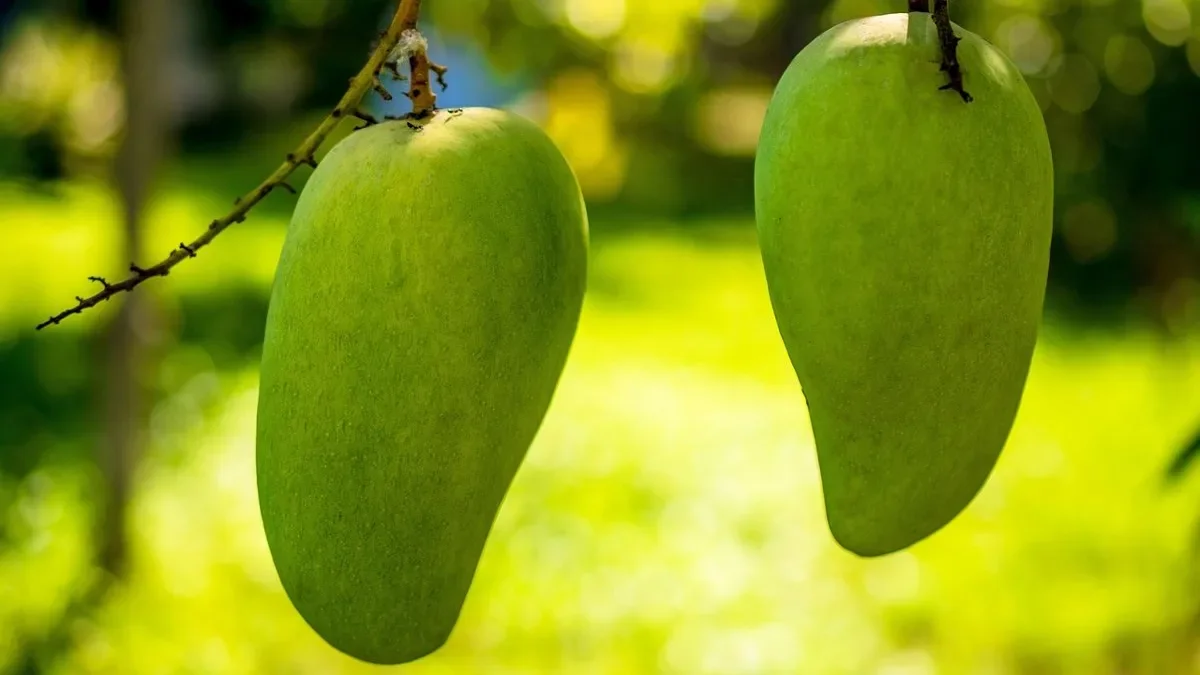
Yes, mango wood is a hardwood. It comes from the mango tree (Mangifera indica), a broadleaf flowering tree, and that botanical origin is the only thing the word “hardwood” actually measures. Mango also happens to be reasonably hard in practice: wood-database.com lists it at 1,070 lbf on the Janka scale, a little harder than black walnut and softer than red oak.
The catch is that mango is not a trouble-free wood. It has interlocked grain that tears out, enough silica to dull blades, a durability rating that ranges from moderately durable to perishable, and reports of skin irritation. This page covers the classification, the real numbers, and the sap and dust question, and it leaves the furniture buying decision to our mango wood furniture pros and cons guide.
Yes, Mango Is a Hardwood: What “Hardwood” Really Means
Best Mango Wood Sanding Dust Mask
 |
3M 8511 Cool Flow N95 Respirator, 2-Pack, $8.72 Mango dust and sap can irritate skin, so if you are sanding or sawing raw mango lumber, a valved N95 keeps the dust off your face.
|
In woodworking, “hardwood” is a botanical label, not a hardness rating. Hardwoods come from angiosperms, broadleaf flowering trees that are mostly deciduous. Softwoods come from conifers such as pine, fir and cedar. Mango is an angiosperm, so it is a hardwood no matter how the boards feel in your hand.
That definition is why the common shortcut “hardwood means hard” fails. Yellow poplar is a hardwood and only measures 540 lbf, while balsa is botanically a hardwood and is among the softest woods sold. Mango sits comfortably in the middle: it is a true hardwood that also has real density behind it, at about 42 lb/ft3 (675 kg/m3) when dried.
Borderline cases trip people up in the same way. If you have wondered about a wood with a name that suggests something else, the same botanical test applies, as we walk through in is knotty alder a hardwood.
Mango Wood Janka Hardness and Strength Numbers
These figures come from the mango species page on wood-database.com. They describe Mangifera indica in general, and individual boards vary a lot, especially between plantation trees.
| Property | Mango (Mangifera indica) |
|---|---|
| Janka hardness | 1,070 lbf (4,780 N) |
| Dried weight | 42.1 lb/ft3 (675 kg/m3) |
| Specific gravity (12% MC) | 0.52 to 0.68 |
| Modulus of rupture | 12,830 psi (88.5 MPa) |
| Crushing strength | 7,240 psi (49.9 MPa) |
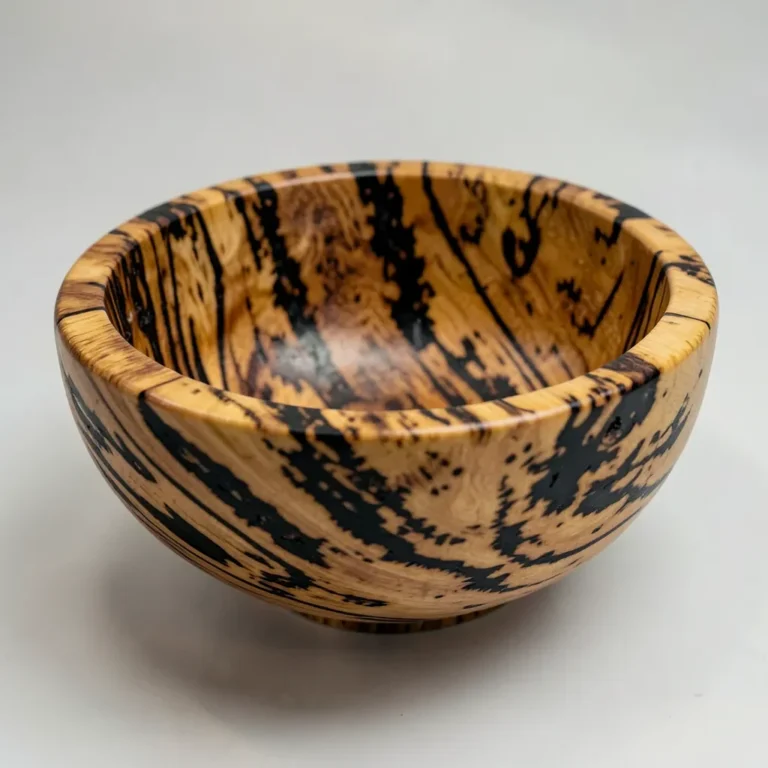
| Heartwood color | Golden brown, sometimes with yellow, pink or black streaks |
| Rot resistance | Moderately durable to perishable; susceptible to fungi and insects |
A hardness number only means something next to other woods, so here is mango against several common ones, using the Janka values listed on their wood-database.com pages.
| Wood | Type | Janka hardness (lbf) |
|---|---|---|
| Hard maple | Hardwood | 1,450 |
| Red oak | Hardwood | 1,220 |
| Mango | Hardwood | 1,070 |
| Black walnut | Hardwood | 1,010 |
| Yellow poplar | Hardwood | 540 |
| Eastern white pine | Softwood | 380 |
Two things stand out. Mango is roughly 2.8 times harder than eastern white pine, so “stronger than pine” is true, but it is also about 26 percent softer than hard maple, so it dents more easily than the maple furniture you may be comparing it to. If you want to see where it lands among dozens of species, our Janka hardness scale for 75+ woods has the full ranking, and how wood hardness is measured explains what the steel-ball test actually does.
How Mango Wood Behaves in the Shop
Mango cuts easily in a straight-grained board and badly in a wild one. Wood-database.com notes that the grain can be straight or interlocked, with a medium to coarse texture and good natural luster. When the grain interlocks or turns wild, tearout is common when machining, and reaction wood can shift as it is sawn, which can bind a blade.
There is a second cost that does not show up on the Janka chart. The same source reports a fairly high silica content, which readily dulls cutting edges. In practice that means carbide-tipped blades and sharp planer knives earn their keep on mango, and a hand plane needs honing more often than the hardness number alone would suggest.
- Gluing and finishing: both go well, according to wood-database.com, and the wood has no characteristic odor.
- Tearout: take light passes and plan for a card scraper or a sanding step on figured or interlocked boards.
- Blades: expect faster dulling than the Janka number suggests because of the silica.
Once a piece is built, staining mango takes a few extra steps because of the streaky color, which we cover in can you stain mango wood, and routine care is in our guide to cleaning mango wood.
Mango Wood Sap and Dust: The Allergy Question
This is the part most “is mango a hardwood” pages skip. Mango belongs to the Anacardiaceae family, the same family as poison ivy and poison oak. The Wikipedia entry on mango wood states that allergenic urushiols are present in the fruit peel, that people already sensitized to poison ivy or oak can react to mango, and that the wood is known to produce phenolic substances that can cause contact dermatitis.
Wood-database.com is more measured: severe reactions are quite uncommon, but mango has been reported to cause skin irritation. Reading the two together, the honest summary is that a reaction is possible, most likely for people with a poison ivy history, and usually shows up as a skin rash rather than anything worse.
A cautious approach for a home shop costs very little:
- Wear nitrile gloves when handling fresh-cut boards and long sleeves when sanding.
- Use an N95 respirator for sanding and sawing so the fine dust stays off your face and out of your airways.
- Wash exposed skin after a session, and wash the sleeves you wore before reusing them.
- If you know you react to poison ivy, test a small area of skin with a scrap before committing to a big project.
None of the sources we read says that sealed, finished mango furniture is a problem, and this page is not medical advice. If a rash develops or does not clear up, see a doctor.
Is Mango Wood Good for Furniture?
It can be, with expectations set correctly. Wood-database.com lists furniture, ukuleles, veneer, plywood, turned objects and flooring among its common uses, and a 1,070 lbf rating is enough for tables, chairs and cabinets that see normal indoor wear. The weak point is decay resistance: because it is rated moderately durable to perishable, mango is an indoor wood. Left outside, it is exposed to fungal and insect attack.
The sustainability claim deserves a precise reading as well. Wood-database.com says the wood is considered very eco-friendly because some mango plantations harvest trees for lumber after they finish their useful fruit-bearing life. That is a real practice, but it does not mean every piece of mango furniture comes from such trees. The species is not listed in the CITES Appendices, and the IUCN reports it as data deficient. If sourcing matters to you, ask the seller where the timber came from.
For the buying side, including price ranges and what to look for, see what mango wood furniture is really like and our list of where to buy mango wood. To compare against a similar-priced hardwood, our birch vs poplar comparison shows how the same Janka logic plays out for two common budget hardwoods.
Frequently Asked Questions
Is mango wood considered a hardwood?
Yes. Mango comes from a broadleaf flowering tree, Mangifera indica, so it is classified as a hardwood. It has a Janka hardness of 1,070 lbf, which is harder than black walnut (1,010 lbf) and softer than red oak (1,220 lbf).
Is mango wood hard or soft?
It is medium hard. At 1,070 lbf it is about 2.8 times harder than eastern white pine (380 lbf) but about 26 percent softer than hard maple (1,450 lbf), so it can dent more easily than maple.
Can mango wood cause an allergic reaction?
It can. Mango is in the same plant family as poison ivy, and sources report that the wood can cause skin irritation or contact dermatitis, especially in people already sensitive to poison ivy. Severe reactions are described as uncommon. Gloves and an N95 respirator are sensible when sanding or sawing raw wood.
Is mango wood good for outdoor use?
Generally no. Mango is rated moderately durable to perishable and is susceptible to fungal and insect attack, so it is better suited to indoor furniture and decor than to outdoor exposure.
Bottom Line
Mango is a hardwood by botany and a medium-hard one by the numbers, at 1,070 lbf and about 42 lb/ft3. Treat it as an indoor furniture wood that tears out on interlocked grain, dulls tools, and warrants gloves and a dust mask while you work it.
Sponsored / affiliate links. As an Amazon Associate I earn from qualifying purchases. I may earn additional commission from eligible campaigns.