Can You Cut Plexiglass With a Miter Saw? (Right Blade + Technique)
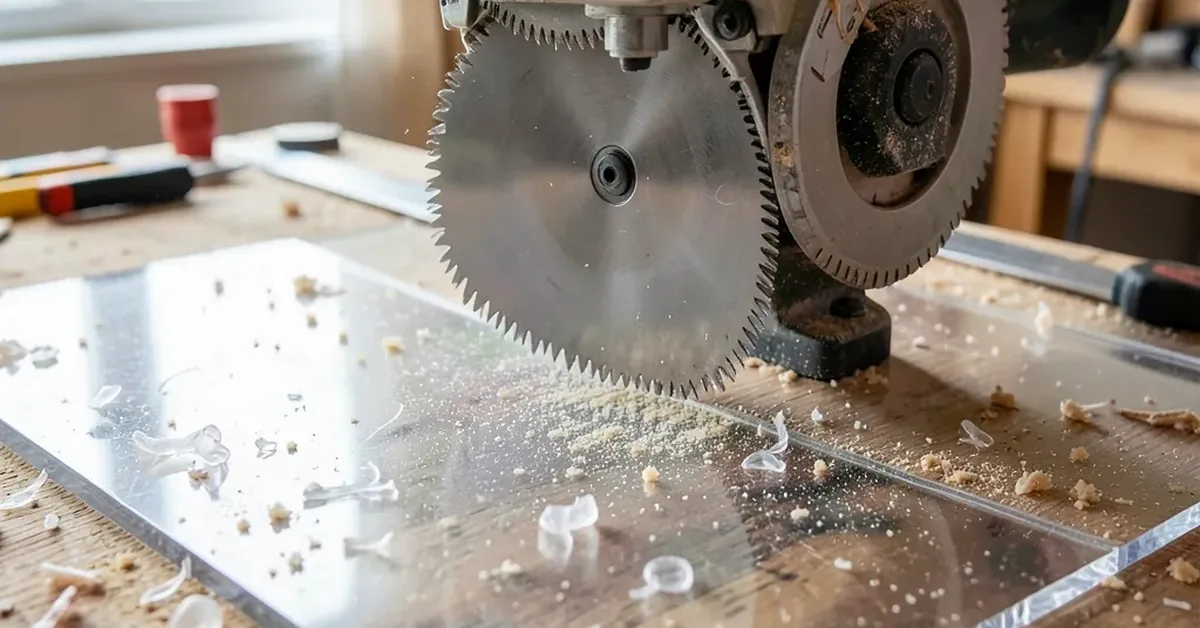
A miter saw cuts plexiglass cleanly only with a fine-tooth blade — 60 or more teeth per inch in a triple-chip grind — run at a slower speed than you’d use for wood. A standard 24-40 tooth wood blade chips or melts the edge instead of slicing it. This guide covers the exact blade spec, a masking-tape trick most guides skip, and step-by-step cutting instructions.
The Right Blade Spec for Cutting Plexiglass
Best Plexiglass-Cutting Blade Pick
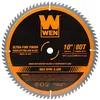 |
WEN BL1080 10-Inch 80-Tooth Carbide-Tipped Ultra-Fine Finish Blade – $19.99 80 teeth clears the 60-TPI minimum this guide recommends for plexiglass, and the carbide tips hold an edge through repeated plastic cuts without dulling as fast as a standard wood blade.
|
As an Amazon Associate we earn from qualifying purchases.
Plexiglass (acrylic) shatters or melts under the wrong blade before it ever gets a fair chance at a clean cut. The spec that actually matters is tooth count and grind — not just “a plastic blade.”
| Spec | What to Look For | Why It Matters |
|---|---|---|
| Tooth count | 60+ TPI (teeth per inch) | More, smaller teeth shear the plastic instead of tearing it |
| Tooth grind | Triple-chip grind (TCG) | Alternating flat and chamfered teeth clear chips and resist chipping the edge |
| Blade speed | Lowest setting the saw allows | High RPM generates friction heat that melts and re-fuses the cut edge |
| Feed rate | Slow, steady, no forcing | Let the teeth cut — pushing hard cracks the sheet at the cut line |
📊 A standard 24-40 tooth wood-cutting blade is coarse enough to chip or crack plexiglass on contact — a fine 60+ TPI plastic blade is not optional for a clean cut. Source: ePlastics Cutting Guide, 2026
What Plexiglass Is and Why It Cuts Differently Than Wood
Plexiglass, also sold as acrylic or PMMA (polymethyl methacrylate), is a transparent thermoplastic — it softens and melts under heat instead of just splintering under force the way wood does. That single property is why blade speed matters as much as blade choice: a wood blade’s coarse teeth and a saw’s normal RPM both generate more friction heat than a thin sheet of plastic can shed before it starts melting at the cut edge.
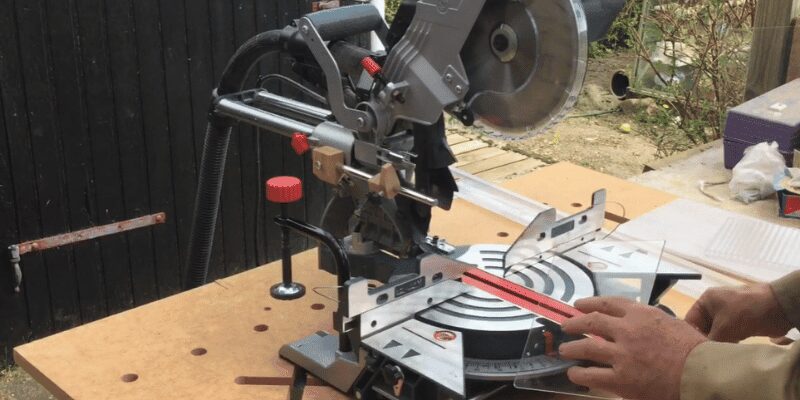
Step-by-Step: How to Cut Plexiglass With a Miter Saw
- Mark and tape the line: Measure and mark your cut, then run masking or painter’s tape along both sides of the line — it reduces surface scratching and helps hold small chips in place.
- Install the right blade: Swap in a 60+ TPI triple-chip-grind blade built for plastics.
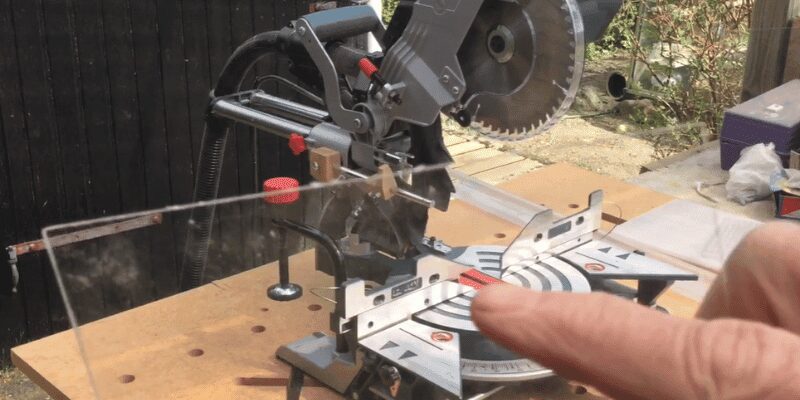
- Clamp the sheet: Secure the plexiglass firmly on both sides of the blade so it can’t shift or vibrate.
- Set the lowest speed: Reduce the saw’s cutting speed to limit friction heat.
- Cut slowly and steadily: Lower the blade onto the line and feed it through without forcing — let the teeth do the work.
- Let the blade stop, then lift: Wait for the blade to come to a full stop before raising it away from the plastic.
- Deburr the edge: Peel off the tape and lightly sand any rough edge with fine-grit sandpaper.
Troubleshooting Common Problems
| Problem | Likely Cause | Fix |
|---|---|---|
| Melting or fusing behind the blade | Speed too high or dull blade | Lower the saw’s speed setting; replace a dull or gummed-up blade |
| Chipped or rough edge | Wrong blade (low tooth count) | Switch to a 60+ TPI triple-chip-grind plastic blade |
| Sheet cracks mid-cut | Unsupported sheet or forced feed rate | Clamp both sides fully; slow the feed rate, let the blade do the work |
| Surface scratches | No protective tape, debris on table | Apply masking tape along the cut line before starting |
Wear safety goggles, gloves, and hearing protection throughout, and work in a ventilated area — melted acrylic gives off fumes you don’t want to breathe for long. For angled trim or edge work, the same blade and speed rules apply whether you’re making a bevel cut or a straight crosscut, and a dull blade makes every one of these problems worse — check out our guide on keeping a miter saw blade sharp if cuts are getting rougher over time.
Frequently Asked Questions
Can plexiglass be cut with a miter saw?
Yes. Use a fine-tooth blade with 60 or more teeth per inch, ideally a triple-chip grind, run the saw at its lowest speed, and support the sheet fully on both sides of the blade. A standard wood blade chips or cracks the edge instead of cutting it cleanly.
Does masking tape help when cutting plexiglass?
Yes. Applying masking or painter’s tape along both sides of the cut line adds a thin buffer that reduces surface scratching and helps hold small chips in place instead of letting them tear loose, especially near the start and end of the cut.
Why does plexiglass crack or chip on a miter saw?
Cracking and chipping almost always trace back to one of three causes: a coarse wood blade instead of a fine plastic-cutting blade, cutting speed set too high, or the sheet not fully supported so it flexes during the cut. Fix the blade and speed first — that solves most cases.
Should I cut plexiglass fast or slow on a miter saw?
Slow. Cutting fast raises friction heat that melts the plastic and can re-fuse it behind the blade, and forcing the feed rate is what cracks the sheet at the cut line. Let the teeth do the work at a steady, unhurried pace.
Conclusion
Cutting plexiglass on a miter saw comes down to three things: a 60+ TPI triple-chip blade, the lowest speed setting, and a slow, unforced feed rate. Get those right and the sheet cuts as cleanly as trim molding — skip any one of them and you’re sanding chips or scraping melted edges instead.
Sponsored / affiliate links. As an Amazon Associate I earn from qualifying purchases. I may earn additional commission from eligible campaigns.