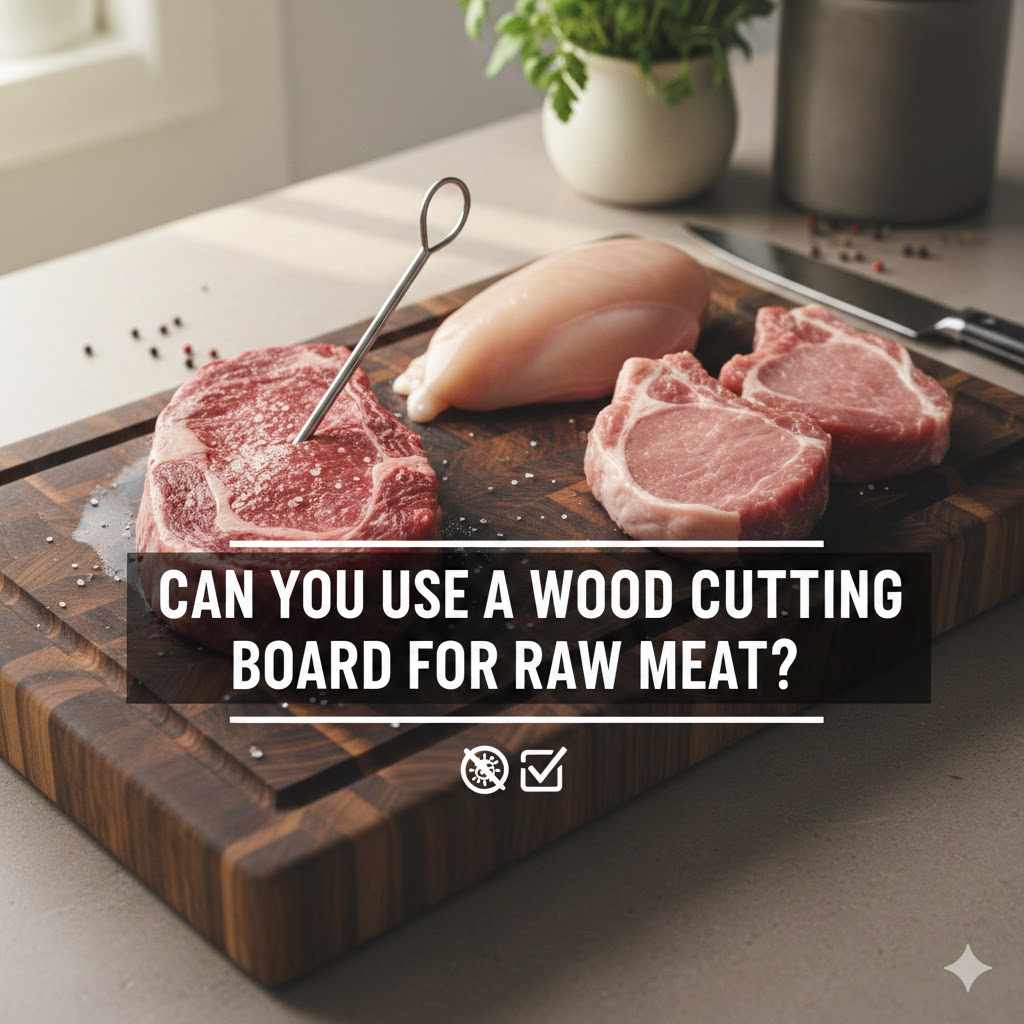
Can You Use a Wood Cutting Board for Raw Meat?
Many people wonder about using their favorite wooden cutting boards when they’re preparing raw meat. It’s a common question, especially for those who love cooking. Sometimes, it feels a bit tricky to know the right way to keep things clean and safe.
Don’t worry, it’s simpler than you might think! We’ll walk through exactly how to do it so you can feel confident in your kitchen. Let’s get started with a clear, step-by-step guide to safely using wood for all your food prep needs.
Wood Cutting Boards and Raw Meat Safety
Using wood cutting boards with raw meat is a frequent concern in kitchens everywhere. Many home cooks worry about hygiene and whether wood can harbor bacteria after contact with uncooked poultry, beef, or pork. This worry is understandable, as food safety is very important.
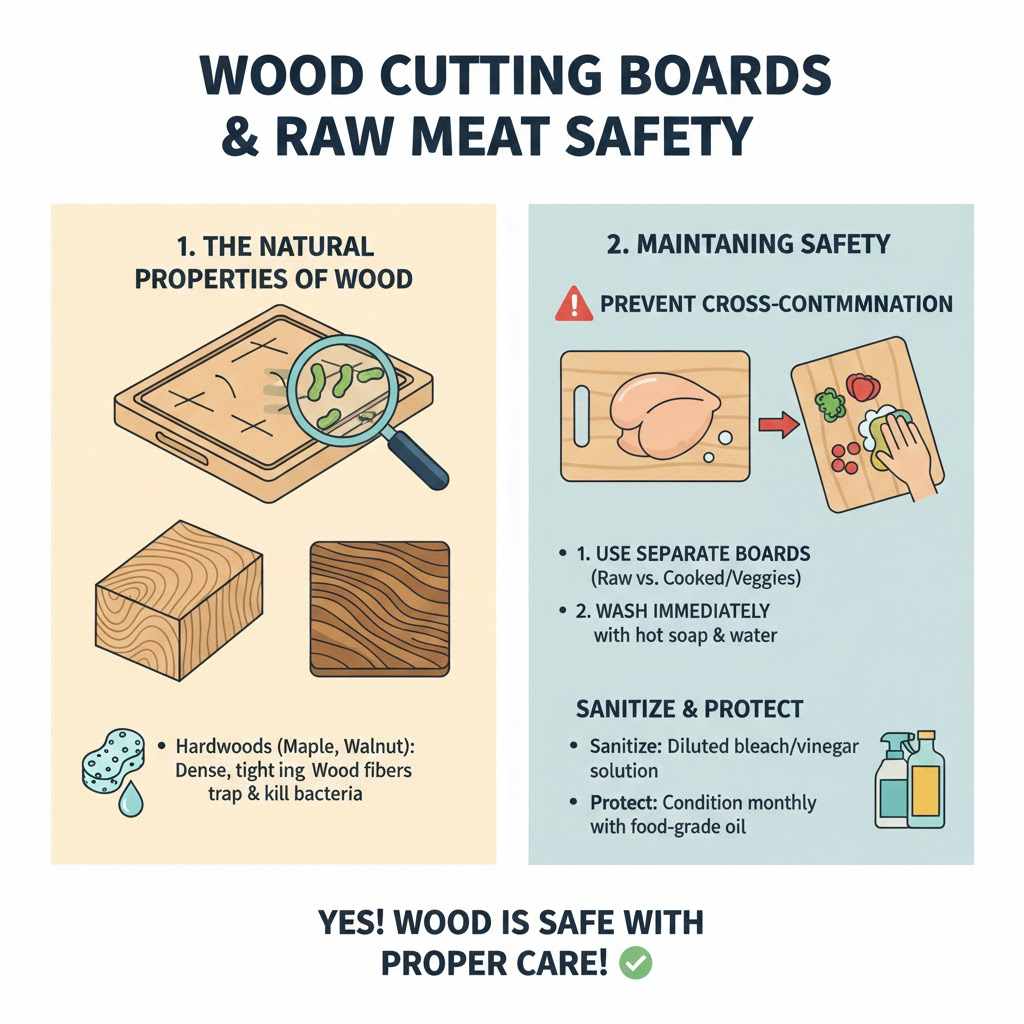
The good news is that with proper care, wood cutting boards can be used safely for raw meat. This section will explain why wood is often considered and how to handle it to prevent cross-contamination. We will explore the natural properties of wood that make it suitable and the essential steps to ensure a safe cooking environment.
The Natural Properties of Wood
Wood has unique qualities that make it a great material for cutting boards. Unlike plastic, wood can actually heal itself to some extent. When a knife makes a cut on a wooden board, the wood fibers close up around the cut.
This natural closing action helps to trap and kill bacteria. Studies have shown that certain types of wood, like maple and walnut, can significantly reduce the number of bacteria present on their surface within a few hours. This self-sanitizing ability is a key reason why wood cutting boards have been used for centuries.
Some woods are better than others for cutting boards. Hardwoods are generally preferred over softwoods. Hardwoods are denser and have tighter grain patterns, which means they are less likely to absorb liquids and stains.
They also tend to be more durable and resistant to deep scratches, which can harbor bacteria. Maple, cherry, walnut, and beech are excellent choices for cutting boards because of their hardness and beautiful appearance. Softwoods, such as pine, are not recommended for cutting boards as they are too soft and can become deeply grooved, making them harder to clean.
The absorbency of a wooden cutting board is also a factor. While wood does absorb some moisture, it does so to a lesser degree than many plastics, especially when properly maintained. The more a board absorbs moisture and food juices, the more challenging it can be to ensure it is thoroughly cleaned and dried. This is why the maintenance of a wooden board is crucial for its safe use with any type of food.
Understanding Bacterial Contamination
Bacterial contamination is a primary concern when handling raw meat. Raw meats can carry harmful bacteria like Salmonella, E. coli, and Listeria. If these bacteria transfer from the raw meat to other foods, surfaces, or even your hands, they can cause foodborne illnesses. This transfer is called cross-contamination. It’s crucial to prevent this from happening in your kitchen.
The way a cutting board is used and cleaned directly impacts its potential for bacterial contamination. A cutting board that is deeply scarred with knife marks can create little hiding places for bacteria. These microscopic spaces can be difficult to reach with regular washing. Over time, bacteria can multiply in these areas. This is why the maintenance and replacement of cutting boards are important for ongoing food safety.
It’s also important to remember that bacteria are invisible to the naked eye. This means a cutting board can look clean but still harbor harmful microorganisms. Therefore, a strict cleaning and sanitizing routine is essential, especially when preparing raw meat. This routine should be applied consistently to ensure the safety of all food prepared in your kitchen.
Can You Use a Wood Cutting Board for Raw Meat? The Simple Answer
Yes, you absolutely can use a wood cutting board for raw meat. The key is knowing how to use it and clean it properly. Wood cutting boards are not inherently unsafe for raw meat. In fact, their natural properties can even be beneficial when they are well-maintained.
The common misconception might stem from older boards or improper cleaning practices. When a wood board is regularly oiled, cleaned, and sanitized, it becomes a reliable tool for any kitchen task. The main challenge for beginners is often the cleaning and sanitizing part. Many are unsure about the best methods to ensure all bacteria are removed.
We will guide you through these steps. You’ll learn how to prepare your board, use it effectively, and clean it thoroughly. This will ensure that your cooking is always safe and enjoyable, no matter what you’re preparing.
Safe Practices for Using Wood Cutting Boards with Raw Meat
Proper techniques are vital for safely using wood cutting boards, especially with raw meats. The goal is to prevent any harmful bacteria from spreading. This involves specific steps before, during, and after preparing your food. By following these practices, you can enjoy the benefits of a wooden cutting board without compromising your health.
Separating Raw Meats from Other Foods
A fundamental rule of food safety is to keep raw meats separate from ready-to-eat foods like fruits, vegetables, and cooked items. This separation should extend to your cutting boards. It is best to dedicate one cutting board solely for raw meats. Another can be used for vegetables and other items. This prevents any lingering bacteria from raw meat from contaminating foods that will not be cooked further.
Using different colored cutting boards can be a simple visual reminder. For example, a dark-colored wood board could be designated for raw meats, while a lighter one is used for produce. This makes it easy to avoid accidental mixing. Always wash your hands thoroughly after handling raw meat and before touching anything else, including other food items or clean utensils.
Consider using multiple cutting boards in your kitchen. This is a highly effective strategy to prevent cross-contamination. If you only have one or two wooden cutting boards, cleaning and sanitizing between tasks is absolutely essential. However, having dedicated boards simplifies the process and significantly reduces the risk.
Cleaning Your Wood Cutting Board After Raw Meat Use
Cleaning your wood cutting board after preparing raw meat is a critical step. Begin by scraping off any large food particles. Then, wash the board thoroughly with hot water and a mild dish soap. Use a stiff brush or sponge to scrub all surfaces. Rinse the board well under hot running water.
For a deeper clean, you can use a paste of baking soda and water. Apply the paste to the board and let it sit for a few minutes, then scrub and rinse. This helps to lift stubborn stains and odors. After washing, always dry your wooden cutting board immediately with a clean towel. Do not let it air dry flat, as this can cause the wood to warp or crack. Prop the board up on its edge to allow air to circulate around it, ensuring it dries completely.
Sanitizing Your Wood Cutting Board
Sanitizing is an important extra step after cleaning, especially when raw meat has been involved. A common and effective sanitizer is white vinegar. After washing and rinsing your board, pour white vinegar over its entire surface. Let it sit for a few minutes. Vinegar is acidic and helps to kill bacteria.
Another option is to use a mild bleach solution. Mix one tablespoon of bleach with one quart of water. Apply this solution to the cutting board using a sponge or cloth. Let it sit for about five minutes, then rinse thoroughly with cold water. Be sure to rinse very well to remove all traces of bleach. Always use caution when working with bleach and ensure good ventilation.
Some people also use hydrogen peroxide as a sanitizer. Apply 3% hydrogen peroxide to the board, let it foam for a few minutes, then rinse. This is a gentler option than bleach but still effective. Whichever method you choose, ensure the board is completely dry afterward. Proper drying is as important as the sanitizing itself to prevent mold growth.
Oiling and Maintaining Your Cutting Board
Regularly oiling your wood cutting board is essential for its longevity and hygiene. Oiling helps to prevent the wood from drying out, cracking, and absorbing moisture and odors. It also creates a protective barrier that makes the board more resistant to stains and bacteria. Use food-grade mineral oil, beeswax, or a specialized cutting board conditioner.
Apply the oil generously to all surfaces of the dry board. Let it soak in for at least a few hours, or preferably overnight. Wipe off any excess oil with a clean cloth. Repeat this process weekly, or more often if the board looks dry or feels rough. A well-oiled board will repel liquids better, making it easier to clean and sanitize effectively.
Proper storage is also part of maintenance. Always store your cutting board upright on its edge. This allows air to circulate freely around it, promoting complete drying and preventing moisture from getting trapped. Avoid storing it flat or in damp areas. Regular care ensures your wood cutting board remains a safe and beautiful part of your kitchen.
Choosing the Right Wood Cutting Board for Raw Meat
Not all wood cutting boards are created equal when it comes to using them for raw meat. The type of wood, its construction, and its thickness all play a role in its performance and safety. Making an informed choice can lead to a more enjoyable and hygienic cooking experience.
Types of Wood and Their Suitability
Hardwoods are generally the best choice for cutting boards, especially for use with raw meat. They are dense, durable, and less prone to deep knife marks. Maple, walnut, and cherry are excellent options. These woods have tight grains that make them resistant to moisture and bacteria. Maple, in particular, is a popular choice due to its hardness and natural resistance to bacteria.
Softer woods like pine or fir are not recommended for cutting boards. They are easily scarred by knives, creating crevices where bacteria can hide. These boards also tend to absorb liquids and odors more readily, making them harder to keep clean and sanitary.
End-grain boards are made by gluing together small blocks of wood with the wood grain facing upwards. This construction makes them very durable and kind to knife edges. However, they can be more absorbent than edge-grain boards if not properly maintained. Edge-grain boards, where the wood strips are glued together along their edges, are also a good option. They are typically more affordable and easier to maintain.
The thickness of a cutting board also matters. Thicker boards are more durable and less likely to warp. A board that is at least 3/4 inch thick is generally a good choice. It provides stability and can withstand repeated use and cleaning.
Construction Styles Edge Grain vs. End Grain
When selecting a wood cutting board, you’ll encounter two main construction styles: edge grain and end grain. Both have their advantages, but they perform differently, especially when used with raw meat.
Edge grain cutting boards are made by joining planks of wood together along their sides. The grain runs parallel to the cutting surface. These boards are typically more affordable and easier to manufacture. They are also quite durable and less prone to warping than some other types of wood construction. For general use, including raw meat, an edge grain board is a solid choice if well-maintained.
End grain cutting boards are constructed by gluing together small wooden blocks so that the wood grain runs perpendicular to the cutting surface. When you cut into an end grain board, the knife actually parts the wood fibers. These fibers then spring back together when the knife is removed. This self-healing property makes end grain boards very durable and exceptionally gentle on knife edges.
However, end grain boards can be more expensive and require more diligent maintenance. Their construction means they can be more susceptible to absorbing liquids if not oiled regularly. This increased absorbency, if not managed through proper care, could be a slight concern for raw meat use. Despite this, with consistent oiling and thorough cleaning, an end grain board remains a safe and superior option for any kitchen.
Size and Thickness Considerations
The size and thickness of your wood cutting board are important practical considerations. A larger board provides more workspace, which is particularly helpful when preparing larger cuts of meat or multiple ingredients. It allows you to keep raw meat juices contained and away from other food items.
A thicker board offers greater stability. It won’t slide around on your countertop as easily, which is a safety feature. Thicker boards are also generally more robust and less likely to warp or crack over time, especially with frequent washing. Aim for a board that is at least 3/4 inch thick. Boards that are 1.5 to 2 inches thick are exceptionally durable and offer a substantial cutting surface.
When working with raw meat, having a board with a juice groove can be very beneficial. This is a channel around the perimeter of the board designed to catch any liquids that run off the meat. This groove helps to keep your countertops clean and prevents juices from spreading.
Deep Cleaning and Sanitizing Methods
While daily cleaning is crucial, periodic deep cleaning and sanitizing are essential for maintaining a hygienic wood cutting board, especially after use with raw meat. These methods go beyond a quick wash and ensure that your board remains free from lingering bacteria.
Boiling Water and Soap Wash
A thorough wash with boiling water and dish soap is the first step in deep cleaning. Ensure your sink is clean before you begin. Fill the sink with very hot water and add a good amount of dish soap. Submerge the cutting board in the soapy, hot water and let it soak for about 10-15 minutes.
Use a stiff brush or a non-abrasive scrubbing pad to vigorously scrub all surfaces of the board. Pay extra attention to any cuts or grooves where food particles might be lodged. The hot water helps to loosen debris and kill some surface bacteria. After scrubbing, rinse the board thoroughly under hot running water to remove all soap residue.
This method is effective for removing surface grime and a significant portion of bacteria. However, it is not a complete sanitization process on its own. It should be followed by a dedicated sanitizing step to ensure maximum safety, particularly after preparing raw meats.
Vinegar and Baking Soda Treatment
Vinegar and baking soda are natural powerhouses for cleaning and deodorizing wood cutting boards. After a thorough wash with hot, soapy water and rinsing, sprinkle a generous amount of baking soda over the entire surface of the damp board.
Next, pour white vinegar over the baking soda. You will notice a fizzing reaction. This reaction helps to lift embedded dirt and neutralize odors. Let the fizzing mixture work for about 5-10 minutes. Then, use a brush or sponge to scrub the paste into the wood.
Rinse the board thoroughly with clean water. This treatment is excellent for removing stains and fighting off bacteria. Baking soda is mildly abrasive, helping to scrub away residue, while vinegar’s acidity acts as a natural disinfectant. It leaves your board looking and smelling fresh.
Lemon and Salt Scrub
For a natural abrasive and deodorizing scrub, the combination of lemon and salt is highly effective. After washing your board, cut a lemon in half. Sprinkle coarse salt generously over the entire surface of the cutting board.
Use the cut side of the lemon half to scrub the salt into the wood. The lemon juice acts as a natural bleach, helping to remove stains and kill bacteria. The salt acts as an abrasive, helping to remove dried-on food particles and smooth out minor scratches.
Scrub thoroughly, ensuring you cover all areas of the board. Let the lemon and salt mixture sit on the board for about 5-10 minutes. Then, rinse the board very well with hot water. This method is particularly good for removing onion or garlic odors that can linger on wood.
Using a Mild Bleach Solution (Use Sparingly)
A mild bleach solution can be a highly effective sanitizer for wood cutting boards. However, it should be used sparingly and with caution, as excessive use can dry out and damage the wood over time. It is best reserved for occasions when you are particularly concerned about contamination, such as after cutting raw poultry.
To prepare the solution, mix one tablespoon of unscented household bleach with one quart of cool water. Ensure you are in a well-ventilated area when working with bleach.
Apply the bleach solution to the entire surface of the cutting board using a sponge or cloth. Let it sit for about 5 minutes. Then, rinse the board extremely thoroughly with cold running water. It is vital to remove all traces of bleach to prevent any chemical residue from contaminating food. After rinsing, dry the board immediately and let it air dry completely on its edge.
Preventing Cross-Contamination with Wood Cutting Boards
Cross-contamination is a serious food safety risk. It happens when bacteria from one food item, like raw meat, transfer to another, potentially leading to illness. When using wood cutting boards, preventing this transfer is paramount.
Dedicated Cutting Boards
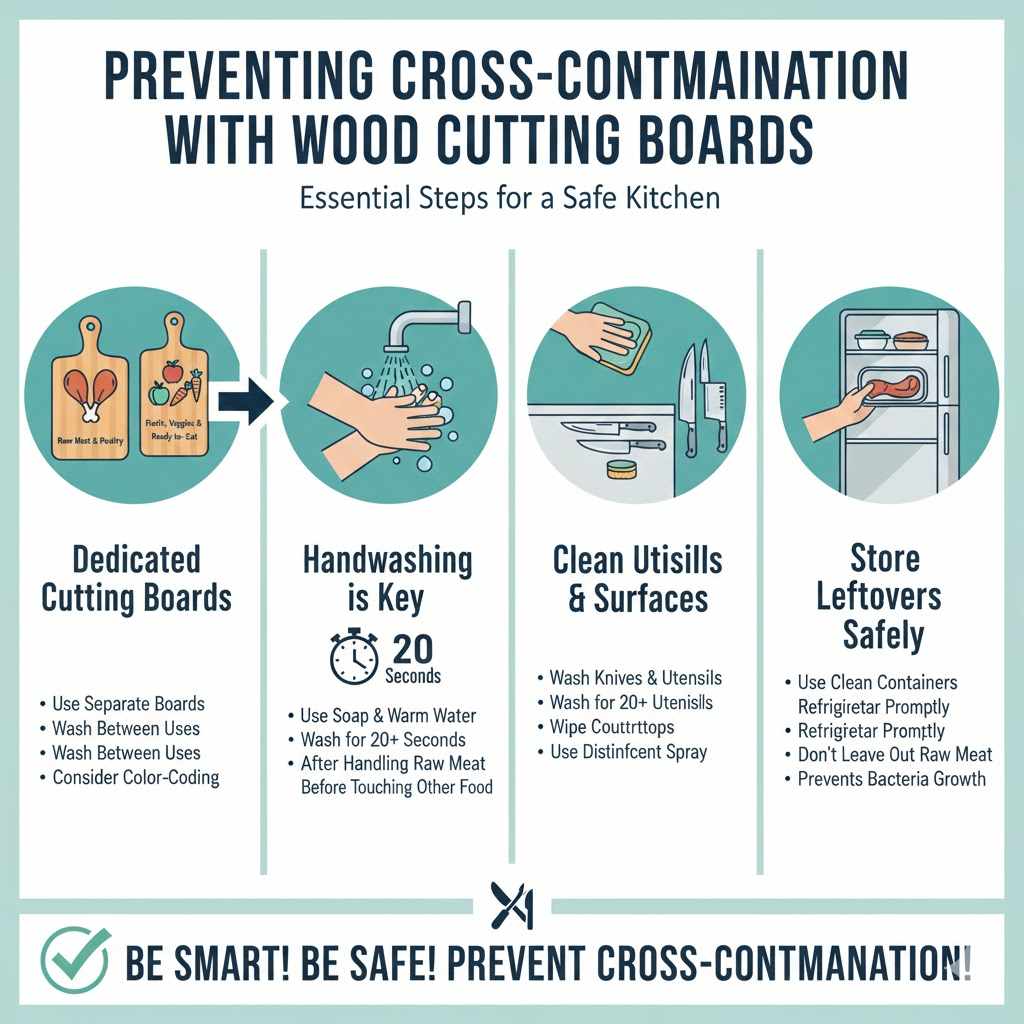
The most effective way to prevent cross-contamination is to use separate cutting boards for different types of food. Have one board designated specifically for raw meats, poultry, and seafood. Use another board for fruits, vegetables, and ready-to-eat foods.
If you have multiple wood cutting boards, this is an easy system to implement. If you only have one or two, you must be extremely diligent about cleaning and sanitizing between tasks. For instance, after cutting raw chicken, the board must be thoroughly washed, sanitized, and dried before being used for vegetables.
Consider using boards made of different materials. A wood board for meats and a plastic board for produce can be a good visual and functional separation. Plastic boards are generally easier to sanitize in a dishwasher, which can be a benefit for produce.
Handwashing is Key
Proper handwashing is as crucial as cleaning your cutting board. Always wash your hands thoroughly with soap and warm water for at least 20 seconds after handling raw meat. This includes before you touch any other food, utensils, or kitchen surfaces.
This simple step can prevent the transfer of bacteria from your hands to other items. It’s easy to forget after a busy cooking session, but it’s a critical barrier against cross-contamination.
Cleaning Utensils and Surfaces
Don’t forget that knives, spatulas, and any other utensils used with raw meat can also transfer bacteria. Wash them thoroughly with hot, soapy water after they come into contact with raw meat. Similarly, wipe down countertops and any other surfaces that may have come into contact with raw meat juices.
A diluted bleach solution or a food-safe disinfectant can be used for wiping down countertops. Ensure you follow the product instructions for effective sanitization.
Storing Leftovers Safely
After preparing raw meat, store any leftovers promptly and safely. Use clean containers and refrigerate them as soon as possible. Do not let raw meat or its juices sit at room temperature for extended periods. This can allow bacteria to multiply rapidly.
A quick example: A home cook prepared chicken breasts on their favorite maple cutting board. They then immediately sliced apples for a salad on the same board without washing it in between. The chicken juices, potentially containing Salmonella, transferred to the apples. Even though the apples wouldn’t be cooked, they could still cause illness if ingested. By washing and sanitizing the board after the chicken and before the apples, this risk would have been eliminated.
Common Questions About Wood Cutting Boards and Raw Meat
Many home cooks have specific questions about the best way to handle raw meat on their wooden cutting boards. Addressing these common concerns can provide clarity and build confidence in safe kitchen practices.
Can I use a wooden cutting board for both raw meat and vegetables?
It is not recommended to use the same wooden cutting board for both raw meat and vegetables without thorough cleaning and sanitizing in between. The safest practice is to use separate cutting boards. One dedicated to raw meats and another for produce. If you must use one board, always wash and sanitize it meticulously after preparing raw meat before using it for vegetables.
How often should I oil my wood cutting board?
You should oil your wood cutting board at least once a month, or more frequently if it appears dry, faded, or starts to absorb liquids readily. Regular oiling prevents the wood from drying out, cracking, and becoming more susceptible to staining and bacterial absorption. Use a food-grade mineral oil or a specialized cutting board conditioner.
What should I do if my wooden cutting board develops deep cuts?
If your wooden cutting board develops very deep cuts or significant damage, it may be time to
Are some woods better than others for cutting raw meat?
Yes, denser hardwoods like maple, walnut, and cherry are generally better than softer woods for cutting boards. They are more resistant to knife marks and less likely to absorb liquids and bacteria. Maple is often cited as an excellent choice due to its hardness and natural resistance.
How can I remove odors from my wooden cutting board?
To remove odors like garlic or onion from your wooden cutting board, try scrubbing it with a paste of baking soda and water, or rub it with a cut lemon and coarse salt. Let these treatments sit for a few minutes before rinsing thoroughly. For persistent odors, a very diluted vinegar solution can also be effective. Always ensure the board is dried completely afterward.
Conclusion
You can absolutely use a wood cutting board for raw meat. The key is consistent cleaning and sanitizing. Properly cared for, wood boards are safe and effective for all your food prep needs. Dedicated boards for raw meat and produce are best. Regular oiling keeps the wood healthy and resistant to absorption. By following these simple steps, you can enjoy your wooden cutting boards with confidence every time you cook.