Can You Use M18 Batteries on M12 Tools? The Real Answer
No — an M18 battery cannot plug straight into an M12 tool. The two platforms use physically different connector shapes and different voltages (18V vs. 12V), so Milwaukee designed them to not fit together at all. The only way to run an M12 tool off an M18 battery is with a regulated third-party step-down adapter, and even then it only works well on a handful of low-draw tools — not the whole M12 lineup.
If you already own both M12 and M18 tools, this mismatch is annoying: you can be standing there with a fully charged M18 pack and a dead M12 driver and still not be able to swap batteries. Below is what’s actually happening electrically, what a step-down adapter can and can’t do safely, and which Milwaukee accessories genuinely bridge the two systems (spoiler: it’s the charger, not the batteries).
Why M12 and M18 Batteries Won’t Physically Connect
Best M18-to-M12 Step-Down Adapter
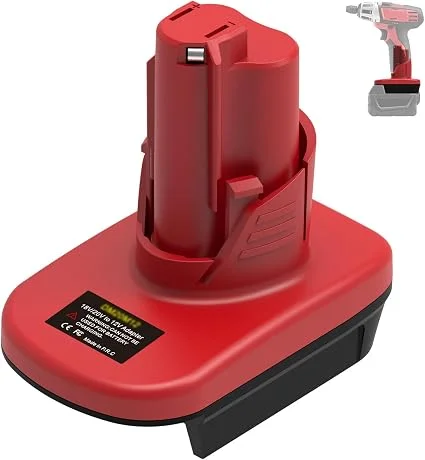 |
ML18M12 Step-Down Battery Adapter – $23.99 The regulated adapter type covered above — lets a charged M18 pack power light-duty M12 tools when your 12V batteries are dead.
|
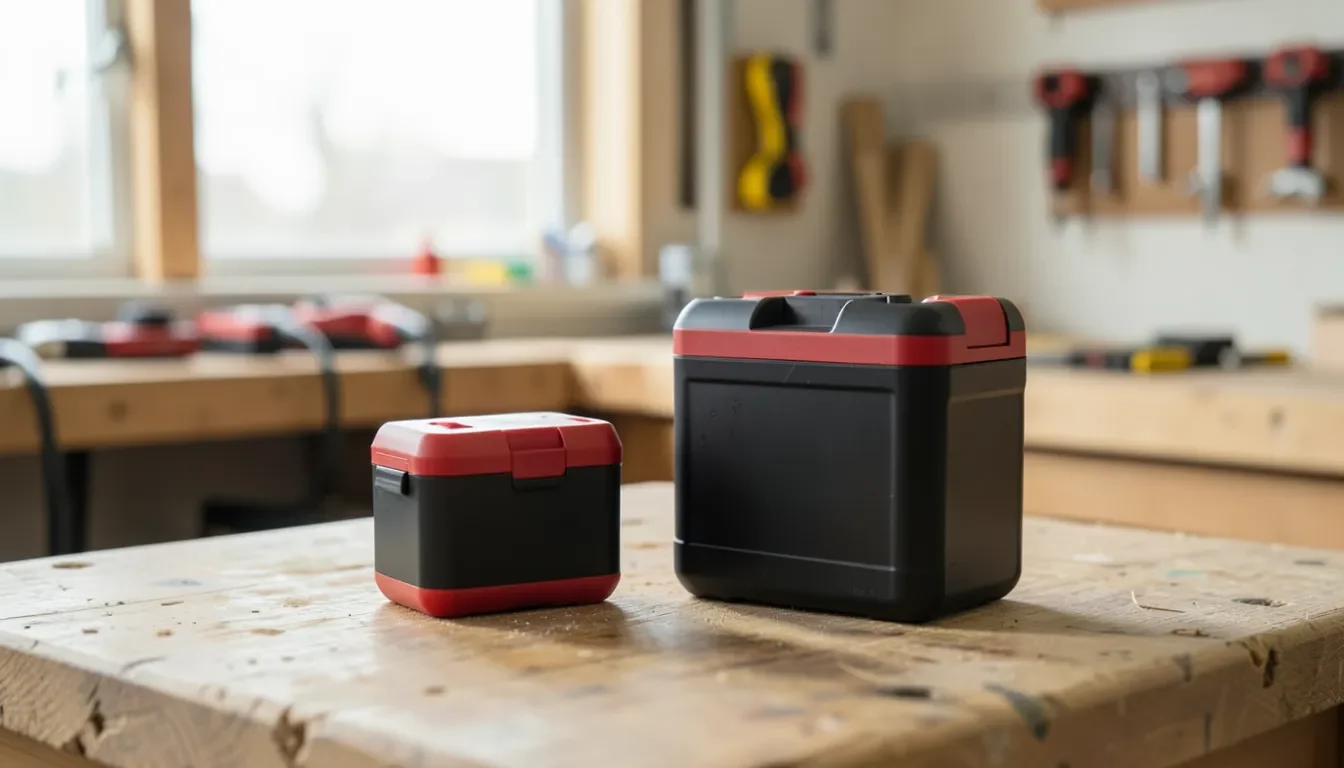
M12 and M18 aren’t the same battery in two sizes — they’re two separate product platforms that happen to share the Milwaukee red-and-black look. The M12 pack slides onto a narrower base with a different rail and contact layout than the M18 pack, so an M12 tool’s battery port physically cannot accept an M18 battery’s foot, and vice versa. That’s a deliberate design choice, not an oversight: it stops someone from accidentally dropping an 18-volt pack into a tool that was only ever built to handle 12 volts.
Voltage is the bigger issue if you did manage to force a connection. M12 tools’ motors, gearing, and internal circuitry are sized for roughly 12 volts of input. Feed that same circuitry 18 volts — 50% more — and you’re pushing more current and heat through components that were never rated for it. Best case, the tool runs hot and wears out faster. Worst case, you cook the motor windings or the internal electronics outright. The mismatched connector is effectively a safety interlock, which is exactly why Milwaukee has never released an official adapter to defeat it.
The M18-to-M12 Step-Down Adapter: What It Actually Fixes
Third-party manufacturers sell a small housing that bridges the two: an M18 battery clips into one end, an M12 tool clips onto the other, and inside sits a DC-DC step-down (buck) converter that regulates the raw 18 volts down to a safe ~12-volt output before it ever reaches the tool. That regulation is the entire point — it’s what separates a legitimate adapter from just wiring the two connectors together, which would send full 18V straight into the tool and risk exactly the damage described above.
We checked current listings and customer feedback for this style of adapter rather than just repeating the marketing copy. The picture that comes back is genuinely mixed. Plenty of buyers report it working fine for months on light-duty tools — drivers, worklights, screwdrivers. But a recurring complaint shows up specifically on higher-draw tools: one reviewer described their unit cutting out after one to two minutes of continuous use on an M12 angle grinder, another said it didn’t work with an M12 air compressor at all, and several mentioned the plastic housing cracking under normal use. That lines up with how these adapters are built — the step-down circuit and its heat sink are sized for occasional, low-current tools, not for anything that pulls sustained high amperage.
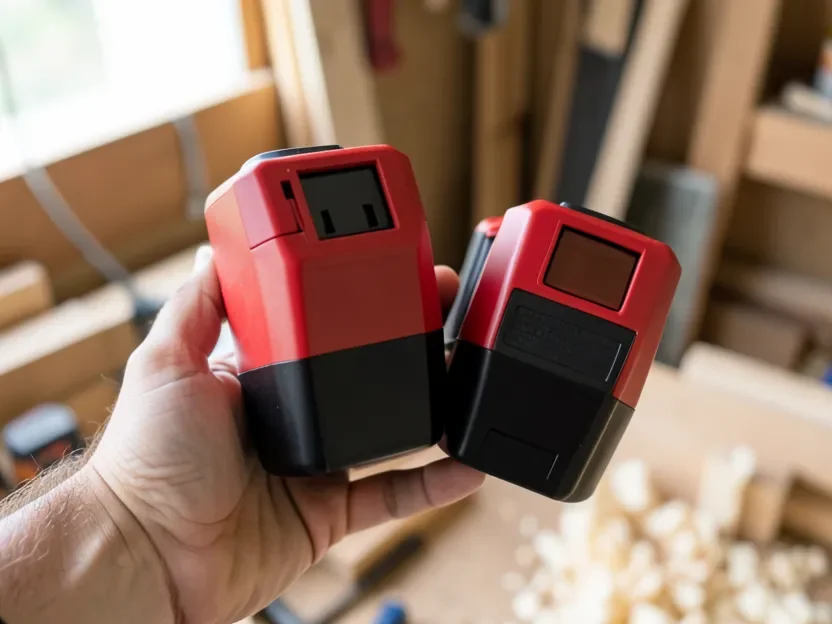
A few practical limits worth knowing before you buy one:
- It’s one-way power delivery only — you cannot charge a battery through the adapter. Pull the adapter off before you put the battery back on a charger.
- Milwaukee doesn’t make, sell, endorse, or warranty these adapters. Using one is entirely on you, and it won’t be covered if it damages a tool.
- They’re a reasonable fix for occasional use on light tools (drill drivers, impact drivers, worklights). They’re a poor fit for anything with a motor that draws hard and steady, like grinders, compressors, or reciprocating saws under load.
- If the adapter or tool ever gets noticeably hot, smells odd, or the tool starts behaving erratically, stop using it immediately.
Milwaukee M12 vs. M18 Tools, By Category
Even setting the adapter aside, it helps to know why Milwaukee split its lineup (see our full M12 vs. M18 breakdown for a side-by-side) into two voltage classes in the first place. Each tool category below runs exclusively on its own platform’s battery — no mixing, adapter or not, unless noted.
Drills and drivers. M12 drill drivers are built around the 12V pack’s lower weight and smaller grip diameter — genuinely nicer to use one-handed overhead or in a cabinet. M18 drills trade that compactness for more torque and faster run speed on bigger bits and denser wood. Both are excellent tools; the “right” one depends on whether you’re doing trim work and light assembly (M12) or framing-grade drilling and driving (M18).
Reciprocating saws (Sawzall). Milwaukee sells a Sawzall in both platforms, and it’s the clearest case of the M18 pack‘s extra headroom mattering: more consistent stroke speed under load and faster cuts through thicker stock. The M12 Sawzall is genuinely useful for its size, though — it fits into tight joist bays and cabinet interiors an M18 saw simply can’t reach.
Jigsaws. Same story: the M12 jigsaw is light enough for one-handed detail cuts, the M18 version pushes through thicker material faster. Neither battery fits the other tool’s port.
Work lights. This is the one category where Milwaukee genuinely built cross-platform flexibility in — some M12/M18-labeled lights ship with dual battery ports so the housing itself accepts either pack, rather than relying on an adapter. Check the specific light’s product page for “M12/M18” in the model name before assuming this applies; most single-voltage lights still only take their own battery.
Can You Charge M12 and M18 Batteries Together?
Yes — and this is the real, official way Milwaukee bridges the two platforms. The M12-18C dual-bay charger (and similar M12/M18-rated multi-chargers) has two separate charging bays wired for their respective voltages, so you can drop an M12 pack in one side and an M18 pack in the other and charge both at once. That’s a genuine Milwaukee product with a full warranty behind it — a much safer way to deal with owning both platforms than a step-down power adapter, since charging itself never happens through any adapter.
Milwaukee Battery Compatibility Chart
A quick reference for what actually plugs into what:
| Battery Platform | Voltage | Works Directly In |
|---|---|---|
| M12 REDLITHIUM | 12V | M12 tools only |
| M18 REDLITHIUM | 18V | M18 tools only (including M18 FUEL) |
| M18 HIGH OUTPUT | 18V | M18 tools, best performance on M18 FUEL |
| M12 or M18 via step-down adapter | Regulated to ~12V output | Select low-draw M12 tools only — third-party, unofficial |
If a tool or battery isn’t listed here, Milwaukee’s own product page for that specific model will confirm which platform it belongs to — model numbers starting 48-11-24xx are M12, and 48-11-18xx are M18.
Do Milwaukee Batteries Work With Other Brands?
No. Every major cordless platform — Milwaukee, DeWalt, Makita, Bauer, Ryobi — uses its own proprietary connector and communication pins, and none of them are cross-compatible without a third-party adapter of the same kind described above. A Milwaukee M18 battery won’t physically fit a DeWalt drill, and a Makita battery won’t fit a Milwaukee tool. If you’re trying to consolidate batteries across a mixed toolbox, a same-platform step-down or step-up adapter (like the M18-to-M12 one above) is the only realistic option, and it comes with the same low-draw-tools-only caveat.
Frequently Asked Questions
Can I use an M18 battery on an M12 tool without an adapter?
No. The connectors are physically different shapes, so an M18 battery won’t clip onto an M12 tool at all without a regulated step-down adapter in between.
Is there an official Milwaukee M18-to-M12 adapter?
No. Milwaukee does not manufacture, sell, or endorse an adapter that lets M18 batteries power M12 tools. The adapters available are all third-party products, used outside Milwaukee’s warranty.
Can I use an M12 battery on an M18 tool?
Not practically. Even with an adapter, an M12 battery can’t supply enough sustained voltage or current to run most M18 tools, which are built to expect a full 18V of headroom. Some adapters exist for this direction, but M18 tools will underperform or shut down under real load.
Can you charge M12 and M18 batteries together?
Yes. Milwaukee’s M12-18C dual-bay charger and similar multi-voltage chargers have separate bays wired for each voltage, so you can charge one M12 and one M18 battery at the same time in the same unit.
Will a step-down adapter void my tool’s warranty?
Effectively, yes. Because Milwaukee doesn’t endorse or sell these adapters, any damage traced back to using one on your tool falls outside Milwaukee’s standard tool warranty.
Bottom Line
M18 batteries and M12 tools are two different systems on purpose, and no official Milwaukee product connects them directly. A regulated third-party step-down adapter can get you through in a pinch on a driver or worklight, but it’s not a dependable long-term fix — and it’s the wrong tool for anything that draws hard and steady. If you regularly need both voltages, the safer, fully-supported answer is a dual-bay M12/M18 charger, not an adapter that runs power through unregulated third-party electronics.
Sponsored / affiliate links. As an Amazon Associate I earn from qualifying purchases. I may earn additional commission from eligible campaigns.
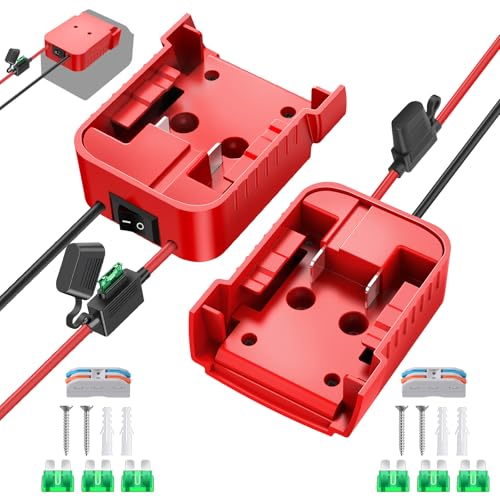 2 Packs 18V Adapters Compatible with Milwaukee M18 Battery for Power Wheel Adapter, Ride On Toy Car, DIY Power Projects, Battery Connector Conversion Kit with Switch & Fuse, 12AWG Wire, Wire Terminal
 2 Pack Battery Adapter for Milwaukee M12 12V Tools, Compatible with DeWalt 20V MAX and Milwaukee M18 18V Batteries, M18 to M12 Battery Converter for Cordless Power Tools, Adapter Only