CMT Blades: Tooth Count, Kerf, and What Actually Matters
CMT blades are Italian-made carbide-tipped saw blades known for their orange-coated plates and consistently clean cuts across table saws, miter saws, and router bits. The company has manufactured cutting tools since 1962 and is a common upgrade pick from stock blades that ship with new saws, which are usually thinner-carbide, lower-tooth-count blades meant to be functional, not optimized for finish quality.
Tooth Count and Grind Determine the Cut
Best Upgrade Blade for General Shop Use
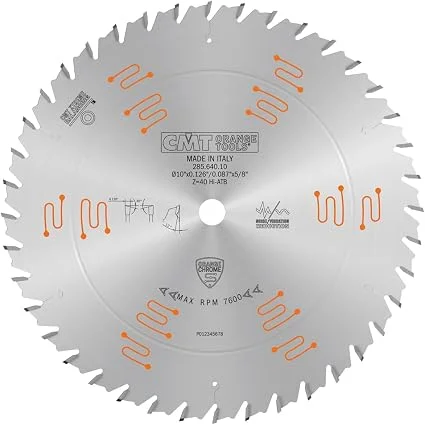 |
CMT Orange Chrome Carbide 10-inch Combination Blade – $63.40 A 40-tooth combination grind, exactly the tooth count and grind this guide recommends for general ripping and crosscutting, is a direct real-world example of the CMT-style blade being discussed.
|
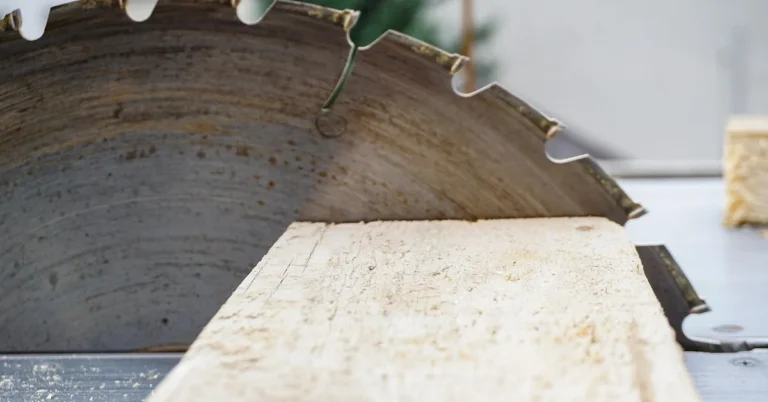
A 40-tooth combination blade (like CMT’s 285 series) rips and crosscuts reasonably well for general shop use. A 60-80 tooth blade with an ATB (alternate top bevel) or HiATB grind leaves a noticeably cleaner edge on crosscuts and plywood, at the cost of ripping speed – more teeth means more material removed per pass but slower feed rates. Match the tooth count to what you cut most, not the highest number available.
Kerf Width Affects More Than Waste
A thin-kerf blade (around 0.09-0.1 inch) removes less material per cut and puts less strain on smaller contractor saws with less horsepower, while a full-kerf blade (0.125 inch or more) tends to run more stably on cabinet saws with 3+ horsepower motors. Running a full-kerf blade on an underpowered saw can bog the motor down mid-cut, especially in hardwood.
Sharpening vs. Replacing
Carbide-tipped blades like CMT’s can be professionally re-sharpened multiple times before the carbide is worn past a usable edge, which is usually cheaper than buying new for a quality blade. Signs it needs sharpening: burning on cuts, more feed pressure required than usual, or visible tear-out on the exit side of a cut that wasn’t there when the blade was new.
Reading a Blade’s Full Spec Label
A blade’s stamped or printed spec includes diameter, tooth count, kerf width, bore size, and grind type – all five matter, not just tooth count. A blade with the right diameter and tooth count but the wrong bore size simply won’t fit the arbor, and a mismatched kerf width can affect how a splitter or riving knife lines up behind the blade, a real safety consideration on a table saw.
Negative vs. Positive Hook Angle
A blade’s hook angle (how aggressively the teeth are angled toward the material) affects both cut aggressiveness and safety – a high positive hook angle rips faster but grabs harder, increasing kickback risk on a table saw if the material binds, while a low or negative hook angle (common on sliding miter saw blades) cuts more slowly but with better control. Match hook angle to the tool, not just the material – a positive-hook rip blade on a sliding miter saw can be genuinely unsafe due to how the blade travels through the cut.
Storing Blades Between Uses
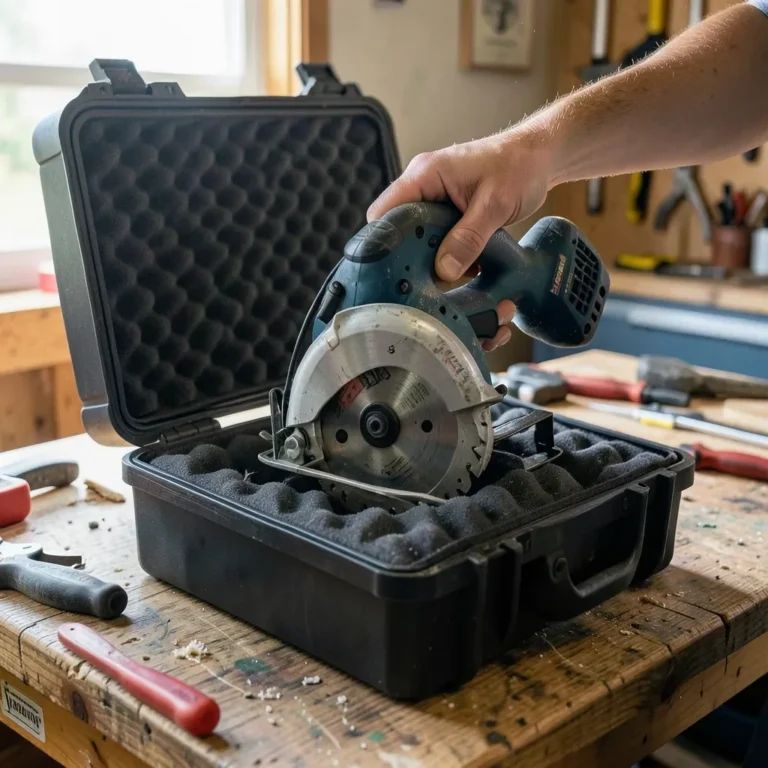
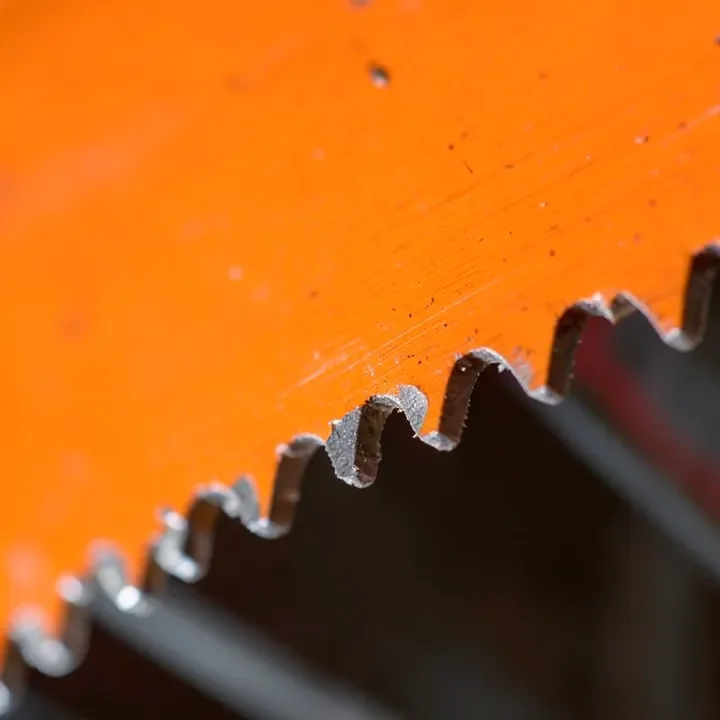
Hanging blades individually or storing them in dedicated blade sleeves prevents the teeth from knocking against each other in a drawer, which dulls carbide edges faster than actual cutting use in many shops. A light coat of camellia oil or a rust-preventative spray on the blade plate (not the carbide teeth) prevents surface rust on blades stored in a humid shop between uses.
Dado Blade Sets vs. Standard Blades
CMT and other manufacturers also make stacked dado blade sets for cutting flat-bottomed grooves and rabbets, which are a fundamentally different product from a standard combination blade despite looking superficially similar – a dado set uses multiple blades and chippers stacked to a specific width, adjustable in small increments with shims, and isn’t interchangeable with single-blade ripping or crosscutting tasks.
Comparing CMT to Other Premium Blade Brands
Freud, Forrest, and Amana are commonly compared alternatives in the same premium carbide-blade tier as CMT, with real differences coming down to specific grind geometry and carbide formulation rather than one brand being universally better – many experienced woodworkers settle on a preferred brand through direct comparison on their own saw rather than any single blade being objectively superior across all use cases.
Matching Blade to Saw Horsepower
A high-tooth-count, full-kerf blade demands more motor power to maintain feed speed than a lower-tooth-count or thin-kerf blade of the same diameter – running an aggressive finish blade on an underpowered benchtop saw can produce burning and bogging that looks like a dull-blade problem but is actually a mismatch between blade demands and available horsepower.
Where to Buy Genuine CMT Blades
Buying from an authorized dealer or CMT’s own site avoids the counterfeit and mislabeled blade problem that affects several popular tool brands sold through third-party marketplace listings – a suspiciously discounted “CMT” blade from an unverified seller is a real risk, since counterfeit carbide blades can fail unpredictably under load.
Frequently Asked Questions
Are CMT blades worth the extra cost over a stock blade?
For regular use, yes – the cleaner cut and longer edge life before needing sharpening typically pay back the price difference over a stock blade’s usable lifespan.
What tooth count is best for a general-purpose table saw blade?
40 teeth on a combination-grind blade handles both ripping and crosscutting reasonably well for general shop use; dedicated rip or crosscut blades at other tooth counts perform better at that one specific task.
Can carbide-tipped blades be sharpened?
Yes, professionally, multiple times before the carbide wears too thin to hold an edge – usually more cost-effective than replacing a quality blade outright.
Sponsored / affiliate links. As an Amazon Associate I earn from qualifying purchases. I may earn additional commission from eligible campaigns.