Is Gorilla Glue Heat Resistant? Temperature Limits Explained
Original Gorilla Glue holds its bond from -40°F to 200°F, and Gorilla Super Glue is rated even higher on paper at -65°F to 220°F — though cyanoacrylate starts softening above roughly 140°F in practice. Use either one on an oven door, exhaust pipe, or engine part and the joint fails long before the metal does. This guide compares the real service temperature of every Gorilla adhesive line and shows exactly where each one holds up.
Quick Answer
By the manufacturer’s own numbers: Original Gorilla Glue (polyurethane) is rated -40°F to 200°F, Gorilla Wood Glue (PVA) 0°F to 150°F, Gorilla Super Glue (cyanoacrylate) -65°F to 220°F on paper but softens above roughly 140°F, and Gorilla Epoxy -10°F to 180°F. None of them are rated for an engine bay, exhaust pipe, or oven interior — use a high-temperature silicone or specialty epoxy there instead.
What Temperature Can Original Gorilla Glue Withstand?
Best General-Purpose Pick
Original Gorilla Glue (Polyurethane), 8 oz
The manufacturer’s widest general-purpose bonder, rated -40°F to 200°F once cured.
- Best for: exterior repairs and dissimilar materials (wood, stone, metal, ceramic)
- Why we picked it: widest real-world temperature range of the four Gorilla lines in this comparison
- Main drawback: expands as it cures, so it needs clamping and isn’t ideal for visible glue lines
Compare more Gorilla adhesive options
 Option 1 Gorilla Wood Glue (PVA), 8 oz
|
 Option 2 Gorilla Super Glue, 20g
|
 Option 3 Gorilla Epoxy, 0.85 oz Syringe
|
As an Amazon Associate we earn from qualifying purchases.
Original Gorilla Glue is a moisture-activated polyurethane adhesive. According to the manufacturer’s current technical specifications, it has a service temperature range of -40°F to 200°F once fully cured, with an application temperature of above 40°F (best results at room temperature). Below 40°F the glue won’t cure properly. Above 200°F, the cured bond doesn’t fail instantly — it gradually softens and loses clamping strength the longer it sits at that heat.
That 200°F ceiling is why Original Gorilla Glue is rated for the same heavy-duty bonding jobs people already trust it for — exterior repairs, general construction, and porous or dissimilar materials — but not for anything that runs hotter than a sun-baked deck board. For more on why this formula behaves differently from other adhesives, see how polyurethane glue cures and where it’s the right choice.
Gorilla Adhesive Heat Resistance Compared
📊 Service temperature by product line: Original Glue -40°F to 200°F, Wood Glue 0°F to 150°F, Super Glue -65°F to 220°F (softens above ~140°F), Epoxy -10°F to 180°F. — Source: The Gorilla Glue Company product technical specifications, 2026
No single Gorilla adhesive is the “best” for heat across every job — each formula trades off temperature range against cure time, gap-filling, and material compatibility. Here’s how the four main lines actually compare, sourced directly from the manufacturer’s own spec sheets rather than the rounded numbers most buying guides repeat.
| Product | Chemistry | Service Temperature | Application Temperature | Best For |
|---|---|---|---|---|
| Original Gorilla Glue | Polyurethane | -40°F to 200°F | Above 40°F | General bonding, outdoor repairs |
| Gorilla Wood Glue | PVA | 0°F to 150°F | 55°F to 75°F | Indoor and covered-outdoor woodworking |
| Gorilla Super Glue | Cyanoacrylate | -65°F to 220°F (softens ~140°F+) | Room temperature | Small, fast indoor repairs |
| Gorilla Epoxy | Two-part epoxy | -10°F to 180°F | 50°F to 100°F | Gap-filling, rigid structural bonds |
If you’re deciding between the two most common options for a woodworking project, this comparison of Gorilla Glue and Super Glue covers cure time and material compatibility in more depth, and Gorilla Wood Glue’s performance on cedar specifically is worth a look if you’re building outdoor furniture.
Can You Use Gorilla Glue Near an Oven, Exhaust, or Engine?
No. None of Gorilla’s four adhesive lines are rated above 220°F, and that ceiling is under lab conditions on a fresh bond — real oven interiors run 350°F to 500°F, and an exhaust manifold or cylinder head can exceed 800°F. Every Gorilla adhesive will soften and let go well before those temperatures. For anything touching an engine bay, exhaust system, or oven interior, reach for a high-temperature RTV silicone (commonly rated to 500°F–600°F) or a specialty high-heat epoxy instead. E6000 is a common alternative people compare it to, but it carries the same limitation — check its own temperature rating before using it near a heat source.
Where Gorilla Glue’s Heat Rating Actually Holds Up
The 150°F–220°F range across the Gorilla lineup is more than most real-world woodworking and repair jobs ever demand. Dark-painted wood left in direct summer sun typically tops out around 150°F to 160°F surface temperature, even in hot climates — comfortably inside every Gorilla product’s rated range except the low end of Wood Glue on the hottest days. That makes these adhesives a safe match for deck furniture, planters, exterior trim, window boxes, and any bonded joint that sits outdoors but isn’t touching a direct heat source.
“Bond holds through hot and cold temperatures.”
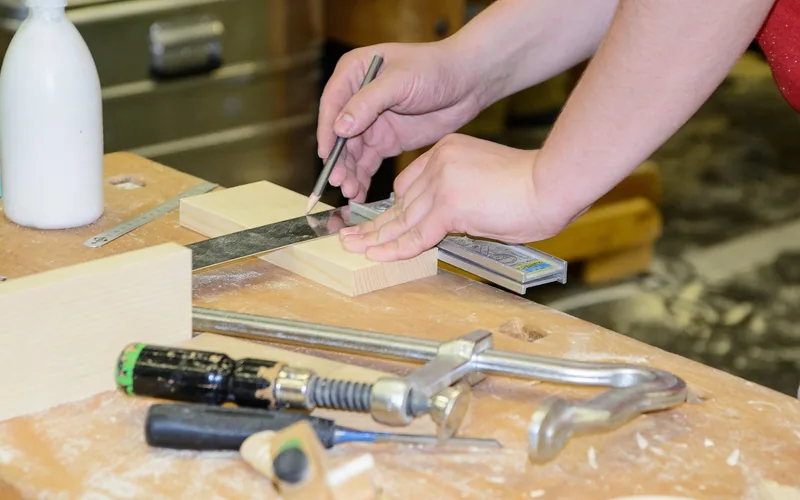
How to Get the Strongest Bond in Hot or Cold Weather
- Match the application temperature to the product: apply Original Gorilla Glue above 40°F (best at room temperature), Wood Glue between 55°F and 75°F, and Super Glue or Epoxy only at room temperature.
- Prepare and dampen the surface: for Original Gorilla Glue specifically, lightly dampen one surface with water before applying — moisture is what activates the polyurethane cure.
- Clamp for the full window: 1–2 hours for Original Gorilla Glue, 20–30 minutes for Wood Glue, at the application temperature above. Cure time roughly doubles in cold weather, so don’t rush this step.
- Let it fully cure before any heat exposure: every Gorilla adhesive reaches full strength at 24 hours. Exposing a joint to heat before then undercuts the eventual bond, no matter what the product’s rated ceiling is.
For more detail on cure timing specifically, this guide to Gorilla Glue’s full cure time breaks down clamp time versus full-strength time for each product.
Frequently Asked Questions
Is Gorilla Glue heat resistant?
Yes. Original Gorilla Glue is rated by the manufacturer for a -40°F to 200°F service temperature once cured. That covers most household and exterior repairs, but not sustained contact with an engine, exhaust, or oven interior.
What temperature does Gorilla Glue’s bond start to fail?
Original Gorilla Glue begins to soften above 200°F. Gorilla Super Glue is rated to 220°F on paper, but the cyanoacrylate formula itself typically starts softening above roughly 140°F under sustained heat, well before its rated ceiling.
Can you use Gorilla Glue on an oven, exhaust, or engine part?
No. None of Gorilla’s adhesive lines are rated above 220°F, while oven interiors run 350°F or hotter and exhaust manifolds can exceed 800°F. Use a high-temperature RTV silicone or a specialty high-heat epoxy instead.
Which Gorilla adhesive has the best heat resistance?
By rated service temperature, Gorilla Super Glue’s -65°F to 220°F range is the widest on paper. In practice, Original Gorilla Glue (polyurethane) tends to hold up more consistently because it doesn’t start softening until much closer to its actual rated ceiling.
Does Gorilla Wood Glue lose strength in summer heat?
Not under normal conditions. Its 0°F to 150°F service rating comfortably covers typical outdoor surface temperatures, including dark-painted wood in direct sun, which usually tops out around 150°F to 160°F.
Conclusion
Match the adhesive to the temperature it’s actually rated for: Original Gorilla Glue or Gorilla Epoxy for general and outdoor work, Wood Glue for interior woodworking, and Super Glue for small, fast repairs — none of them for an engine bay, exhaust pipe, or oven interior.
Sponsored / affiliate links. As an Amazon Associate I earn from qualifying purchases. I may earn additional commission from eligible campaigns.