CNC Wood Carving Machines: Cost, Specs & Best Picks (2026)
CNC wood carving machines cut and carve wood automatically from a digital design file — entry desktop routers start near $150, while machines built for daily hardwood use run $800 to $2,500 and up. A spindle that’s too weak for the wood you’re cutting bogs down, scorches the surface, and burns through bits fast. This guide breaks down real spindle-power and work-area specs by project size, what these machines actually cost, and specific beginner-to-pro picks.
Already own a machine? Our guide to running a CNC on wood covers bits, feeds and speeds, hold-down and safety.
This article contains Amazon affiliate links. As an Amazon Associate, Woodworking Advisor earns from qualifying purchases at no extra cost to you — see our full affiliate disclosure.
What Is a CNC Wood Carving Machine?
Best CNC Wood Carving Machine Pick
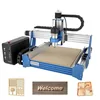
Genmitsu PROVerXL 4030S CNC Router, 710W Spindle & 130mm Z-Height
A mid-range machine that clears the gap between starter kits and production-grade routers.
- Best for: Serious hobbyists moving from a small kit to daily hardwood carving
- Why we picked it: 710W spindle and 130mm Z-height clear dense hardwood and thicker stock without stalling, at a mid-range price
- Main drawback: Assembly and G-code setup take a real weekend, not a 15-minute unbox
Compare more CNC wood carving machine options
 Option 1 Genmitsu CNC 3018-PRO Router Kit
|
 Option 2 Genmitsu Cubiko Desktop CNC Router (Enclosed)
|
 Option 3 Genmitsu PROVerXL 6050 Plus CNC Router
|
As an Amazon Associate we earn from qualifying purchases.
A CNC wood carving machine is a computer-controlled router that cuts, engraves, or carves wood by following a pre-programmed toolpath instead of a human hand. It reads a digital design file (G-code generated from CAD/CAM software) and moves a spinning cutting bit along the X, Y, and Z axes to remove material with repeatable precision. Unlike hand carving, the same file will cut an identical part the tenth time as it did the first.
Woodworking has always chased more precise, more repeatable ways to shape wood — from hand chisels, to powered manual wood routers, to today’s CNC-controlled woodworking machines. Most desktop CNC routers sold today use 3-axis motion (X, Y, Z); 4-axis and 5-axis machines add rotational carving for cylindrical parts like table legs or spindles, at a real jump in price and complexity.
How Much Does a CNC Wood Carving Machine Cost?
Price tracks spindle power and work area more than any other spec. A $150 kit and a $2,500 production router are both “CNC wood carving machines,” but they can carve very different projects. The table below compiles current spindle-power, work-area, and price data across desktop CNC routers actually sold for wood carving in 2026.
| Tier | Price Range | Spindle Power | Typical Work Area | Best For |
|---|---|---|---|---|
| Starter kit | $150–$400 | 60W–300W | 300x180mm–300x300mm | Learning G-code, small signs, inlays, softwood |
| Mid-range hobby | $400–$900 | 300W–800W | 400x400mm–700x700mm | Furniture parts, deeper hardwood carving |
| Production / pro | $1,600–$2,500+ | 800W–3kW+ | 600x1000mm and up | Batch runs, large panels, cabinet doors |
📊 A 2.2kW spindle can push a 12mm bit through hardwood at roughly 200mm/min depth of cut, while an 800W spindle manages only about 3mm depth on the same bit — the main reason starter-kit machines struggle with dense hardwoods like maple or walnut. Source: CNCRouterInfo spindle-wattage comparison, 2026.
Choosing the Right CNC Wood Carving Machine
Match the machine to the project, not the spec sheet. These are the factors that actually change which tier from the table above is the right buy:
- Project size: A 300mm bed won’t carve a full cabinet door — measure your largest planned workpiece before buying, not after.
- Wood species: Softwood and MDF carve fine on a 300–500W spindle; hard maple, walnut, and oak need 500W or more to avoid burning and bit wear (see the data point above).
- Software compatibility: Check whether the machine ships with usable CAM software or expects you to source your own — this changes the real cost and learning curve.
- Construction quality: An all-metal frame with linear rails holds tolerance better than an aluminum-extrusion frame at the same price — vibration shows up directly as chatter marks in the carving.
- Budget for consumables: Carbide bits, spare collets, and dust collection add $50–$150 on top of the machine price in year one — factor that in, not just the sticker price.
A common beginner mistake: cranking up the feed rate to finish a carving faster, then blaming the machine when the bit chatters, burns the wood, or snaps. The fix is almost always slowing the feed rate or stepping up to a higher-wattage spindle — not buying a bigger machine.
Applications in Woodworking
Furniture Making
CNC machines cut matched sets of furniture parts — identical mortises, matching curved rails, repeated joinery — that would take hours to hand-cut consistently across multiple pieces.
Art, Signs, and Decorative Woodwork
Intricate relief carvings, lettering, and 3D-modeled art are the projects that most benefit from CNC precision — the same category of work covered in our guide to wood engraving and other wood carving techniques.
Architectural Elements
Moldings, trim profiles, and repeated architectural details are well suited to CNC production because the toolpath, once dialed in, reproduces the exact profile on every run.
Mastering CNC Wood Carving Techniques
Digital Design and Modeling
Design software such as Fusion 360, VCarve, or Aspire turns a 2D or 3D idea into a toolpath the machine can follow. 3D modeling lets you preview the carved relief before a single chip is cut, which catches design errors that are expensive to discover mid-carve.
Toolpath Optimization
Toolpath order, bit selection, and cutting speed determine both carving time and material waste. Roughing passes remove bulk material fast with a larger bit; a finishing pass with a smaller bit then cleans up detail. Reusable router templates and saved toolpaths speed up repeat projects significantly.
Maintenance and Software Challenges
CNC wood carving machines are precise, but that precision depends on upkeep. Two problem areas account for most beginner frustration:
Maintenance and Calibration
Regular cleaning, lubrication, and inspection of the spindle and tool holder keep cuts accurate. Recalibrate the axes — confirming they’re perpendicular and square — whenever carvings start showing uneven depth or misaligned joints.
Software and G-Code Programming
CAD/CAM software and G-code have a real learning curve. Budget time for troubleshooting toolpath errors before your first project — most beginner mistakes (burned corners, skipped steps, snapped bits) trace back to a G-code or feed-rate setting, not the hardware.
Frequently Asked Questions About CNC Wood Carving Machines
How much does a CNC wood carving machine cost?
Starter kits run $150–$400, mid-range hobby machines run $400–$900, and production-grade routers run $1,600–$2,500 or more. Price tracks spindle power and work area — a bigger bed and stronger spindle both add cost.
What spindle power do you need to carve hardwood?
Plan on 500W minimum for hard maple, walnut, or oak; a 300W or smaller spindle will bog down, burn the surface, and wear bits out fast on dense hardwood. Softwood and MDF carve fine on 300W or less.
Can a CNC router carve 3D wood reliefs, not just flat designs?
Yes. A 3-axis machine can carve true 3D relief by varying cutting depth across a toolpath generated from a 3D model, producing raised details like a hand-carved relief. A 4- or 5-axis machine adds rotational carving for cylindrical parts.
What are the benefits of using CNC wood carving machines?
CNC wood carving machines add precision, repeatability, and speed that hand carving can’t match on multiples — the same file cuts an identical part every time, cutting labor time on repeated designs and reducing material waste from mistakes.
How do you maintain a CNC wood carving machine?
Clean the machine and lubricate moving parts regularly, calibrate the spindle and axes, check cutting tools for wear before each project, and keep the control software updated. Follow the manufacturer’s maintenance schedule rather than a generic interval.
Can beginners use CNC wood carving machines?
Yes — a starter kit under $200 with beginner-focused software is a realistic first machine. Expect a real learning curve on G-code and CAM software regardless of price; most manufacturers publish tutorials to shorten it.
Conclusion
CNC wood carving machines span a $150 starter kit to a $2,500+ production router, and the right one depends on your wood species, project size, and how often you’ll run it — not just your budget ceiling. Match spindle power to the wood you actually plan to cut, factor consumables into the real cost, and a mid-range machine will outlast a cheap one that gets outgrown in a season.
Sponsored / affiliate links. As an Amazon Associate I earn from qualifying purchases. I may earn additional commission from eligible campaigns.