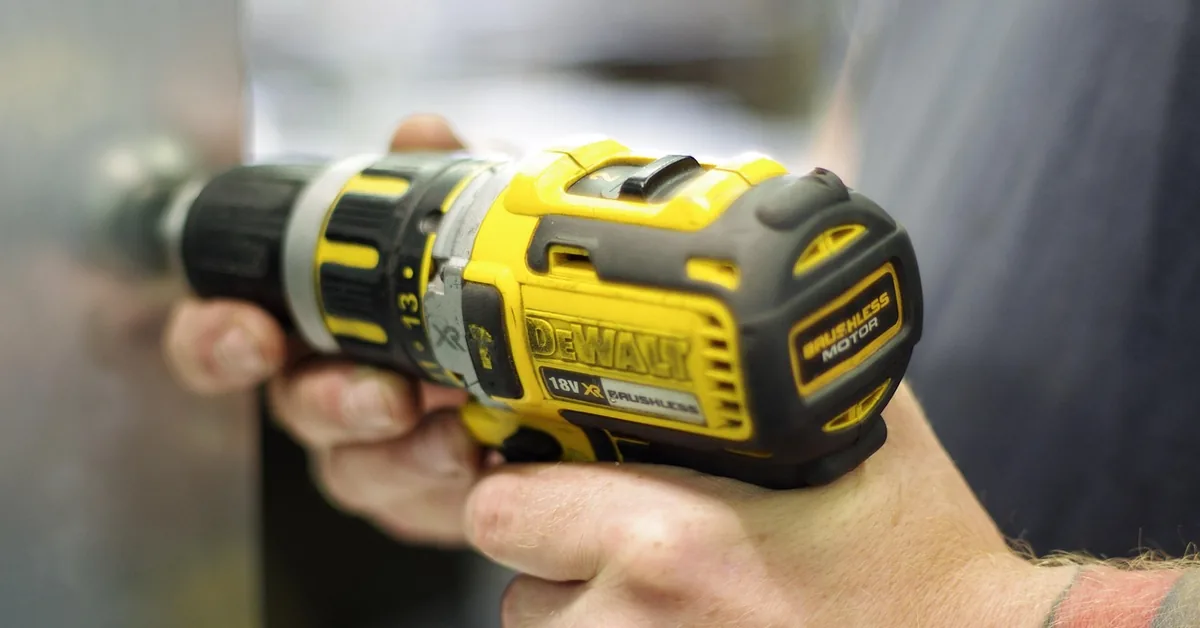
How Long Does a 1.5 Ah Battery Last? Runtime by Tool Type
A 1.5Ah battery delivers 1.5 amps for one hour — but real runtime depends on how much current your tool draws, from 45 minutes on a cordless drill to under 10 minutes on a circular saw. Confusing amp-hours with battery power (voltage) is the most common mistake buyers make. This guide covers the runtime formula, a tool-by-tool breakdown, charge time, and when a 1.5Ah pack is too small for the job.
Quick Answer
Runtime = Ah ÷ amp draw. A 1.5Ah battery runs about 45 minutes in a cordless drill drawing 2A, roughly 30 minutes in an impact driver, and as little as 9–11 minutes in a circular saw, reciprocating saw, or angle grinder. Light-draw tools like an LED work light can run for 3 hours or more on the same battery.
What Is an Amp Hour (Ah)?
Best Battery Upgrade Pick
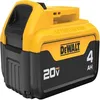
DEWALT 20V MAX Battery, Premium 4.0Ah (DCB204)
Same 20V MAX platform as most DEWALT drills and drivers, with roughly 2.7x the runtime of a 1.5Ah pack.
- Best for: upgrading a drill or driver that keeps running out of charge mid-project
- Why we picked it: drop-in fit on the same platform, no new charger or tool needed
- Main drawback: heavier than a 1.5Ah pack, noticeable on longer overhead work
Compare more battery upgrade options
 Option 1 DEWALT 20V MAX XR 4.0Ah, 2-Pack (DCB204-2)
|
 Option 2 DEWALT 12/20V MAX Dual Charging Station (DCB102)
|
 Option 3 DEWALT 20V MAX Premium 6.0Ah, Double Pack (DCB206-2)
|
As an Amazon Associate we earn from qualifying purchases.
An amp hour (Ah) is a unit that measures how much electrical charge a battery can deliver over time — specifically, the current a battery can supply for one hour before it’s depleted. A 1.5Ah battery can supply 1.5 amps for one hour, or 3 amps for half an hour, or 0.75 amps for two hours. It’s a capacity rating, not a power rating — that distinction matters when you’re comparing batteries.
Amp hours are often confused with voltage. Voltage (18V, 20V MAX, etc.) determines how much power and torque a tool can deliver in a single moment. Amp hours determine how long the battery can keep delivering that power before it needs a recharge. A 1.5Ah, 20V battery and a 5.0Ah, 20V battery power a tool with identical torque — the 5.0Ah pack just lasts roughly 3.3 times longer per charge.
1.5Ah also converts directly to milliamp-hours: 1.5Ah × 1,000 = 1,500 mAh. You’ll see both units used interchangeably on spec sheets and product listings for the same battery.
The Battery Runtime Formula
Runtime in hours = battery capacity (Ah) ÷ the device’s current draw (A). If your device draws 0.75 amps, a 1.5Ah battery lasts approximately 2 hours (1.5 ÷ 0.75 = 2). If the device draws 3 amps — typical for an impact driver under load — the same battery lasts 30 minutes (1.5 ÷ 3 = 0.5 hours).
The catch: most power tools don’t draw a constant current. A drill idles at well under 1 amp and spikes to 8–10 amps under heavy load. That’s why the same 1.5Ah battery can feel like it lasts “forever” driving screws intermittently, then die in minutes of continuous drilling into hardwood or metal.
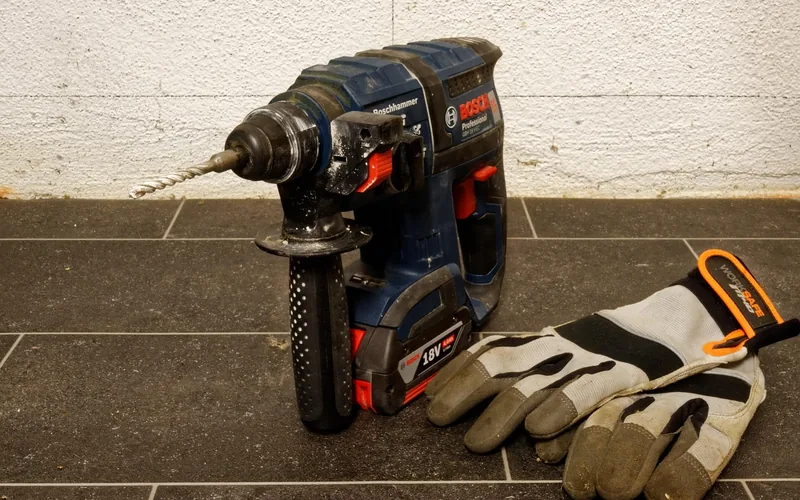
1.5Ah Battery Runtime by Tool Type
Applying the runtime formula above to typical current draw for common tools gives a realistic picture of what to expect from a 1.5Ah pack. These are calculated estimates based on published average draw for each tool category under moderate-to-continuous use — your actual runtime will vary with the specific tool, material, and how continuously you run it.
| Tool | Typical Current Draw | Estimated Runtime on 1.5Ah |
|---|---|---|
| LED work light | ~0.5A | ~3 hours |
| Oscillating multi-tool | ~1.5A | ~60 minutes |
| Cordless drill/driver (light drilling, screws) | ~2A | ~45 minutes |
| Impact driver (driving screws) | ~3A | ~30 minutes |
| Reciprocating saw | ~8A | ~11 minutes |
| Angle grinder | ~8A | ~11 minutes |
| Circular saw (continuous cuts) | ~10A | ~9 minutes |
The pattern is consistent: light-draw tools sip power and can run for hours, while high-torque cutting tools (circular saws, reciprocating saws, grinders) pull enough current to drain a 1.5Ah pack in under 15 minutes of continuous use. If your work is mostly driving screws and light drilling, a 1.5Ah battery is enough. If you’re running a saw or grinder for more than a few minutes at a stretch, you’ll want more capacity.
“In the shop, we keep a 1.5Ah pack on the charger for quick trim and cabinet-install work — it’s fine for driving screws all afternoon. The moment we switch to a hole saw in oak or run a reciprocating saw for demo work, it’s dead in minutes. If your projects go past light-duty tasks, keep a 4.0Ah or larger battery as your primary and let the 1.5Ah be the backup.”
How Long Does a 1.5Ah Battery Take to Charge?
Charge time follows the same formula in reverse: capacity (Ah) ÷ charger output (A), plus roughly 10–20% extra for charging losses. A standard charger rated around 1A takes roughly 90 minutes to 2 hours to fully charge a 1.5Ah battery. A rapid charger rated 3–4A can do the same battery in as little as 30–40 minutes — check your specific charger’s rated output amperage to estimate your own charge time.
1.5Ah vs 2.0Ah vs 4.0Ah vs 6.0Ah
| Capacity | Runtime vs 1.5Ah | Best For |
|---|---|---|
| 1.5Ah | Baseline (1x) | Light-duty tasks, occasional use, lightest weight |
| 2.0Ah | ~1.3x longer | Everyday DIY use, small home projects |
| 4.0Ah | ~2.7x longer | Frequent use, drilling into hardwood, longer sessions |
| 6.0Ah | ~4x longer | All-day jobsite use, high-drain tools like saws and grinders |
Higher Ah does not mean more power — a 1.5Ah and a 6.0Ah battery on the same platform deliver identical voltage and torque. The only difference is how long that power lasts before you need to recharge, and how much extra weight you’re carrying on the tool.
Common Mistakes That Shorten Battery Life
- Storing at 0% charge: lithium-ion batteries degrade faster when left fully drained for weeks. Store at roughly 40–60% charge if it’ll sit unused.
- Leaving it on the charger indefinitely: modern chargers stop actively charging at 100%, but pulling the battery off once it’s full is still better practice than leaving it connected for days.
- Charging or using it in extreme heat or cold: keep the battery roughly between 32°F and 105°F (0°C to 40°C) for charging and storage to avoid accelerated capacity loss.
- Assuming Ah tells you about power: a “1.5Ah” spec only tells you runtime, not torque or speed — check the voltage for power comparisons.
- Mixing battery platforms: a 1.5Ah battery from one brand’s 20V line generally won’t fit or charge safely on another brand’s tools, even at the same voltage.
FAQ
How many mAh is a 1.5Ah battery?
1,500 mAh. Amp-hours (Ah) and milliamp-hours (mAh) measure the same thing at different scales — multiply Ah by 1,000 to get mAh. A “1.5Ah” battery and a “1500mAh” battery are the same capacity.
Is a 1.5Ah battery good for a cordless drill?
Yes, for light work — driving screws and drilling small holes in softwood typically draws 2–3A, giving you 30–45 minutes of runtime. For continuous drilling in hardwood or metal, or all-day jobsite use, a 4.0Ah or larger battery lasts noticeably longer between charges.
How long does a 1.5Ah battery take to charge?
Roughly 90 minutes to 2 hours on a standard 1A charger, or as fast as 30–40 minutes on a rapid charger rated 3–4A. Check your charger’s rated output amperage for a more exact estimate.
What’s the difference between a 1.5Ah and 2.0Ah battery?
Capacity only — a 2.0Ah battery runs about 33% longer than a 1.5Ah battery on the same tool and voltage platform. Both deliver the same power; the 2.0Ah pack is usually slightly larger and heavier.
Does a higher Ah battery mean more power?
No. Voltage (18V, 20V MAX, etc.) determines a tool’s power and torque. Amp-hours (Ah) only determine how long the battery can sustain that power before it needs recharging.
Conclusion
A 1.5Ah battery lasts about 45 minutes on light drilling and driving, but under 15 minutes on saws and grinders that draw 8–10 amps continuously — use the Ah ÷ A formula above with your tool’s typical draw to estimate your own runtime. If you’re constantly recharging mid-project, a same-platform 4.0Ah or larger battery, or a spare battery on hand, solves the problem without buying a new tool. For more battery and tool guides, see our full tools section.
Sponsored / affiliate links. As an Amazon Associate I earn from qualifying purchases. I may earn additional commission from eligible campaigns.