How to Oil a Mini Chainsaw Chain (Right Oil & How Often)
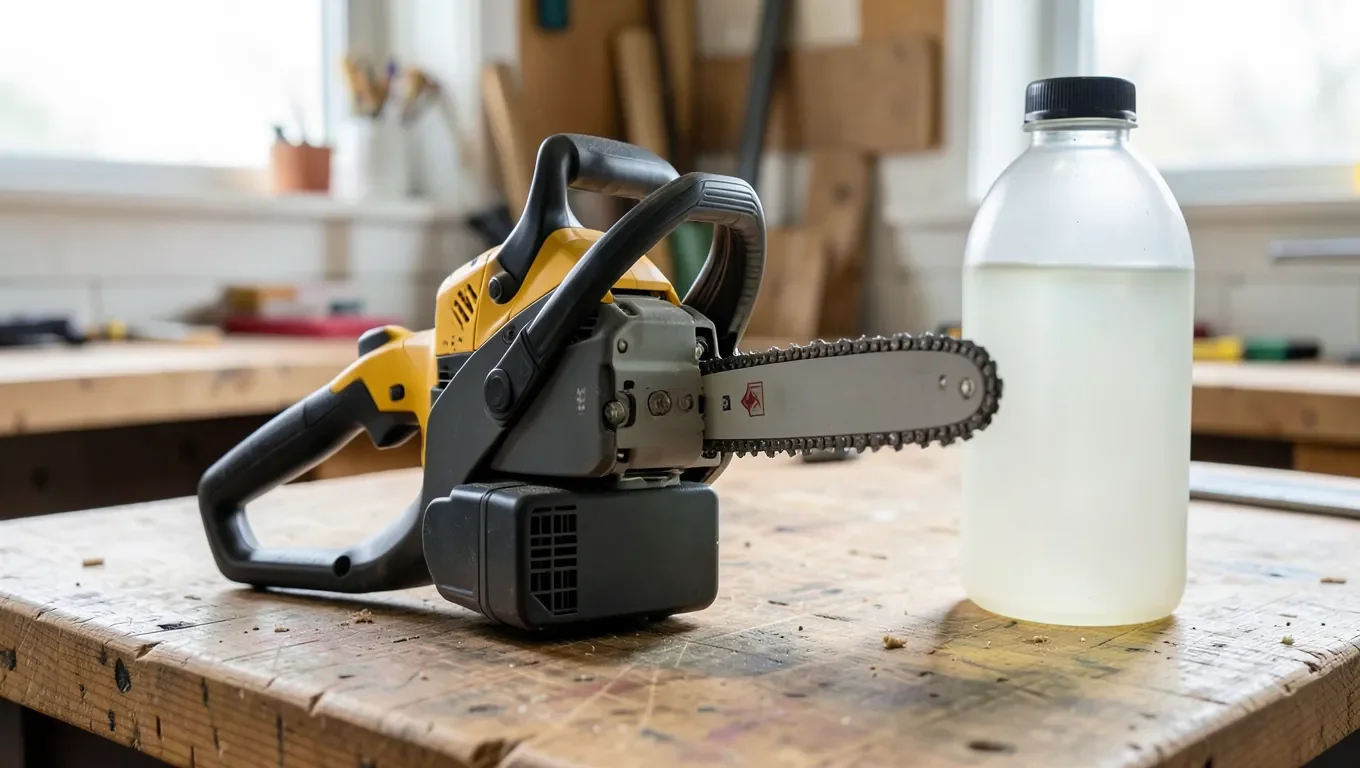
To oil a mini chainsaw chain, use dedicated bar-and-chain oil (never motor oil or vegetable oil) in the small oil reservoir near the bar, and check that reservoir before every single use. Mini chainsaws pack the same bar-and-chain oiling system as a full-size saw into a tank a fraction of the size, so it can run dry in the middle of a job if you don’t keep an eye on it.
That matters more than it sounds like it should. A chain that runs dry — even for a few seconds — heats up fast, wears out the bar groove and drive links well before its time, and is more likely to bind and kick back than a properly lubricated one. Below is how to pick the right oil, fill and check the reservoir the right way, confirm your auto-oiler is actually feeding the chain, and how often to top it off. Haven’t picked a saw yet? See our current best mini chainsaw picks first.
What Oil to Use for a Mini Chainsaw Chain
Best Bar & Chain Oil for Mini Chainsaws
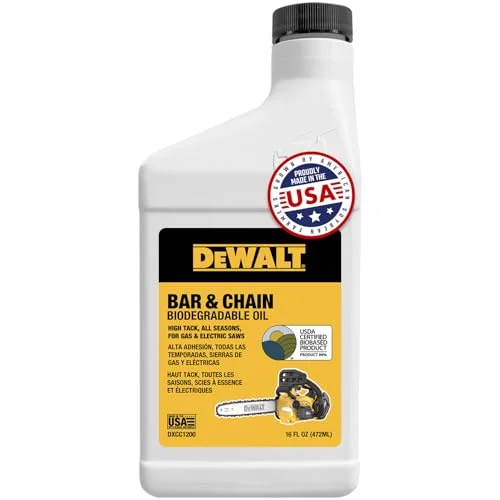 |
DEWALT 16 oz. Biodegradable Bar & Chain Oil – $9.98 A real tackified bar-and-chain oil in a bottle sized right for a mini saw’s small reservoir, so you’re not stuck refilling from a gallon jug or reaching for motor oil.
|
Use a bar-and-chain oil made for chainsaws — not motor oil, not hydraulic oil, and not vegetable oil, even though all three get recommended online as “it’ll work in a pinch.” Real bar oil contains a tackifier additive that lets it cling to a chain spinning at speed instead of flinging straight off into the sawdust. Motor oil has no tackifier at all, so most of what you apply is thrown clear of the bar within seconds rather than actually lubricating the chain. Vegetable oil is a step better than nothing — it does stick a little and it’s biodegradable — but it thins out and breaks down faster than a real tackified bar oil, so you’d be refilling a tank that’s already small far more often than you need to. For a mini saw specifically, that trade-off isn’t worth it: a small 16 oz bottle of proper bar oil, like the biodegradable pick above, will still cover a full season of light pruning and lasts far longer per fill than vegetable oil does.
Why Mini Chainsaw Tanks Run Dry So Fast
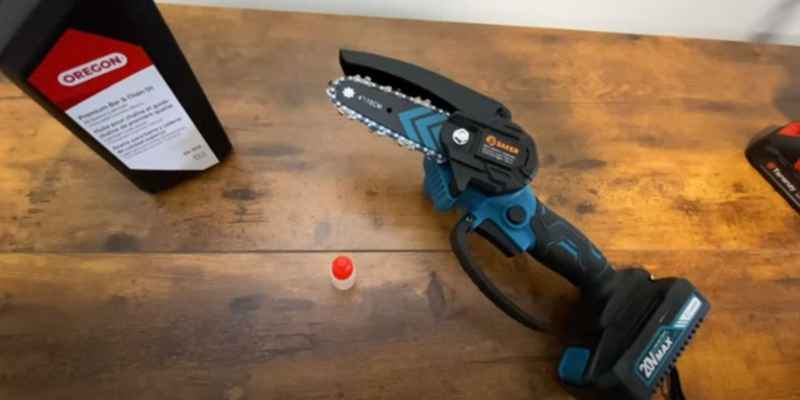
A full-size gas or corded chainsaw usually carries several ounces of bar oil in its reservoir. Most 6-inch mini chainsaws hold somewhere around 3–4 fluid ounces — some hold noticeably less — and the oiler is still feeding the chain the entire time the saw is running, exactly like a full-size saw’s. That combination means a mini saw’s tank can run empty after well under an hour of actual cutting, sometimes in the middle of a single pruning session, long before the battery itself needs a recharge.
The practical fix is simple: top off the reservoir before every session, not just when you remember to, and glance at the oil window or cap partway through longer jobs. If you’re doing more than 20–30 minutes of steady pruning, keep the bottle within reach and plan on a mid-session top-off rather than assuming one fill will carry you through.
How to Actually Oil the Chain, Step by Step
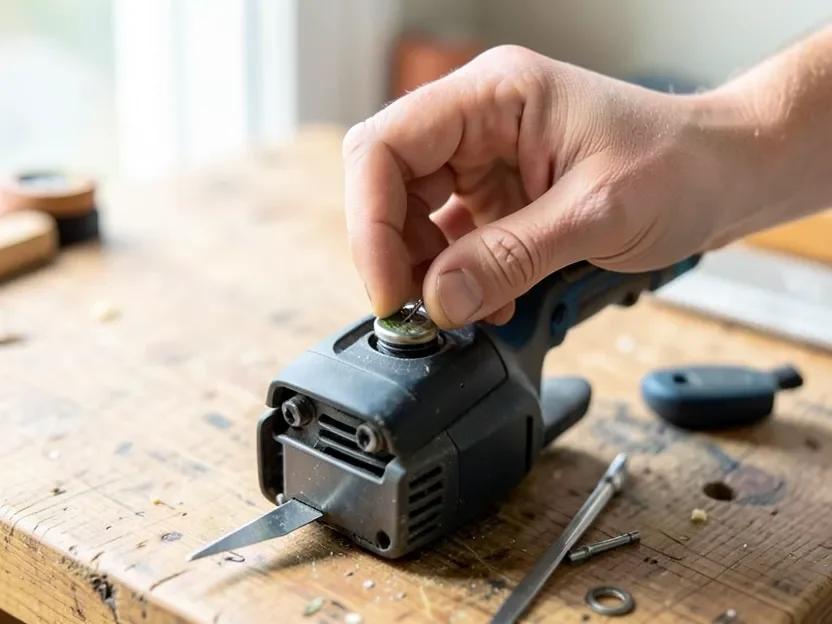
Most mini chainsaws oil the chain automatically through a small internal pump, the same basic system as a full-size saw — you fill a reservoir, and the saw doles oil onto the bar and chain while it runs. Here’s how to do it properly:
1. With the saw powered off and the battery removed, set it on a flat, stable surface with the oil fill cap facing up. 2. Wipe away sawdust or debris from around the cap before opening it — grit falling into the reservoir is a common cause of a clogged oil port later. 3. Fill with bar-and-chain oil until it reaches the fill line or just below the cap threads; don’t overfill, since a full tank can weep oil out around the cap seal. 4. Reinstall the cap firmly, then reattach the battery. 5. Before you start cutting, run the saw at low speed for a few seconds with the bar pointed away from you and toward a light-colored surface — this both primes the oiler and lets you confirm oil is actually reaching the chain (more on that check below).
If the saw has sat unused for a while or the oiler seems sluggish on startup, a few manual drops directly on the bar groove and chain links before that first low-speed run helps get oil moving through the line faster.
How to Check That the Auto-Oiler Is Actually Feeding the Chain
Don’t assume the oiler is working just because the reservoir is full — a clogged port or an air bubble in the line can leave the chain running dry even with oil in the tank. The reliable way to check it takes about ten seconds: hold the saw with the bar pointed a few inches above a piece of light-colored concrete, a sheet of cardboard, or a paper towel, and run it at low-to-medium speed for a couple of seconds. A working oiler throws a visible fine mist or a light spray pattern of oil droplets onto that surface. No mist, or only a faint smear, means the oiler isn’t keeping up — check that the reservoir isn’t actually empty, that the fill cap vent hole isn’t clogged with sawdust, and that the oil outlet port on the bar side isn’t packed with debris before you cut anything.
Do this test at the start of every session, not just the first time you use the saw. It takes less time than pulling on gloves and it’s the difference between catching a dry-running chain before it damages anything and finding out the hard way mid-cut.
Never Run It Dry, Even Briefly
It’s tempting to keep going for “just one more cut” when you notice the reservoir is low, especially on a small pruning job. Don’t. A chain with no oil reaching it heats up almost immediately from metal-on-metal friction against the bar groove, which accelerates wear on both the chain’s drive links and the bar itself — damage that shows up as a bar that needs replacing far sooner than it should. A dry, overheated chain is also more prone to binding in the cut, and a binding chain is one of the more common triggers for kickback. Top off the tank the moment you notice it running low rather than pushing through to the end of a task.
How Often Should You Oil a Mini Chainsaw?
Check and top off the reservoir before every use, and check it again partway through any session longer than 20–30 minutes — that’s the realistic answer for a mini saw’s small tank, as opposed to the “every 2–3 hours” rule of thumb that applies to a full-size saw with a much bigger reservoir. If you’re doing a full afternoon of pruning across a few battery swaps, plan to refill the oil tank at least once alongside your battery changes, since the two rarely run out at exactly the same time.
Signs you’ve been running low without noticing: a dry, high-pitched grinding sound instead of a smooth cut, visible smoke or a faint burning smell from the bar, discoloration or bluing on the chain links, and a bar groove that looks dry and dull instead of lightly glossy. Any of those means stop, refill, and run the low-speed oiler check above before cutting again.
Troubleshooting Common Oiling Problems
Oil pooling or leaking when the saw is stored: This is usually gravity, not a malfunction — a full reservoir left standing can weep a little oil past the cap seal or out the bar side over hours. Store the saw with the bar guard on and the reservoir no more than about three-quarters full if you notice this happening often.
No oil reaching the chain despite a full tank: Check the fill cap’s small vent hole first — if it’s blocked, the tank can’t vent air in as oil is drawn out, and the pump will starve even though oil is physically present. Sawdust packed into the oil outlet port on the bar side is the second most common cause; clear it with a toothpick or the tip of a small screwdriver with the battery removed.
Too much oil, chain flinging oil everywhere: Some mini saws have a small adjustment screw near the oiler; turning it slightly toward the minus/decrease side reduces flow. If yours doesn’t have one, cut back on how much you pre-fill and rely on the reservoir topping off less aggressively each time.
Chain looks oiled but still feels loose or rattly: That’s a tension problem, not an oiling problem — a loose chain can look wet and lubricated while still being unsafe to run. See our guide on why a chainsaw chain keeps coming loose if tightening it doesn’t hold between sessions.
Frequently Asked Questions
Do Mini Chainsaws Need To Be Oiled?
Yes. Mini chainsaws use the same bar-and-chain oiling system as a full-size saw, just in a much smaller tank. Skipping oil, or letting the small reservoir run dry, wears out the bar and chain quickly and raises the risk of the chain binding and kicking back.
How To Lubricate An Electric Chainsaw Chain?
Fill the oil reservoir near the bar with a dedicated bar-and-chain oil, reattach the cap, then run the saw briefly at low speed pointed toward a light surface to confirm the auto-oiler is spraying a visible mist onto the chain before you start cutting.
Do Cordless Chainsaws Need Chain Oil?
Yes — being battery-powered only changes how the saw is driven, not how the chain is lubricated. Cordless and mini chainsaws still need bar-and-chain oil in their reservoir, checked and topped off before every use since their tanks are smaller than a corded or gas saw’s.
How Often Should I Oil My Electric Chainsaw?
Check the reservoir before every use, and again partway through any session longer than 20–30 minutes. A mini saw’s small tank can run dry well before an hour of steady cutting, so don’t rely on a once-a-session assumption the way you might with a full-size saw.
Conclusion
A mini chainsaw’s chain lasts as long as its oiling routine is consistent: real bar-and-chain oil instead of motor or vegetable oil, a reservoir checked before every use instead of assumed to be full, and a quick spray-pattern test to confirm the auto-oiler is actually working before you make the first cut. None of that takes more than a minute, and it’s a lot cheaper than a new bar and chain.
Sponsored / affiliate links. As an Amazon Associate I earn from qualifying purchases. I may earn additional commission from eligible campaigns.