How Long To Season Maple Firewood: The Essential Secret
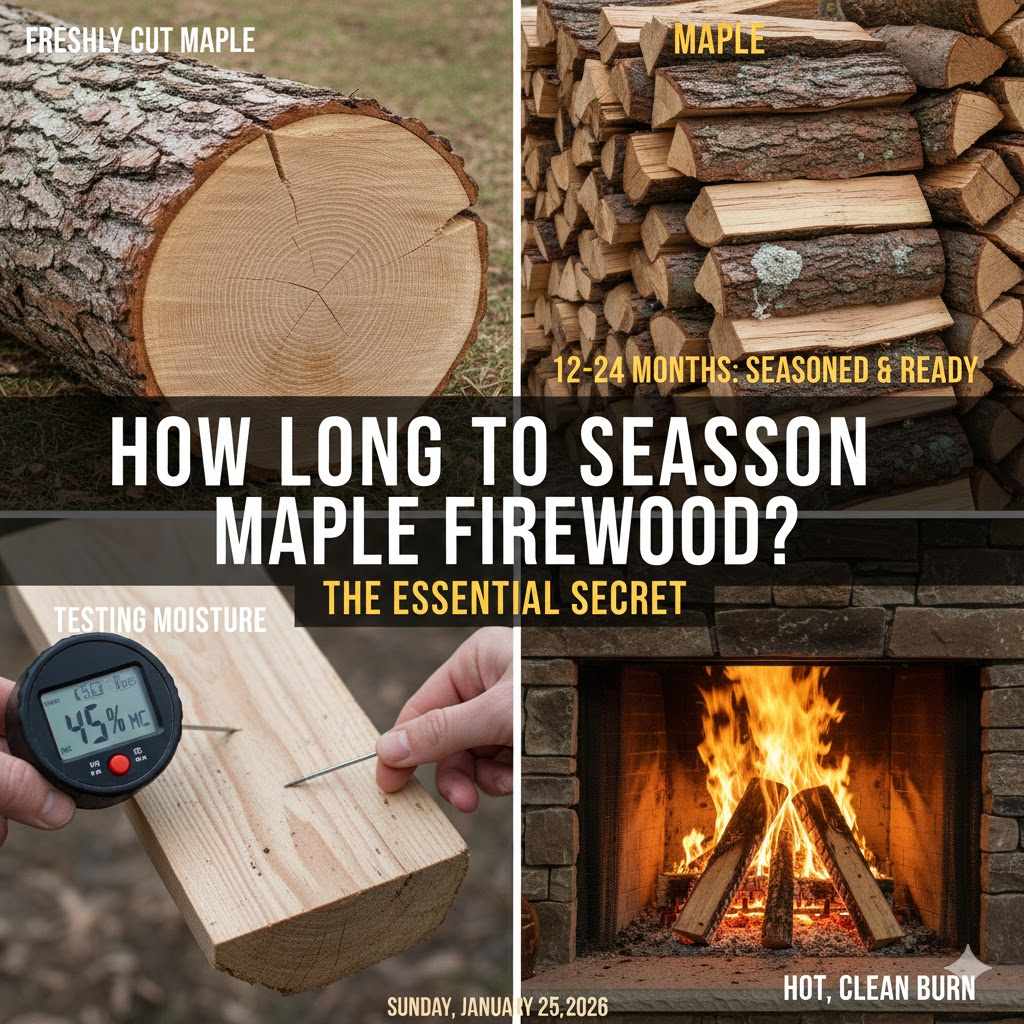
For best results, season maple firewood for at least 6 to 12 months. Hard maple may require closer to 12 months or even longer, while soft maple can be ready in about 6 months. Proper stacking and good airflow are essential to reaching the ideal moisture content of under 20% for a clean, efficient burn.
Hello there! I’m Md Meraj, and I love helping folks get the most out of their woodworking and DIY projects. One question I hear all the time is about firewood. You’ve done the hard work of cutting and splitting maple, but now you’re wondering, “How long do I have to wait?” It can be frustrating to see a beautiful stack of wood and not know when it’s ready for the fireplace.
Don’t worry, you’re in the right place. Getting this right is simpler than you think. In this guide, I’ll walk you through everything you need to know. We’ll cover the ideal seasoning time for maple and share some simple tricks to speed up the process. Let’s get that firewood ready for a perfect, cozy fire.
Why You Absolutely Must Season Maple Firewood
Before we talk about “how long,” let’s talk about “why.” Seasoning wood isn’t just about being patient; it’s about safety, efficiency, and enjoying a much better fire. Freshly cut wood, or “green” wood, is full of water—sometimes making up half its weight!
Trying to burn green maple is a recipe for frustration. Here’s what happens:
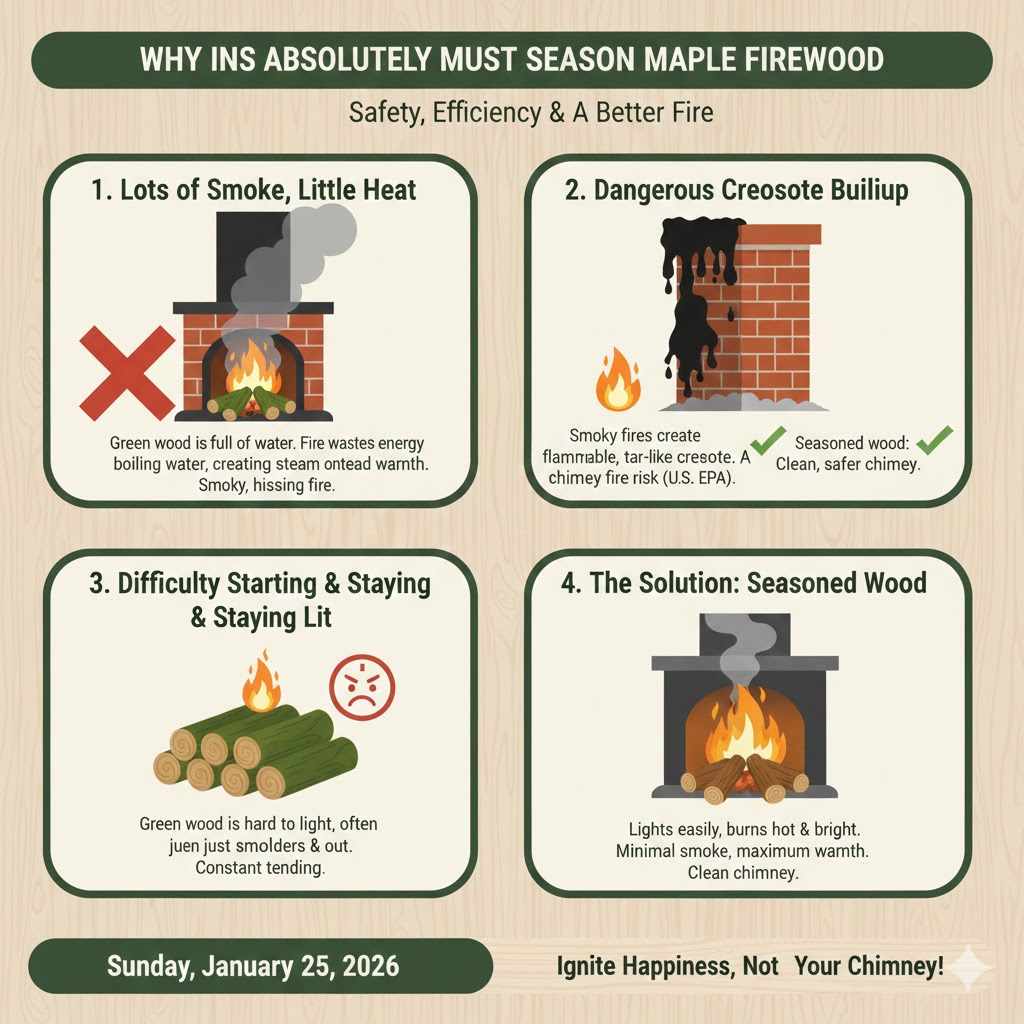
- Lots of Smoke, Little Heat: The fire has to work overtime just to boil the water out of the wood. This energy is wasted as steam instead of producing the warm, crackling flames you want. You get a smoky, hissing fire that gives off very little heat.
- Dangerous Creosote Buildup: This is the most important reason to season wood. The smoky, low-temperature fire from green wood creates a dark, tar-like substance called creosote. According to the U.S. Environmental Protection Agency, creosote builds up inside your chimney and is highly flammable, creating a serious risk of a chimney fire.
- Difficulty Starting and Staying Lit: Green wood is tough to light. Even if you get it going, it often smolders and goes out easily, meaning you have to constantly tend to the fire.
Properly seasoned wood, on the other hand, lights easily, burns hot and bright, produces minimal smoke, and keeps your chimney much cleaner and safer.
Hard Maple vs. Soft Maple: Does It Make a Difference?
You might just think of it as “maple,” but there are two main categories: hard maple and soft maple. Understanding which one you have is helpful because it affects how long it takes to season. Hard maple (like Sugar Maple or Black Maple) is much denser than soft maple (like Red Maple or Silver Maple).
Think of it like trying to dry a sponge versus a brick. The sponge (soft maple) lets go of its water more easily, while the dense brick (hard maple) holds onto it for much longer. Because of its density, hard maple contains more BTUs (British Thermal Units), which means it will burn longer and hotter once it’s seasoned. It’s a premium firewood, but it demands more patience.
| Feature | Hard Maple (e.g., Sugar Maple) | Soft Maple (e.g., Red Maple) |
|---|---|---|
| Density | High | Low to Medium |
| Weight (When Green) | Heavier | Lighter |
| Average Seasoning Time | 12 to 18 months | 6 to 12 months |
| Heat Output (BTUs) | Excellent | Good |
| Burn Time | Long | Moderate |
The Ideal Seasoning Time for Maple Firewood
So, we come to the big question: how long does it take? The simple answer is at least 6 months, but ideally a full year. This gives the wood enough time to get its moisture content below 20%, which is the target for perfect firewood.
Here’s a more detailed breakdown:
- Soft Maple: In ideal conditions (split, stacked, and good airflow), soft maple can be ready in as little as 6 to 9 months.
- Hard Maple: Because it’s so dense, hard maple really needs 12 months at a minimum. Many people who heat with wood prefer to season hard maple for a full 18 to 24 months for the best possible results.
Remember, these are just estimates. The actual time depends on several key factors, which you have a lot of control over!
Key Factors That Speed Up (or Slow Down) Seasoning
You can’t change the weather, but you can definitely influence how quickly your firewood seasons. Getting these four things right will make a huge difference.
1. Splitting: The Single Most Important Step
If you only do one thing, do this: split your wood. A whole log has its bark, which is nature’s perfect raincoat. It’s designed to keep moisture in! By splitting the logs, you expose the inner wood to air and sunlight, allowing the moisture to escape much, much faster. A log left in the round could take years to season properly, while a split piece can be ready in months.
Rule of thumb: Split logs to a diameter of 3 to 6 inches for the best drying results.
2. Stacking for Success: Airflow is Everything
Once your wood is split, don’t just throw it in a pile! A jumbled pile traps moisture, encourages mold, and can become a cozy home for pests. A proper stack allows air to flow freely around every single piece of wood.
- Get it Off the Ground: Never stack wood directly on the dirt. Moisture from the ground will wick up into your wood, preventing it from ever drying out. Lay down a couple of 2x4s, pallets, or build a simple firewood rack to create a base.
- Stack in Single Rows: The best stacks are long, single rows. This maximizes the amount of surface area exposed to the sun and wind. If you must have a wider stack, leave a generous air gap between rows.
- Leave Gaps: Don’t pack the wood too tightly. A little space between each piece is crucial for air circulation.
- Cover the Top Only: Protect your stack from rain and snow by covering the top, but leave the sides open to the air. A simple tarp secured over just the top third of the stack or a small, slanted roof works perfectly. Covering the entire pile traps moisture like a greenhouse.
3. Location, Location, Location
Where you build your stack matters. The ideal spot is one that gets plenty of direct sunlight and is exposed to prevailing winds. Avoid shady corners, damp areas, or stacking right up against a building, as this can block airflow and invite insects near your home.
4. Climate and Weather
Your local climate plays a big role. Firewood will season much faster in a hot, dry, and windy climate like Arizona than it will in a cool, damp environment like the Pacific Northwest. While you can’t control the weather, cutting and stacking your wood in early spring gives it the full advantage of the hot, dry summer months for seasoning.
How to Know When Your Maple Firewood is Perfectly Seasoned
After months of waiting, how can you be sure your maple is ready? You don’t have to guess. There are several simple tests you can do right in your own backyard.
The Visual Check: Look for Cracks and Color
Fresh, green wood has a bright, vibrant color. As it seasons, the wood becomes duller, fading to a grayish or yellowish-brown. The most tell-tale sign is checking—the cracks and splits that form on the cut ends of the wood as it dries and shrinks. If you see deep cracks, that’s a great sign!
The Sound Check: Listen for the “Clink”
This is one of my favorite methods. Grab two pieces of wood and smack them together. Seasoned, dry wood will make a sharp, hollow “clink” or “clack” sound. Green wood, full of water, will make a dull, muffled “thud.” The difference is very clear once you hear it.
The Weight Check: Feel the Difference
Water is heavy. A piece of seasoned maple will feel significantly lighter than a piece of green maple of the same size. If you handle enough wood, you’ll develop a good feel for this difference.
The Ultimate Test: Using a Moisture Meter
For a foolproof answer, nothing beats a wood moisture meter. These affordable digital tools are easy to use. Simply push the metal prongs into a freshly split face of the wood (not the ends, which dry fastest). For firewood, you are looking for a reading of 20% or less. Many seasoned woodburners won’t use anything above 15% for the absolute best performance.
| Characteristic | Green (Unseasoned) Maple | Seasoned Maple |
|---|---|---|
| Color | Bright, creamy white or pale tan | Dull, grayish or yellowish-brown |
| Ends | Smooth and damp | Darkened, with visible cracks (checking) |
| Weight | Heavy for its size | Noticeably lighter |
| Sound (when struck) | Dull “thud” | Sharp, ringing “clink” |
| Bark | Tightly attached | Often loose and may peel off easily |
| Smell | Sappy, sweet, or “plant-like” smell | Smells like dry, inert wood |
| Moisture Content | 30% to 50%+ | Under 20% |
Your Step-by-Step Guide to Seasoning Maple Like a Pro
Feeling confident? Let’s put it all together. Follow these simple steps for perfectly seasoned maple firewood every time.
- Cut Your Logs to Stove Length: First, cut your maple logs into manageable lengths, typically 16 to 18 inches, to fit your fireplace or wood stove. Shorter pieces have less distance for moisture to travel to escape.
- Split the Wood Immediately: Don’t let those logs sit! The sooner you split them after cutting, the sooner the drying process begins. Split everything down to a reasonable size.
- Find the Perfect Spot for Your Stack: Choose a location that is sunny, breezy, and away from your house. A spot with southern exposure is often best.
- Build a Proper Firewood Stack: Use pallets or lumber to create a raised base. Stack your split maple in neat, single rows with plenty of space for air to move. Many people build “towers” at the ends by alternating pairs of logs to create stable bookends for their stack. A well-organized stack is a joy to look at and highly effective. For more ideas on wood properties, you can explore resources from university extension programs, like this one from UNH Extension.
- Cover the Top, But Only the Top: Drape a tarp or build a small roof over the top of your stack to shed rain and snow. Make sure the sides remain completely open to the air.
- Be Patient and Test Regularly: Give the wood time to do its thing. After about 6 months (for soft maple) or a year (for hard maple), start testing a few pieces from the middle of the stack. Use the sound test, visual checks, and a moisture meter to know for sure when it’s ready.
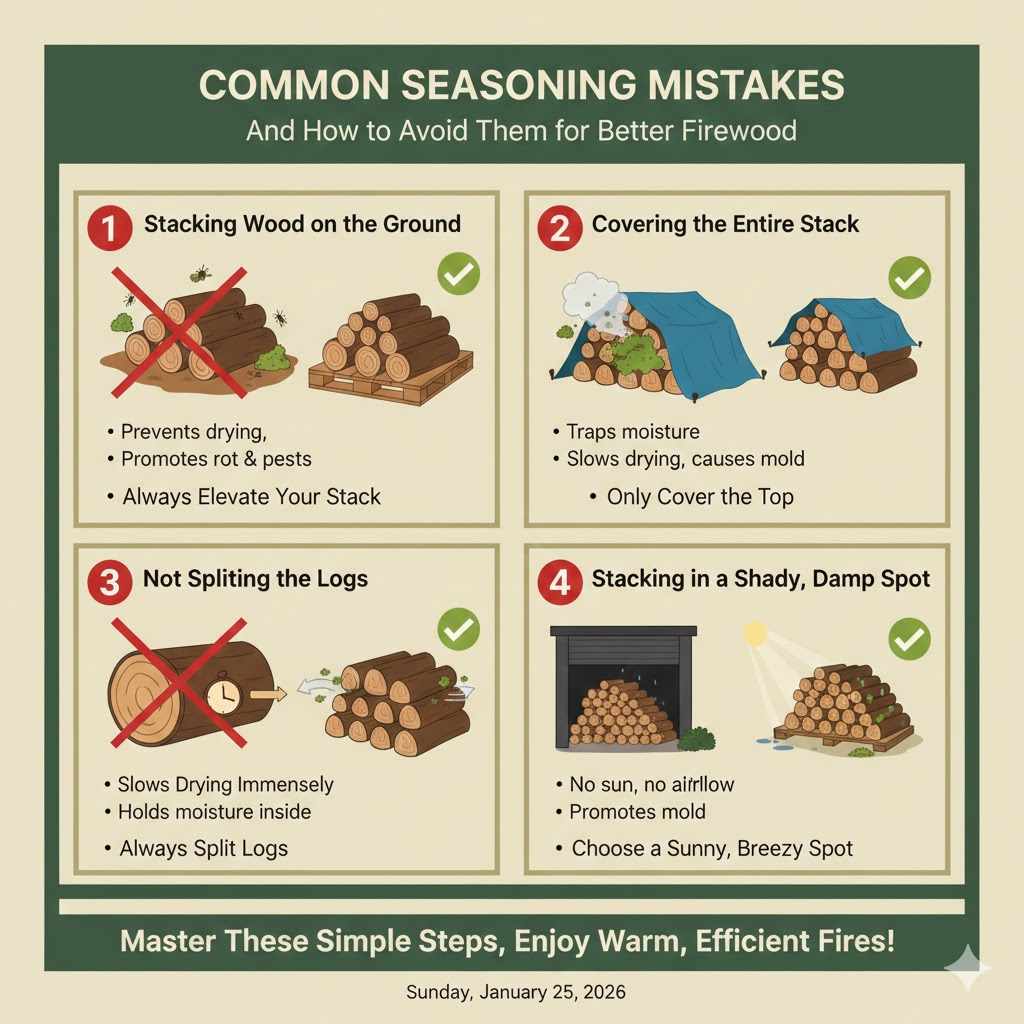
Common Seasoning Mistakes and How to Avoid Them
We all make mistakes when we’re learning. Here are a few common ones I see that can sabotage your seasoning efforts. Avoid these, and you’ll be way ahead of the game.
- Mistake #1: Stacking Wood on the Ground. This is a big one. It prevents the bottom layer from drying, promotes rot, and invites termites and other pests. Always elevate your stack.
- Mistake #2: Covering the Entire Stack with a Tarp. A fully wrapped firewood pile creates a humid tent. It traps moisture escaping from the wood and from the ground, slowing drying and promoting mold growth. Only cover the top.
- Mistake #3: Not Splitting the Logs. Trying to season whole logs is like trying to dry clothes inside a sealed plastic bag. It takes forever. Splitting is a non-negotiable step for quick and effective seasoning.
- Mistake #4: Stacking in a Shady, Damp Spot. A stack tucked away in a dark, still corner behind the garage will not dry well. Sunlight and airflow are your two best friends in the seasoning process.
Frequently Asked Questions About Seasoning Maple Firewood
Is it OK to burn maple that has only seasoned for 3 months?
It’s not recommended. After only 3 months, maple will still have a very high moisture content. Burning it will produce a lot of smoke, creosote, and very little heat. It’s better to be patient and wait at least 6 months for the best and safest results.
Can firewood be too dry?
Technically, yes, but it’s very rare in an outdoor setting. Wood that is extremely dry (under 10% moisture) can burn very quickly. However, wood stored outside will naturally acclimate to the ambient humidity. For firewood purposes, you don’t need to worry about it getting “too dry.”
Does it matter what time of year I cut my maple?
Yes, it helps! The best time to cut firewood is in the late fall or winter when the sap is down in the roots. The wood will have a lower starting moisture content. If you cut and split it then, it will be ready to take full advantage of the spring and summer drying seasons.
What’s the white fungus on my firewood? Is it still safe to burn?
A little surface mold or fungus is common on firewood as it seasons, especially in damp climates. It’s generally harmless. Once the wood is fully seasoned and dry, the fungus will die off. As long as the wood isn’t soft and punky (rotting), it is perfectly safe to burn.
Should I stack my seasoned wood inside?
It’s best to store the bulk of your firewood outside. Bringing in a small supply for a day or two is fine, but storing large amounts inside can bring insects, mold, and dirt into your home. A covered rack or woodshed outdoors is the ideal storage solution.
Does maple create more creosote than other woods?
No, the type of wood is not the primary cause of creosote. The moisture content is. Any wet wood—whether it’s maple, oak, or pine—will produce a smoky, cool fire that leads to creosote. Properly seasoned maple burns very cleanly and produces minimal creosote.
How can I stack firewood without a rack?
You can create a solid base using a couple of long logs or pressure-treated 4x4s laid on the ground. To make stable ends for your row, you can build pillars by stacking wood in alternating directions (like building with Lincoln Logs). This creates a sturdy, self-supporting stack.
Conclusion: Your Reward for a Little Patience
There you have it—the essential secrets to perfectly seasoned maple firewood. It all comes down to a simple formula: split it, stack it right, and give it time. By giving your maple the 6 to 12 months it needs, you’re not just preparing fuel; you’re setting yourself up for warmer, cozier fires that are safer for your home and family.
The satisfying “clink” of two perfectly seasoned pieces and the bright, clean flame in your fireplace are well worth the wait. You’ve done the hard work of preparing the wood, so take that final, patient step to ensure it performs its best. Happy building, and enjoy those wonderful fires!