Can You Mop Hardwood Floors With Pine-Sol Safely? The Real Protocol
Pine-Sol isn’t recommended for hardwood floors, and switching to a cleaner made for wood is the better move – but if you’re going to use it anyway, heavy dilution, a barely-damp mop, and immediate rinsing are what keep the damage risk as low as it can be. This guide covers that safe-use protocol specifically. For why Pine-Sol causes damage in the first place, our Pine-Sol damage explainer covers the chemistry; this page is about the practical steps if you’re mopping today.
The Dilution Ratio That Matters
Best Pine-Sol Alternative for Hardwood
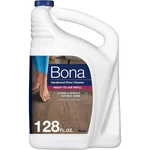 |
Bona Hardwood Floor Cleaner Refill (128 oz) – $37.77 A pH-neutral cleaner made for polyurethane finishes – no dilution math, no rinse step, none of the risk described above.
|
Pine-Sol’s label instructions are written for tile, vinyl, and sealed concrete – surfaces that don’t have a thin finish layer that can be chemically softened. For hardwood, that label ratio is too strong. If you’re using it despite the risk, go well past the label dilution: something like a capful in a full bucket of water rather than the label’s general-purpose ratio. The goal is a solution so mild it barely smells like Pine-Sol – at that dilution, it behaves more like plain water with a trace of degreaser than a disinfectant cleaner.
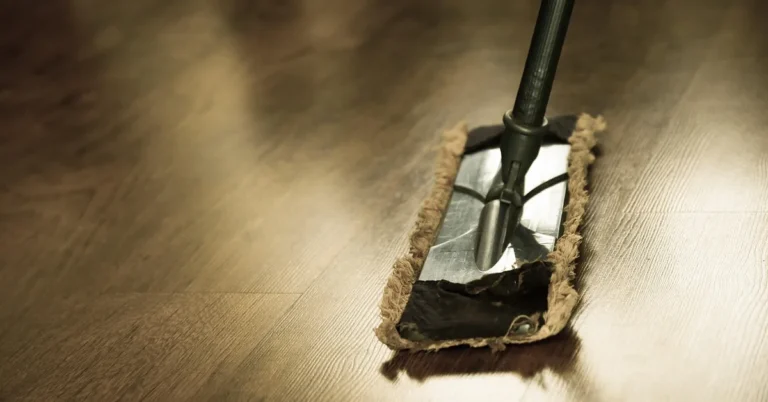
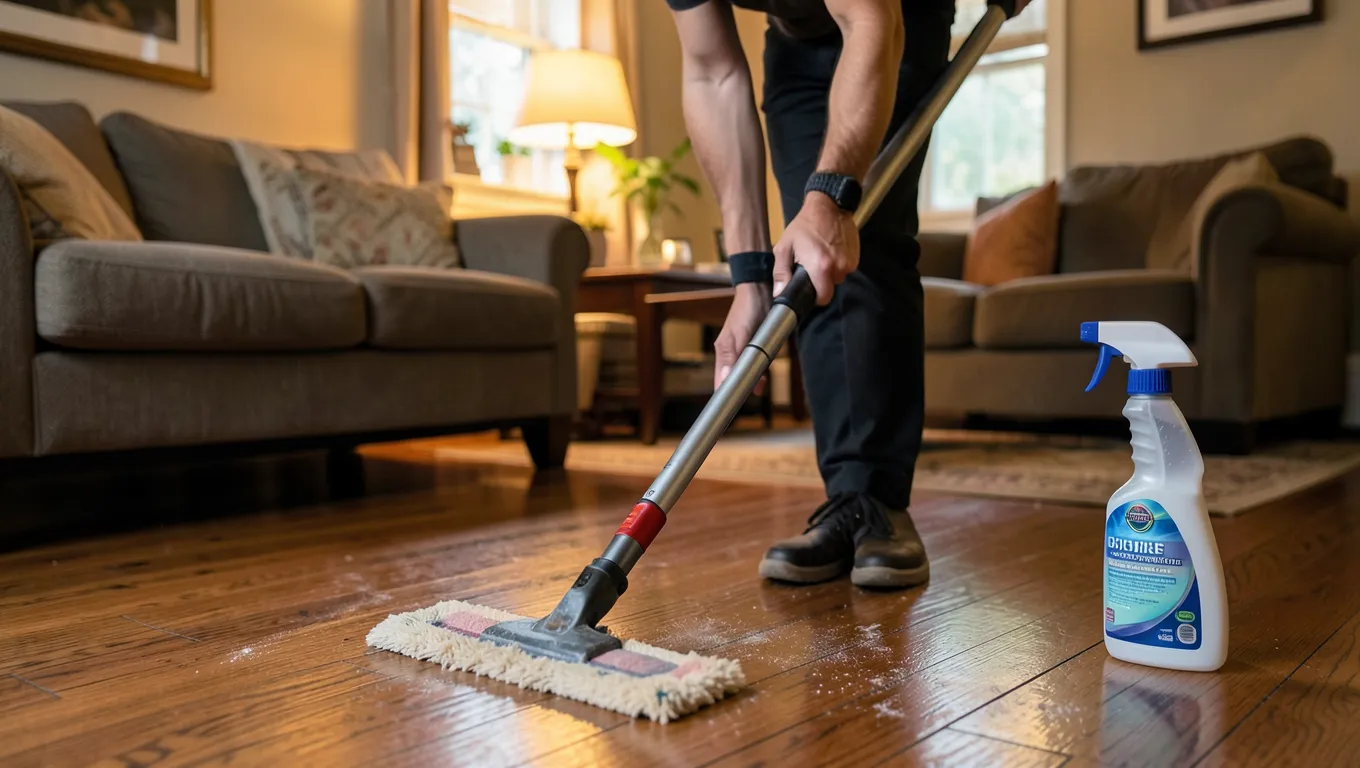
Mop Damp, Not Wet
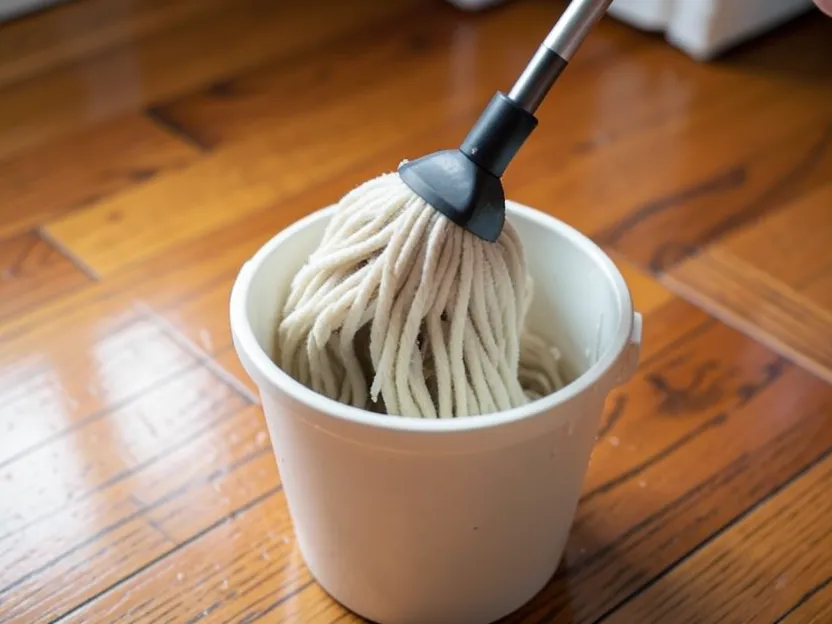
Standing liquid is the actual enemy of a hardwood finish, more so than the cleaner itself in most cases – water and cleaning solution that sits in the seams between boards can work past the finish and reach the wood, causing cupping or gray staining that no amount of correct dilution prevents. Wring the mop until it’s barely damp, not visibly wet, before it touches the floor. If you can see standing liquid on the floor after a pass, the mop was too wet.
Rinse Immediately With Plain Water
This is the step people skip, and it’s the one that causes the cloudy, hazy finish that gets blamed entirely on “Pine-Sol ruining floors.” Any cleaner residue left to dry on the finish – not just Pine-Sol – can leave a film that looks dull or streaky. Go back over the floor with a second mop, wrung nearly dry, using plain water only, immediately after the cleaning pass. Don’t let the cleaning solution air-dry on the floor and consider the job done.
Skip This Entirely If Any of These Apply
- Your floor has a wax or oil finish rather than polyurethane – these are more porous and absorb liquid and chemicals faster, with much less margin for error.
- The finish already shows wear, dullness, or bare spots – a compromised finish has no protective barrier left to fight the chemicals reaching the wood.
- You’re cleaning a large area rather than a small spot – the more square footage exposed to any liquid cleaner, the more chances for a puddle to sit too long somewhere.
In any of these cases, the safe-use protocol above doesn’t reduce the risk enough to be worth it – a cleaner formulated specifically for hardwood is the better call, full stop.
The Simpler Fix: Switch Cleaners
A pH-neutral cleaner formulated for hardwood is designed to evaporate cleanly without needing a rinse step, and it doesn’t carry the risk of breaking down a polyurethane finish the way a general-purpose degreaser can. Given that Pine-Sol needs this much babying to use “safely,” and a dedicated hardwood cleaner needs none of it, switching products is genuinely the lower-effort option once you account for the dilution and rinse steps above.
Frequently Asked Questions
What’s the safest dilution ratio for Pine-Sol on hardwood?
Much more diluted than the label’s general-purpose instructions – a capful in a full bucket of water rather than the standard ratio. Even at heavy dilution, it’s still not the recommended approach; a hardwood-specific cleaner avoids the risk entirely.
Why does my floor look cloudy after mopping with Pine-Sol?
Cloudiness is usually residue that dried on the finish rather than being rinsed off, not necessarily the cleaner damaging the wood directly. A second pass with plain water immediately after cleaning, before anything dries, prevents most of this.
Is it ever completely safe to use Pine-Sol on hardwood?
Not completely – even heavily diluted and properly rinsed, it carries more risk than a cleaner formulated for wood finishes. It can be used with reduced risk following the steps above, but “reduced risk” isn’t the same as “no risk,” especially on a finish that’s already worn.
Can I use Pine-Sol on wax-finished hardwood floors?
No – skip it entirely on wax or oil finishes. These finishes are more porous than polyurethane and absorb liquid and chemicals much faster, with far less margin for error than the dilution protocol above accounts for.
Sponsored / affiliate links. As an Amazon Associate I earn from qualifying purchases. I may earn additional commission from eligible campaigns.