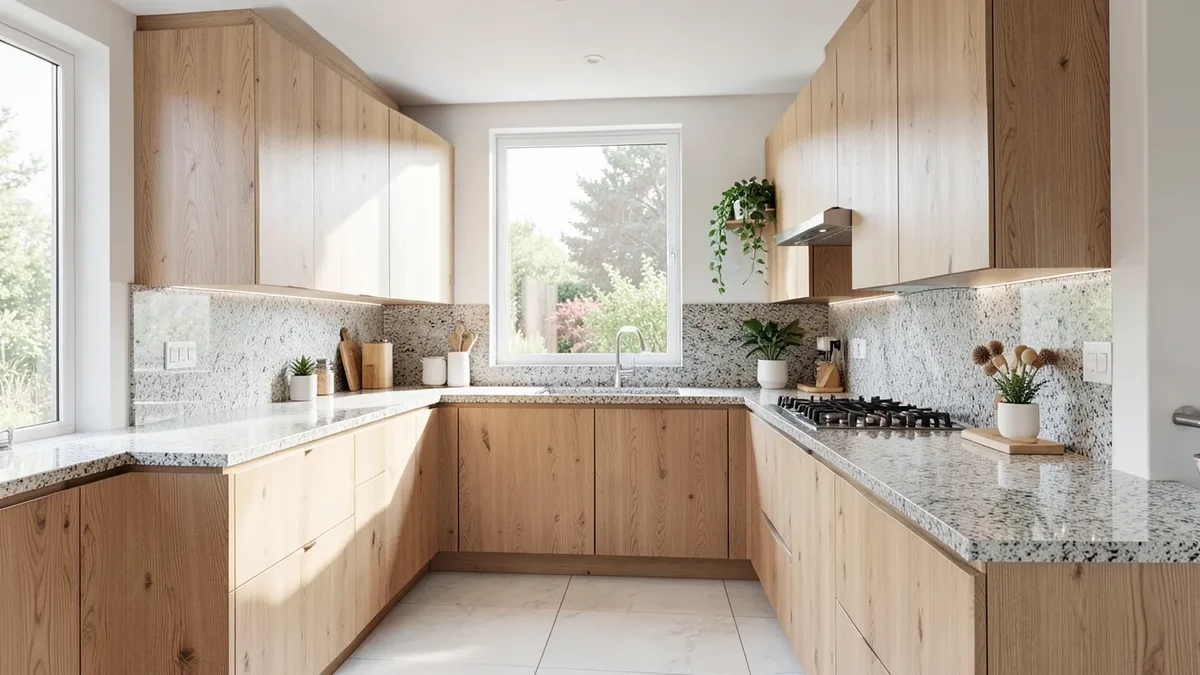
Maple Wood Kitchen Cabinets: Durability, Grain, and the Blotching Fix
Maple is one of the most durable, budget-friendly hardwoods for kitchen cabinets, with a subtle, tight grain that takes paint beautifully. Its one real weakness: that same tight, closed grain makes maple notoriously prone to blotchy staining if you skip a pre-stain wood conditioner first. Get that one step right and maple is genuinely hard to beat on durability and looks per dollar.
Hey there, fellow DIYers, Md Meraj here. Maple is a hard, closed-grain hardwood, harder than oak on the Janka scale, which is exactly why it resists dents and dings so well in a busy kitchen. But that same dense, tight grain structure means it doesn’t absorb stain evenly the way open-grained woods like oak do. Understanding that one property explains almost everything about how to work with maple cabinets successfully, from finishing to long-term care.
What Makes Maple a Strong Choice for Kitchen Cabinets
PREVENTS BLOTCHY MAPLE STAINING
 |
Minwax Pre-Stain Wood Conditioner, 1 Quart – $4.48 Applied before staining, this is the step that stops maple’s tight grain from soaking up stain unevenly and blotching.
|
- Hardness: hard maple ranks around 1450 on the Janka hardness scale, notably harder than red oak (around 1290), which translates to real resistance to dents and dings in daily kitchen use.
- Subtle, uniform grain: maple’s grain is much less pronounced than oak’s, giving it a smoother, more contemporary look that works well painted or lightly stained.
- Cost: typically less expensive than cherry or walnut while still being a genuine hardwood, not an engineered substitute.
The One Real Downside
Maple’s tight grain absorbs liquid stain unevenly, soaking up more color in some spots than others and leaving a blotchy, uneven finish if you stain it straight out of the can. This is the single most common complaint about maple cabinets, and it’s entirely avoidable with the right prep, covered below.
Hard Maple vs. Soft Maple
“Hard maple” (sugar maple) is what most quality cabinetry uses for its density and durability. “Soft maple” (red or silver maple) is still a legitimate hardwood, just softer and a bit less expensive, and it’s a reasonable choice for cabinet doors or areas that see less daily impact. Either way, ask your cabinet maker or retailer which one you’re getting. Some lower-cost lines blend the two, and it affects both durability and how evenly the wood takes stain.
Cabinet Styles That Work Well With Maple
- Shaker style: maple’s clean, subtle grain suits Shaker’s simple recessed-panel look particularly well, and it’s the most popular pairing for a reason.
- Slab (flat-panel): a great match for maple’s smooth surface, especially painted, for a modern minimalist kitchen.
- Raised panel: works but shows maple’s subtler grain less dramatically than it would on oak or cherry. Consider this if you want a traditional look without heavy grain patterning.
- Beadboard: a charming, cottage-style option that pairs well with maple’s smooth surface for the recessed bead detailing.
Finishing Maple Cabinets Without Blotching
Natural/clear finishes: a clear coat (conversion varnish, polyurethane, or a catalyzed lacquer for a factory-level finish) shows off maple’s subtle grain and pale, warm color without the blotching risk that staining carries.
Staining maple the right way: always apply a pre-stain wood conditioner first. It partially seals the wood so the stain absorbs more evenly across the surface instead of soaking in unevenly and blotching. A gel stain is also a safer choice than a thin liquid penetrating stain on maple, since gel stains sit more on the surface rather than soaking in erratically. Skipping the conditioner is, by far, the most common reason DIY maple staining goes wrong.
Painting maple: maple’s smooth, tight grain is genuinely one of the best surfaces for a painted finish, since there’s little grain texture to telegraph through the paint the way it would on oak. A bonding primer designed for hardwood still matters for adhesion and durability, especially on cabinets that get opened and closed constantly.
Choosing Hardware for Maple Cabinets
Maple’s understated grain gives hardware more visual weight than it would have on a busier wood like oak, so pulls and knobs read as a bigger design decision here. Brushed nickel and matte black both pair well with maple’s neutral tone, while brass complements warmer stain choices particularly well.
Keeping Maple Cabinets Looking New
- Wipe with a soft, slightly damp cloth. Skip ammonia-based or abrasive cleaners, which dull the finish over time.
- Wipe up grease and moisture near the stove and sink promptly. Standing moisture is what eventually causes finish failure and swelling at joints.
- An occasional coat of a quality furniture polish or conditioner (check it’s compatible with your specific finish) helps maintain sheen and a slight protective barrier.
Frequently Asked Questions
Is maple an expensive wood for cabinets?
It’s a mid-range hardwood, generally less expensive than cherry or walnut but a step above budget options like MDF or laminate, offering strong durability for the price.
Does maple wood darken or change color over time?
Yes, natural maple tends to develop a warmer, slightly amber tone with age and light exposure, which is normal and part of the wood’s natural character.
Is maple more durable than oak for kitchen cabinets?
Hard maple is denser than red oak on the Janka hardness scale, giving it a slight edge in dent and ding resistance, though both are strong, long-lasting cabinet woods.
Can you paint over stained maple cabinets?
Yes, with proper prep: a light sanding to break the old finish’s sheen and a quality bonding primer before the topcoat.
Why does my stained maple look blotchy?
Maple’s tight grain absorbs stain unevenly without prep. This is almost always fixed by applying a pre-stain wood conditioner before staining, or by using a gel stain instead of a liquid penetrating stain.
Are maple cabinets outdated?
No. Maple’s neutral, subtle grain works with both traditional and modern kitchen designs, which is part of why it remains one of the most consistently popular cabinet woods.
Sponsored / affiliate links. As an Amazon Associate I earn from qualifying purchases. I may earn additional commission from eligible campaigns.