How to Build a Wood Kiln From a Shipping Container (Safely)
A 20-foot steel shipping container makes a genuinely solid wood kiln shell — but only with rigid foam insulation, a correctly sized heat and dehumidification source, and proper electrical wiring, not an open fire sealed inside a metal box. Skip the wiring and smoke-alarm step and a homemade kiln becomes a real fire risk, not just a slow-drying one. This guide covers container selection, insulation, heat-source options, a real drying schedule, and the fire-safety checklist most kiln tutorials leave out.
Quick Answer
Insulate a container with 1-inch rigid foam board and a foil vapor barrier, add one circulation fan per 8 feet of length, and use a small 600–800W dehumidifier (or a solar collector) to hold 110–180°F and 30–80% relative humidity depending on drying stage. Wire it on its own dedicated circuit with a smoke alarm — fire, not slow drying, is the real risk with a DIY kiln.
What You’ll Need to Convert a Shipping Container Into a Kiln
Best Kiln Monitoring Pick

Klein Tools ET140 Pinless Moisture Meter
A pinless meter lets you scan through the outer inch of a board without leaving pinholes, so you can check moisture content at multiple spots in the stack without damaging the lumber.
- Best for: Checking moisture content mid-drying without marking the boards
- Why we picked it: Pinless scanning matches how you actually spot-check a full kiln load
- Main drawback: Less precise on very thick or rough-sawn stock than a pin meter
Compare more kiln-drying monitoring options
 Option 1 General Tools MMD4E Pin Moisture Meter
|
 Option 2 TopTes TS-630 Digital Moisture Meter
|
 Option 3 ToLife 1000 Sq Ft Dehumidifier
|
As an Amazon Associate we earn from qualifying purchases.
- A 20-ft or 40-ft shipping container — an insulated or high-cube (9.5-ft ceiling) unit cuts your build time roughly in half if you can find one secondhand
- Angle grinder or metal-cutting saw, plus a welder or self-tapping metal screws
- 2×4 furring strips, 1-inch rigid foam board insulation, and a reflective foil vapor barrier
- Circulation fans rated for continuous duty — plan on one per 8 feet of container length
- A small dehumidifier (600–800W handles a 20-ft box) or a solar collector panel and fan system for a passive solar kiln
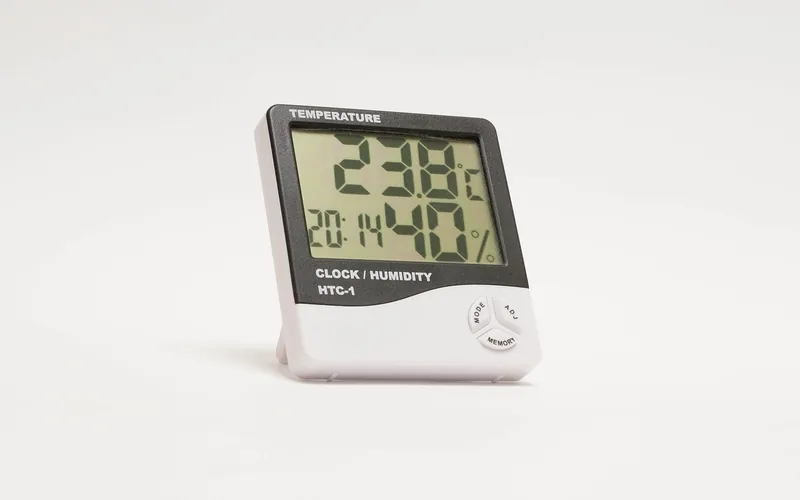
- A digital hygrometer/thermometer and a pin or pinless wood moisture meter
- A dedicated 20-amp circuit, GFCI protection, and a hardwired smoke alarm
- 3/4-inch sticker strips for stacking and spacing the lumber

Step-by-Step: Converting a Shipping Container Into a Wood Kiln
- Pick the right container: Choose an insulated or high-cube container secondhand if you can find one — starting with existing insulation saves a full framing-and-foam pass later.
- Frame and insulate the walls: Screw 2×4 furring strips to the interior ribs, glue 1-inch rigid foam board between them, and cover everything with a reflective foil vapor barrier to stop condensation from soaking the insulation.
- Cut vents and mount fans: Cut vent openings on opposite ends of the container and mount one circulation fan per 8 feet of length on rubber isolation mounts so air moves evenly across every board, not just the ones nearest the fan.
- Install the heat and humidity source: Wire in a 600–800W dehumidifier for a 20-ft container, or a solar collector with a closed-loop fan system if you’re building a passive solar kiln instead.
- Stack and sticker the lumber: Stack boards with 3/4-inch stickers directly above each other every 12–16 inches so air can move through the whole stack instead of just around its edges.
- Add monitoring: Mount a digital hygrometer at mid-stack height and check moisture content with a wood moisture meter every 24–48 hours.
- Wire it safely: Run the dehumidifier and fans on their own dedicated, GFCI-protected circuit and install a hardwired smoke alarm inside or immediately outside the container before you ever run it unattended.
- Preheat and start the schedule: Seal the container, run the system empty for a few hours to confirm stable temperature and humidity, then load the lumber and begin the drying schedule below.
| Heat Source | Typical Setup Cost | Best For |
|---|---|---|
| Small dehumidifier (600–800W) | ~$150–$300 | Fastest, most controllable drying in a 20-ft container |
| Passive solar collector + fans | ~$100–$200 (mostly labor) | Sunny climates, lower running cost, slower and weather-dependent |
| Direct-fired kiln heater | $500+ plus commercial controls | Larger commercial batches only — not recommended for a first DIY build (highest fire risk) |
How Do You Make a Cheap Wood Kiln?
The cheapest genuinely safe option is a passive solar kiln: an insulated box or small shed-sized frame with a clear, south-facing glazed roof and a reflective back wall that raises the interior air to roughly 100–160°F on a sunny day using nothing but sunlight, plus a couple of small fans to move air across the stack. It won’t work at night or through a stretch of cloudy weather, and it usually can’t beat 8–10% final moisture content without a follow-up dehumidification stage — but it needs no electrical heat source at all, which removes most of the fire risk covered later in this guide.
What not to do: building an open fire directly inside a sealed barrel or container and closing it up to trap the heat is a real fire and carbon-monoxide hazard, not a legitimate drying method — every commercial and university drying guide we reviewed builds heat from an electric, solar, or steam source, never an open flame sealed inside the same box as the lumber.
How Long Does It Take to Dry Wood in a Homemade Kiln?
Air-drying lumber outdoors takes roughly a year per inch of thickness in a temperate climate — not the “two weeks per inch” figure that circulates in some older DIY articles, which understates the real timeline by more than 20 times. A properly insulated container kiln collapses that timeline dramatically: at 130–140°F and 30–40% relative humidity, expect roughly 3 days per inch of thickness for softwoods, and longer for dense hardwoods.
Hardwood schedules should start gentler than that. University extension drying schedules call for an initial 24–48 hour acclimation stage at 110–120°F and 70–80% relative humidity while the lumber is still green, then a gradual ramp — raising temperature roughly 5–10°F every 24–72 hours while relative humidity steps down — until the wood reaches 170–180°F near the end of the schedule, once moisture content has dropped to 10–15%. Track progress with a moisture meter and a wood shrinkage calculator rather than the calendar; every species and every load dries at a different rate.
📊 Target moisture content depends on end use: wood for indoor furniture or musical instruments is dried to 6–8% MC, while outdoor construction framing lumber only needs to reach 17–19% MC. — Source: Wagner Meters, Kiln Drying Your Own Wood
Green lumber also weighs far more than dry lumber — a freshly cut board can hold anywhere from 30% to well over 100% of its dry weight in water, which matters when you’re figuring out how much your stack weighs for loading and support. Run your species and dimensions through a wood weight calculator before you build stickers and supports sized for the green weight, not the dry weight.
Fire Safety Checklist for a DIY Wood Kiln
A homemade dehumidification kiln carries a real, documented fire risk — this is the part most container-kiln tutorials skip entirely.
- Put the dehumidifier and fans on their own dedicated, correctly sized circuit — never a shared or overloaded one.
- Install a hardwired smoke alarm inside or immediately outside the kiln, not just somewhere in the house.
- Never bypass a dehumidifier’s internal safety cutoffs, and don’t run a unit that has been recalled or shows signs of seizing up.
- Keep the interior free of sawdust and debris buildup around the heat source.
- If you run a separate heat source for a bug-kill cycle, unplug the dehumidifier first rather than running both at once.
- Check with your homeowners insurer before running a kiln as anything beyond occasional personal use — many policies exclude fire losses tied to a home business, and wood drying run commercially from a residence can fall into that category.
“Inexpensive DH units can seize up, and because they don’t have adequate controls or are on a high-amp circuit, they don’t shut off — they keep trying to run, creating heat and a real fire risk. I’ve personally been involved in fires where a homeowner was running a wood-drying setup out of the house.”
For a broader look at how enclosed heat sources near wood can go wrong, see our guide on whether a wood burner can get too hot — the same overheating and clearance principles apply inside a sealed kiln.
Common Mistakes When Building a DIY Wood Kiln
- Sealing the container completely airtight with no controlled air exchange, which traps humidity and can also trap fumes and heat.
- Skipping the acclimation stage and jumping straight to high heat, which case-hardens the outside of the boards and locks moisture inside.
- Using a random household dehumidifier with no idea of its wattage or duty-cycle rating, then running it continuously without checking on it.
- Stacking lumber without stickers, so airflow can’t reach the boards in the middle of the pile.
- Never checking actual moisture content and just guessing based on how many days have passed.
Can You Use the Container as a Workshop After Kiln Use?
Yes — once a kiln has finished a drying run, the same insulated shell works well as a small workshop. Clean out any sawdust and moisture buildup, add proper ventilation or an exhaust fan since the space was sealed for drying, and route power through the same dedicated circuit you wired for the kiln equipment. A 20-foot container gives you roughly 150 square feet of insulated shop space — enough for a bench, a small dust collector, and hand-tool storage — while a 40-foot high-cube gives meaningfully more headroom and floor space if you can source one. Browse more woodworking project guides for what to build once the space is set up, and check our wood species guide if you’re deciding what to dry and build with first.
Prefer a purpose-built box over a container? Our guide to making a solar or dehumidifier kiln to dry wood covers sourced sizes, costs and sample-board moisture tracking.
FAQ
How do you make a cheap wood kiln?
The cheapest safe option is a passive solar kiln: an insulated box with a clear, south-facing glazed roof and a reflective back wall that raises interior temperature using sunlight alone, paired with a couple of small fans to move air across the stack. It needs no electric heat source, though it dries slower and only works well on sunny days.
How long does it take to dry wood in a homemade kiln?
At 130–140°F and 30–40% relative humidity, expect roughly 3 days per inch of thickness for softwoods, longer for dense hardwoods — versus about a year per inch for outdoor air-drying. Track actual moisture content with a moisture meter rather than counting days, since every load dries differently.
What temperature kills bugs in kiln-dried wood?
The internationally recognized heat-treatment standard (ISPM 15) requires the wood’s core temperature to reach at least 133°F (56°C) and hold there for a minimum of 30 minutes to kill insects and larvae. A dehumidification kiln that reaches 140°F for about 48 hours, as many DIY guides recommend, comfortably clears that threshold.
Is it safe to build your own wood-drying kiln?
It can be, but only with the same electrical precautions any appliance running unattended for days needs: a dedicated circuit, a hardwired smoke alarm, and a dehumidifier that isn’t seizing up or bypassing its own safety cutoffs. Homemade kiln fires are a documented, recurring problem discussed in woodworking forums, almost always traced to wiring or equipment shortcuts, not the wood itself.
Do you need insurance or a permit for a home wood kiln?
Check with your homeowners insurer before you build one. Standard homeowners policies typically exclude fire losses connected to a home-run business, and a kiln operated for paid lumber drying — rather than occasional personal use — can fall outside normal coverage. Some municipalities also require a permit for a permanent electrical circuit run to an outbuilding or container.
Conclusion
A shipping container gives you a genuinely solid, weatherproof shell for a wood kiln — the steel walls already keep out pests and weather, so your real job is insulation, a properly sized heat source, and a monitoring routine you actually stick to. Build in the fire-safety basics from the start — a dedicated circuit, a smoke alarm, and a dehumidifier you trust — and you’ll dry lumber in days instead of a year, from a shell that becomes a usable workshop once the last batch comes out.
Sponsored / affiliate links. As an Amazon Associate I earn from qualifying purchases. I may earn additional commission from eligible campaigns.